



IAEA's Grossi Says Inspectors Will Visit Iran's Nuclear Sites
International Atomic Energy Agency Director-General Rafael Grossi announced on June 24 that the IAEA's inspectors will visit Iran's nuclear enrichment sites.
“I can understand political statements, they are part of the reality, but the fundamental thing I would like to remind you and draw your attention to is that there has been a Memorandum of Understanding, signed by both presidents [of Iran and the United States],” Grossi said at a press conference at the Daiichi nuclear power plant in Fukushima, Japan.

He added that the memorandum "says explicitly that the nuclear activities that are going to be carried out with regards to the nuclear material facilities will be supervised by the IAEA."
“Obviously, to do that, we will have to inspect. Whether this happens the day after tomorrow or in one week or in 10 days, it’s important, but not essential. This is going to happen,” Grossi said.
A day earlier, US President Donald Trump said that IAEA inspectors would go to Iran "at the appropriate time" to inspect damaged nuclear facilities.
In response to claims that there were no plans for nuclear inspectors to return to Iran, he said Iranian officials were "wrong" and that Washington had agreed with Tehran to conduct "100 percent inspections."
Asked when the inspections would begin, he said: "There is no rush, but they will be on site at the appropriate time."
Grossi's comments are among the most explicit statements by the IAEA regarding Iran's nuclear activities. The agency has played a key role in determining the status of Tehran's nuclear stockpiles.
Since the start of the 12-day war between Israel and Iran last year, Tehran has blocked the UN agency's access to its nuclear enrichment facilities.
IAEA inspections are essential to implementing the agreement signed by Washington and Tehran last week, which requires Iran to reduce the enrichment level of its uranium stockpile.
Oman Announces Temporary Sea Route Through Strait Of Hormuz
Oman announced the introduction of a temporary sea route to pass through the Strait of Hormuz in coordination with the International Maritime Organization (IMO).
According to the Omani state news agency, this measure is intended to facilitate the passage of vessels intending to pass through this important waterway.
According to this announcement, ships intending to use this temporary route must depart after coordinating with the IMO and based on the coordinates announced by this international body and Omani authorities.
The announcement emphasizes that this decision was taken with the aim of ensuring freedom of navigation in this strategic waterway in line with international and maritime law to ensure freedom of navigation without the need to pay tolls.
Earlier, Iranian officials who had traveled to Oman after Switzerland had announced an agreement to plan and develop a joint mechanism with Oman to collect fees for providing maritime services to ships passing through the Strait of Hormuz.
Iranian officials said this would not mean collecting transit fees and that the fees would be collected solely in exchange for providing services.
US President Donald Trump has also emphasized in recent days that during the 60-day period following the initial agreement between Washington and Tehran, the passage of ships through the Strait of Hormuz will be completely free, and after this period, Tehran and Muscat will cooperate to introduce and implement a mechanism to provide services to passing vessels.
Over 1,000 Vessels Remain In Persian Gulf
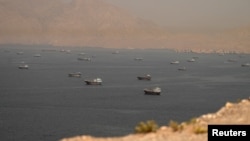
Nearly 1,150 ships are still stuck in the Persian Gulf despite the initial agreement between Iran and the United States to end the war, Alliance, Germany's largest insurance company, announced.
The insurance company estimates the total value of these vessels and their cargoes at around $125 billion.
Justus Heinrich, a senior expert in the commercial sector at Alliance Insurance, emphasized that "shipping has been held hostage in this war," saying that even if conditions in the Strait of Hormuz return to normal, it will take weeks for the ships to leave the region and transfer their cargoes to their final destinations.
Despite the initial agreement between Iran and the United States, shipping companies continue to assess the risk level in the Persian Gulf region as high. A few days ago, following the resurgence of fighting in Lebanon, Iran announced once again the temporary closure of the Strait of Hormuz, which fueled concerns among shipping companies.
Heinrich said international shipping organizations and German shipowners are still unable to accurately assess the risks to their vessels and crews, and as a result, "ships will not leave their anchorages as long as the situation remains the same."
Iran has effective leverage, he said, noting that 20 and 25 percent of the world's oil and liquefied gas shipments pass through the Strait of Hormuz.
Trump Criticizes Congress For Passing War Powers Bill, Calls It 'Meaningless'
US President Donald Trump has criticized Congress for passing on June 23 the largely symbolic "War Powers" bill, which was designed to end the Iran war.
In an angry social media post, Trump called it "poorly timed and meaningless."
The bill, which was first passed by the House of Representatives, would require the president to withdraw US forces from a conflict with Iran unless Congress specifically authorizes this action.
Fifty senators, including four Republicans, voted in favor against 48 who opposed.
"These Senators have just made my job more difficult, but I will get it done, one way or the other, because I always get it done!" Trump complained on his social media platform, Truth Social.
Right at a time when Iran is "willing to give us anything" and "respecting the hell out of the United States" and himself, he wrote, "the U.S. Senate decides to have a poorly timed and meaningless War Powers Act Vote, telling the Number One Sponser of Terror in the World that the United States doesn't like what I am doing to them, and I must stop."
The resolution will not be presented to Trump for signature, and therefore, in terms of legal force, it is a matter of debate and is largely symbolic.
Over the past months, Democratic senators have repeatedly put bills to a vote to stop the war, but each time they have failed due to Republican opposition.
We are now closing the live blog for the day. We'll be back at 7:30 a.m. Central European time to cover the latest events across the Middle East.
US Senate Votes To Halt Iran War Without Congress Authorization
The US Senate has narrowly voted in favor of a bill demanding the war against Iran be stopped and requiring US President Donald Trump to seek congressional approval if he decides to resume it, the first such war powers resolution to ever pass in both the House of Representatives and the Senate.
The legislation passed in a 50 to 48 Senate vote on June 23 as four Republicans joined in with Democrat members. It requires Trump to withdraw US forces from the conflict with Iran unless Congress specifically authorizes military action in the region.
The resolution will not be presented to Trump to approve with his signature, and it was not immediately clear how it would affect the conflict with Tehran and Washington currently negotiating a peace agreement amid a cease-fire.
“With the Senate passage of my Iran War Powers Resolution, both chambers have now made clear that the president cannot continue this war of choice and must cease all hostilities against Iran," Gregory Meeks, the ranking Democrat on the Foreign Affairs Committee, said after the vote.
"Regardless of what President Trump says, this measure is binding under the War Powers Resolution, and I will explore all legal avenues to ensure the Executive complies with the will of Congress," Meeks added.
Over the past months, Democratic senators have repeatedly put forward bills to stop the war, only to be defeated by the Republican majority. The Republicans also hold a slim majority in the House.
Trump: IAEA Inspectors Will Go To Iran At "An Appropriate Time"

US President Donald Trump said that International Atomic Energy Agency (IAEA) inspectors will go to Iran at the "appropriate time" to inspect nuclear facilities damaged in US air strikes earlier this year.
Reacting to reports that Iran denied inspectors would go to Iran, Trump said that Iranian officials were "wrong" to say so and that Washington had agreed with Tehran to conduct inspections.
Asked when such inspections could start, Trump told journalists on June 23: "There is no rush, but they will be on site at an appropriate time."
Trump added that the goal of the agreement with Iran is to prevent Iran from obtaining a nuclear weapon, and that Islamic Republic officials have agreed to this.
Rubio Says Hormuz Must Remain Free Of Transit Fees

US Secretary of State Marco Rubio arrived in Abu Dhabi on June 23, opening a high-stakes Gulf tour aimed at reassuring Washington’s closest Arab allies after a fragile cease-fire framework between the United States and Iran raised fresh questions over regional security and Tehran’s future ambitions.
Rubio is in the region to hold meetings with leaders in the United Arab Emirates, Kuwait, and Bahrain over the next two days, as Gulf capitals weigh the implications of a US-brokered de-escalation deal with Tehran.
The visit comes at a delicate moment for the region. Although oil exports and shipping traffic through the Strait of Hormuz have begun recovering following days of disruption, tensions remain elevated.
Iranian officials have accused several Gulf states of quietly facilitating US military operations during recent hostilities, while simultaneously signaling they will continue pressing for a reduced American military footprint across the region.
For Gulf monarchies long wary of Iran’s regional influence, Rubio’s mission is both diplomatic and strategic: to assure allies that Washington’s security commitments remain intact, even as the contours of a potential longer-term understanding with Tehran begin to emerge.
For more go here.
Oman, Iran Agree To Continue Hormuz Navigation Talks
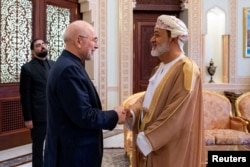
Oman and Iran have agreed to continue discussions on the future administration of navigation in the Strait of Hormuz, including maritime services and the costs associated with operating them in the strategic waterway.
In a joint statement issued after talks in Muscat on June 23, the two countries said they would establish a joint working group involving their foreign ministries and consult other Persian Gulf coastal states and relevant parties.
The move appears to implement a provision of last week's memorandum of understanding between Tehran and Washington, which called for talks on the future management of navigation and maritime services in the strait.
The announcement followed a visit by Iranian Parliament Speaker Mohammad Baqer Qalibaf and Foreign Minister Abbas Araqchi, who met Oman's Sultan Haitham bin Tariq and Foreign Minister Sayyid Badr Albusaidi.
Oman and Iran reaffirmed their commitment to ensuring safe passage through the strait in accordance with international law while respecting sovereignty over territorial waters.
They also pledged to keep the waterway a secure and open route for international navigation and to promote regional stability.
With reporting by Reuters
Despite Iranian Denials, Trump Says Tehran Has Agreed To 'Highest Level' Of Nuclear Inspections
US President Donald Trump has repeated his claim that Iran has agreed to the highest level of nuclear inspections of its facilities and that the inspections will continue indefinitely
In a post on the Truth Social platform on June 23, Trump wrote that despite Iranian "protestations and false statements to the contrary coupled with the drumbeat of the Fake News, which is doing everything possible to make the US Victory as small and insignificant as possible, Iran has fully and completely agreed to highest level Nuclear inspections long into the future (Infinity!!!)"
According to Trump, the arrangement will ensure “Nuclear Honesty.”
“If they did not agree to this, there would be no further negotiations!” he wrote.
The claim was first made on June 22 by US Vice President JD Vance, who said Iran had agreed to inspections of its nuclear facilities and that such inspections could take place this week.
However, officials from the Islamic republic have rejected any suggestion that international inspectors will be granted access to the country’s nuclear sites.
Earlier on June 23, Foreign Ministry spokesman Esmail Baghaei said that Iran has no plans to allow inspections by the International Atomic Energy Agency (IAEA) of nuclear facilities that were bombed.
Since the summer of 2025, when the United States and Israel bombed Iranian nuclear facilities at Fordow, Natanz, and Isfahan, Tehran has suspended cooperation with the IAEA and blocked inspectors’ access to those sites.
In another part of his Truth Social post, Trump said that in light of Iran’s agreement to IAEA inspections and “other important concessions,” he had agreed to keep the Strait of Hormuz open and not impose a naval blockade.
However, he added that US naval forces in the Middle East would remain in position and could reimpose a blockade if necessary, although he said such a scenario currently appeared “highly unlikely.”
Trump also said that Iran’s frozen assets would be placed in an escrow account under US control and could be used exclusively to purchase food and medical supplies from the United States, including corn, wheat and soybeans from American farmers.
“These are things that are desperately needed by Iran,” Trump wrote. “This is a humanitarian crisis, and I feel it is necessary to help, NOW, before it is too late.”
The US president also said that negotiations with Iran were “going well.”