



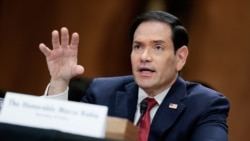
IAEA Head: Transferring Iranian Uranium Abroad 'Difficult But Not Impossible'
Rafael Grossi, head of the International Atomic Energy Agency (IAEA), says that while it is "difficult," transferring Iran's enriched uranium abroad is "not impossible."
Grossi's remarks come as the fate of Iran's highly enriched uranium reserves has become a central issue in ongoing talks between Tehran and Washington. Iranian officials have called the US demand that Tehran give up its enriched uranium "excessive" and said they will not give in to it.
Iran is estimated to have about 440 kilograms of uranium enriched to about 60 percent. Grossi previously said that Iran's uranium stockpile had largely remained intact and in the same place after US and Israeli air strikes on the country's nuclear facilities in 2025.
In an interview with Al Jazeera, Grossi said that transferring Iran's highly enriched uranium abroad was "not easy, because this is in gas form, and this is highly contaminant, and it is not an easy operation."
Grossi also added that several other options are being considered, including "downblending" the uranium to a lower level of enrichment. Kazakhstan has also been mentioned as a possible storage location.
US President Donald Trump has called Iran's stockpiles of enriched uranium, which are buried in nuclear facilities, "nuclear dust" and has repeatedly said that the United States must acquire these stocks.
However, in Trump's latest comments on the matter, made during a recent trip to China, Trump said that he did not think the United States removing enriched uranium from Iran was necessary and that it was more of a "public relations" move.
"We were thinking about doing it early on, but it would take time, it would take about a week and a half. And that’s a long time to be in enemy territory," Trump said in an interview with Fox News on May 14.
Middle East Flight Disruptions Continue As Some Airlines Resume Flights
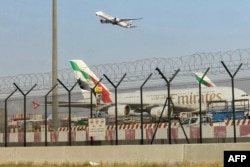
While some airlines have begun resuming flights to the Middle East, disruptions caused by the Iran war continue to overshadow regional air routes and Europe-Asia flights.
Regional airlines have increased their flight capacity after severe war-related disruptions, but many airlines outside Middle East are still rerouting flights from Europe to Asia to avoid the region's airspace.
A number of European and Asian carriers have suspended flights to Tel Aviv, Dubai, Doha, Riyadh, Beirut, Erbil, Baghdad, and Tehran until dates in the summer or fall. Air France has suspended flights to Tel Aviv until June 14 and flights between Beirut and Dubai until June 17, while KLM has suspended flights to Dubai until August 2 and routes between Riyadh and Dammam until July 12.
British Airways has also delayed the resumption of flights to Dubai, Doha, and Tel Aviv until August 1 and plans to reduce the number of flights to the Middle East once it returns. The airline has also permanently removed Jeddah from its list of destinations.
Among US carriers, Delta has extended the suspension of its Atlanta-Tel Aviv route until December 18, but plans to resume its New York-Tel Aviv flight on September 6. Air Canada has also canceled its flights to Tel Aviv and Dubai until September 7.
In contrast, some airlines are resuming limited flight schedules. Malaysia Airlines has announced that it will resume limited flights to Doha from July 2. Australia's Qantas has also increased flights to Rome and Paris to meet increased demand on European routes.
Iran Plans 3-Day Funeral Ceremony For Ali Khamenei
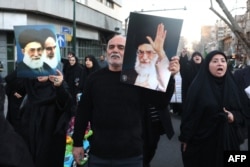
Tehran is reportedly planning a "farewell ceremony" and funeral for former Supreme Leader Ali Khamenei to take place in several Iranian cities.
Khamenei, who was killed in a joint US-Israeli strike on February 28, has not yet been buried.
The cities of Qom and Mashhad, as well as the capital, will host the event, according to a Tehran official.
According to Iranian media reports, Mohammad Amin Tavakolizadeh, deputy social affairs director for the Tehran region, said on June 2 that officials are expecting up to 20 million people to attend in the capital alone.
He did not specify the exact date of the ceremony but said it would likely be held in late June or early July.
Tavakolizadeh said the "farewell ceremony" will last three days in Qom and Mashhad and 24 hours in Tehran.
He added that Khamenei would be buried at the shrine of the eighth Shi'ite Imam in Mashhad, "according to his will and the wishes of his relatives."
Iran's Judiciary Rejects Appeal Of Imprisoned British Couple
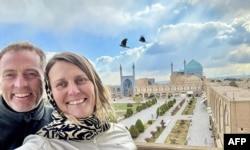
The family of a British couple imprisoned in Iran announced on June 3 that Craig and Lindsay Foreman's appeal to overturn their 10-year prison sentence has been rejected.
According to Reuters, the family explained that the Islamic republic's judicial authorities did not allow the couple to attend the court hearing and have provided them with very little information about the proceedings.
A court in Tehran sentenced the Foremans to 10 years in prison last year on charges of "espionage."
Both have denied the spying charges.
Rubio Says Sanctions On Iran Won't Be Lifted To Open Hormuz
US Secretary of State Marco Rubio has said that no sanctions on Iran will be lifted in exchange for Iran agreeing to open the Strait of Hormuz.
Speaking at a Senate committee hearing on June 2, Rubio said, "That's not been discussed. That's not been offered."
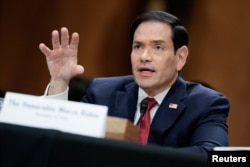
His comments directly contradict accounts in Iranian state media of the draft agreement being negotiated by Tehran and Washington via Pakistani mediators. These reports have said the deal being discussed includes sanctions relief and the return of Iranian funds that have been frozen abroad.
Rubio told senators that the first phase of any deal would be Iran opening the Strait of Hormuz, and that this would be followed by a second phase dealing with Iran's nuclear program lasting 30-90 days.
He added that talks were being complicated by delays caused by the structure of power within Iran. Iran's negotiators, he said, had to then negotiate with their own leadership council in Tehran -- causing delays of several days each time new messages were passed.
Rubio was also asked if could use his influence within the Trump administration to persuade it to provide lawmakers with the legal rationale for US military strikes on Iran, which it began with Israel on February 28.
"Let me take that back and ask the Office of Legal Counsel. But certainly, they provided the legal rationale for the strike," he said.