Accessibility links

Breaking News

From Offshoot To 'Spearhead': The Rise Of IS-K, Islamic State's Afghanistan Branch

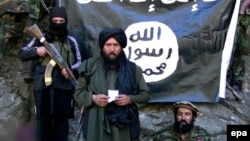
A still taken from an undated video shows Hafiz Saeed (center), the founder of IS-K, at an undisclosed location at the Afghanistan-Pakistani border in January 2015.

Since its emergence a decade ago, the Islamic State-Khorasan (IS-K) militant group has largely focused its attacks on Afghanistan and Pakistan.

But IS-K, the Afghanistan branch of Islamic State (IS), has carried out an increasing number of mass-casualty attacks outside its stronghold in South Asia in recent years, including in Iran and Russia.

Experts say the deadly attack on a concert venue outside Moscow on March 22, which was widely blamed on IS-K, shows the affiliate’s growing capabilities and ambitions, as well as its leading role in the umbrella organization.

“This branch has become the spearhead, the leading internationally minded branch of the Islamic State,” said Lucas Webber, co-founder and editor of MilitantWire.com.

Webber said IS’s central leadership in Syria and Iraq has had to “focus more on survival, regrouping, and reconstituting its capabilities and its networks” after the group was largely defeated and dismantled by a U.S.-led coalition in 2019.
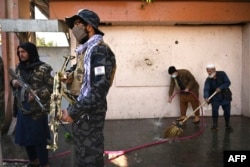
Taliban fighters stand guard outside a hospital in Kabul in November 2021 after an attack claimed by IS-K. At least 19 people were killed.

“It’s essentially become the parent organization of the IS franchise,” said Webber, referring to IS-K, which first appeared in Afghanistan in late 2014, the same year that IS seized large swaths of Syria and Iraq and declared a self-styled caliphate.

IS also has branches in the Arabian Peninsula, Africa, Southeast Asia, and the Caucasus.

External Operations

As well as continuing to carry out attacks in Afghanistan and Pakistan, IS-K appears to have shifted its focus to external operations in recent months.

In January, IS-K was blamed for killing more than 90 people in Iran’s southern city of Kerman, the deadliest attack in the Islamic republic in decades.
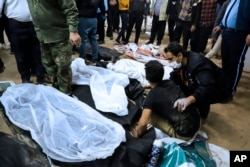
Relatives identify the bodies of some of the 90 people who were killed in explosions in the Iranian city of Kerman in January that were blamed on IS-K.

On March 22, gunmen stormed the Crocus City Hall concert venue in the Moscow region, killing at least 139 people, in Russia’s worst terrorist violence in two decades.

IS claimed responsibility for the attack. U.S. officials specifically blamed IS-K, while Moscow attributed the attack to Islamic extremists without mentioning the IS affiliate.

IS-K on March 25 threatened to carry out more “massacres” against Russia. Moscow has targeted IS militants in Syria and Africa and forged ties with the Taliban government, a fierce rival of IS-K in Afghanistan.

Webber of MilitantWire.com said IS-K poses a rapidly growing threat to the West. “For the foreseeable future, this seems to be an indication of things to come,” he said.

General Michael E. Kurilla, head of the U.S. military’s Central Command, told lawmakers on March 21 that IS-K “retains the capability and the will to attack U.S. and Western interests abroad in as little as six months with little to no warning.”

Law enforcement in Europe have uncovered several IS-K plots in recent years.
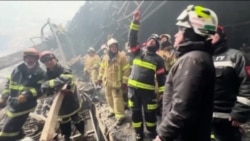
Why Would Islamic State Attack Russia?
please wait

No media source currently available

0:00 0:04:07 0:00


German police on March 19 said they had arrested two suspected IS-K supporters. They were accused of plotting to attack the Swedish parliament.

In July, police in Germany and the Netherlands arrested nine people who they said were in contact with IS-K.

During the past year, the group has threatened to carry out attacks in Sweden, the Netherlands, and Denmark after cases of Koran burnings in those countries.

'Loose Network Of Cells'

After its emergence, IS-K initially captured small pockets of territory in eastern and northern Afghanistan as part of IS’s broader aim of expansion throughout South and Central Asia.

But IS-K was driven out from its territorial strongholds around 2019 after coming under increasing fire from Afghan and international forces as well as the Taliban. Since then, IS-K has embarked on a new strategy of urban warfare.

“We are witnessing a new phase of the Islamic State-Khorasan,” said Riccardo Valle, the co-founder of The Khorasan Diary, an online platform that tracks militant groups in Afghanistan and Pakistan.

Before-And-After Images Suggest Severe Abuse Of Moscow Terror Suspects
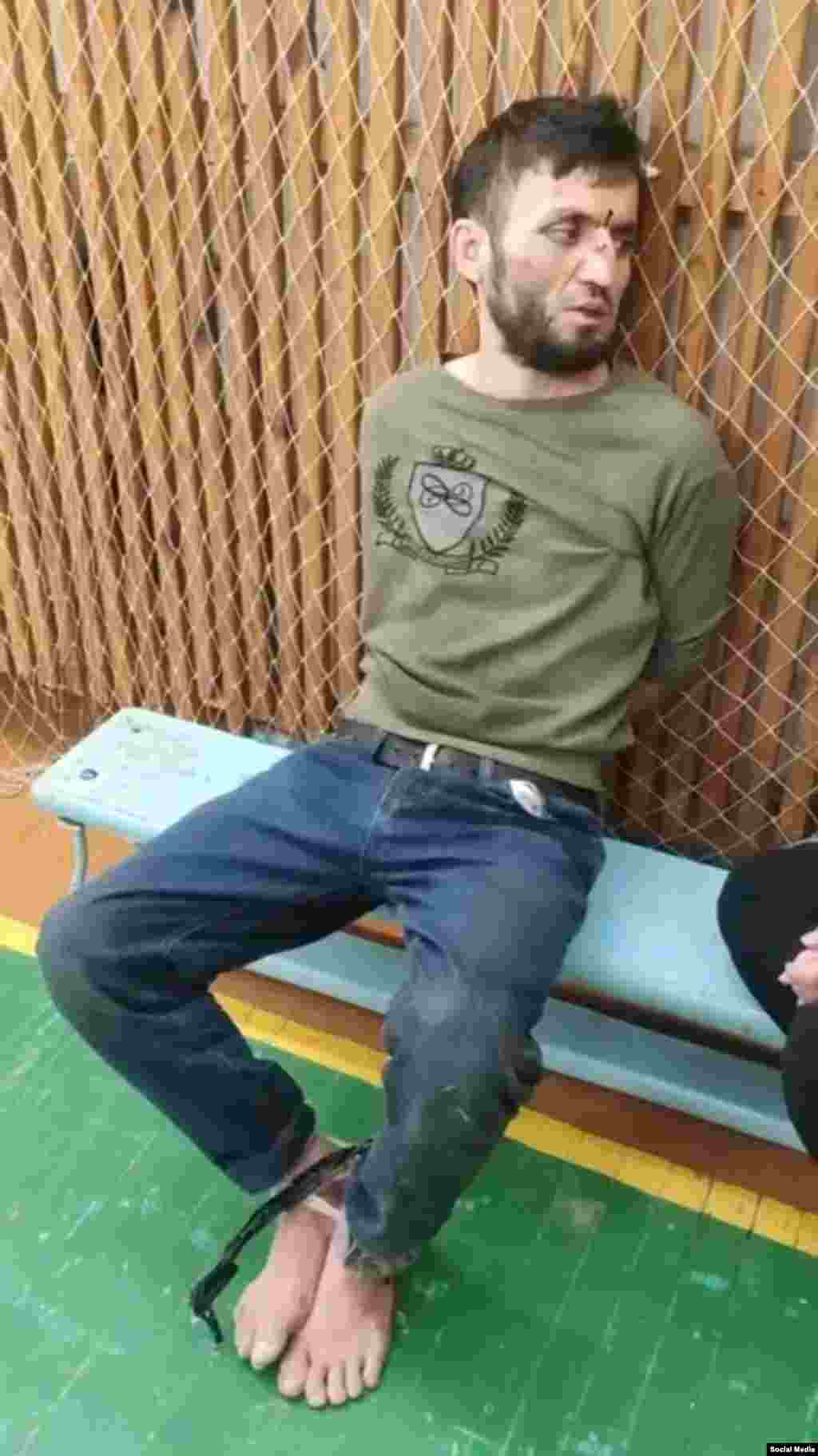
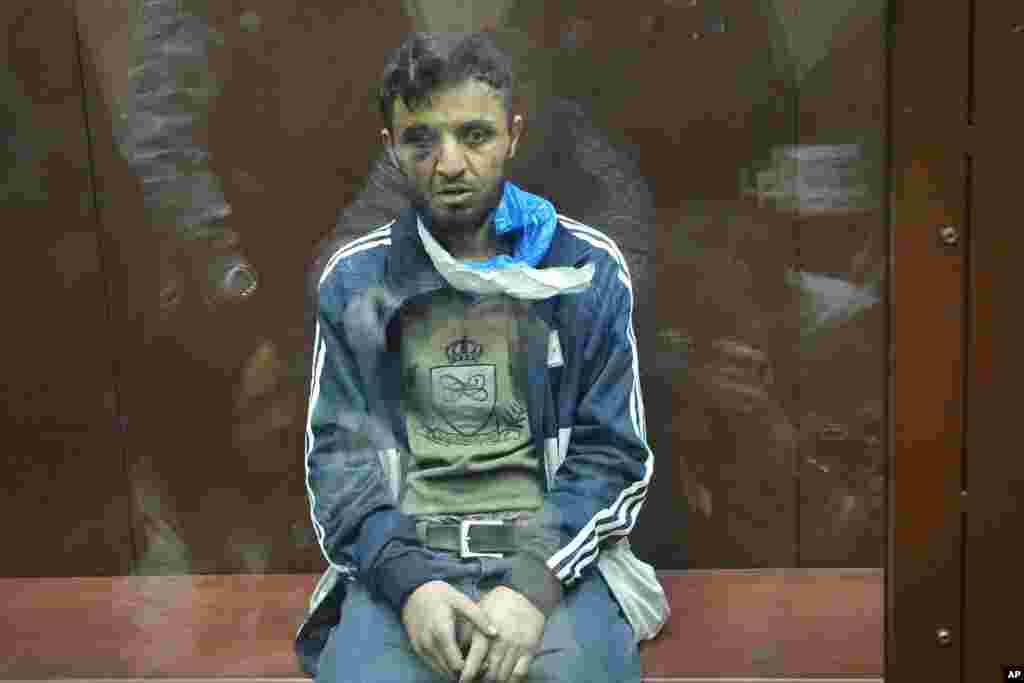
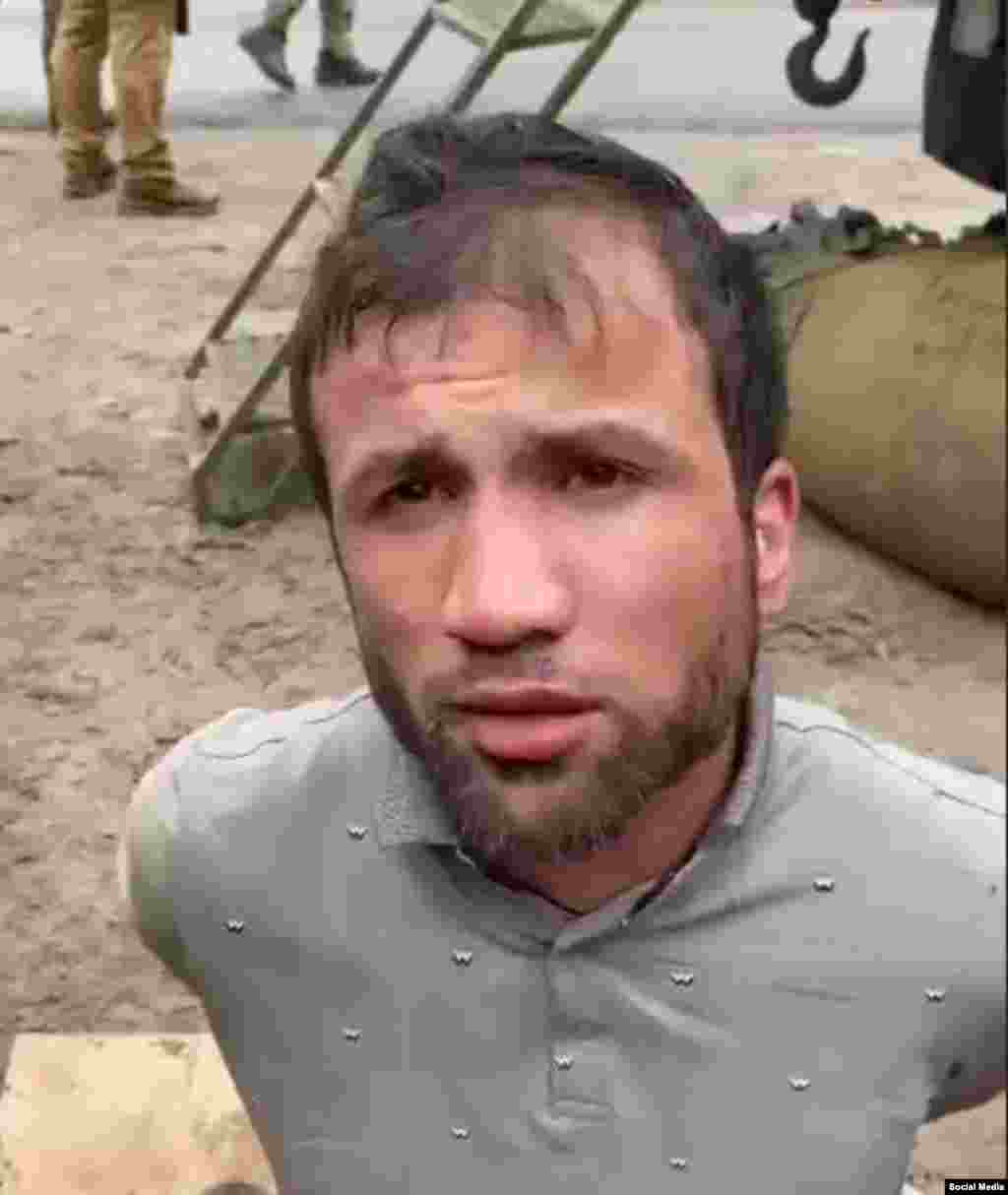
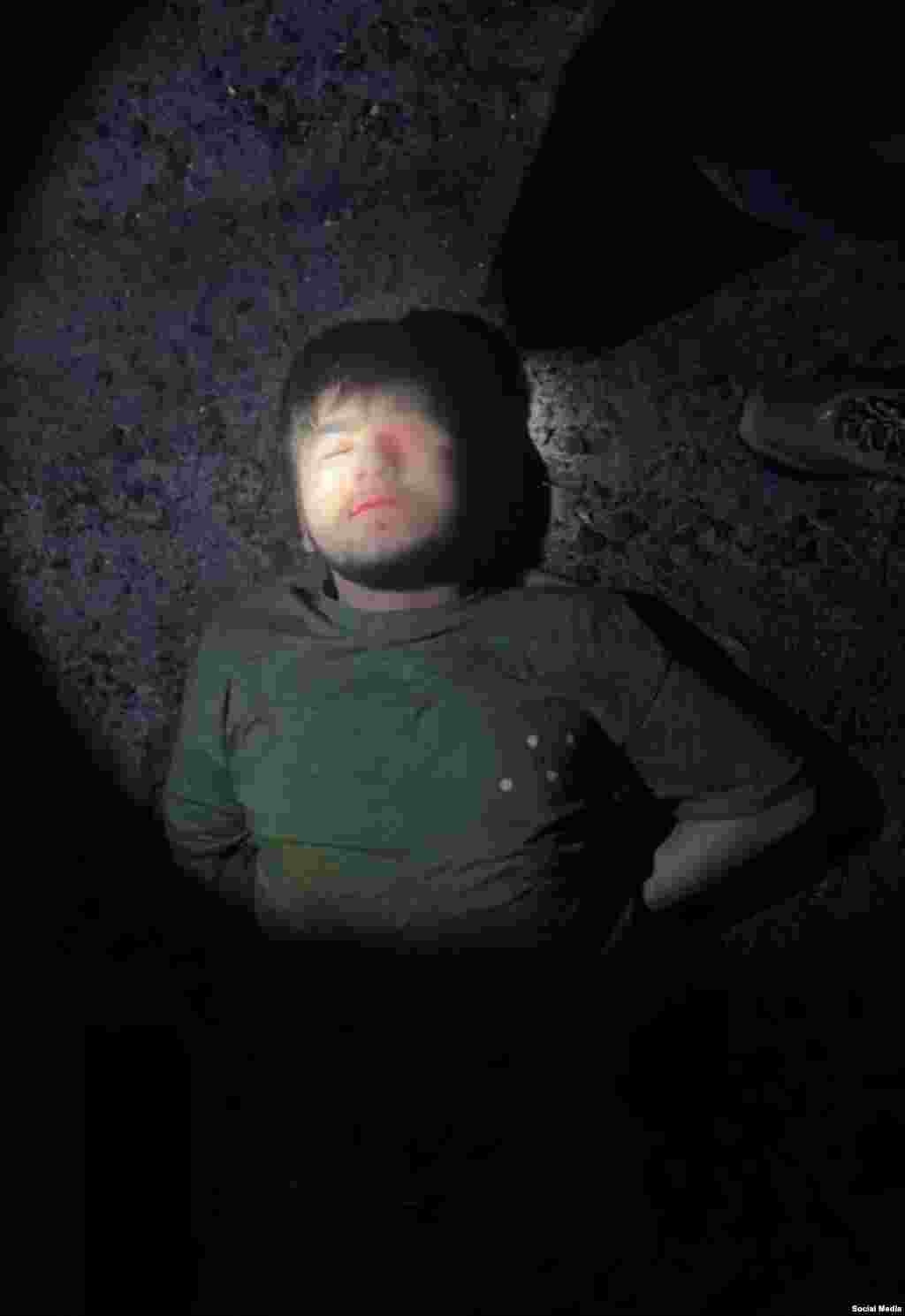
Dalerjon Mirzoev is seen immediately after his capture in the Bryansk region on March 23. He was captured on suspicion of being one of four Tajik nationals involved in the terrorist attack on a concert hall near Moscow on March 22 that left at least 137 dead and more than 180 injured.
1/8 Dalerjon Mirzoev is seen immediately after his capture in the Bryansk region on March 23. He was captured on suspicion of being one of four Tajik nationals involved in the terrorist attack on a concert hall near Moscow on March 22 that left at least 137 dead and more than 180 injured.
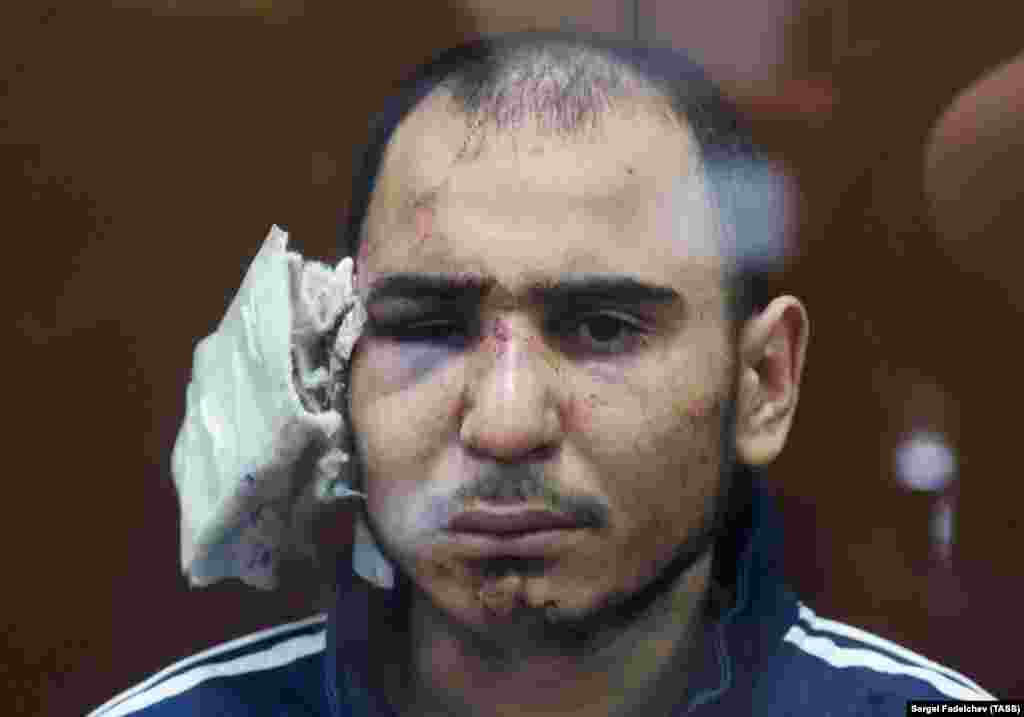
Images taken as four Tajik men suspected of committing the Crocus City Hall shooting near Moscow were apprehended in western Russia on March 23 are starkly different from how the men appeared -- battered and bruised -- in court the following day.
Here is Mirzoev pictured in court in Moscow on March 24 wearing the same long-sleeved T-shirt but sporting signs of being beaten.
2/8 Here is Mirzoev pictured in court in Moscow on March 24 wearing the same long-sleeved T-shirt but sporting signs of being beaten.
Images taken as four Tajik men suspected of committing the Crocus City Hall shooting near Moscow were apprehended in western Russia on March 23 are starkly different from how the men appeared -- battered and bruised -- in court the following day.
Faridun Shamsiddin is shown apparently unscathed immediately after his capture in the Bryansk region on March 23. 
3/8 Faridun Shamsiddin is shown apparently unscathed immediately after his capture in the Bryansk region on March 23. 
Images taken as four Tajik men suspected of committing the Crocus City Hall shooting near Moscow were apprehended in western Russia on March 23 are starkly different from how the men appeared -- battered and bruised -- in court the following day.
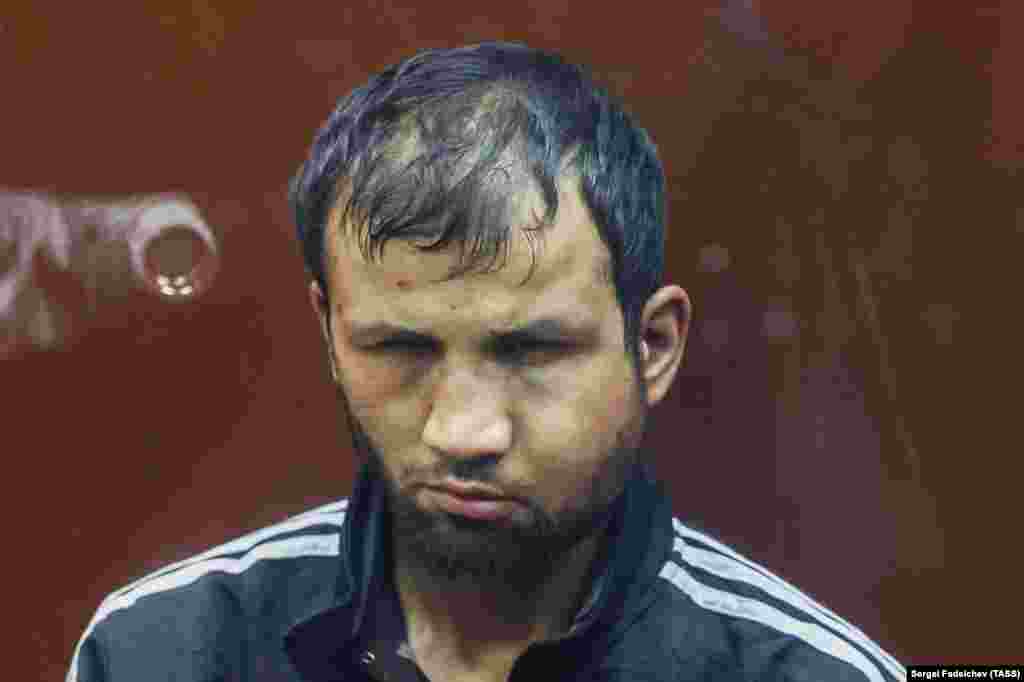
Shamsiddin is seen here pictured in court in Moscow on March 24 with a swollen and bruised face. Earlier, the Tajik man was filmed as he was apparently being tortured by security forces with an electrical cable attached to his genitals.<br />
<br />
Aiden Aslin, a British national who was captured by Russia while fighting for Ukraine during the battle of Mariupol, told RFE/RL that he believes the publication of apparent torture of the terror suspects is intended to &quot;set an example.&quot;<br />
<br />
The former Ukrainian marine says such abuse of suspects yet to be found guilty of any crime is at &quot;the same level&quot; as the extrajudicial violence he says he witnessed while in Russian captivity.&nbsp;
4/8 Shamsiddin is seen here pictured in court in Moscow on March 24 with a swollen and bruised face. Earlier, the Tajik man was filmed as he was apparently being tortured by security forces with an electrical cable attached to his genitals.

Aiden Aslin, a British national who was captured by Russia while fighting for Ukraine during the battle of Mariupol, told RFE/RL that he believes the publication of apparent torture of the terror suspects is intended to "set an example."

The former Ukrainian marine says such abuse of suspects yet to be found guilty of any crime is at "the same level" as the extrajudicial violence he says he witnessed while in Russian captivity. 
Images taken as four Tajik men suspected of committing the Crocus City Hall shooting near Moscow were apprehended in western Russia on March 23 are starkly different from how the men appeared -- battered and bruised -- in court the following day.
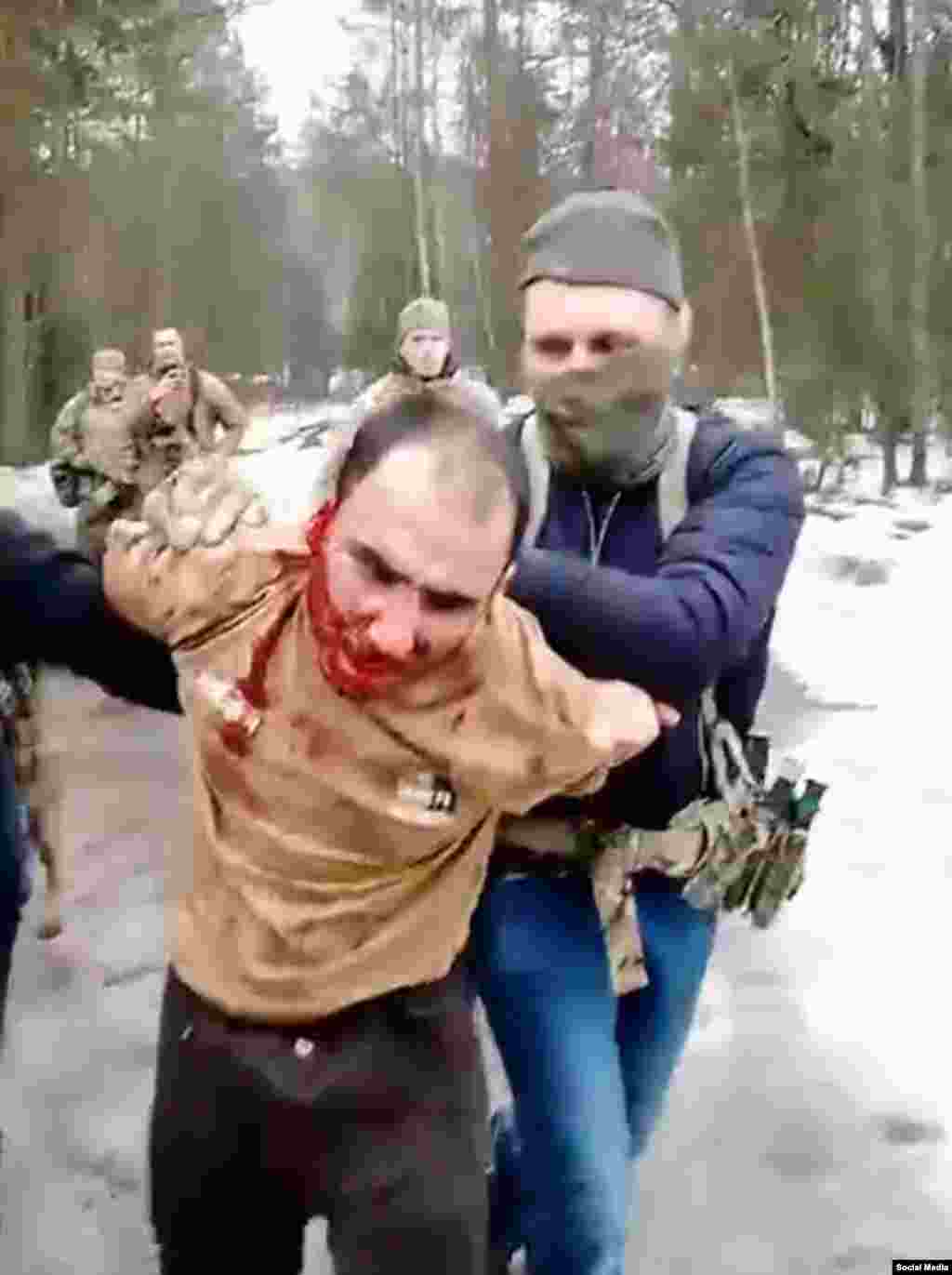
Saidakram Rajabalizoda is seen as he is led away after reportedly having his ear sliced off by uniformed men who caught him in a forest in Russia&#39;s Bryansk region on March 23.<br />
<br />
The Russian Grey Zone Telegram channel, which is connected to the Wagner group, published a video purportedly showing Rajabalizoda&rsquo;s ear being cut off and security agents trying to force him to eat it. A man in the video yells at the suspect: &ldquo;Chew, bastard! I will cut you open and shove it into your mouth.&rdquo;
5/8 Saidakram Rajabalizoda is seen as he is led away after reportedly having his ear sliced off by uniformed men who caught him in a forest in Russia's Bryansk region on March 23.

The Russian Grey Zone Telegram channel, which is connected to the Wagner group, published a video purportedly showing Rajabalizoda’s ear being cut off and security agents trying to force him to eat it. A man in the video yells at the suspect: “Chew, bastard! I will cut you open and shove it into your mouth.”
Images taken as four Tajik men suspected of committing the Crocus City Hall shooting near Moscow were apprehended in western Russia on March 23 are starkly different from how the men appeared -- battered and bruised -- in court the following day.
Rajabalizoda is seen at his March 24 court appearance with his right ear bandaged and showing evidence of being beaten while in detention.&nbsp;
6/8 Rajabalizoda is seen at his March 24 court appearance with his right ear bandaged and showing evidence of being beaten while in detention. 
Images taken as four Tajik men suspected of committing the Crocus City Hall shooting near Moscow were apprehended in western Russia on March 23 are starkly different from how the men appeared -- battered and bruised -- in court the following day.
Muhammadsobir Faizov is pictured after being apprehended on March 23 with an apparently severe eye injury that has been blurred out by Russian media outlets.
7/8 Muhammadsobir Faizov is pictured after being apprehended on March 23 with an apparently severe eye injury that has been blurred out by Russian media outlets.
Images taken as four Tajik men suspected of committing the Crocus City Hall shooting near Moscow were apprehended in western Russia on March 23 are starkly different from how the men appeared -- battered and bruised -- in court the following day.
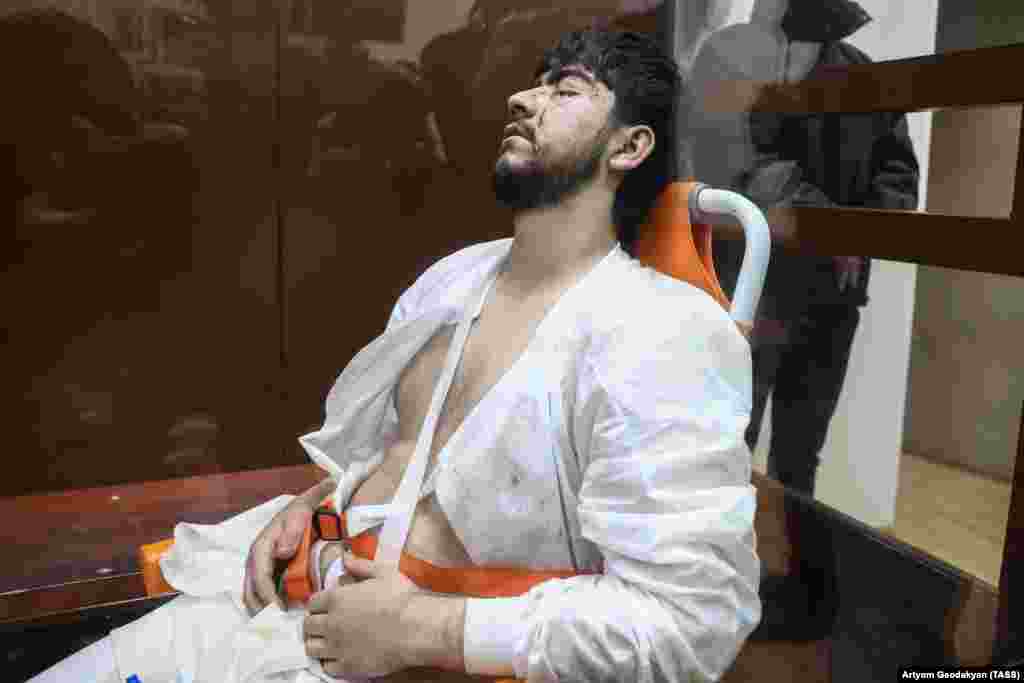
Faizov is seen here at a March 24 court hearing. The terror suspect was wheeled into the courtroom and appeared barely responsive during the appearance.&nbsp;
8/8 Faizov is seen here at a March 24 court hearing. The terror suspect was wheeled into the courtroom and appeared barely responsive during the appearance. 
Images taken as four Tajik men suspected of committing the Crocus City Hall shooting near Moscow were apprehended in western Russia on March 23 are starkly different from how the men appeared -- battered and bruised -- in court the following day.
Previous slide
Next slide


He said IS-K has evolved from a group aiming to seize territory like a “traditional army” to a “loose network of cells, which tends to carry out more lethal attacks.”

IS-K is made up of Afghan and foreign fighters. In a report published in June 2023, the UN Security Council said the number of IS-K militants in Afghanistan ranged “from 4,000 to 6,000,” including family members. Some experts estimate that the number is much lower.

Sara Harmouch, a terrorism and defense policy expert in Washington, said IS-K’s focus on asymmetric warfare instead of territorial control has enabled the group to adapt to local conditions and withstand counterterrorism operations.

“This flexibility could make IS-K a more dynamic and resilient leader within the IS network, capable of navigating post-caliphate era complexities,” she said.

Harmouch said IS-K’s ability to carry out high-profile attacks outside Afghanistan and Pakistan has raised its profile and indicated its expanding capabilities.

“This visibility could position IS-K as a leading figure within the broader IS network, especially in attracting recruits and resources,” she said.

  • 16x9 Image

    Abubakar Siddique

    Abubakar Siddique, a journalist for RFE/RL's Radio Azadi, specializes in the coverage of Afghanistan and Pakistan. He is the author of The Pashtun Question: The Unresolved Key To The Future Of Pakistan And Afghanistan. He also writes the Azadi Briefing, a weekly newsletter that unpacks the key issues in Afghanistan.

This item is part of
XS
SM
MD
LG