


Accessibility links

Breaking News

Kyrgyz Chaos: Shortage Of Medics, Hospital Beds As COVID-19 Cases Skyrocket

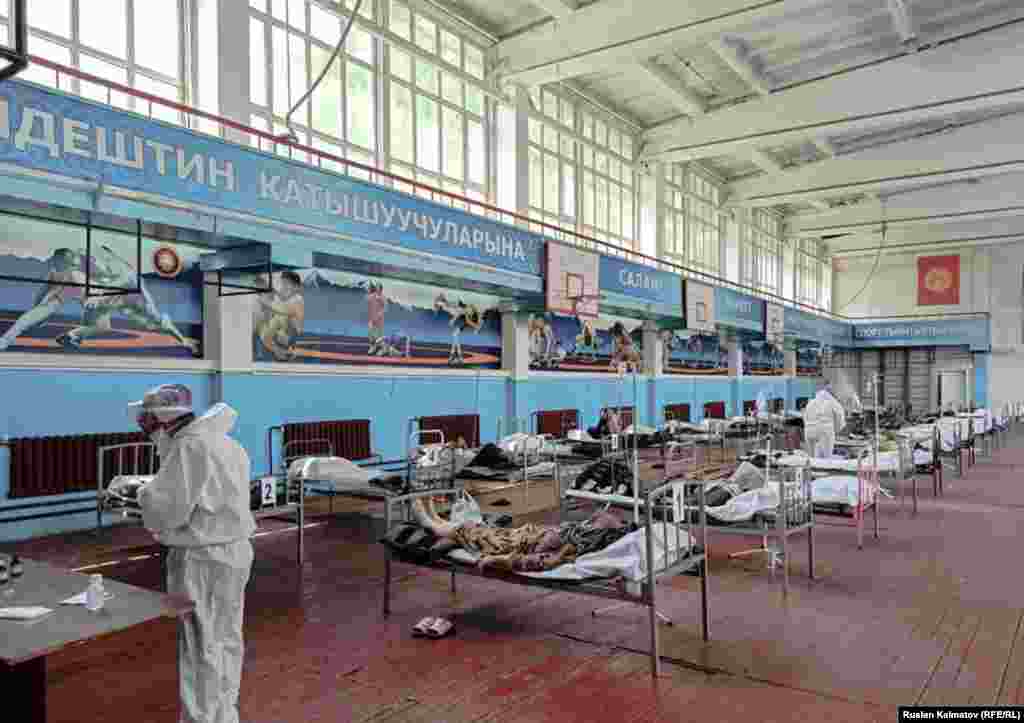
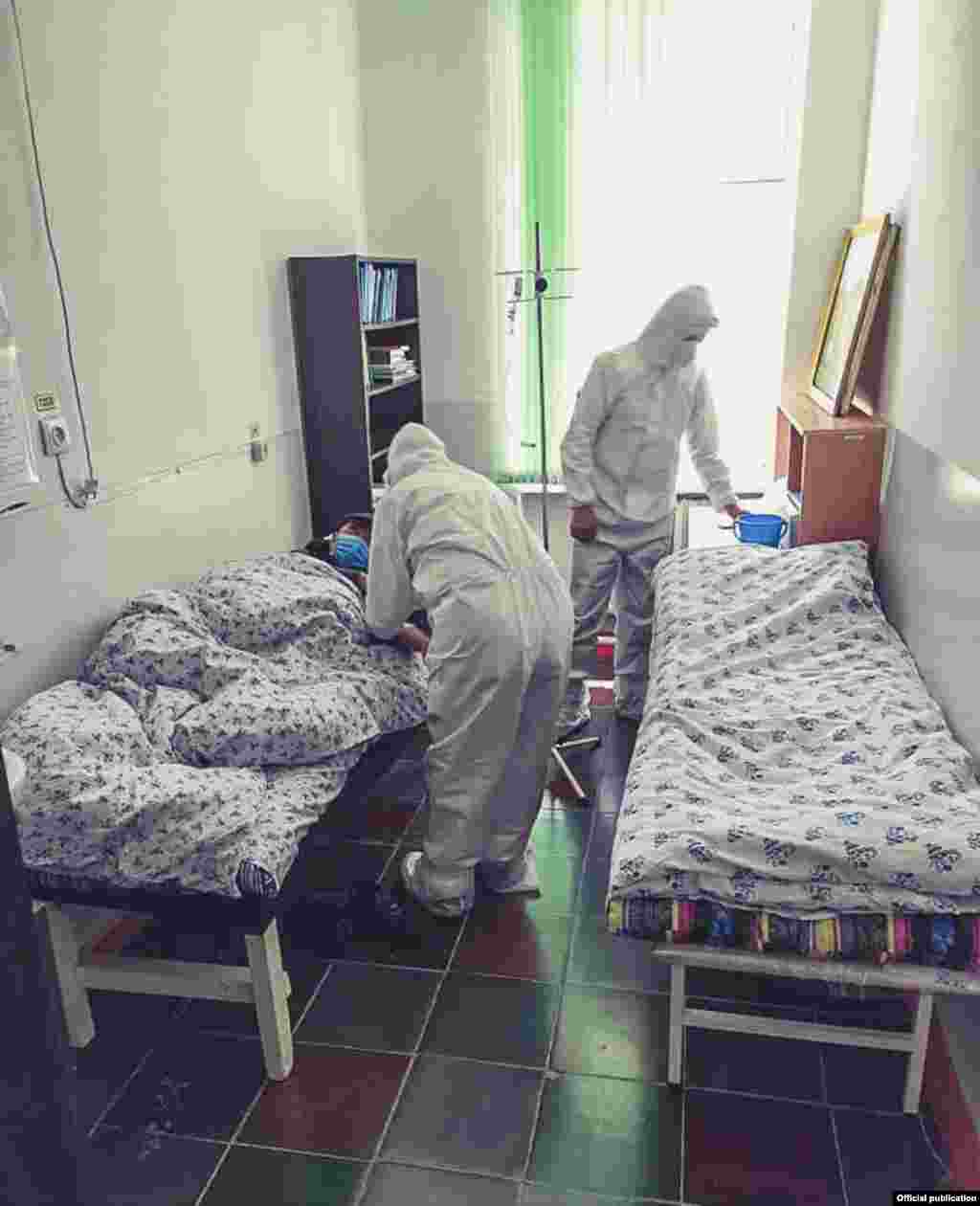
Medical workers in a temporary hospital set up in Bishkek to handle the large number of coronavirus cases

“When I was driving from one hospital to another with my sister in the car -- who was struggling to breathe -- I felt like the loneliest person in the world,” said Taalaybek Shaiymbekov about his 26-year-old sister, Kunduz.

After being rejected by numerous hospitals in the Kyrgyz capital, Bishkek, for several days, Kunduz was finally given a bed at the National Infectious Diseases Center on June 28.

Kunduz Shaiymbekova
Kunduz Shaiymbekova

But it was too late. Doctors were unable to save the young woman’s life.

Shaiymbekov told RFE/RL that Kunduz died from what Kyrgyz doctors diagnosed as pneumonia just five days after falling ill in late June.

Kunduz took a test for the coronavirus but died before the results came back.

“I’m angry with the government, which said it was ready to deal with [coronavirus] outbreak. I didn’t see any of that readiness,” Shaiymbekov said.

Kyrgyzstan, a Central Asian nation of some 6.5 million, is facing a severe shortage of medical professionals, hospital beds, drugs, and equipment as coronavirus infections have shot up in recent weeks. The country lifted a state of emergency in May.

The Health Ministry reported 511 new infections on July 10, bringing the total number of confirmed cases to 9,358 since Kyrgyzstan recorded its first case in March. The official death toll from COVID-19 stands at 122.

Real figures of infections and deaths are believed to be much higher, but the country’s testing capability is severely limited.

The huge increase in deaths by pneumonia is also seen as masking the country's true mortality rate from COVID-19.

Kyrgyzstan Opens Makeshift Hospitals As COVID-19 Cases Rise

<span>A 570-bed makeshift hospital in Kyrgyzstan&#39;s northwestern Talas region, which officially recorded its first COVID-19 cases in June.</span>
1/18 A 570-bed makeshift hospital in Kyrgyzstan's northwestern Talas region, which officially recorded its first COVID-19 cases in June.
Kyrgyzstan's government is opening makeshift hospitals in seven regions of the country to cope with a rising number of COVID-19 cases. 
As of July 9, the Talas region had recorded more than 80 coronavirus cases and two deaths. The area was closed to visitors at the end of June.
2/18 As of July 9, the Talas region had recorded more than 80 coronavirus cases and two deaths. The area was closed to visitors at the end of June.
Kyrgyzstan's government is opening makeshift hospitals in seven regions of the country to cope with a rising number of COVID-19 cases. 
COVID-19 patients receive treatment at a makeshift hospital in the southwestern Kyrgyz city of Jalal-Abad.
3/18 COVID-19 patients receive treatment at a makeshift hospital in the southwestern Kyrgyz city of Jalal-Abad.
Kyrgyzstan's government is opening makeshift hospitals in seven regions of the country to cope with a rising number of COVID-19 cases. 
Hospitals in Jalal-Abad say they are getting more than 150 new COVID-19 patients a day.
4/18 Hospitals in Jalal-Abad say they are getting more than 150 new COVID-19 patients a day.
Kyrgyzstan's government is opening makeshift hospitals in seven regions of the country to cope with a rising number of COVID-19 cases. 
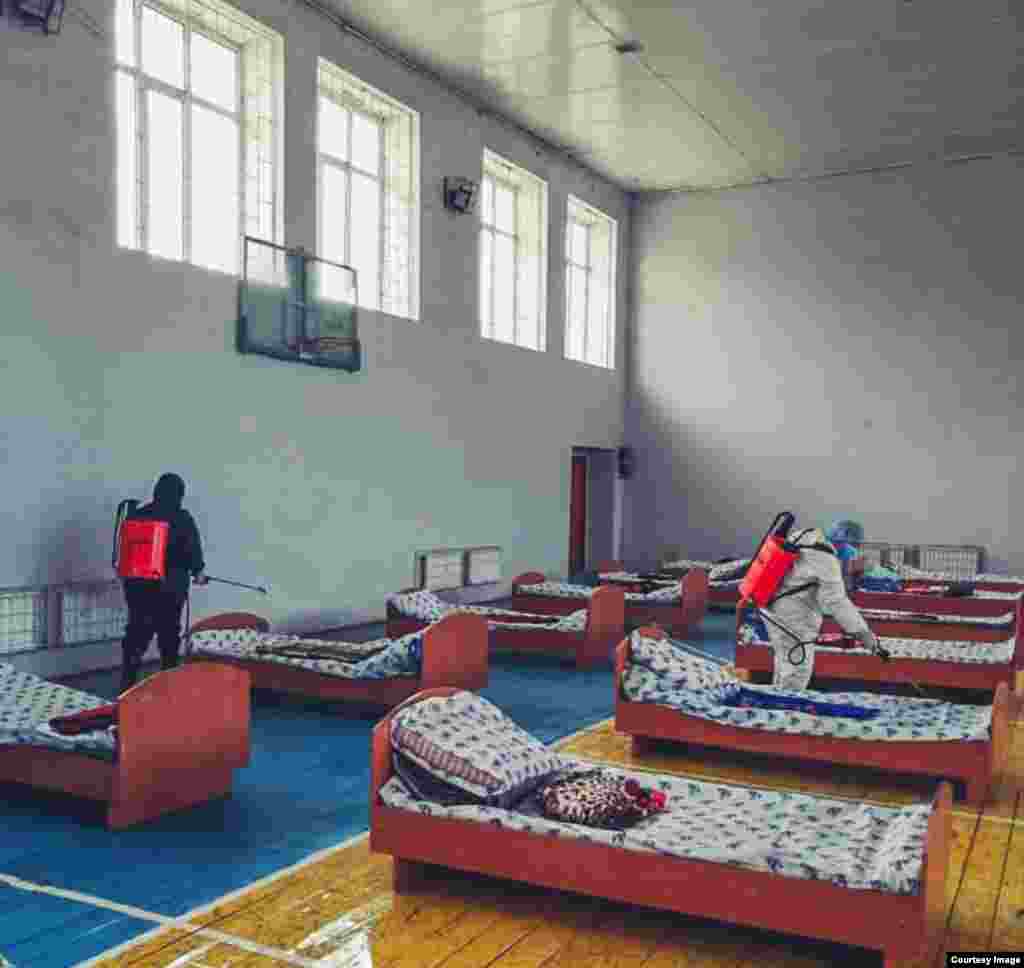
Workers set up a makeshift hospital in a Jalal-Abad gym on July 8. ​Health officials in the region say they<span>&nbsp;need 300 more oxygen concentrators.&nbsp;</span><span>Of the 372 concentrators currently available to Kyrgyz doctors, 23 are not working.</span>
5/18 Workers set up a makeshift hospital in a Jalal-Abad gym on July 8. ​Health officials in the region say they need 300 more oxygen concentrators. Of the 372 concentrators currently available to Kyrgyz doctors, 23 are not working.
Kyrgyzstan's government is opening makeshift hospitals in seven regions of the country to cope with a rising number of COVID-19 cases. 
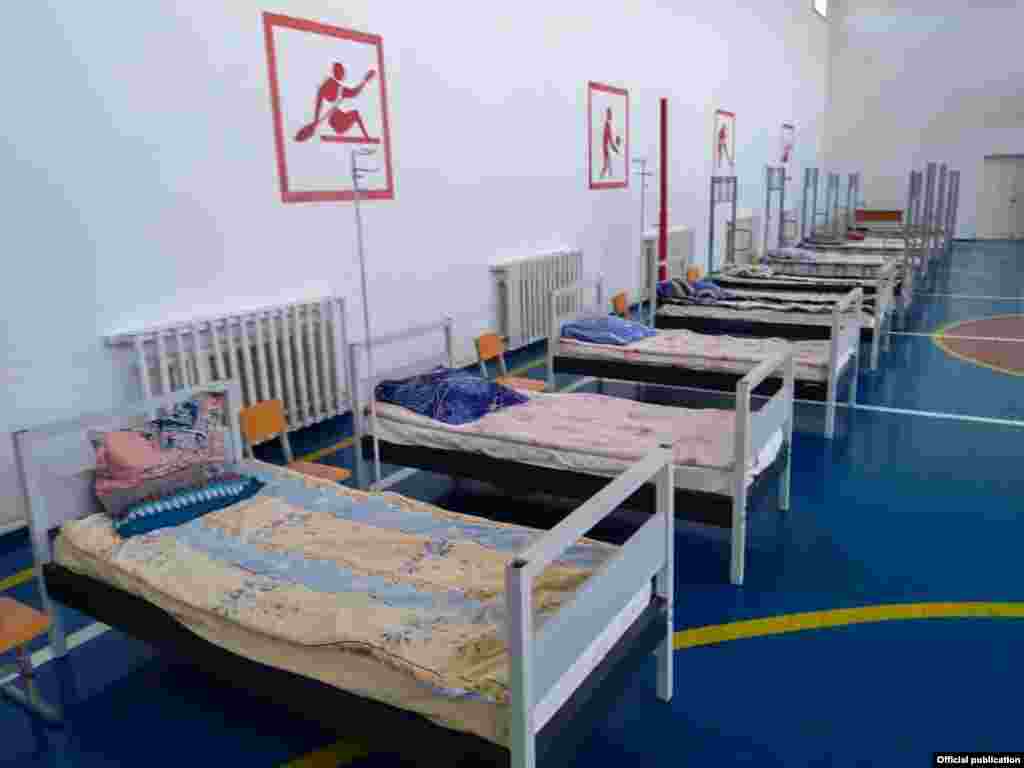
<span>More than 1,000 beds for COVID-19 patients are being prepared at a day hospital in Kyrgyzstan&#39;s Batken region. </span><span>Currently, beds are ready in the Kyzyl-Kiya and Leilek districts.&nbsp;</span>
6/18 More than 1,000 beds for COVID-19 patients are being prepared at a day hospital in Kyrgyzstan's Batken region. Currently, beds are ready in the Kyzyl-Kiya and Leilek districts. 
Kyrgyzstan's government is opening makeshift hospitals in seven regions of the country to cope with a rising number of COVID-19 cases. 
<p><span>Neighboring&nbsp;</span>Uzbekistan has donated <span><span>protective gear and lab&nbsp;equipment to help </span></span>Kyrgyzstan&#39;s Batken region​ deal with the rising number of<span><span>&nbsp;COVID-19 cases.</span></span></p>
7/18

Neighboring Uzbekistan has donated protective gear and lab equipment to help Kyrgyzstan's Batken region​ deal with the rising number of COVID-19 cases.

Kyrgyzstan's government is opening makeshift hospitals in seven regions of the country to cope with a rising number of COVID-19 cases. 
<span><span>Makeshift facilities will be used to provide medical care to infected patients if there is a shortage of hospital beds. Some&nbsp;1,790 temporary beds have been prepared in case the Batken region&#39;s 435 hospital beds fill up.</span></span>
8/18 Makeshift facilities will be used to provide medical care to infected patients if there is a shortage of hospital beds. Some 1,790 temporary beds have been prepared in case the Batken region's 435 hospital beds fill up.
Kyrgyzstan's government is opening makeshift hospitals in seven regions of the country to cope with a rising number of COVID-19 cases. 
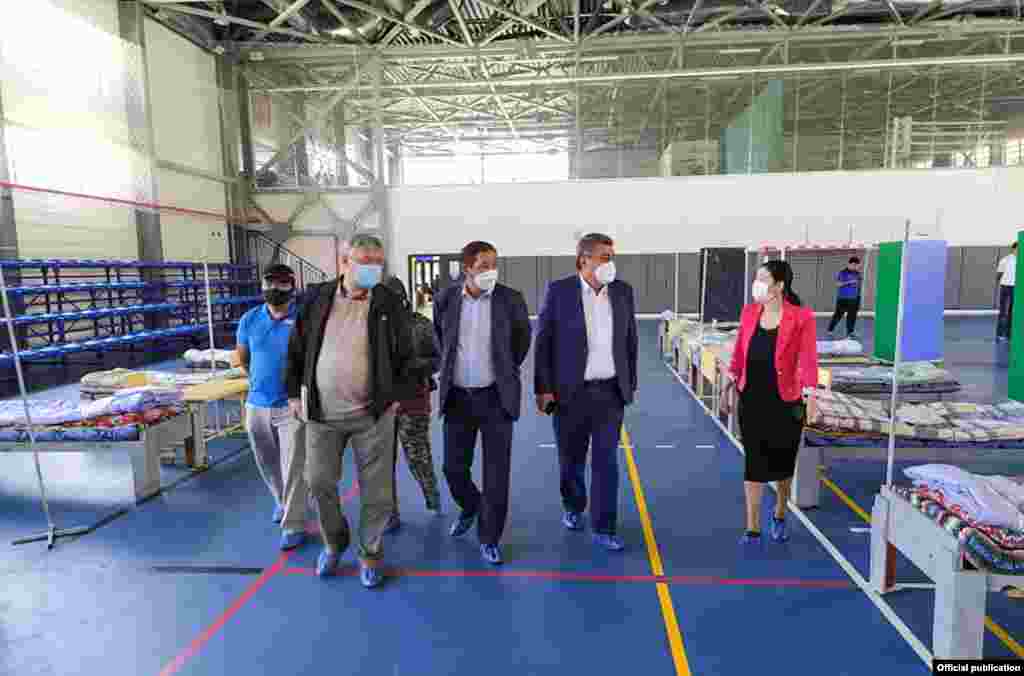
Government official&nbsp;Akylbek Osmonaliev (right) inspects makeshift hospitals in the Issyk-Kul region.
9/18 Government official Akylbek Osmonaliev (right) inspects makeshift hospitals in the Issyk-Kul region.
Kyrgyzstan's government is opening makeshift hospitals in seven regions of the country to cope with a rising number of COVID-19 cases. 
<span>More than 1,300 new beds have been set up in Issyk-Kul.</span>
10/18 More than 1,300 new beds have been set up in Issyk-Kul.
Kyrgyzstan's government is opening makeshift hospitals in seven regions of the country to cope with a rising number of COVID-19 cases. 
Personal protection equipment is being stockpiled for medical workers.
11/18 Personal protection equipment is being stockpiled for medical workers.
Kyrgyzstan's government is opening makeshift hospitals in seven regions of the country to cope with a rising number of COVID-19 cases. 
Medical personnel working in Issyk-Kul.
12/18 Medical personnel working in Issyk-Kul.
Kyrgyzstan's government is opening makeshift hospitals in seven regions of the country to cope with a rising number of COVID-19 cases. 
<span>A hospital in the eastern city of Karakol in the Issyk-Kul region on&nbsp;</span><span>July 9</span>
13/18 A hospital in the eastern city of Karakol in the Issyk-Kul region on July 9
Kyrgyzstan's government is opening makeshift hospitals in seven regions of the country to cope with a rising number of COVID-19 cases. 
A 829-bed day hospital has also been opened in Kyrgyzstan&#39;s Naryn region to deal with a rise in COVID-19 cases.
14/18 A 829-bed day hospital has also been opened in Kyrgyzstan's Naryn region to deal with a rise in COVID-19 cases.
Kyrgyzstan's government is opening makeshift hospitals in seven regions of the country to cope with a rising number of COVID-19 cases. 
There are also scores more beds available in other districts such as At-Bashy, Ak-Talaa Jumgal, Kochkor, and Naryn.
15/18 There are also scores more beds available in other districts such as At-Bashy, Ak-Talaa Jumgal, Kochkor, and Naryn.
Kyrgyzstan's government is opening makeshift hospitals in seven regions of the country to cope with a rising number of COVID-19 cases. 
<span>On July 9, 18 new coronavirus cases were recorded in the Naryn region bringing the&nbsp;</span><span>total number of people with infections there to 604.</span>
16/18 On July 9, 18 new coronavirus cases were recorded in the Naryn region bringing the total number of people with infections there to 604.
Kyrgyzstan's government is opening makeshift hospitals in seven regions of the country to cope with a rising number of COVID-19 cases. 
<span>Medical staff at a school in the Dordoy district of Kyrgyzstan&#39;s capital, Bishkek.&nbsp;</span>
17/18 Medical staff at a school in the Dordoy district of Kyrgyzstan's capital, Bishkek. 
Kyrgyzstan's government is opening makeshift hospitals in seven regions of the country to cope with a rising number of COVID-19 cases. 
A Bishkek school gym transformed into a makeshift hospital.
18/18 A Bishkek school gym transformed into a makeshift hospital.
Kyrgyzstan's government is opening makeshift hospitals in seven regions of the country to cope with a rising number of COVID-19 cases. 
Previous slide
Next slide


In its daily coronavirus update, the Health Ministry reports COVID-19 and pneumonia fatalities separately. At least 268 people have died from pneumonia in Kyrgyzstan since March.

Exhausted Medics, Overcrowded Hospitals

Local journalist Alena Khomenko shared a photo of what she described as frontline medical workers sleeping in an overcrowded room after their shifts at the Issyk-Kul provincial hospital in Kyrgyzstan’s north.

The photo, posted on July 7, shows three single beds occupied by two people each.

“There are eight to 10 people in each room…. Our doctors spend days and nights on duty, wearing uncomfortable clothes and masks. Now they don’t even have a normal place to get some rest,” the journalist wrote.

Hospital Director Toktobai Maanaev said “it was just a joke” and that the doctors who treat COVID-19 patients there “are not experiencing a lack of space.”

But patients, relatives, activists, and others say that many medical facilities in Issyk-Kul and elsewhere in Kyrgyzstan are running out of beds both for patients and staff.

Azamat Aitbaev, a member of the Karakol city council in Issyk Kul Province, tweeted that “all hospitals in Karakol are full and aren’t taking new patients.”

“They have written a list of medicine and are telling the patients to treat themselves at home,” she wrote. “I spoke with doctors and they said there is also a shortage of medics. They rest two or three hours and are back on their feet again.”

“The situation is the same in hospitals in the [nearby town of] Balykchy,” tweeted local activist Dinara Oshurakhunova. “Medics are getting ill, not enough medicine, not enough protective gear.”

An Issyk-Kul city resident told RFE/RL that her father died recently from COVID-19-like symptoms at the provincial hospital.

“My father told me over the phone that there was only one ventilator at the internal diseases department. It wasn’t enough for so many patients who needed oxygen. And that ventilator didn’t work properly,” said the woman, who asked not to be named.

“Because of the shortage of beds, sometimes the hospital would place both male and female patients in the same room,” she said on July 7.

In the southwestern province of Jalal-Abad, health officials say that all intensive-care beds at the main regional hospital are currently occupied.

In southern Osh Province, several doctors at the Kurshab village hospital recorded a video message to say medics are in a dire need of personal protective equipment (PPE) and medication:


Businesses Closing

President Sooronbai Jeenbekov ordered his government to take urgent measures to provide medics as well as the entire health system with wide-ranging support and supplies in the fight against the coronavirus.

Regional health officials are creating new, makeshift treatment facilities, some of them by renting buildings from sanatoriums and recreational centers, including sports arenas and even the former U.S. military base, Ganci, outside of Bishkek.

Some politicians and doctors are urging ordinary people to take the risk of the coronavirus seriously and follow rules -- such as wearing masks, washing hands, and social distancing -- to protect themselves and others from the virus.

The majority of the coronavirus cases so far have been recorded in Bishkek, followed by the nearby Chui Province.

The country, however, is gearing up for a possible rise of infections in other regions, where the rates still remain relatively low.

“We try to contain the virus, but we must be prepared for the situation to get worse,” Prime Minister Kubatbek Boronov warned in early July as the country began to see new cases go beyond the record of 500 for a single day.

Despite the growing infections in the country and the overload on hospitals, staff, and medical equipment, the government has said in recent days that it’s not considering a new nationwide lockdown.

Boronov said a strict lockdown -- as the country imposed previously for several weeks -- would severely hurt the economy of Kyrgyzstan, one of the poorest in Central Asia.

“Reimposing restrictions that bring to a halt most sectors of the economy would have a negative impact on these sectors and the lives of our citizens,” Boronov said on July 6.

But some businesses in Bishkek have decided to close their doors and shutter operations, citing the health risks.

The capital’s huge Asia Mall and the Technopark trade center, as well as the RIOM car market, announced on July 8 they were closing until the situation improves.

The Aychurek shopping center said it was closing temporarily starting on July 9, while the Dordoi Plaza trade center announced the closure of business from July 8-19.

As of July 10, southern Batken Province will ban public transport vehicles and the private taxi services that connect the remote Batken region to other parts of the country.

In Osh, religious authorities have recommended suspending Friday Prayers in mosques.

  • 16x9 Image

    Farangis Najibullah

    Farangis Najibullah is a senior correspondent for RFE/RL who has reported on a wide range of topics from Central Asia, including the impact of Russia’s invasion of Ukraine on the region. She has extensively covered efforts by Central Asian states to repatriate and reintegrate their citizens who joined Islamic State in Syria and Iraq.

  • 16x9 Image

    RFE/RL's Kyrgyz Service

    RFE/RL's Kyrgyz Service is an award-winning, multimedia source of independent news and informed debate, covering major stories and underreported topics, including women, minority rights, high-level corruption, and religious radicalism.

This item is part of
XS
SM
MD
LG