



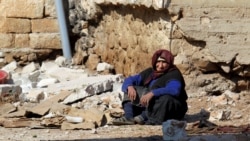
One person has been killed and several others wounded at the explosion at a metro station in Istanbul, Turkey. There appears to be some uncertainty about the cause of the blast.
OnlineTambov, a Russian news site, has published photographs from Aviators Square in Lipetsk, where locals and a delegation from the neighboring Tambov Oblast gathered today to pay their respects to Oleg Peshkov, the Russian pilot shot dead by rebels after Turkey downed his Su-24 jet near the Syrian border last week.
Peshkov is to be buried in Lipetsk tomorrow. He is being hailed as a hero in Russia and has been posthumously awarded the Hero of the Russian Federation medal, the highest honorary title in Russia.
The explosion at an Istanbul metro station appears to have been caused by a power transformer, local media say.
There are reports of an explosion and casualties at a metro station in Istanbul.
CNN has tweeted a video of Defense Secretary Carter's announcement that the United States is to deploy a "specialized expeditionary targeting force" to pressurize IS.
U.S. Deploying Special Ops Force To Conduct Raids In Iraq, Syria
U.S. Defense Secretary Ash Carter has said that the Pentagon is deploying a special operations force that will "over time" conduct raids in Iraq and Syria "to put even more pressure" on IS in Iraq and Syria, The Hill reports.
"These special operators will over time be able to conduct raids, free hostages, gather intelligence, and capture [IS] leaders," Carter told the House Armed Services Committee.
The force would "also be in a position to conduct unilateral operations in Syria," Carter added.
Carter said that in Iraq, the force would carry out operations at the invitation of the Iraqi government.
This just in from Reuters.
70,000 "Moderate" Rebels -- Myth Or Reality?
Are there really 70,000 "moderate" Syrian rebels, Michael Stephens of the Royal United Services Institute (RUSI) asks ahead of a Parliamentary vote in the UK over whether Britain should extend its anti-IS air strikes to Syria.
The figure of 70,000 has been cited as the number of fighters who do not belong to extremist groups and who are committed to fighting Syrian President Bashar al-Assad.
But can we consider all these rebels as "moderate"? Well, that really depends what you mean by "moderate."
Stephens notes that:
But while it may be possible to identify 65,000-75,000 personnel in brigades that fight both Assad and IS, the problem is that these groups of fighters, particularly in the north of the country, are not powerful enough to take on al-Qaeda or IS by themselves, or in many cases break their current alliances/ceasefires with them.
For example, Jaysh al-Fatah -- a coalition of seven different groups operating around the northern cities of Aleppo, Idlib and Hama -- is comprised of Salafist jihadists from the al-Qaeda-affiliated al-Nusra Front, and the equally unpalatable Ahrar al-Sham and Jund al-Aqsa.
Yet two other groupings in the alliance, Ajnad al-Sham and Faylaq al-Sham, display little such sentiments.
The problem is that numerically within Jaysh al-Fatah the more moderate groups do not stand a chance against the hardliners.
Mashable's Christopher Miller makes a point about Russia's list of banned imports from Turkey.
(The Russian word for turkey is indeyka, however, relating to India rather than to Turkey.)