

Here's a news item by Reuters on how David Cameron said he could have handled the Panama Papers fallout a bit better:
Cameron Says He Mishandled 'Panama Papers' Tax Scrutiny
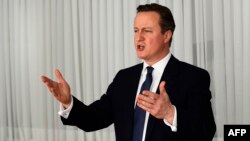
LONDON, April 9 (Reuters) - British Prime Minister David Cameron said on Saturday he should have handled scrutiny of his family's tax arrangements better and promised to learn the lessons after days of negative media coverage and calls for his resignation.
After four days and four different statements over his late father's inclusion in the "Panama Papers", Cameron said on Thursday he once had a stake in his father's offshore trust and had profited from it, spurring calls for the leader to resign.
"Well, it's not been a great week," Cameron said on Saturday, speaking in London at a meeting of members of his Conservative Party. "I know that I should have handled this better, I could have handled this better. I know there are lessons to learn and I will learn them." (Reporting by William James and Paul Sandle; editing by Mark Heinrich)
And here's Ben Fox and Kenneth Silva from the Associated Press taking a look at the Panama Papers scandal from another angle:
Tiny British Virgin Islands Has Big Role In Leaked Documents
TORTOLA, British Virgin Islands (AP) — A thriving financial services industry that evolved over the last 30 years in the British Virgin Islands made it one of the most popular places in the world to form a corporation, turning a sleepy cluster of Caribbean islands into a global hub of finance.
Now the British Virgin Islands has come under scrutiny like never before thanks to the leak of confidential documents from a Panama-based law firm that specializes in offshore finance.
More than half the 200,000 offshore companies set up by the Mossack Fonseca law firm, including ones owned by the father of British Prime Minister David Cameron and relatives of Chinese leader Xi Jinping, were registered in the BVI, according to reports coordinated by the International Consortium of Investigative Journalists.
BVI officials have sought in recent days to address the reports while defending financial oversight in a territory where incorporated entities outnumber residents by a ratio of more than 10-to-1 and blue-suited lawyers and bankers on the streets of Tortola often outnumber tourists.
"If you see articles that say jurisdictions like the BVI are facilitators of illegitimate activity, that is incorrect," Financial Secretary Neil Smith said Friday. "Yes, it occurs, but it also occurs in jurisdictions that are not seen as offshore financial centers."
The British Virgin Islands, an overseas British territory of about 30,000 people near Puerto Rico, is the world's leading center for company incorporation, according to the Tax Justice Network. More than 1 million enterprises have been incorporated since 1984. There were 450,000 active ones at the end of last year, according to the Financial Services Commission.
The problem, as critics of offshore financial secrecy see it, is that the BVI and other jurisdictions enable the hiding of the true owners of companies in ways that allow corruption and criminality to flourish. "We're not saying that shell companies or tax shelters need to be done away with, we're saying that more of this needs to be out in the open," said Mark Hays, a senior adviser with Global Witness.
The Tax Justice Network says the BVI has a "lax, flexible, ask-no-questions, see-no-evil company incorporation," system. "The BVI has long been linked to wave after wave of scandals," the organization said in a report that ranked the BVI at number 21 on its financial secrecy index. The U.S. was No. 3 and Switzerland No. 1.
But the Tax Justice Network also notes that the British Virgin Islands has made significant improvements.
Read the entire article here