



Gizmodo looks at how Mossack Fonseca might have been hacked.
For a company good at hiding money, Mossack was apparently terrible at hiding data. Wordfence says Mossack’s emails were stored on the very same server that could be easily accessed through the Revolution Slider exploit—after uploading a short script to Mossack, the emails were there for the taking. It would be like keeping all your money in a single checking account and having your PIN be 1-2-3-4. Wordfence also claims that, until very recently, there was no firewall protecting Mossack’s site, a security measure that might have been able to stop or at least limit the amount of data that was leaked.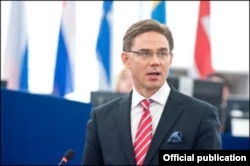
European Commission Vice President Jyrki Katainen says tax avoidance is "a cancer of market economies."
ICYMI, this commentary by Guardian economics journalist Aditya Chakrabortty from April 10 is getting a lot of social-media attention today.
But the risk is that all this will descend into a morass of semi-titillating detail: a string of revelations about who gave what to whom, and whether he or she then declared it to the Revenue. The story will become about “handling” and “narrative” and individual culpability. That will be entertaining for those who like to point fingers, perplexing for those too busy to engage in the detail – and miss the wider truth revealed by the leak which forced all this into public discussion.
Because at root, the Panama Papers are not about tax. They’re not even about money. What the Panama Papers really depict is the corruption of our democracy.
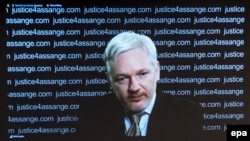
Al-Jazeera talks about how the Panama Papers leak is being covered, including comment from WikiLeaks's Julian Assange.
Here's a very interesting blast from the past, a 2015 piece in The Atlantic on the aggressive secrecy of the wealth-management world...
I was lucky that he merely threatened me. A journalist from Newsweek actually wasdeported from a different tax-haven island (Jersey) for her reporting there, and was banned from re-entering the island, or any part of the U.K., for nearly two years. Even though her story was unrelated to the financial-services industry, it was expected to bring negative publicity to the island, threatening its reputation as a place to do business. The message was therefore quashed by banishment of the messenger. The wealth-management industry does not mess around.
Wealth management is a profession on the defensive. Although many people have never heard of it, it is well known to both state revenue authorities and international agencies seeking to impose the rule of law on high-net-worth individuals. Those individuals—including the 103,000 people classified as “ultra-high-net-worth” based on having $30 million or more in investable assets—pay wealth-management professionals hefty fees to help them avoid taxes, debts, legal judgments, and other obligations the rest of the world considers part of everyday life. The general public doesn’t hear much about these professionals, since there are only a few of them worldwide (just under 20,000 belong to the main professional society) and they strive to keep a low profile, both for themselves and their clients.
Mossack Fonseca apparently routinely "borrowed" the name of the International Red Cross in its financial manipulations.
Mossack Fonseca didn't immediately return an email seeking comment, but a leaked email cited by the publications appeared to lay out the firm's reasoning.
"Given that banks and financial institutions are today asked to obtain information about economic beneficiaries, it has become difficult for us not to divulge the identity of those of the Faith Foundation's," the email said, according to the papers. "That's why we've implemented this structure designating the 'International Red Cross.' It's easier that way."
Another email cited by the papers suggests Mossack Fonseca deliberately kept the Red Cross in the dark about the maneuver.
"According to Panama law, the beneficiaries of a foundation can be used without knowing it," the email said, according to the papers. "That means the International Red Cross doesn't know about this arrangement."
Forbes thinks about how China might respond to the Panama Papers:
That response shows that the Panama Papers will change China in just one plain way: Communist leaders will pick up their politically reliable tune that foreigners are out to get them, and to amplify it they may strike back at someone with economic weaponry.
And
China blames Western media for making the Panama Papers a sensation. Some 300 journalists were involved in investigating the documents, says an April 5 commentary by China’s Global Times online (it avoids mentioning what the papers say about Chinese leaders). The report ropes China’s perennial favorite blame target the United States, as well. “The Western media has taken control of the interpretation each time there has been such a document dump, andWashington has demonstrated particular influence in it. Information that is negative to the U.S. can always be minimized, while exposure of non-Western leaders…can get extra spin,” the commentary says. Watch for Beijing to make it harder than it already is for Western journalists to operate in China.
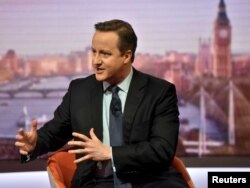
Reuters reports that British Prime Minister David Cameron says his government will accelerate its planned tax-avoidance legislation.
"This government has done more than any other to take action against corruption in all its forms, but we will go further," Cameron will tell parliament, according to advance excerpts of his statement circulated by his Downing Street office.
"That is why we will legislate this year to hold companies who fail to stop their employees facilitating tax evasion criminally liable."
The plan was announced by finance minister George Osborne in March 2015, but previously the commitment was to introduce the legislation by 2020, Downing Street said.
Economist Mohamed El-Erian argues that the Panama Papers leak will make centrist government much more difficult.
The Panama Papers are yet another blow to the political establishment. They amplify popular resentment toward governments that already are perceived by a significant segment of the population as turning a blind eye to tax-dodging. That anger is stoked by disclosures that some high-ranking officials also availed themselves of the shelters. And though no laws were broken in most cases, the documents will feed the perception that the privileged are allowed to play by different rules.
Indeed, for many, the Panama Papers are reminiscent of a broader phenomenon that played out in the run-up and the aftermath of the 2008 global financial crisis: The perception of a system run and managed by a political establishment that serves the rich and connected and fails to hold these elites accountable for the damage they cause to the rest of society. There is still notable residual resentment that very few bankers were brought to justice for their role in a financial debacle that caused significant misery and almost tipped the world into a devastating multiyear depression.