



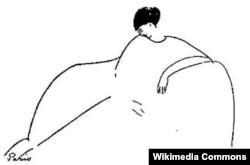
The New York Times today continues the topic of what the Panama Papers tell us about how the fine-art market works.
The International Consortium of Investigative Journalists, citing the documents, reported last week that the Russian billionaire collector Dmitry E. Rybolovlev used an offshore holding entity, created by Mossack Fonseca, to move his collection out of his wife’s reach during divorce proceedings.
Mr. Rybolovlev’s lawyers denied that the divorce had anything to do with his decision to transfer ownership of his art to the entity, Xitrans Finance Ltd., which he had established in the British Virgin Islands in 2002.
Mr. Rybolovlev’s wife, Elena, filed for divorce in 2008. According to the article, during the legal battle that ensued, correspondence sent to Mossack Fonseca stated that Mr. Rybolovlev used Xitrans to move his collection out of Switzerland to Singapore and London.
In a statement last week, the Rybolovlev family trust’s lawyer said the offshore arrangements “were set up completely legitimately for the purposes of asset protection and estate planning” and had been publicly disclosed in numerous publications worldwide.
Mr. Rybolovlev has spent more than $2 billion on museum-quality works byLeonardo da Vinci and other masters. He bought them with the help of Yves Bouvier, a Swiss art dealer and businessman who runs a storage facility at the Geneva Freeport, a warehouse complex. Mr. Rybolovlev has accused Mr. Bouvier of defrauding him in the purchases, a charge that Mr. Bouvier has denied.
The European Parliament plans to spend its afternoon session on April 12 discussing the Panama Papers. Here is a link to live TV coverage.
The European Union on April 12 is expected to announce new rules under which large corporations will have to disclose how much tax they pay in which EU countries and any activities in listed tax havens.
Lord Hill, the EU's financial services commissioner, said: "This is a carefully thought through but ambitious proposal for more transparency on tax.
"While our proposal on [country-by-country reporting] is not of course focused principally on the response to the Panama Papers, there is an important connection between our continuing work on tax transparency and tax havens that we are building into the proposal."
Country-by-country reporting rules already apply to banks, mining and forestry companies, according to an EU spokesperson.
Spain's acting industry minister says he does not know why his name appears in the Panama Papers and denies being an owner of a Panama-based shell company.
At a press conference Monday in Lanzarote, Soria said he never had any relationship with any companies in Panama, and refused to appear in Congress, citing the acting government’s position that it is not beholden to congressional oversight.
Soria said he has no idea why his name shows up on the list of directors of a company incorporated in the Bahamas in 1995.
This piece of information is part of a trove of 11.5 million documents from a Panama-based law firm that were leaked to the media. Other Spaniards whose names have cropped up in the Panama Papers include the filmmaker brothers Pedro and Agustín Almodóvarand an aunt of King Felipe VI’s.
Politico has doubts that the Panama Papers revelations will lead to concerted international action on tax evasion.
Supporters of tax reforms, including the European Commission and the U.S. government, hope the biggest offshore data leak in history will give new impetus to long-running efforts to bring order to the messy, secretive and competitive world of tax.
Others are not so sure. The reason is simple: Although any politician who promises to fight against tax evasion is on to a sure-fire vote-winner, national governments have shown a stubborn reluctance to share information, co-ordinate their moves and, least of all, harmonize tax regimes.
As if to underline those problems, Panama — the home of Mossack Fonseca, the law firm whose files were leaked — was never a signatory to voluntary tax agreements mandating transparency and due diligence. Those rules are set by the Financial Action Task Force (FATF), which has been trying to foster co-operation among governments ever since its founding in 1989.It turns out that for a plurality of respondents in this poll, the Panama Papers has not harmed their image of politicians:
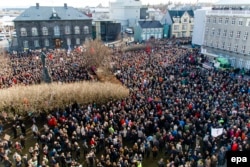
Iceland Finance Minister Bjarni Benediktsson says he will not resign over Panama Papers revelations that he had a stake in an offshore firm between 2005 and 2010. Last week, Prime Minister David Gunnlaugsson resigned over revelations about him.
Iceland's Finance Minister Bjarni Benediktsson said on Tuesday he would not resign over the Panama Papers leaks, which showed he was once had a stake in an offshore investment firm in the Seychelles.
Asked by reporters in London whether he would quit, Benediktsson answered: "No".
Drew Sullivan of the Organized Crime and Corruption Reporting Project (OCCRP), which is one of the lead organizations on the Panama Papers stories, writes for Foreign Policy magazine that despite great successes, organizations like his "face an existential threat."
But many organizations like ours face an existential threat — a toxic brew of stagnant economies, politically oriented advertising dollars, hostile governments and laws, and other problems. And that’s before getting to the fundamental problem: investigative reporting has never been a profitable business and has always relied on some big brother media to support it.
In many developing countries, media outlets that do investigative journalism survive only with the help of Western governments, the Open Society Foundations, a few other non-profit foundations, and little else. Even then, of all the development money spent abroad, journalism accounts for just 1 percent. And of that, investigative reporting receives only 2 to 3 percent, according to numbers from the Center for Independent Media Assistance.
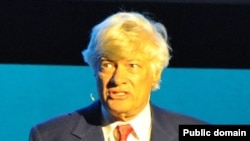
U.K. human rights lawyer Geoffrey Robertson spoke with RFE/RL after the Panama Papers scandal broke. Among the things he said:
"[The] message of the Panama Papers is that governments have been slow and they are being defeated by clever lawyers and accountants and they need to act to have more forceful and onerous laws against tax avoidance."