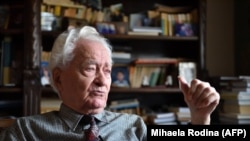
Romanian engineer Eugeniu Iordachescu (file photo)
A Romanian engineer who saved 12 historic churches and other buildings from destruction under the reign of communist dictator Nicolae Ceausescu has died at the age of 89.
The website of the Romanian Orthodox Church, Basilica.ro, reported on January 6 that Eugeniu Iordachescu died on January 4. No other details were reported.
Between 1982 and 1988, the Ceausescu regime carried out a massive reconstruction and modernization of the capital, Bucharest, following the dictator's visit to North Korea. More than 40,000 buildings were demolished in the process.
The Man Who Saved Romanian Churches From Destruction
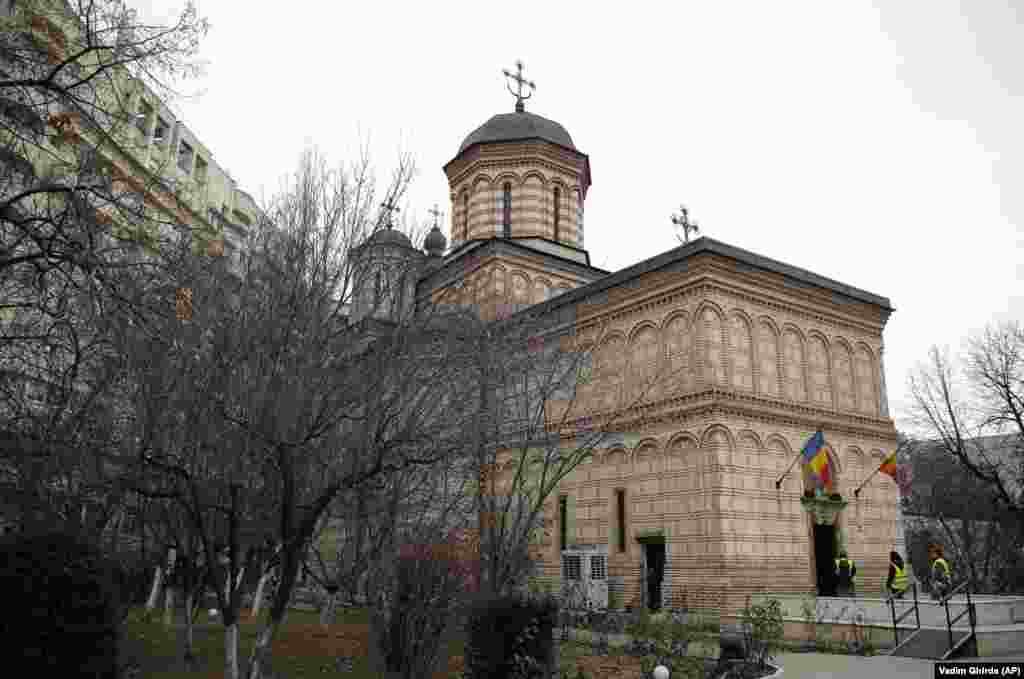
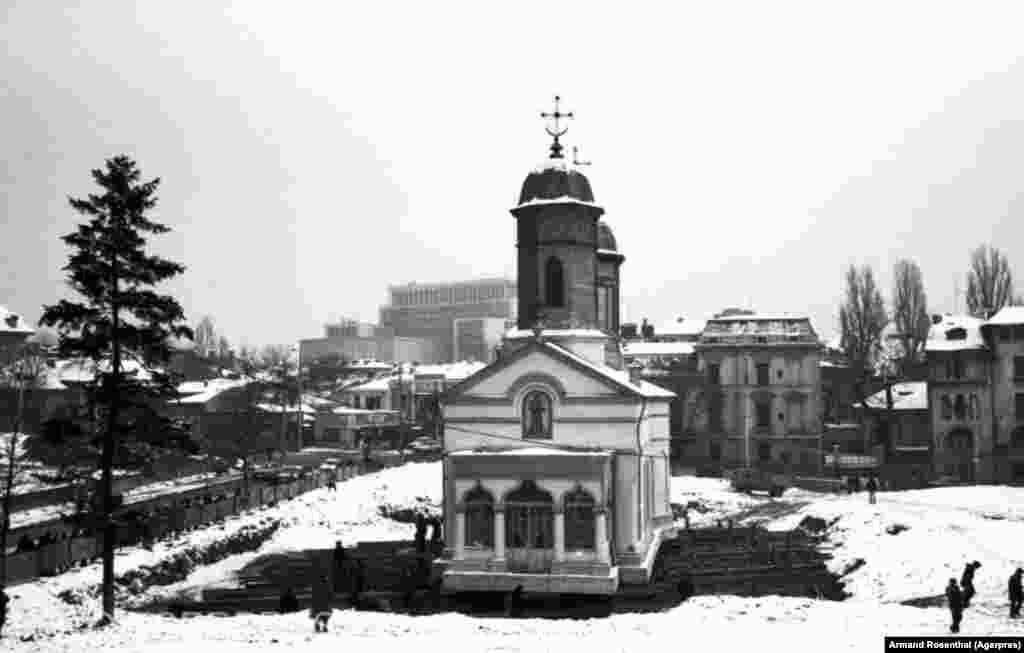
1/15Eugeniu Iordachescu developed a unique system to place entire buildings on a structure similar to railroad tracks in order to move them away from areas slated for reconstruction. In 1985, the 16th-century Mihai Voda Orthodox Church was moved in tandem with its stand-alone tower.
He was called "the engineer of heaven" for saving a dozen churches from destruction during communist rule in Romania. Civil engineer Eugeniu Iordachescu died on January 4, but he left a lasting legacy on the Bucharest skyline.
Show moreShow less
2/15Weighing 9,000 tons, the Mihai Voda Orthodox Church was the biggest building that Eugeniu Iordachescu moved. The rail system he developed in Bucharest was similar to one used by Czechoslovak engineers to move the Church of the Assumption of the Virgin Mary in the city Most in 1975.
He was called "the engineer of heaven" for saving a dozen churches from destruction during communist rule in Romania. Civil engineer Eugeniu Iordachescu died on January 4, but he left a lasting legacy on the Bucharest skyline.
Show moreShow less
3/15Mihai Voda Orthodox Church in its new location in Bucharest. Romanians paid homage to Iordachescu at the church on January 6, two days after he died from a heart attack.
He was called "the engineer of heaven" for saving a dozen churches from destruction during communist rule in Romania. Civil engineer Eugeniu Iordachescu died on January 4, but he left a lasting legacy on the Bucharest skyline.
Show moreShow less
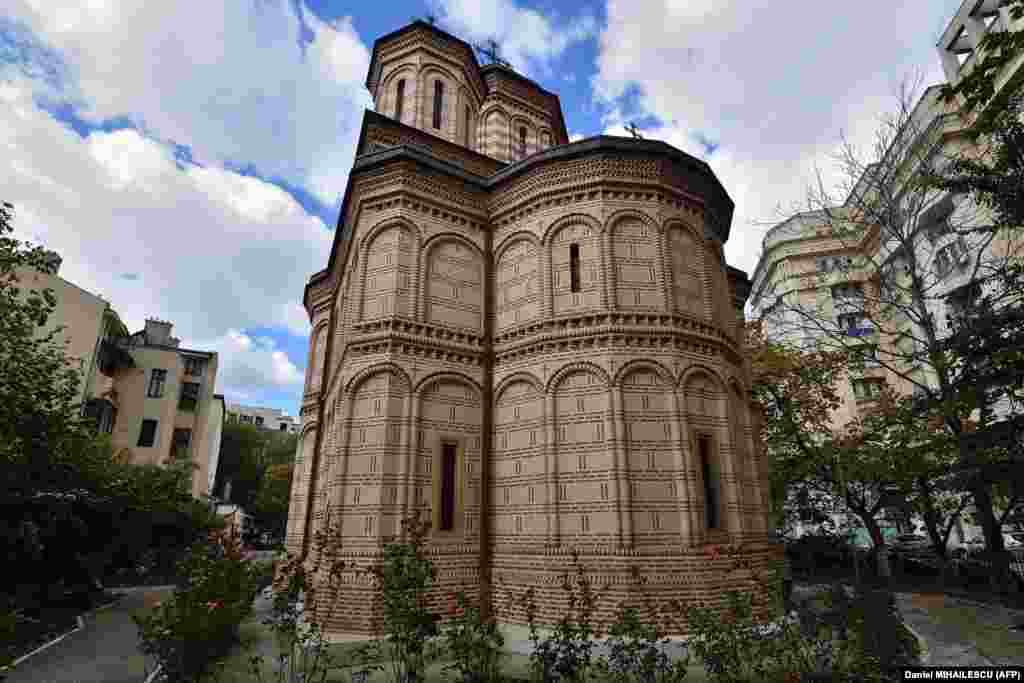
4/15The Mihai Voda Orthodox Church was built in 1594 by Prince Michael the Brave and also served as a monastery. It was moved 289 meters from its original location.
He was called "the engineer of heaven" for saving a dozen churches from destruction during communist rule in Romania. Civil engineer Eugeniu Iordachescu died on January 4, but he left a lasting legacy on the Bucharest skyline.
Show moreShow less
5/15The 18th-century Schitul Maicilor was the first church to be moved by Iordachescu in Bucharest in 1982. Weighing 745 tons, its name means Nuns’ Convent, and it was relocated 245 meters away from its original site.
He was called "the engineer of heaven" for saving a dozen churches from destruction during communist rule in Romania. Civil engineer Eugeniu Iordachescu died on January 4, but he left a lasting legacy on the Bucharest skyline.
Show moreShow less
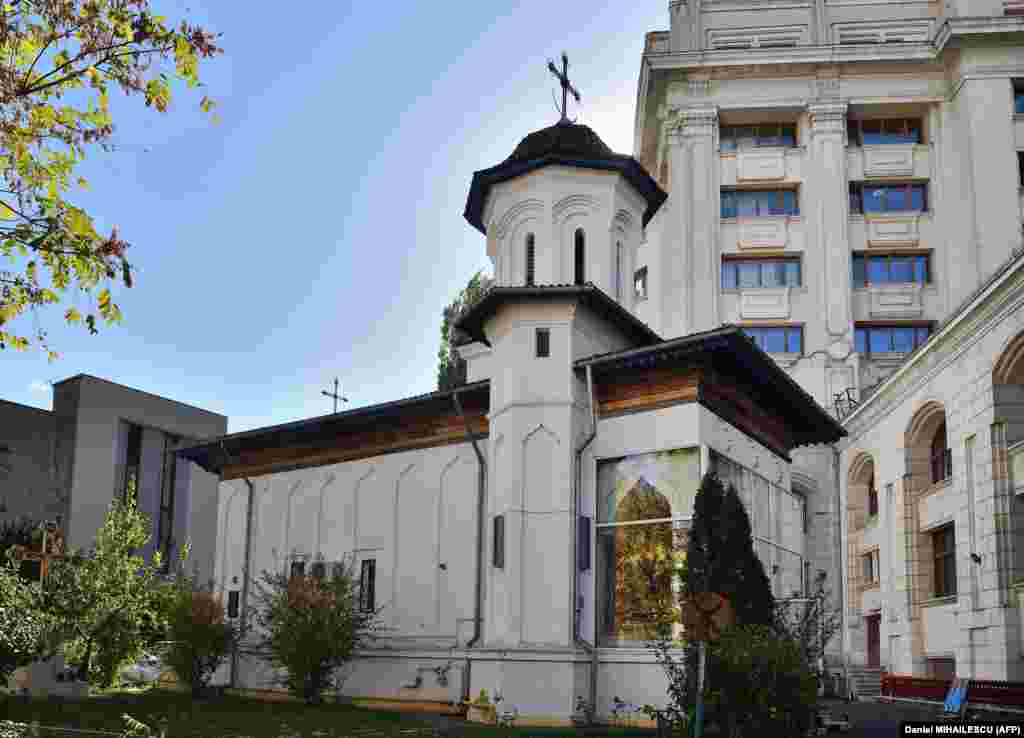
6/15Schitul Maicilor Church in Bucharest on October 30, 2017.
He was called "the engineer of heaven" for saving a dozen churches from destruction during communist rule in Romania. Civil engineer Eugeniu Iordachescu died on January 4, but he left a lasting legacy on the Bucharest skyline.
Show moreShow less
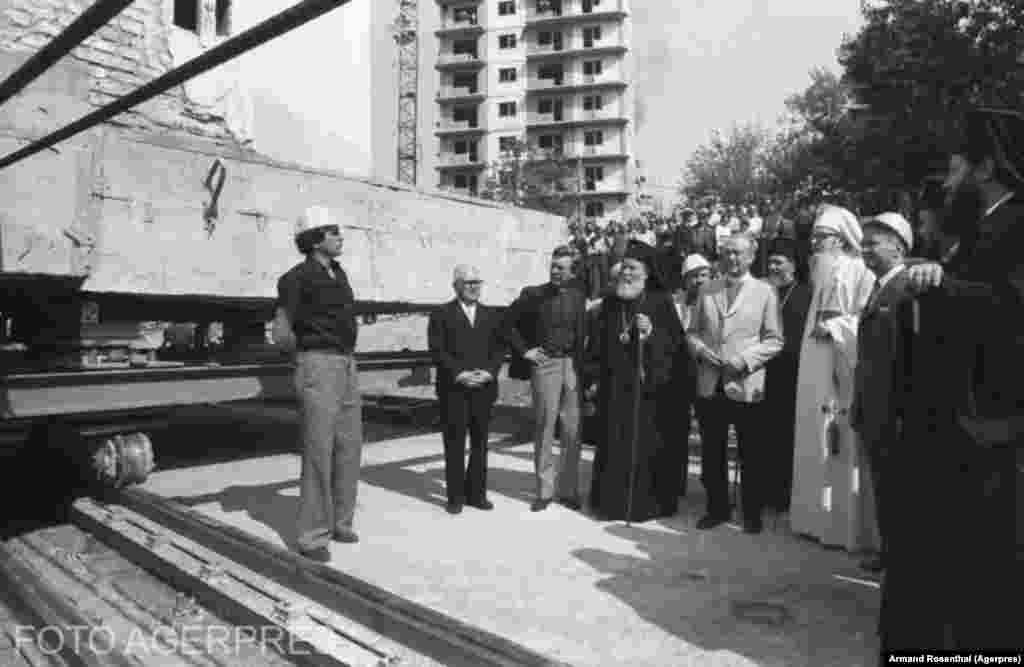
7/15Eugeniu Iordachescu and religious leaders supervising the relocation of Olari Orthodox Church in 1982.
He was called "the engineer of heaven" for saving a dozen churches from destruction during communist rule in Romania. Civil engineer Eugeniu Iordachescu died on January 4, but he left a lasting legacy on the Bucharest skyline.
Show moreShow less
8/15Olari Orthodox Church was saved in Bucharest, but 24 other churches were bulldozed by communist authorities in the Romanian capital.
He was called "the engineer of heaven" for saving a dozen churches from destruction during communist rule in Romania. Civil engineer Eugeniu Iordachescu died on January 4, but he left a lasting legacy on the Bucharest skyline.
Show moreShow less
9/15A man walks past Olari Orthodox Church on January 6, 2019.
He was called "the engineer of heaven" for saving a dozen churches from destruction during communist rule in Romania. Civil engineer Eugeniu Iordachescu died on January 4, but he left a lasting legacy on the Bucharest skyline.
Show moreShow less
10/15Eugeniu Iordachescu (right) looks over plans to move St. Stefan's Church in 1988.
He was called "the engineer of heaven" for saving a dozen churches from destruction during communist rule in Romania. Civil engineer Eugeniu Iordachescu died on January 4, but he left a lasting legacy on the Bucharest skyline.
Show moreShow less
11/15Also known at the Stork's Nest, St. Stephen's Church on its tracks.
He was called "the engineer of heaven" for saving a dozen churches from destruction during communist rule in Romania. Civil engineer Eugeniu Iordachescu died on January 4, but he left a lasting legacy on the Bucharest skyline.
He was called "the engineer of heaven" for saving a dozen churches from destruction during communist rule in Romania. Civil engineer Eugeniu Iordachescu died on January 4, but he left a lasting legacy on the Bucharest skyline.
Show moreShow less
13/15St. Stephen's Church was saved from communist leader Nicolae Ceausescu's urban redesign known as "systemization." The church was moved to make way for Soviet-style apartment buildings and the sprawling House of the People, which today serves as Romania's parliament.
He was called "the engineer of heaven" for saving a dozen churches from destruction during communist rule in Romania. Civil engineer Eugeniu Iordachescu died on January 4, but he left a lasting legacy on the Bucharest skyline.
Show moreShow less
14/15St. John the New Orthodox Church in Bucharest on the move in 1986.
He was called "the engineer of heaven" for saving a dozen churches from destruction during communist rule in Romania. Civil engineer Eugeniu Iordachescu died on January 4, but he left a lasting legacy on the Bucharest skyline.
Show moreShow less
15/15St. John the New Orthodox Church in Bucharest on October 30, 2017, nestled between modern buildings.
He was called "the engineer of heaven" for saving a dozen churches from destruction during communist rule in Romania. Civil engineer Eugeniu Iordachescu died on January 4, but he left a lasting legacy on the Bucharest skyline.
Show moreShow less
Previous slide
Next slide
Iordachescu developed a unique system to place entire buildings on a structure similar to railroad tracks in order to move them away from areas slated for reconstruction.
In 2016, the Romanian Orthodox Church awarded him the Patriarchal Cross, the church's highest honor for laypeople.
He was given the sobriquet "the engineer of heaven."
Based on reporting by AP, Descopera.ro, and Libertatea