Accessibility links

Breaking News

News

Russian Government Orders Media Outlets To Delete Stories Referring To 'Invasion' Or 'Assault' On Ukraine

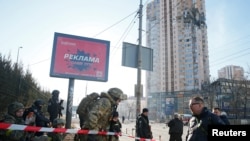
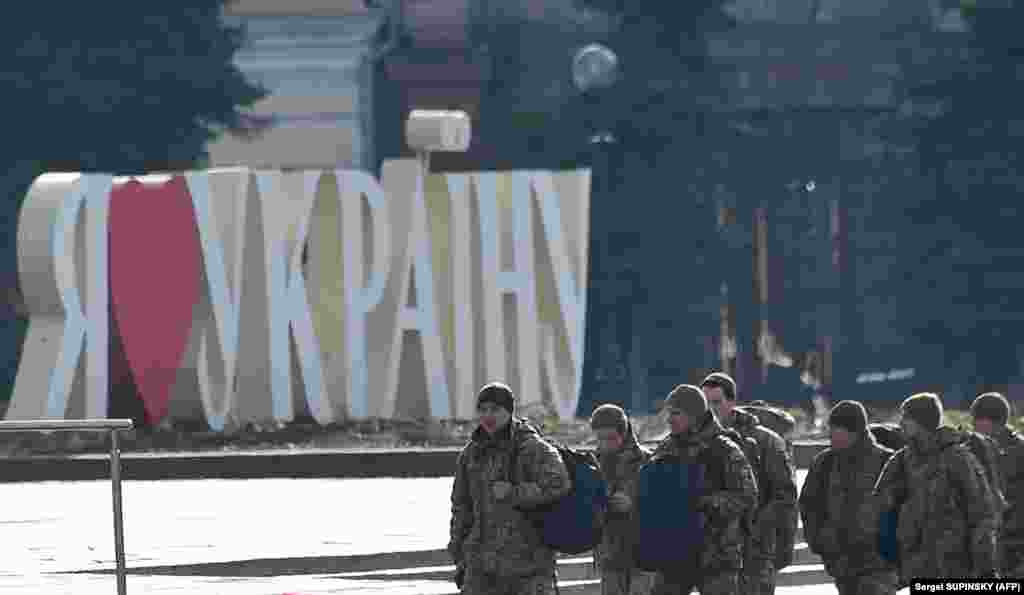
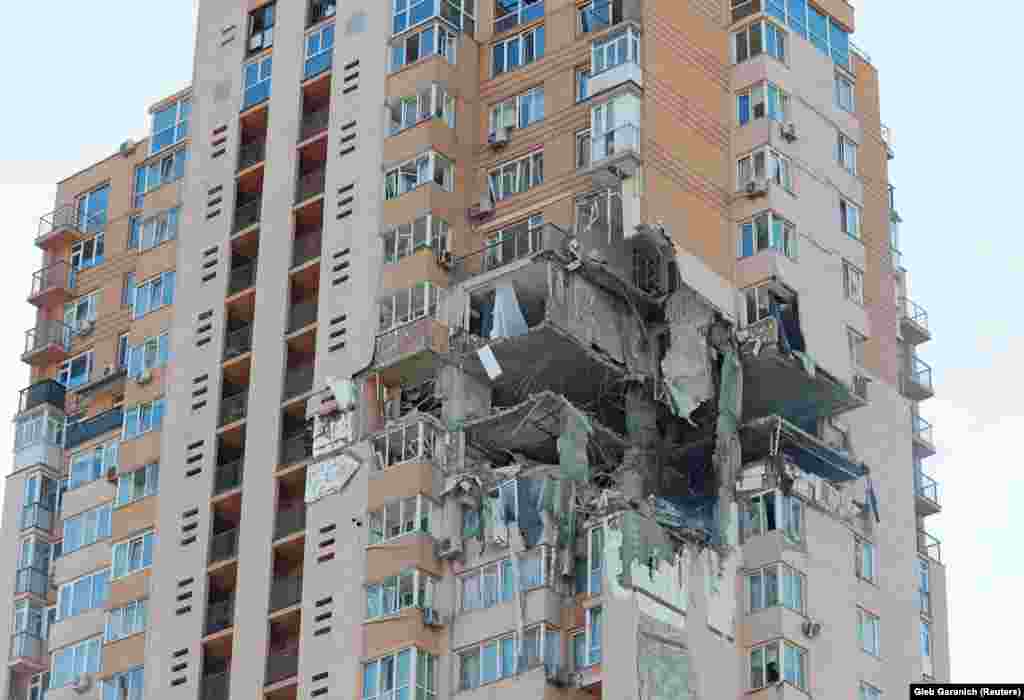
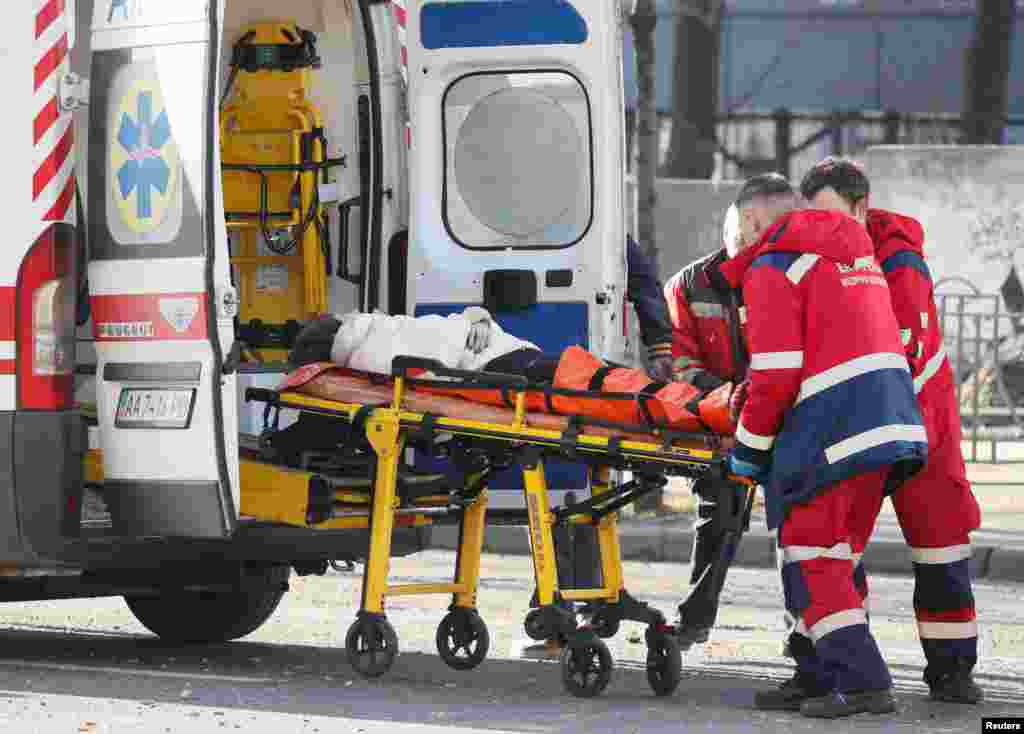
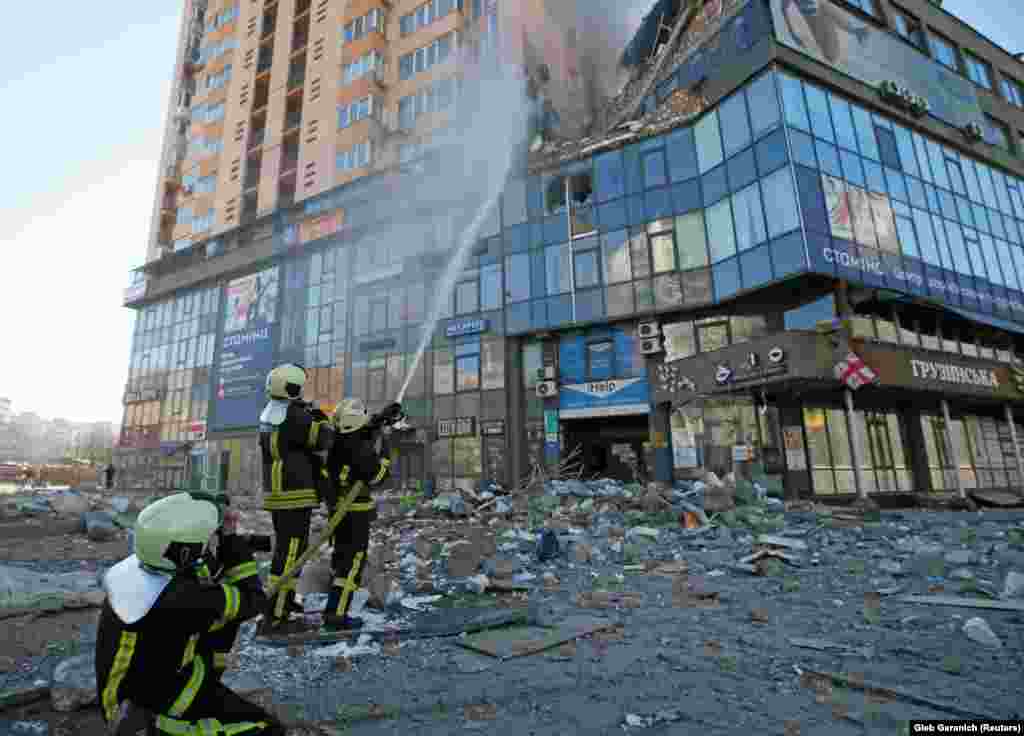
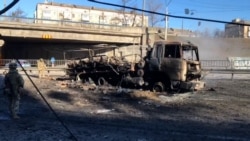
Ukrainian servicemen are seen near an apartment building damaged by shelling in Kyiv on February 26.

Russia’s media-monitoring agency Roskomnadzor has ordered media outlets to delete reports using the words “assault,” “invasion,” or “declaration of war” to describe Russia’s massive, unprovoked military incursion into neighboring Ukraine.

The agency said on February 26 that it had launched an investigation into the “dissemination of unreliable publicly significant information” against the independent newspaper Novaya gazeta, Ekho Moskvy, InoSMI, Mediazona, New Times, Dozhd, and other media outlets for their coverage of the war in Ukraine.

RFE/RL’s Crimea.Realities was also listed.

The media outlets were accused of publishing “inaccurate information about the shelling of Ukrainian cities and civilian casualties in Ukraine as a result of the actions of the Russian Army.”

If the outlets refuse to delete the reports, Roskomnadzor threatened to block them.

“RFE/RL will not comply with Roskomnadzor’s demands,” RFE/RL President and CEO Jamie Fly said. “The Kremlin’s threats are a blatant attempt to whitewash the brutal facts about the human cost of [Russian President Vladimir] Putin’s illegal war against Ukraine.”

“Russians are turning to us more than ever during this critical moment to hear what Ukrainian officials and civilians are saying and to see images of the death and destruction caused by Vladimir Putin that their government is withholding from them,” he added. “We will not succumb to this pressure to deprive them of the truth.”

Roskomnadzor has launched an “administrative probe” against the media outlets that could result in fines up to 5 million rubles ($60,000).

The agency said media could find “reliable information” only from “official Russian information outlets.”

The Russian Defense Ministry on the same day charged that Novaya gazeta and other Russian media were “actively disseminating fake information” purportedly prepared by Ukrainian “nationalists” and the Ukrainian SBU security agency.

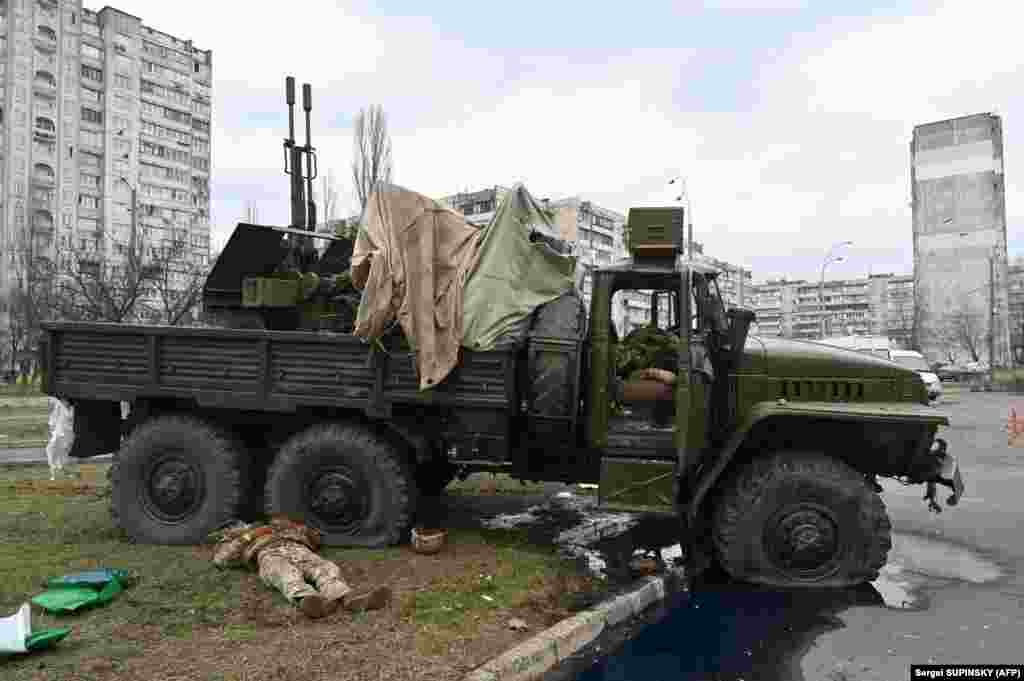
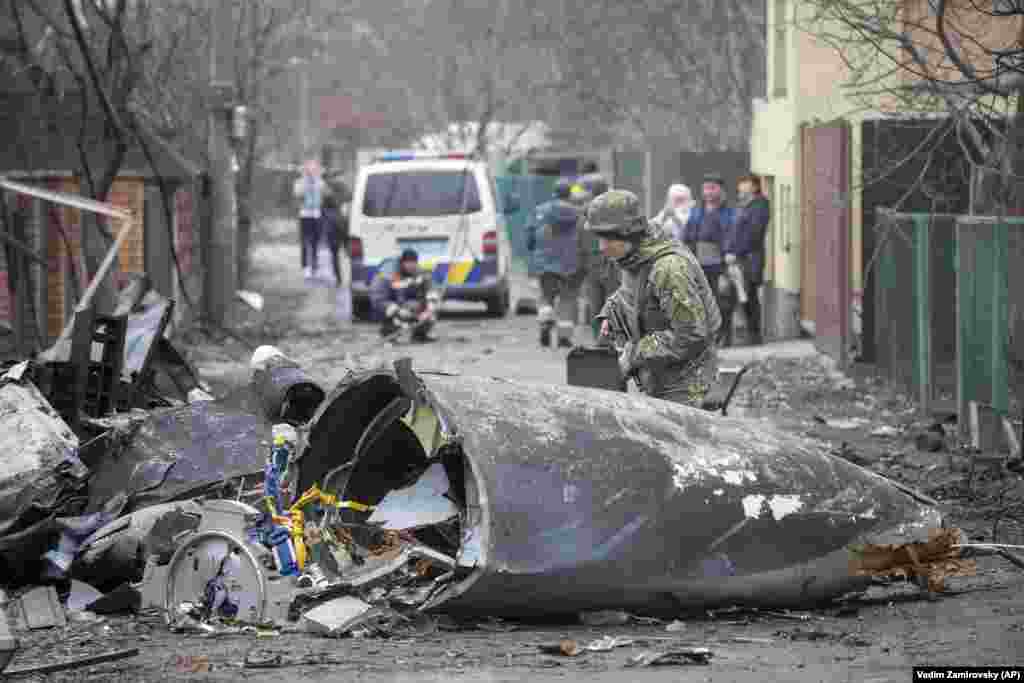
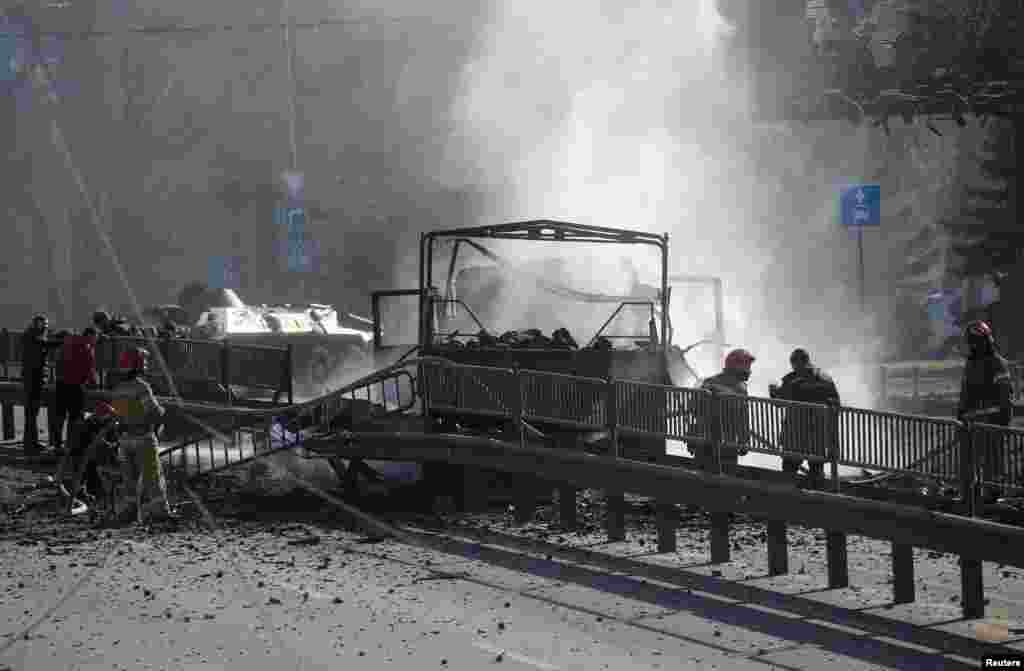
Destroyed Russian Weapons, Smoldering Wreckage Litter Kyiv Streets
please wait

No media source currently available

0:00 0:00:59 0:00

Novaya gazeta responded on Telegram by posting a letter the paper sent to the Defense Ministry on February 25 requesting casualty figures that the paper said went unanswered.

“In order for us to publish your information, you have to send it to us,” Novaya gazeta wrote.

Also on February 26, the nongovernmental Internet monitor NetBlocks reported that Twitter “has been restricted” by many providers in Russia.

“The incident comes as the government clashes with social media platforms over policy in relation to the #Ukraine conflict,” NetBlocks wrote on Twitter.

One day earlier, Roskomnadzor warned that access to Facebook would be restricted because the social-media giant had blocked the official accounts of several Russian state-media outlets, including RIA Novosti and the Defense Ministry’s television channel, Zvezda.

The Russian government has sought to tightly control information about the war in Ukraine and to prevent manifestations of antiwar sentiment.

In the first two days after the invasion of Ukraine began, Russian police detained more than 1,800 people in 60 cities for protesting against the war, according to OVD-Info, a nongovernmental organization that monitors political repression.

About 100 Russian journalists, including a few from state media such as TASS and RT, have signed an open letter condemning "the military operation that Russia has started against Ukraine."

More than 1,500 Russian teachers have signed an open petition calling for an end to the war and expressing support for anti-war protests.

Nearly 750,000 people have signed an online Russian petition calling for the public to speak out against the war in Ukraine.

The Russian government has not provided any official information on Russian military losses during the Ukraine campaign.

More News

Iran Says Final Spaniard Arrested In October 2022 Released From Detention

Santiago Sanchez Cogedor

The Iranian Embassy in Madrid said Tehran had released from detention Santiago Sanchez Cogedor, who was arrested after entering Iran in October 2022 in an incident reportedly related to protests over the death in custody of Iranian-Kurdish woman Mahsa Amini.

"The embassy of the Islamic Republic of Iran is pleased to announce the release of Santiago Sanchez Cogedor, the only Spanish citizen detained in Iran," the Iranian Embassy posted on X on December 31.

"His release comes amid friendly and historic relations between the two countries and in accordance with the law," the embassy statement added.

Sanchez arrived in Iran in mid-October 2022 during the Women, Life, Freedom protests. His family in early November 2022 said he was an adventurer who was planning to walk to the World Cup venue in Qatar.

Sanchez had cycled to the Arabian region on previous adventures as part of efforts to raise funds for hospitals and other organizations, his family said.

According to the U.S.-based Human Rights Activist News Agency (HRANA), the 41-year-old Sanchez was arrested in Saghez after visiting Amini’s burial place.

Ana Baneira Suarez, a 24-year-old activist who works for a human rights NGO, was arrested and detained along with fellow Spaniard Sanchez but was released in February.

The 22-year-old Amini died in custody on September 16, 2022, shortly after being detained by the so-called “morality police” for allegedly violating the country’s strict Islamic dress code. Supporters say she was subjected to physical abuse while in custody.

Iranian authorities launched a brutal crackdown against mass demonstrations that became some of the most daunting challenges faced by the Islamist government since Iran’s 1979 revolution.

Iran’s government for years has been accused of charging foreign citizens with espionage and using them as hostages to receive the easing of sanctions against the country imposed for its financing of terrorism in the region. Tehran denies it has links to regional terror groups despite widespread evidence.

With reporting AFP

German Officials Detain 3 More Suspects In Connection With Cologne Cathedral Attack Threat

A police car drives in front of the Cologne Cathedral on December 24.

Three more people were detained on December 31 in connection with a reported threat of an attack on the Cologne Cathedral over the holidays, German authorities said. The detentions came days after a 30-year-old Tajik man was detained in relation to an alleged plot to attack the world-famous cathedral by Islamic extremists in the western German city. The suspects were detained and their apartments were searched. No details about their identities were released. All of the detained suspects — including the Tajik arrested last week — allegedly belong to a larger network that included people across Germany and in other European countries, dpa reported.

U.K. Tells Iran It Shares Responsibility For Preventing Huthi Red Sea Attacks

British Foreign Secretary David Cameron

British Foreign Secretary David Cameron told his Iranian counterpart in a call that Tehran shares responsibility for preventing attacks by Huthi rebels in the Red Sea. “I spoke to [Foreign Minister Hossein Amir-Abdollahian] today about Huthi attacks in the Red Sea, which threaten innocent lives and the global economy. I made clear that Iran shares responsibility for preventing these attacks given their long-standing support to the Huthis,” he wrote on social media on December 31. Huthis rebels have claimed attacks on ships they say have Israeli links or are en route to Israeli ports.

Three More Serbian Opposition Leaders End Hunger Strikes Amid Expected Pause In Protests

On December 30, Marinika Tepic briefly addressed the crowd at a protest against alleged election theft in downtown Belgrade, after which she went to the hospital.

BELGRADE – Three additional opposition leaders associated with the pro-Europe Serbia Against Violence coalition have ended their hunger strikes that were launched to demand annulment of general elections that took place in the country earlier this month.

Officials on December 31 confirmed that Marinika Tepic, Jelena Milosevic, and Branko Miljus had ended their hunger strikes after about 12 days, joining Janko Veselinovic and Danijela Grujic, both members of parliament, who on December 28 announced they were ending their hunger strikes on the advice of doctors.

In addition to the hunger strikes, pro-Europe opposition supporters and student groups have held daily protests in Belgrade since the day after the December 17 election. They are demanding annulment of the parliamentary and local elections across Serbia, claiming fraud after President Aleksandar Vucic's ruling Serbian Progressive Party (SNS) was declared victorious in the elections.

Opposition figures said there would be a pause in daily protests – held for 13 straight days – with some saying that further major demonstrations would be organized at specific future dates.

On December 30, several thousand protesters filled Terazije Square in the old Stari Grad neighborhood of the Serbian capital.

Tepic, a leading figure in Serbia Against Violence, began her hunger strike on December 18. She was placed on intravenous drips on December 25 following a deterioration in her health. She vowed to continue the hunger strike but later indicated that the health concerns were forcing her to call if off.

On December 30, Tepic briefly addressed the crowd at a protest against alleged election theft in downtown Belgrade, after which she went to the hospital.

Opposition leader Dragan Djilas, who is head of the Freedom and Justice Party, on December 31 confirmed the hunger strike had ended and told the FoNet agency on December 31 that Tepic was feeling fine and had started consuming minimal amounts of food.

Local media reports said Milosevic ended the hunger strike after doctors at the Clinical Center in Nis concluded that the continuation of the strike could lead to organ damage.

Miljus confirmed to RFE/RL that he had suspended his hunger strike. He is out of the hospital and undergoing home treatment.

The Organization for Security and Cooperation in Europe (OSCE) and other international observers denounced what they called a series of "irregularities" in the December 17 voting. Domestic nongovernmental election-monitoring groups also alleged that irregularities took place in the voting process.

Viola von Cramon, a member of the observation mission of the European Parliament to the parliamentary and local elections, condemned the alleged irregularities and said the European Parliament expects “higher democratic standards from an EU candidate country.”

Thousands of opposition supporters rallied in Belgrade on December 30.

Vucic and SNS politicians have denied allegations of fraud and vote-buying, saying the elections were held in a democratic atmosphere.

Serbia's national election commission on December 29 rejected the call by Serbia Against Violence to nullify the voting.

Many Western observers have raised concerns over deteriorating political rights and civil liberties in Serbia and increased government pressure on independent media outlets.

Vucic has attempted to maintain good relations with Moscow, even as Serbia seeks closer ties with the European Union. Serbia has not joined the bloc and other Western powers in imposing sanctions against Russia over its full-scale invasion of Ukraine.

Moscow accused the West, without providing evidence, of orchestrating the Belgrade protests following the elections.

Taliban Blames Tajiks, Pakistanis For Attacks Inside Afghanistan

Smoke billows from a guesthouse after an attack in Kabul in December 2022.

Afghanistan’s Taliban-led government on December 31 claimed that Tajik and Pakistani nationals have been responsible for most of the attacks inside the country since the extremist group took power and that dozens of the alleged perpetrators have been killed or arrested. Mohammad Mujahid, the Taliban defense minister, didn’t provide evidence during a Kabul news conference. Tensions between Afghanistan and Pakistan have been high over claims by Islamabad that Afghanistan is providing a safe haven for terror groups who conduct operations inside Pakistan. Islamabad has also cracked down on more than 1.7 million “undocumented foreigners,” predominantly Afghans, living in the country. To read the original story by RFE/RL’s Radio Azadi, click here.

Putin Praises Military In Brief, Low-Key New Year's Address

Russian President Vladimir Putin

A brief New Year's address by Russian President Vladimir Putin has been broadcast on state television as the country’s eastern regions usher in 2024. Putin called on Russians not to look back but to “move forward and create the future.” He praised Russia’s military, which launched an unprovoked full-scale invasion of neighboring Ukraine in February 2022 and has been fighting there ever since. Putin stood against a background of the Kremlin during the low-key address. He did not mention a December 30 incident in the western city of Belgorod in which Moscow claimed a Ukrainian air strike killed 24 people and injured more than 100. To read the original story in Russian, click here.

European Council Clears Romania, Bulgaria To Join Schengen Free-Travel Zone

The European Council has voted to admit Romania and Bulgaria to the free-travel Schengen Area beginning in March. Air and maritime border controls will be lifted on March 31, while land controls will be eliminated at a later date. Within the Schengen Area, people are allowed to travel, work, and live in another member country without visas or permits. European Commission President Ursula von der Leyen congratulated both countries on “this great achievement.” To read the original story by RFE/RL’s Romanian Service, click here.

Updated

Ukraine's Kharkiv Hit By Air Strikes After Russia Says 24 Killed In Belgorod Attack

A view shows the Kharkiv Palace Hotel heavily damaged by a Russian missile strike on December 31.

Russia launched a major air strike against the northeastern Ukrainian city of Kharkiv on the night of December 30-31, damaging residential buildings, a medical clinic, a hotel, and other civilian infrastructure, Ukrainian officials said.

Live Briefing: Russia's Invasion Of Ukraine

RFE/RL's Live Briefing gives you all of the latest developments on Russia's full-scale invasion, Kyiv's counteroffensive, Western military aid, global reaction, and the plight of civilians. For all of RFE/RL's coverage of the war in Ukraine, click here.

Meanwhile, officials in Russia said 24 people had died as a result of a purported Ukrainian attack on the city of Belgorod on December 30.

Ukrainian officials said 28 people were injured in the attacks on Kharkiv and 12 had been hospitalized.

Interior Minister Ihor Klymenko reported that “among the victims is a journalist from Great Britain,” without providing additional information. One of the missiles struck the five-star Kharkiv Palace Hotel.

Separately, Germany’s ZDF broadcaster said a seven-person television crew was hit by the Russian missile strike on the hotel, with a Ukrainian translator being seriously injured.

“This is another attack by Russia on the free press,” ZDF Editor in Chief Bettina Schausten said.

The Ukrainian military reported that the attack was carried out by several Iranian-made Shahed drones and rockets launched from Russia’s western Belgorod region.

Air-raid warnings were sounded across Ukraine on December 31 for about one hour after the military detected several Russian MiG-31K military aircraft taking off from the Russian city of Mozdok.

Andriy Raikovych, head of the regional military administration in Kirovohrad, said power lines and a nonresidential building in the central Ukrainian region were damaged by a Russian air assault.

"The Kirovohrad region is again under enemy fire," Andriy Raikovych wrote on Telegram, adding that no injuries had been reported.

Russia’s Defense Ministry said that “in response to the Ukrainian attack on Belgorod,” Moscow had struck “decision-making centers” and “military targets” in Kharkiv.

A spokesman for Ukraine’s military intelligence issued a statement calling Russia’s claims a “morbid delusion” and denying that any Ukrainian military personnel had been injured in the Kharkiv attack.

WATCH: Kharkiv, the second-largest city in Ukraine, woke up to Russian missile and drone strikes on December 31. Ukrainian authorities say 28 people were injured in the barrage.

Overnight Russian Strikes Hit Ukraine's Second City
please wait

No media source currently available

0:00 0:01:18 0:00

The Kharkiv strikes came hours after Russian authorities claimed a Ukrainian attack hit the city of Belgorod, about 25 kilometers from Ukraine’s border with Russia. Some 111 people were injured, Russia’s Emergency Situations Ministry reported.

RFE/RL was not able to independently verify the Russian reports. Ukraine did not respond to the reports.

During an emergency session of the UN Security Council on December 30, Russian UN Ambassador Vasily Nebenzya accused Ukraine of using “cluster munitions” in the purported Belgorod attack and said it was a “deliberate, indiscriminate attack against a civilian target.”

British UN Ambassador Thomas Phipps told the session: “If Russia wants to blame someone for the deaths of Russians in this war, it should start with President [Vladimir] Putin.”

The Belgorod incident came on the heels of massive missile strikes by Russia that killed at least 40 people and injured more than 160 in several Ukrainian cities, including Kyiv, on December 29.

Covered bodies lie on the ground following what Russian authorities say was a Ukrainian military strike on Belgorod on December 30.

January 1 has been declared a day of mourning in Kyiv, where 23 civilians were reportedly killed. Emergency workers in the capital recovered the bodies of five victims early on December 31.

Schools, a maternity hospital, and residential and commercial buildings were hit in the barrage, which was one of the most violent attacks since Russia’s unprovoked invasion of Ukraine in February 2022.

In a statement on December 30, Ukrainian President Volodymyr Zelenskiy urged Kyiv's allies to continue providing military support for his country, saying 2024 will “be a time of many decisions.”

Britain announced it would send “hundreds” of additional air-defense missiles to Ukraine after Prime Minister Rishi Sundak reiterated that “we must continue to stand with Ukraine for as long as it takes.”

With reporting by RFE/RL’s Russian Service and AFP

About 20 People Detained At Russian Bar Following Drag Performance

(illustrative photo)

Russian police detained 20 people at a Siberian bar where the evening's entertainment included drag performances, a local Telegram channel reported.

Police arrived at Elton in Krasnoyarsk on December 30 following complaints about men dancing slowly and kissing each other, according to KrasMash.

An eyewitness told the Prospekt Mira outlet that customers became upset after two men began hugging and kissing. Police later released all those detained.

Russian President Vladimir Putin has increasingly restricted the rights and freedoms of people with so-called "nontraditional" sexual relations as he caters to his conservative base.

Russia's Supreme Court last month banned the "international LGBT movement" and labelled it an extremist organization, opening the door to greater law enforcement pressure on the gay community.

Days after the ruling, police carried out raids at several gay venues in Moscow, local media reported at the time.

Russian Riot Police Raid Gay Club Amid Crackdown On 'LGBT Movement'
please wait

No media source currently available

0:00 0:02:08 0:00

The owners of Elton told media the bar was not an LGBT venue and that the police raid was part of a wider law enforcement inspection of clubs ahead of the New Year's celebration.

Russian Teenager Sentenced To Four Years In Prison On Treason Charges

(illustrative photo)

A Russian teenager has been sentenced to four years in prison on charges of treason, the latest victim of the Kremlin's sweeping crackdown on citizens opposed to its invasion of Ukraine.

Kevin Lik, 18 and a resident of the North Caucasus region of Adygea, was found guilty of observing and photographing the local military base and sending the pictures by e-mail to a representative of a foreign government, according to prosecutors.

The court announced its verdict on December 28 following a closed-door trial. Lik was handed one-third of the minimum 12-year term for treason on account of his age and alleged confession of guilt and remorse for his actions.

Lik allegedly carried out his activities from December 2021 -- when he was a minor attending high school -- until February 8, 2023, prosecutors said. He was allegedly opposed to the government’s policies and war in Ukraine.

Lik was detained in the summer, the BBC reported, citing a friend. His mother was arrested on February 9 for 10 days for using "obscene language" in the military enlistment office building. Such detentions are often the first stage of treason investigations, lawyers told the BBC.

The Kremlin has used the ambiguous treason law as a weapon to crush opposition to its war in Ukraine. People from all walks of life are getting swept up in the treason dragnet, experts say.

Russia is on track to open more treason cases this year than in any year since the fall of the Soviet Union, according to Kholod, an independent news outlet.

Russian President Vladimir Putin earlier this year signed into law a bill stiffening the penalty for treason to life in prison.

With reporting by the BBC

Pakistani Electoral Body Rejects Ex-PM Khan's Nomination For 2024 Elections

Former Pakistani Prime Minister Imran Khan addresses supporters of his Pakistan Tehrik-e Insaf (PTI) party during a public rally in Abbottabad in May 2022.

Pakistan's electoral body has rejected former Prime Minister Imran Khan's nomination to contest the February 2024 national elections in two constituencies, officials and his party's media team said on December 30. The 71-year-old former cricket star has been embroiled in a tangle of political and legal battles since he was ousted as prime minister in April 2022. In a list of rejected candidates from Lahore, the Election Commission of Pakistan said Khan's nomination was rejected because he was not a registered voter of the constituency and because he is "convicted by the court of law and has been disqualified."

Gay Russian Anchor, Journalist Lobkov Alleges Moscow Beating

Pavel Lobkov (file photo)

Longtime TV anchorman and journalist Pavel Lobkov says he was attacked in a park in an affluent downtown district in Moscow, posting photos early on December 30 that show bloody injuries to his face and hands. Lobkov, who is openly gay, appeared to suggest the attack was homophobic by including a slur in quotation marks in the post. He did not provide details. Russia's Supreme Court last month ruled that the "LGBT movement" is extremist, sparking a global outcry at the latest attack on LGBT rights in Russia. To read the original story by RFE/RL's Russian Service, click here.

UN Security Council Calls For Afghan Special Envoy

The resolution was adopted after 13 members of the Security Council voted in favor, while Russia and China abstained. (file photo)

The United Nations Security Council adopted a resolution on December 29 calling for the appointment of a special envoy for Afghanistan to increase engagement with the country and its Taliban leaders. It followed an independent assessment report issued in November that called for greater engagement with Afghanistan following the return to power of the Taliban in August 2021. The resolution calls on UN Secretary-General Antonio Guterres to name a special envoy to promote the independent report's recommendations, particularly regarding gender and human rights. The resolution was adopted after 13 members of the Security Council voted in favor, while Russia and China abstained.

Girls' School Torched In Northwestern Pakistan

A note reportedly threatened "more harm" if the school was not closed down.

Unknown perpetrators have set a girls' secondary school on fire overnight in Pakistan's northwestern Khyber Pakhtunkhwa Province, police officials in the Bannu district said. Bannu district police official Iftikhar Shah said police were investigating and interrogating "from every angle" to catch the perpetrators. A note reportedly threatened "more harm" if the school was not closed down. No group has claimed responsibility, although the Tehrik-e Taliban Pakistan (TTP) militant group has targeted girls' and women's institutions in the past. To read the original story by RFE/RL's Radio Mashaal, click here.

Bosnian Serb Leader Dodik Counters U.S. Warning With Vow To Resist Boosting Multiethnic Institutions

Milorad Dodik addresses the media in front of the Court of Bosnia-Herzegovina in Sarajevo on December 5.

The separatist-minded leader of the mostly ethnic Serb part of Bosnia-Herzegovina has repeated his threat to rip the country apart and wreak new havoc on the Balkans if the international community further strengthens multiethnic institutions.

In an interview with AP on December 29, Republika Srpska President Milorad Dodik said he was "not irrational [and] I know that America's response will be to use force" but he won't be "frightened...into sacrificing [Serbian] national interests."

Since a 1995 peace deal known as the Dayton agreements ended intense ethnically fueled war in the former Yugoslavia, Bosnia has been administered under a Bosniak and Croat federation and a mostly Serb-populated entity known as Republika Srpska.

It is also overseen by a civilian high representative with UN backing and sweeping powers, currently German Christian Schmidt.

U.S. Assistant Secretary of State for European and Eurasian Affairs James O'Brien said on December 28 that Washington will take action if there are efforts to unilaterally alter "the basic element" of the post-1995 architecture.

There is "no right of secession," O'Brien said.

Dodik has spent the past two years trying to erode central Bosnian authority and establishing parallel institutions to further his longtime threats to divide the country for good.

Many groups cling fiercely to ethnic divisions despite decades of international mediation to settle grievances among Bosnia, Serbia, Kosovo, and other former parts of Yugoslavia. Serbs are the most numerous of the ethno-national groups in the region.

"Among Serbs, one thing is clear and definite and that is a growing realization that the years and decades ahead of us are the years and decades of Serb national unification," Dodik told AP.

Dodik has also cultivated increasingly close ties to Moscow, which has tried to exploit religious and cultural affinities in the region.

He has also courted -- and been courted by -- national populist Hungarian Prime Minister Viktor Orban, who has resisted anti-Russian sanctions and battled publicly with the European Union.

"Brussels is using the promise of EU accession as a tool to unitarize Bosnia," Dodik said, adding, "In principle, our policy still is that we want to join [the EU], but we no longer see that as our only alternative."

EU officials who asked for anonymity to discuss the situation after similar comments earlier this week by Dodik insisted to RFE/RL's Balkan Service that Republika Srpska independence is a moot issue because of the resulting isolation it would bring.

"Any random remarks by Dodik are not really worth commenting on," one EU official said. "Apart from his only 'friend' in Europe, Orban and no one else, Dodik knows very well that the talk of the independence of Republika Srpska is nonsense because such an entity would be politically and economically totally isolated, and it would only bring more trouble to its people."

With reporting by AP and RFE/RL's Balkan Service

Death Toll, Condemnation Mount From Massive Russian Bombardment As Kyiv Declares Day Of Mourning

In video released by Russia's Emergencies Ministry on December 30, firefighters extinguish burning cars after an alleged strike in Belgorod.

Aerial attacks continued overnight between Russia and Ukraine but appeared to have abated early on December 30, one day after Russia carried out its most intense bombardment of Ukrainian military and civilian targets in the 22-month-long war, sparking international outcry and condemnation at a special meeting of the UN Security Council.

Live Briefing: Russia's Invasion Of Ukraine

RFE/RL's Live Briefing gives you all of the latest developments on Russia's full-scale invasion, Kyiv's counteroffensive, Western military aid, global reaction, and the plight of civilians. For all of RFE/RL's coverage of the war in Ukraine, click here.

Ukrainian officials said the death toll had climbed to at least 39, with 159 injured in the massive Russian air attacks on Kyiv and other targets throughout Ukraine with hypersonic and other missiles and drones on December 29.

President Volodymyr Zelenskiy and other Ukrainian officials called it the heaviest bombardment since the unprovoked full-scale invasion began in February 2022.

Kyiv Mayor Vitali Klitschko said a 16th body had been found at a bombed-out warehouse in the capital. He also declared January 1 a day of mourning in the city.

U.S. and European governments joined together to condemn the Russian air attacks at a special UN Security Council meeting late on December 29 requested by Kyiv.

Permanent council member China avoided condemning the attacks but called for peace, while Russia's UN envoy blamed the civilian casualties on Ukrainian air defenses.

UN Secretary-General Antonio Guterres condemned the Russian air attacks on Ukraine through a spokesperson. Stephane Dujarric said in a statement for Guterres that "Attacks against civilians and civilian infrastructure violate international humanitarian law, are unacceptable and must end immediately."

"Today, millions of Ukrainians awoke to the loud sound of explosions. I wish those sounds of explosions in Ukraine could be heard all around the world," Foreign Minister Dmytro Kuleba said in conjunction with the Security Council gathering.

Russian Ambassador to the UN Vasily Nebenzya told the council that Russia's forces had only attacked military targets and said civilians were killed by Ukrainian air defenses.

Hours after the Security Council meeting, the Ukrainian General Staff said early on December 30 that there had been dozens of Russian missile and drone attacks on military and civilian targets in the past 24 hours.

'Thank God, We Are Alive:' Ukraine Reels From Massive Russian Air Attack
please wait

No media source currently available

0:00 0:02:52 0:00

Later, Russia's Emergencies Ministry claimed that Ukrainian strikes had killed at least 18 people, including two children, in the city of Belgorod, which lies about 30 kilometers from the border with Ukraine.

Russia claimed another 111 people were injured in the attack on the city. Unverified footage showed burnt-out cars, damaged residential buildings, and debris strewn across streets in Belgorod.

The Russian Defense Ministry had accused Ukraine of attacking Belgorod and other nearby regions with 32 drones overnight.

Ukraine has repeatedly targeted military or government-related sites in Russian regions close to the border in part as it seeks to bring the war home to Russia.

The December 30 attack on Belgorod appears to be one of the biggest to date

As usual, Kyiv did not officially comment on the Belgorod attack but government soures told media that it targeted military sites. The sources said the civilian damage was caused by Russia's anti-missile defenses.

RFE/RL was not immediately able to determine the cause of the civilian damage in Belgorod.

Russia, which has been accused of extensive war crimes in Ukraine and continues to bombard civilian infrastructure, called for a meeting of the UN Security Council to raise complaints about the Belgorod strike.

Zelenskiy's office said early on December 30 that the Ukrainian president made a surprise visit to a forward control post in Avdiyivka, the scene of months of intense ground fighting in the eastern Donetsk region.

The Ukrainian General Staff said Russian forces continue to try to surround Avdiyivka.

Ukrainian officials said late on December 29 that search-and-rescue operations were continuing in many places struck in the missile and drone barrage earlier in the day.

They have reported that 158 Russian missiles of varying sophistication and attack drones were fired and said Russia appeared to throw "everything they have" into the attack.

Power was cut in four northern and southern regions as a result of the attacks, which reportedly hit a maternity ward and education facility as well as residential buildings and infrastructure.

The intense attack comes with U.S. and other Western assistance at risk despite Kyiv's pleas. The Ukrainian Foreign Ministry said on December 29 that there can be "no talk of a truce" under current conditions.

The United States and its NATO allies were consulting Warsaw after Poland reported an air intrusion during the Russian flurry, with indications reportedly suggesting a possible Russian missile was to blame.

NATO Secretary-General Jens Stoltenberg said he talked with President Andrzej Duda about the "missile incident" and said the alliance "is monitoring the situation & we will remain in contact as the facts are established."

A Russian charge d'affaires who was summoned to the Polish Foreign Ministry said Warsaw did not show evidence of a missile entering its airspace.

Hundreds of Polish troops resumed their search in what the army said was an effort "to definitively confirm that no element of the object remains on Polish territory."

The U.S.-based Institute for the Study of War said in its regular daily assessment that the massive air attack "appears to be a culmination of several months of Russian experimentation with various drone and missile combinations and efforts to test Ukrainian air defenses."

It predicted that "Russia will continue to conduct strikes against Ukraine at scale in an effort to degrade Ukrainian morale and Ukraine’s ability to sustain its war effort."

With reporting by Reuters

Four Iranians Tehran Accused Of Spying For Israel Executed

The number of executions has been rising sharply in recent months in Iran, rights groups say.

Four Iranians -- three men and one woman -- have been executed after being accused of spying for Israel, the Mizan news agency said.

Wafa Hanareh, Aram Omri, Rahman Parhazo, and Nasim Namazi were charged and found guilty of "enmity against God and corruption on Earth," for their alleged involvement in intelligence cooperation with Israel's Mossad, Mizan, which is affiliated with the judiciary, said on December 29.

They were originally sentenced to death in February 2023.

The Kurdistan Human Rights Network said that according to a family member of one of the four prisoners, the death sentences were carried out even though their lawyers had filed for a retrial with the same court and also submitted a petition to the Amnesty and Clemency Commission.

"Amid the review of these appeals, the prisoners were transferred to solitary confinement in Tehran, where they were executed, presumably as an act of retribution against Israel," the family member said.

Human rights groups have accused the Iranian authorities of torturing the four during their detention.

The Kurdistan Human Rights Network released an audio file purportedly from two of the prisoners, detailing physical and psychological torture, including threats of assault and family member arrests, to extract forced confessions.

Meanwhile, the Norway-based human rights organization Hengaw condemned the executions and urged the global community to react, saying the punishments were "not only a clear violation of the right to life and human dignity but also a gross disregard of international laws and human rights principles."

Roya Boroumand, executive director of the Abdorrahman Boroumand Center, a Washington-based organization specializing in Iranian human rights research, also condemned the executions.

"In the absence of an independent judiciary, due process, transparency, and accountability, these sentences have no legitimacy," Boroumand said in a post on X, formerly Twitter.

The executions come shortly after the death of Razi Musavi, a commander of the Islamic Revolutionary Guard Corps in Syria, fueling speculation about potential retaliatory motives.

Iran and Israel have been engaged in a years-long shadow war. Tensions have been exacerbated by the ongoing war in the Gaza Strip between Israel and Hamas, which has been deemed a terrorist organization by the United States and the European Union.

Tehran has long supported Hamas, though the relationship has been at times difficult.

Meanwhile, the rate of executions in Iran has been rising sharply, particularly in the wake of the widespread protests triggered by Mahsa Amini's death.

Iran Human Rights said that, as of December 2023, more than 700 people had been executed in Iran, with a marked increase in recent months.

Amnesty International says the regime in Tehran has executed more people than any other country in the world other than China so far this year.

Written by Ardeshir Tayebi based on an original story in Persian by RFE/RL's Radio Farda
Updated

In Belgrade, Thousands Protest Elections After Serbian Watchdog Rejects Opposition Appeal

Opposition protesters rally in central Belgrade on December 30.

Thousands of demonstrators gathered in central Belgrade on December 30 to call for opening voter lists and other anti-fraud efforts amid ongoing unrest over this month's national, regional, and municipal elections claimed by President Aleksandar Vucic's ruling party.

The protesters filled the spacious Terazije Square in the old Stari Grad neighborhood of the Serbian capital, and looked to number well into the thousands.

The show of anger in the streets by students and activists outside the formal political opposition pledging to challenge the conduct of the elections is the latest of nearly two weeks of public discontent since the December 17 voting.

The organizer, ProGlas, is a movement that includes public figures and launched an initiative before the elections that has been signed by nearly 200,000 citizens. It is demanding parliamentary and local elections in Serbia within six months, "after the process of fundamentally changing election conditions."

ProGlas says the citizens' electoral will was "betrayed."

One day earlier, Serbia's national election commission rejected the united opposition alliance Serbia Against Violence's call to nullify the voting, citing a technicality.

That decision came after a student-led, noon-to-noon traffic blockade was launched in downtown Belgrade ahead of the weekend demonstration.

Vucic declared a sweeping victory at nearly every level in the parliamentary and local voting, which also sparked a handful of hunger strikes by opposition leaders demanding a new vote and an internationally backed probe into the elections.

International observers from the Organization for Security and Cooperation in Europe (OSCE) have called the election process unfair and cited evidence of bused-in nonresidents to boost the ruling Serbian Progressive Party's (SNS) support, especially in Belgrade.

Vucic, who has tightened his hold on the Balkan state since his party came to power in 2012, has called it "the cleanest and most honest" elections ever.

In its ruling handed down late on December 29, the Republic Election Commission (RIK) dismissed an appeal by the opposition Serbia Against Violence alliance to annul the vote results.

The commission's deputy president, Marko Jankovic, said the challenge of nationwide results was rejected because it had been submitted by the opposition alliance's party list in Belgrade to the city's election commission, which then turned it over to the RIK.

Groups of students set up tents in downtown Belgrade shortly after noon on December 29 to blockade a main street near government buildings.

They were camped out on one of the busiest roadways in the capital, Kneza Milosa Street, near the Ministry for State Administration and Local Self-Government.

Vucic and Prime Minister Ana Brnabic have dismissed the international assessments as planned and untrue, and alleged without presenting evidence that foreign plotters are behind the postelection unrest.

A protest against the election process and results outside Belgrade city hall on December 24 turned violent when windows were broken and police used tear gas to disperse the crowd.

Opposition leader Dragan Djilas denied allegations levelled by pro-government tabloids that the opposition was planning incidents at the rally on December 30.

"No one is planning any violence," he said on December 29. "We will not accept stolen elections and we will fight with all democratic methods."

OSCE observers concluded in their initial report that the national vote was conducted under "unjust conditions."

Family Of Iranian Prisoner Warns Of Missed Medical Appointments

Miryousef Younesi (left) and Ali Younesi

The family of Miryousef Younesi, a prisoner held in Tehran's notorious Evin Prison, says it is concerned after a series of his specialized medical appointments were abruptly canceled as he marks a full year in detention for allegedly being part of a supply network for activists, a claim his supporters say is baseless.

Reza Younesi, Miryousef's son, said that despite confirmation from a medical professional within the prison that his father requires treatment beyond that available at the facility, scheduled appointments have been inexplicably canceled.

He described the move as a "disturbing tactic" by the Ministry of Intelligence "to harass" his father.

Miryousef Younesi, the father of Ali Younesi – a noted student prisoner – was arrested in December 2022 and subsequently transferred to the high-security Ward 209 at Evin prison. A year has passed since his arrest, yet no court proceedings have been initiated in the case.

The ministry alleges Miryousef Younesi was involved with the Mujahedin-e Khalq organization, accusing him of being part of a network supplying financial and logistical support to operational teams within Iran. However, the claims have been met with skepticism by rights supporters.

Ali Younesi, along with Amirhossein Moradi, were arrested in April 2020 and held in detention until April 2022, when a court convicted them of sabotaging public facilities, cooperating with opposition groups, and spreading propaganda against the system. They were handed sentences of 10 years, five years, and one year for the alleged offenses.

The cases prompted a wave of protests from students and professors at the Sharif University of Technology where they were enrolled.

In November 2021, Amnesty International said the two detained students had been tortured by Iranian intelligence agents and held "in prolonged solitary confinement in harsh conditions to extract forced confessions.”

Further adding to the family's ordeal, Aida Younesi, Miryousef's daughter, reported a week after his arrest that he had been subjected to severe interrogation techniques, including sexual slurs and pressure to admit to unfounded charges.

Highlighting the dire situation of his father, Reza Younesi revealed that his father is suffering from pain and hearing impairment.

Written by Ardeshir Tayebi based on an original story in Persian by RFE/RL's Radio Farda

NATO, U.S. Consult With Warsaw After Apparent Intrusion Of Russian Missile Into Polish Airspace

Polish President Andrzej Duda (right) and NATO Secretary-General Jens Stoltenberg (file photo)

NATO Secretary-General Jens Stoltenberg said he spoke with Poland’s president about indications that a Russian missile entered Polish airspace on December 29 during a barrage of Russian missiles and drones fired at Ukraine.

Stoltenberg said he consulted with President Andrzej Duda about the “missile incident” and said on X, formerly Twitter, that NATO “is monitoring the situation & we will remain in contact as the facts are established.”

Live Briefing: Russia's Invasion Of Ukraine

RFE/RL's Live Briefing gives you all of the latest developments on Russia's full-scale invasion, Kyiv's counteroffensive, Western military aid, global reaction, and the plight of civilians. For all of RFE/RL's coverage of the war in Ukraine, click here.

Poland’s defense forces said earlier that an unknown object had entered Polish airspace from the direction of Ukraine and then vanished off radar.

“Everything indicates that a Russian missile intruded in Poland’s airspace. It was monitored by us on radars and left the airspace. We have confirmation of this on radars and from allies" in NATO, Poland’s armed forces chief, General Wiesław Kukuła, said.

Poland’s defense forces said the object penetrated about 40 kilometers into its airspace and left after less than three minutes. The defense forces said both its radar and NATO radar confirmed that the object left Polish airspace.

Kukula said steps were being taken to verify those findings and eliminate the possibility of a technical error.

Poland summoned the Russian charge d'affaires and demanded an explanation. Russia's RIA Novosti news agency quoted the Russian charge d'affaires as saying that Poland provided no proof of a border violation.

U.S. national-security adviser Jake Sullivan spoke by phone with the head of Poland's National Security Bureau, Jacek Siewiera, to express the “United States’ solidarity with Poland…as it deals with reports of a missile temporarily entering Polish airspace,” the White House said.

Sullivan expressed U.S. solidarity with Poland and pledged technical assistance as needed and assured Siewiera that President Joe Biden is following the incident closely.

It was not immediately clear where the object disappeared from radar or in which direction it had been going. Troops were mobilized to find it.

Ukrainian officials have said the aerial barrage was the biggest since Russia launched its full-scale invasion of Ukraine in February 2022.

With reporting by Reuters, AP, and AFP

Russian Report Says 74 Sailors Died In Ukraine's Attack On Novocherkassk

Explosions in the port of Feodosia after an attack by Ukraine on December 26.

The Russian Black Sea Fleet press service was quoted as saying that 74 Russian sailors were killed and 27 injured in Ukraine's missile attack on Russia's Novocherkassk landing ship near the Crimean port city of Feodosia. The figure appeared on the Novosti Sevastopolya news website. Ukrainian authorities said earlier that the December 26 air strikes caused an explosion that indicated that ammunition on the large landing ship had detonated. The Russian training ship UTS-150 was also damaged in the attack. To read the original story by RFE/RL's Russian Service, click here.

Ukraine Strikes Major Naval Port In Russian-Occupied Crimea
please wait

No media source currently available

0:00 0:01:12 0:00

Hungary Refuses To Extradite Russian Suspected Of High-Profile Killing In Kyiv

Amina Okuyeva
Amina Okuyeva

Hungary has refused to extradite to Ukraine a Russian man suspected in the 2017 killing Amina Okuyeva, a member of the volunteer Dzhokhar Dudayev battalion consisting of natives of the North Caucasus region of Chechnya, according to police.

Former Ukrainian lawmaker Ihor Mosiychuk, for whom Okuyeva once worked as an adviser, told RFE/RL that Igor Redkin, a native of Russia's North Caucasus region of Daghestan, had violated house arrest conditions and fled Ukraine during the initial days of Russia's full-scale invasion of Ukraine, launched in February 2022. Mosiychuk confirmed that Redkin is currently in Hungary.

Ukrainian law enforcement officers arrested Redkin and three other unidentified individuals in 2020 on suspicion of involvement in the killing of Okuyeva.

The men were suspected in opening fire with assault rifles at Okuyeva and her husband, Adam Osmayev, while the couple was traveling in a car on Kyiv's outskirts in October 2017, killing Okuyeva and injuring Osmayev.

Osmayev accused Russian officials at the time of organizing the attack.

Osmayev, who has survived several assassination attempts, is the commander of the volunteer Dzhokhar Dudayev battalion fighting Russian armed forces invading Ukraine.

Osmayev first made headlines in Ukraine in February 2012 when he was detained by Ukrainian authorities and charged with possession of illegal explosives, damaging private property, and forgery.

At the request of Russian authorities, he was charged with plotting to kill Russian President Vladimir Putin, and Moscow sought his extradition.

Kyiv ultimately refused to extradite him, and he was subsequently released from Ukrainian custody in November 2014 after more than 2 1/2 years in jail.

Three months after his release, Osmayev assumed command of the Dzhokhar Dudayev battalion, which then was fighting against Russia-backed separatists in eastern Ukraine.

His late wife, Amina Okuyeva, gained renown working as a medic during the street protests in Kyiv known as Euromaidan that culminated in violent clashes with police in February 2014 and the ouster of then-President Viktor Yanukovych.

Kazakh Journalist Imprisoned On Extortion Charge Launches Hunger Strike

Vladimir Severny and Nargiz Severnaya

Kazakh journalist Vladimir Severny, who was sentenced to seven years in prison earlier this month on extortion charges that he rejects, launched a hunger strike protesting his incarceration, his lawyer said on December 29. A court in Almaty also sentenced Severny’s wife, Nargiz Severnaya, to eight years in prison on December 4 but said she may start serving her prison term in 2028. Investigators say the married journalists blackmailed two businesses in Almaty, extorting significant amount of cash from them for withholding sensitive information related to the businesses from being published. The couple denies any wrongdoing. To read the original story by Current Time, click here.

Jailed Kazakh Activists' Appeal Against Incarceration Rejected

Activist Ravkhat Mukhtarov

The Almaty City Court on December 29 rejected appeals filed by activists Bota Sharipzhan and Ravkhat Mukhtarov of the Oyan Qazaqstan (Wake Up, Kazakhstan) movement against their incarceration. The activists were sentenced to 15 days in jail each earlier this week on a charge of violating regulations for public gatherings. On December 16, Kazakhstan’s Independence Day, Sharipzhan, Mukhtarov, and several other activists rallied in Almaty with posters calling for the commemoration of victims of the 1986 Kazakh youth uprising against the Kremlin and the January 2022 anti-government protests. Several activists were handed up to 25 days in jail before and after Independence Day. To read the original story by RFE/RL's Kazakh Service, click here.

Preliminary Hearings Launched In Case Against Azerbaijani Activist Haciyev

Baxtiyar Haciyev
Baxtiyar Haciyev

BAKU -- A court in Baku on December 29 started preliminary hearings in a case against Azerbaijani activist Baxtiyar Haciyev, who has been in pretrial detention for more than a year.

During the hearing, when Judge Ali Mammadov stressed that Haciyev is under arrest, the activist said he is being held "hostage."

The judge agreed to allow Haciyev's lawyers to restart visitations to their client during the trial. He also ordered investigators to provide the defense team with freshly printed materials from the case after they complained previous copies of materials were of poor quality and hard to read.

After learning that the defendant received the papers related to his final charges and the case in general just a day earlier, the judge adjourned the preliminary hearing until January 7, saying the defendants must be given at least a week to get acquainted with all the materials of the case.

Haciyev, who was born in 1982, was arrested in early December 2022 and charged with hooliganism and contempt of court. He rejects the charges.

In June, investigators added charges of "illegal entrepreneurship," "false entrepreneurship," "forgery," "use of forged documents," and "smuggling." Haciyev has rejected these charges as well.

He has held two hunger strikes since the start of his detainment, protesting the "politically motivated" case against him.

Haciyev was previously convicted on slander charges and had been detained during human rights protests in recent years.

In 2011, Haciyev was given a two-year prison sentence on charges of evading military duty but was released nine months early on the eve of then-U.S. Secretary of State Hillary Clinton's scheduled visit to Baku.

He has consistently denied any wrongdoing. Azerbaijani and international human rights groups have recognized Haciyev as a political prisoner.

In February, the U.S. State Department expressed concerns over Haciyev's arrest and his state of health, stressing that the charges against him are "understood as politically motivated."

Critics of Azerbaijani President Ilham Aliyev's government say authorities in the oil-rich Caspian Sea state frequently seek to silence dissent by jailing opposition activists, journalists, and civil society advocates on trumped-up charges.

Aliyev has ruled Azerbaijan with an iron fist since 2003, taking over for his father, Heydar Aliyev, who served as president for a decade.

Load more

XS
SM
MD
LG