



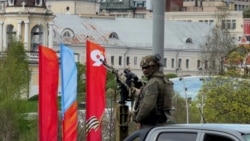

Ukraine’s military said it hit a Russian missile carrier in the Caspian Sea, the latest in a series of increasingly ambitious long-range strikes on Russian targets.
It was unclear how badly the ship was damaged in the May 7 strike, which could not be immediately confirmed. The ship was part of Russia’s Caspian Sea flotilla, which has been used to fire cruise missiles at Ukrainian targets in the past.
Russia made no comment on the report.
More than four years into Russia’s all-out assault, Ukraine has ramped up its long-range weapons arsenal, expanding both drone production and missiles.
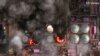
Earlier this week, President Volodymyr Zelenskyy said at least two homegrown Flamingo missiles were fired at a weapons facility in central Russia, about 1,200 kilometers from the border.
And Ukrainian drones have targeted Russian oil export facilities in the Baltic Sea. Last month, the local governor declared the area a “front-line region” because of the number of Ukrainian drones spotted there.
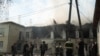
Makhachkala, the port where much of the Caspian fleet is located, is about 1,300 kilometers from territory still under Ukrainian control.
The attack also comes as Russia prepares for Victory Day, commemorating the defeat of Nazi Germany in World War II. Under President Vladimir Putin, it’s become one of the most important holidays of the year, a grandiose celebration of Soviet and Russian military history, as well as Russia’s ongoing war in Ukraine.
This year, the Kremlin has scaled back the parade, amid fears that Ukraine might try to disrupt the events.
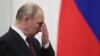
Asked by reporters about heightened security, Kremlin spokesman Dmitry Peskov downplayed the reports.
"You know that on the eve of major holidays, and, of course, perhaps most importantly, Victory Day in our country, additional security measures are always taken by the relevant services," he said.
This year, additional measures were being taken due to “the rather complex operational situation” due to what he called the "terrorist threat" from Ukraine.
The Kremlin has proposed a cease-fire with Ukraine beginning on May 8, to coincide with the holiday events. Zelenskyy rejected the proposal, and countered with a cease-fire that had been set to run from May 6.
The Victory Day events are typically attended by numerous foreign dignitaries and heads of state, including presidents from the five Central Asian countries that used to be part of the Soviet Union.
The list of guests released by the Kremlin on May 7 included fewer than 10 dignitaries; Belarusian leader Aleksandr Lukashenko and Slovak Prime Minister Robert Fico were among those on the list.
Russia’s Foreign Ministry issued a belligerent warning to Kyiv, and diplomatic missions there, threatening to attack the Ukrainian capital if Ukraine did in fact disrupt the May 9 events.
In his daily video address on May 7, Zelenskyy mocked the Russian call for a Victory Day cease-fire.
"They want Ukraine's permission to hold their parade, to go out onto the square safely for an hour once a year, and then continue killing, killing our people and waging war," he said.
Ukraine launched more than 300 drones at Russian targets over the course of the day on May 7, Russia's Defense Ministry said.

