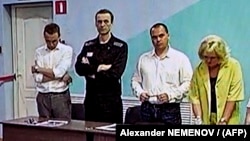
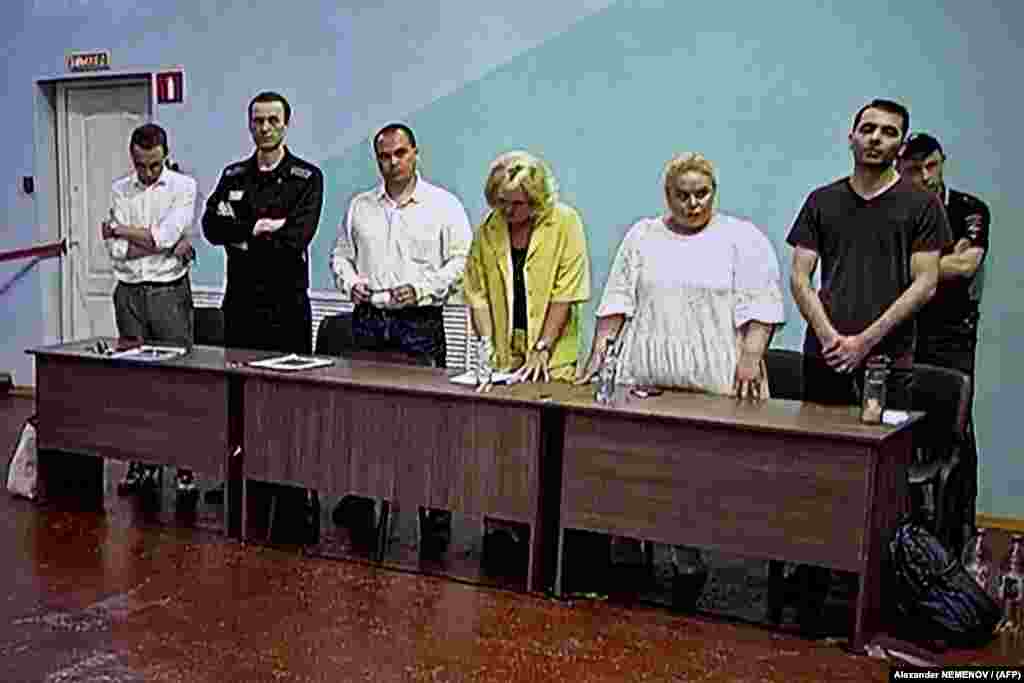
Aleksei Navalny (second from left) listens as the latest verdict against him is read out on August 4.
Jailed opposition politician Aleksei Navalny, who is already serving a nine-year prison sentence on embezzlement charges that he and his allies say are politically motivated, has been sentenced to 19 years in Russia's harshest prison regime after being found guilty on charges of extremism related to his Anti-Corruption Foundation (FBK).
The court, which was set up in the prison where the 47-year-old is being held, 250 kilometers east of Moscow, convicted him on August 4 under six articles of the Criminal Code, including creating and financing an extremist community, calling for extremism, rehabilitating Nazism, and involving minors in dangerous acts.
The prosecution, which sought a 20-year prison sentence, had asked the court to order Navalny to serve any new prison term in a “special regime” site, a term that refers to a prison with the highest level of security and the harshest restrictions for inmates. The designation comes even though Russian law states it should be given to those with life sentences or "especially dangerous recidivists."
Navalny reacted to the sentence on Facebook, saying the number of years does not matter. "I perfectly understand that, like many political prisoners, I am sitting on a life sentence. Where life is measured by the term of my life or the term of life of this regime," he said.
Navalny urged his compatriots to keep resisting the Kremlin and what he said are its attempts to "frighten" Russians "and deprive you of the will to resist."
He added that Russians are being forced to surrender their country "without a fight to a gang of traitors, thieves and scoundrels who have seized power.... Don't lose the will to resist."
Other reaction to the sentence came swiftly from the European Union and the United States, which slammed the verdict in comments that referred to a "sham" and "unjust" trial.
"The latest verdict in yet another sham trial against Aleksei Navalny is unacceptable. This arbitrary conviction is the response to his courage to speak critically against the Kremlin’s regime," European Council President Charles Michel said in a social media post after the verdict was announced.
Aleksei Navalny: A Life Of Politics, Protest, And Prison Time
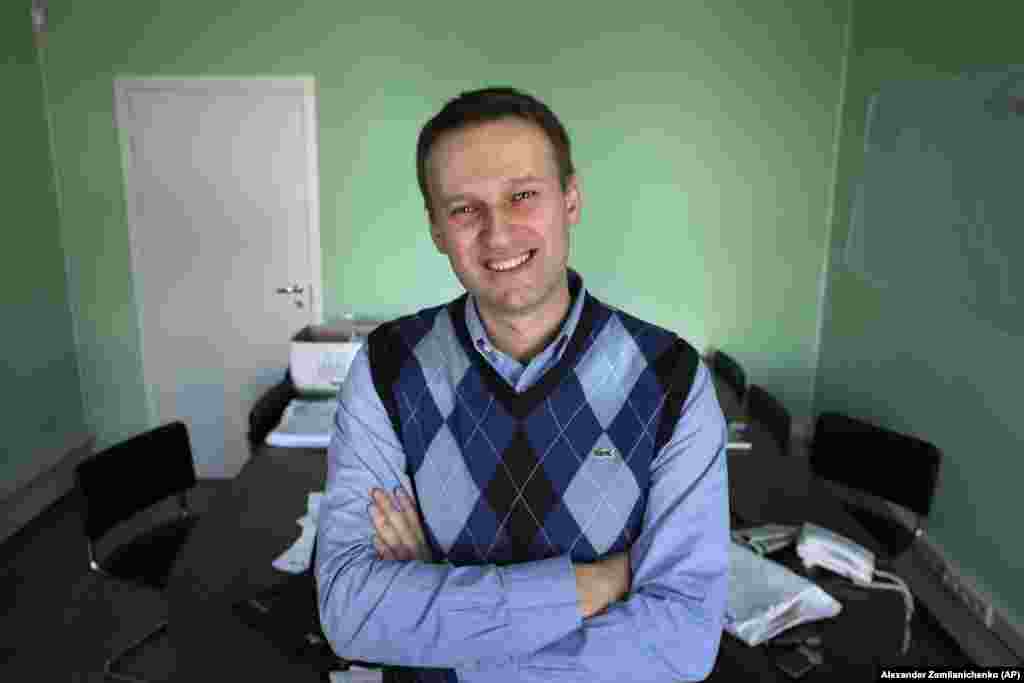
1/24In the span of a decade, Aleksei Navalny (pictured in 2010), opposition leader, corporate lawyer, and anti-corruption activist, went from the Kremlin's biggest foe to Russia's most prominent political prisoner.
Russian opposition leader Aleksei Navalny has been jailed more than 10 times since 2011 and, until August 4, 2023, was serving prison terms of nine years and 2 1/2 years. On August 4, he was sentenced to an additional 19 years in a maximum-security “special regime” prison.
Show moreShow less
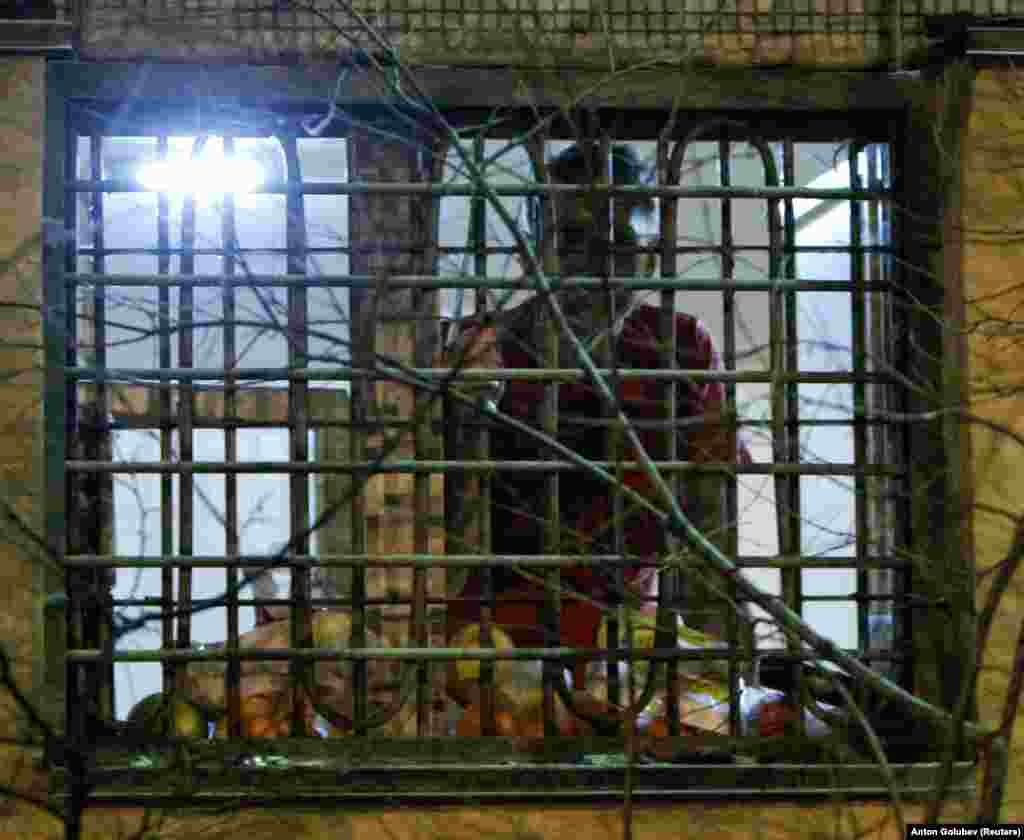
2/24Navalny looks out of the window of his cell in Moscow in December 2011. He was sentenced to 15 days of detention for "resisting law enforcement officers." It was the first of what would later become regular occurrences.
Russian opposition leader Aleksei Navalny has been jailed more than 10 times since 2011 and, until August 4, 2023, was serving prison terms of nine years and 2 1/2 years. On August 4, he was sentenced to an additional 19 years in a maximum-security “special regime” prison.
Show moreShow less
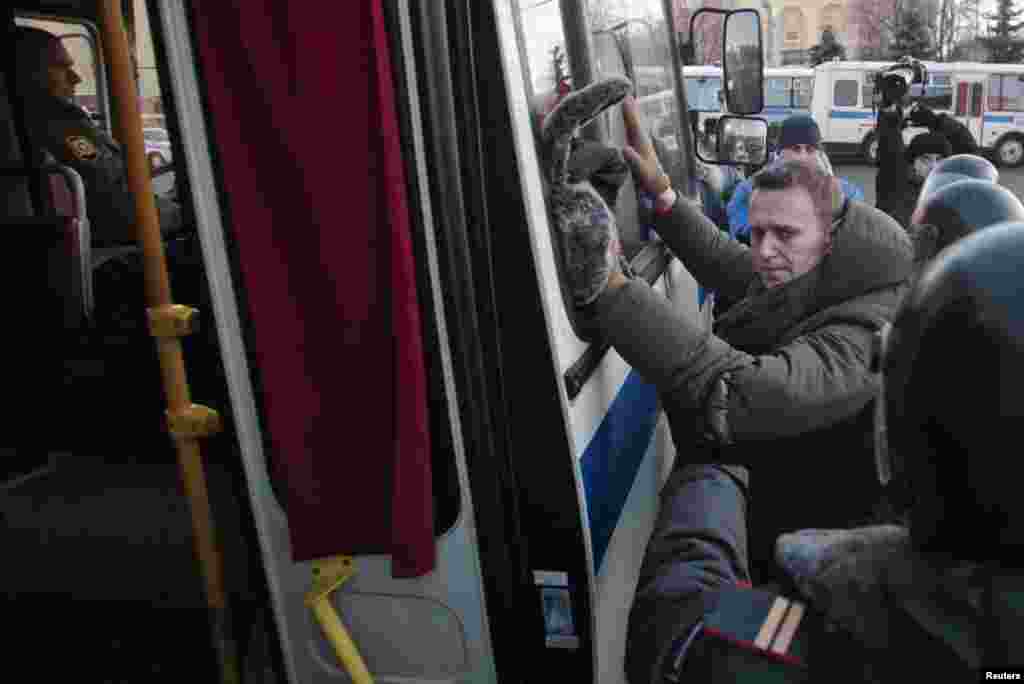
3/24Navalny (left) was detained by police during a Moscow rally on March 5, 2012, after Vladimir Putin was declared to have won the presidential election.
Navalny described Putin's party, United Russia, as "the party of crooks and thieves."
Russian opposition leader Aleksei Navalny has been jailed more than 10 times since 2011 and, until August 4, 2023, was serving prison terms of nine years and 2 1/2 years. On August 4, he was sentenced to an additional 19 years in a maximum-security “special regime” prison.
Show moreShow less
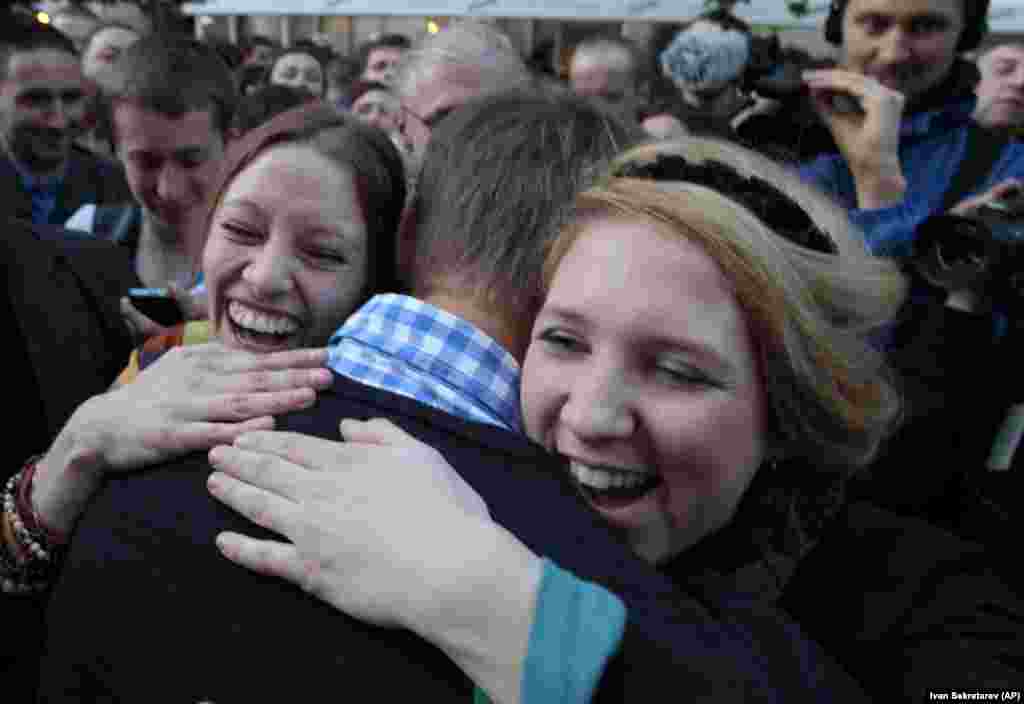
4/24Jubilant supporters embrace Navalny in May 2012 after he and left-wing politician Sergei Udaltsov were released from detention after serving a 15-day sentence for "participating in an illegal public event" in Moscow. The two were arrested as they protested Putin's inauguration.
Russian opposition leader Aleksei Navalny has been jailed more than 10 times since 2011 and, until August 4, 2023, was serving prison terms of nine years and 2 1/2 years. On August 4, he was sentenced to an additional 19 years in a maximum-security “special regime” prison.
Show moreShow less
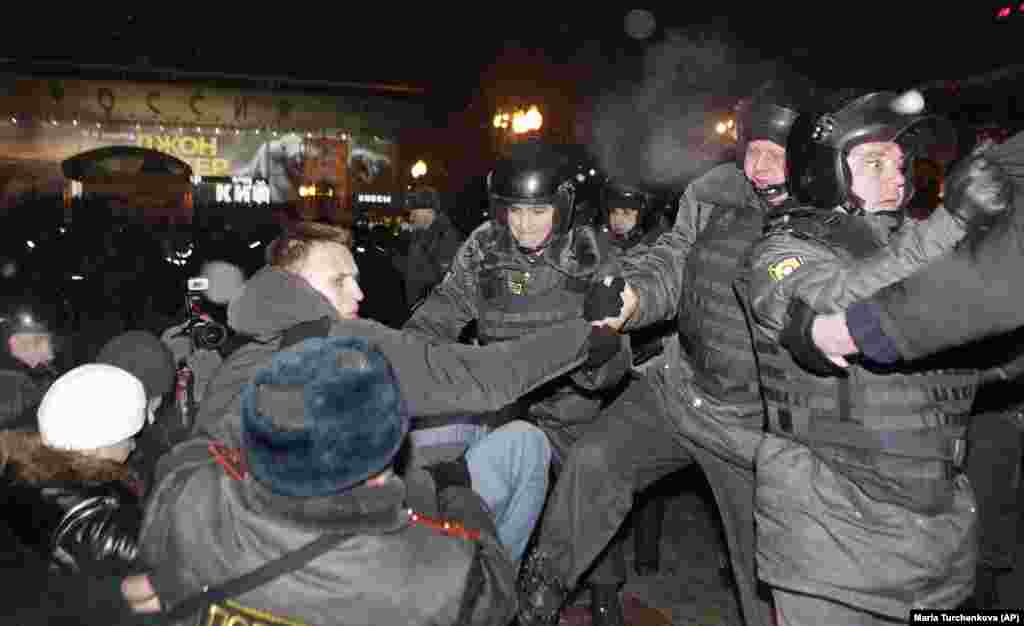
5/24In December 2012, Navalny was apprehended during an unapproved rally in the heart of Moscow. Opposition figures claimed that they were detained to prevent them from participating in a protest against Putin.
Russian opposition leader Aleksei Navalny has been jailed more than 10 times since 2011 and, until August 4, 2023, was serving prison terms of nine years and 2 1/2 years. On August 4, he was sentenced to an additional 19 years in a maximum-security “special regime” prison.
Show moreShow less
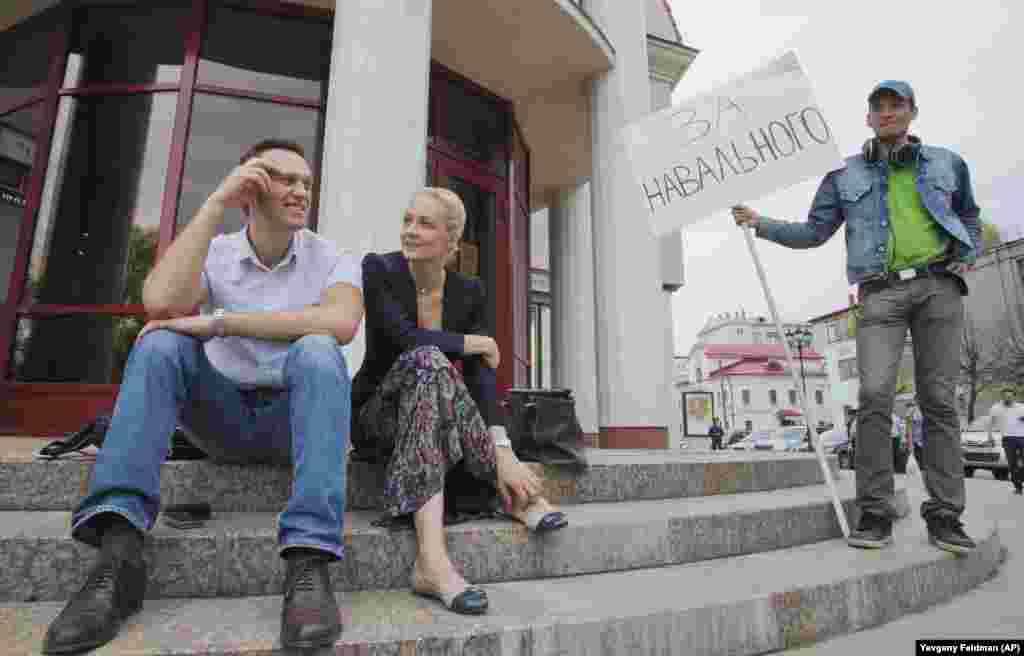
6/24Navalny and his wife, Yulia, sit together after a court hearing as a supporter with a poster reading "For Navalny" looks on in the northwestern city of Kirov on May 16, 2013.
Accused of embezzlement, Navalny insisted the charges were revenge for his exposure of high-level government corruption and for his campaigns against Putin.
Russian opposition leader Aleksei Navalny has been jailed more than 10 times since 2011 and, until August 4, 2023, was serving prison terms of nine years and 2 1/2 years. On August 4, he was sentenced to an additional 19 years in a maximum-security “special regime” prison.
Show moreShow less
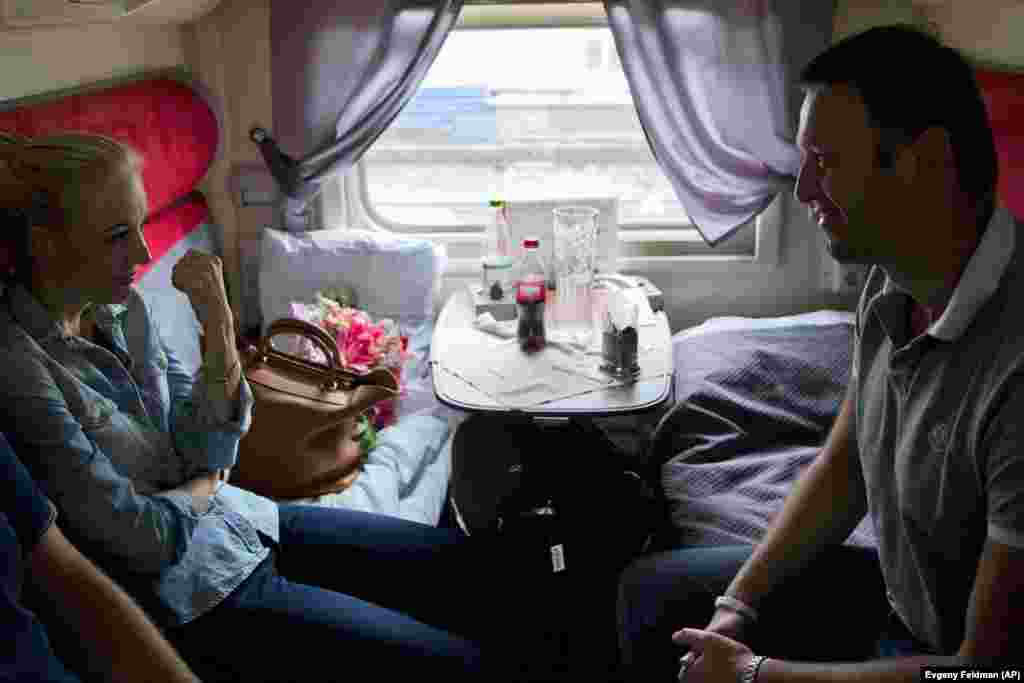
7/24The couple travels from Kirov to Moscow on a train on July 20, 2013, when he was released after receiving a suspended sentence on the embezzlement charge.
Russian opposition leader Aleksei Navalny has been jailed more than 10 times since 2011 and, until August 4, 2023, was serving prison terms of nine years and 2 1/2 years. On August 4, he was sentenced to an additional 19 years in a maximum-security “special regime” prison.
Show moreShow less
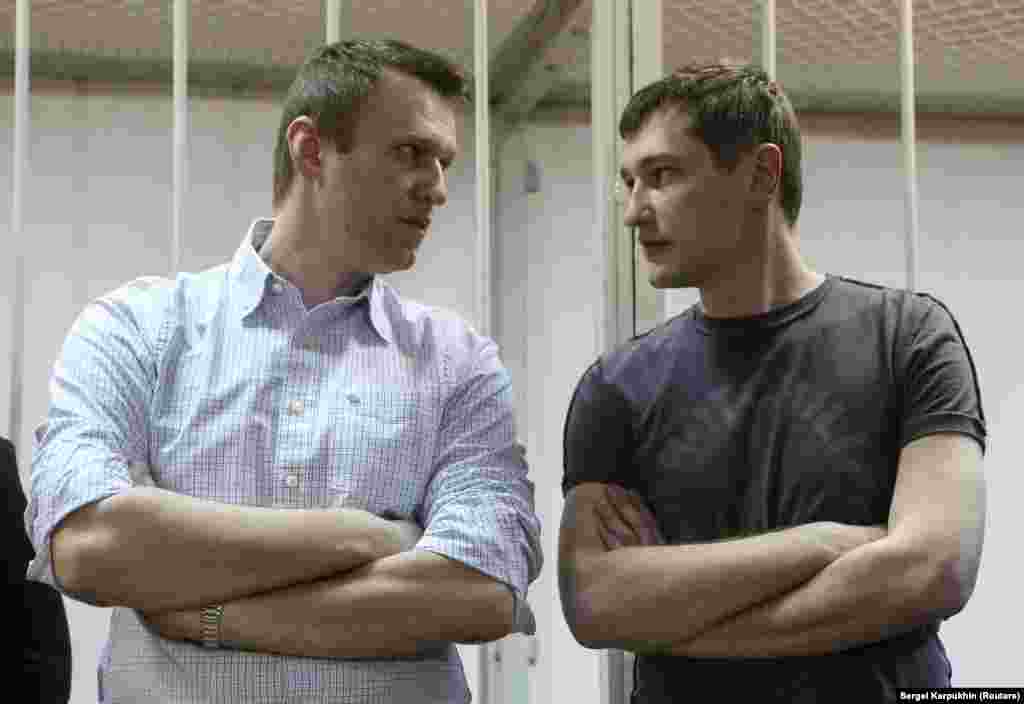
8/24Navalny and his brother and co-defendant, Oleg, attend a court hearing in Moscow on December 30, 2014, in a separate embezzlement case. The court ruled that Navalny be given a suspended sentence but jailed Oleg for 3 1/2 years.
Russian opposition leader Aleksei Navalny has been jailed more than 10 times since 2011 and, until August 4, 2023, was serving prison terms of nine years and 2 1/2 years. On August 4, he was sentenced to an additional 19 years in a maximum-security “special regime” prison.
Show moreShow less
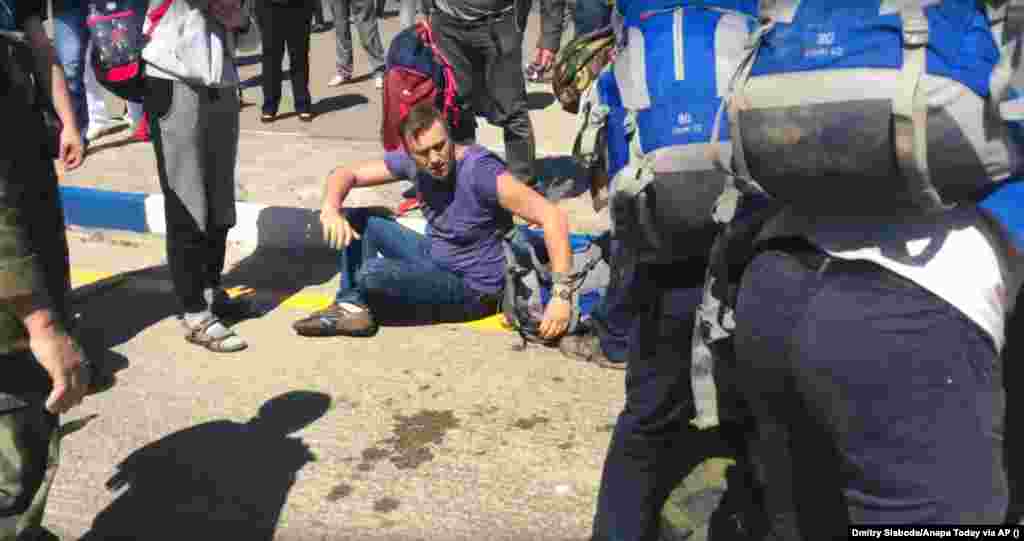
9/24Navalny tries to get up after he and his associates were attacked by a group of Cossacks at the Anapa airport in southern Russia in May 2016.
Russian opposition leader Aleksei Navalny has been jailed more than 10 times since 2011 and, until August 4, 2023, was serving prison terms of nine years and 2 1/2 years. On August 4, he was sentenced to an additional 19 years in a maximum-security “special regime” prison.
Show moreShow less
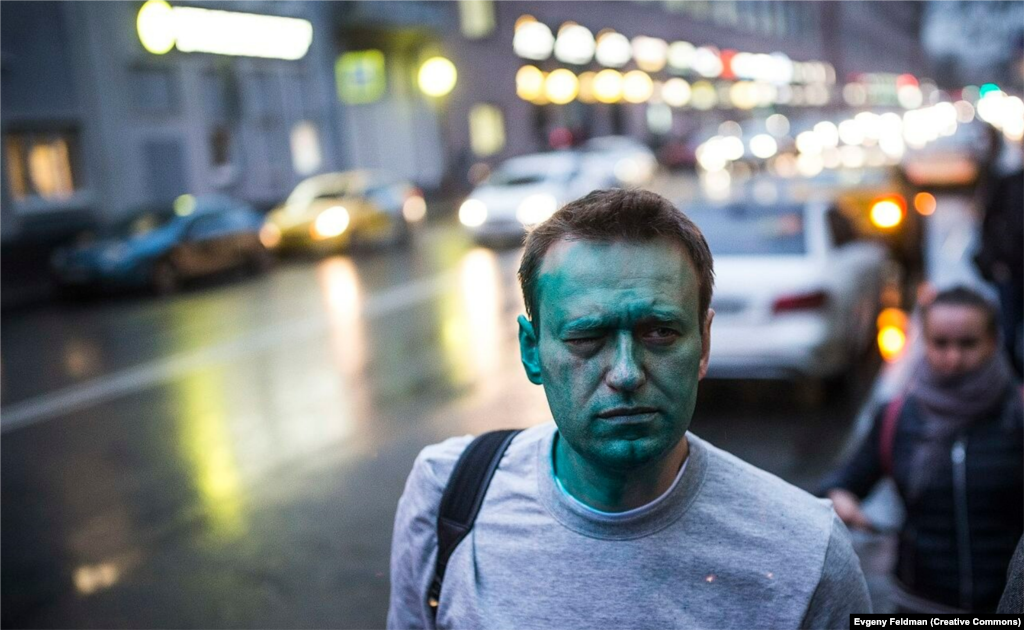
10/24Navalny moments after he was attacked by an unidentified assailant who splashed him with a green antiseptic liquid known as zelyonka outside of a meeting in Moscow on April 27, 2017.
Russian opposition leader Aleksei Navalny has been jailed more than 10 times since 2011 and, until August 4, 2023, was serving prison terms of nine years and 2 1/2 years. On August 4, he was sentenced to an additional 19 years in a maximum-security “special regime” prison.
Show moreShow less
11/24Yulia, Navalny's wife, tends to him after the attack. He suffered burns to his eyes.
Russian opposition leader Aleksei Navalny has been jailed more than 10 times since 2011 and, until August 4, 2023, was serving prison terms of nine years and 2 1/2 years. On August 4, he was sentenced to an additional 19 years in a maximum-security “special regime” prison.
Show moreShow less
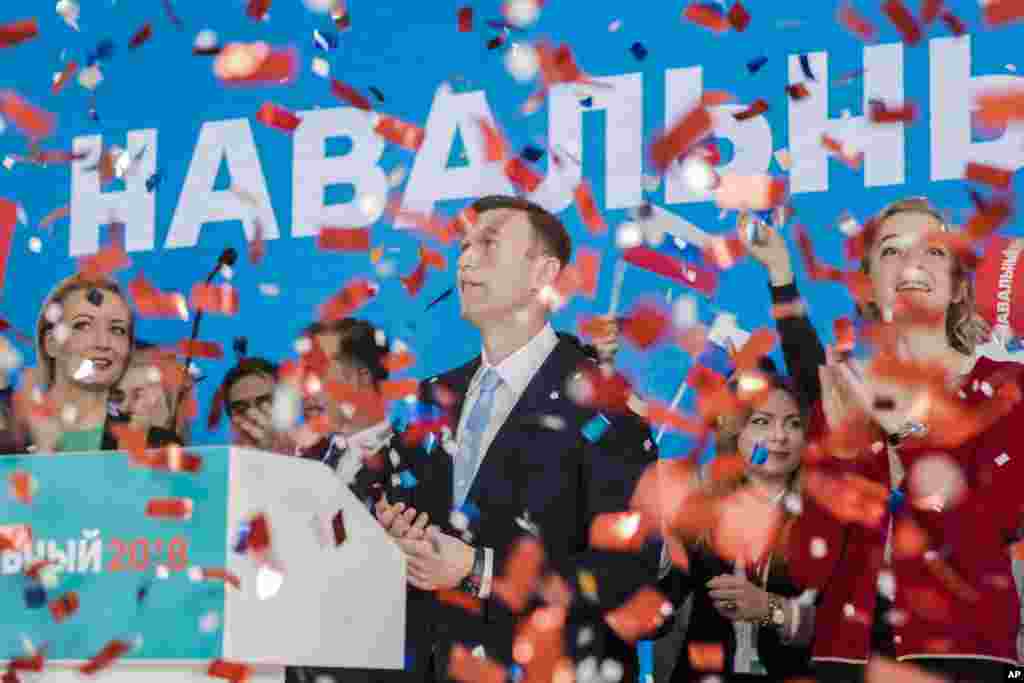
12/24The couple celebrates as he is nominated for the presidential election race in Moscow on December 24, 2017. Navalny ran a yearlong grassroots campaign and staged waves of rallies to push the Kremlin to let him run.
Russian opposition leader Aleksei Navalny has been jailed more than 10 times since 2011 and, until August 4, 2023, was serving prison terms of nine years and 2 1/2 years. On August 4, he was sentenced to an additional 19 years in a maximum-security “special regime” prison.
Show moreShow less
13/24Navalny heads to Russia's Central Election Commission in Moscow on December 25, 2017.
Navalny was disqualified from running due to his criminal conviction. The move was widely perceived as politically motivated.
Russian opposition leader Aleksei Navalny has been jailed more than 10 times since 2011 and, until August 4, 2023, was serving prison terms of nine years and 2 1/2 years. On August 4, he was sentenced to an additional 19 years in a maximum-security “special regime” prison.
Show moreShow less
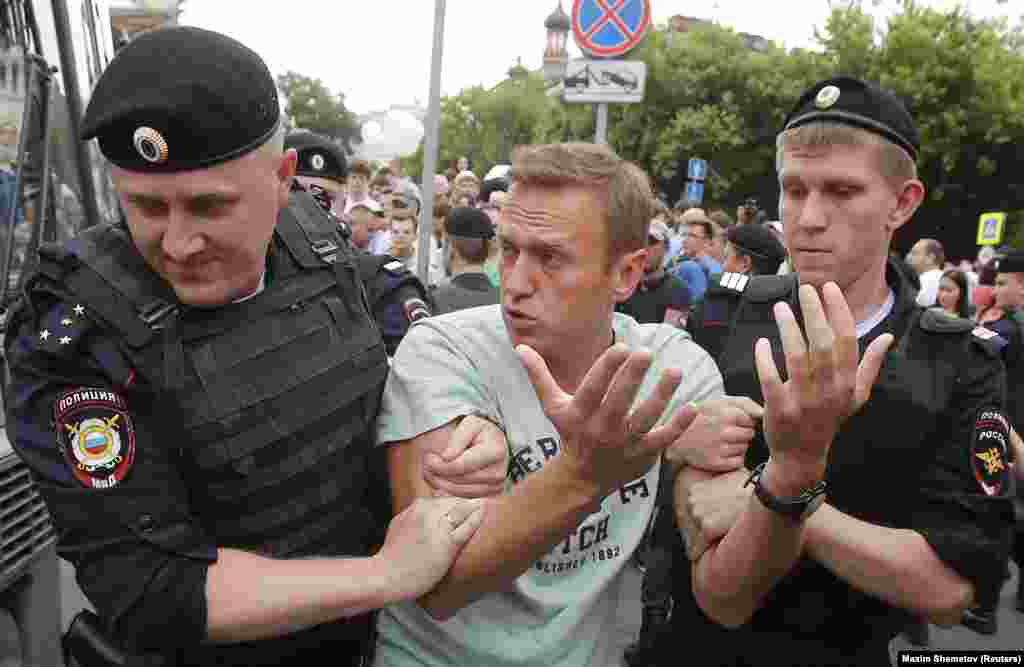
14/24Police detain Navalny on June 12, 2019, during a rally in support of investigative journalist Ivan Golunov, who was arrested and accused of drug possession.
Russian opposition leader Aleksei Navalny has been jailed more than 10 times since 2011 and, until August 4, 2023, was serving prison terms of nine years and 2 1/2 years. On August 4, he was sentenced to an additional 19 years in a maximum-security “special regime” prison.
Show moreShow less
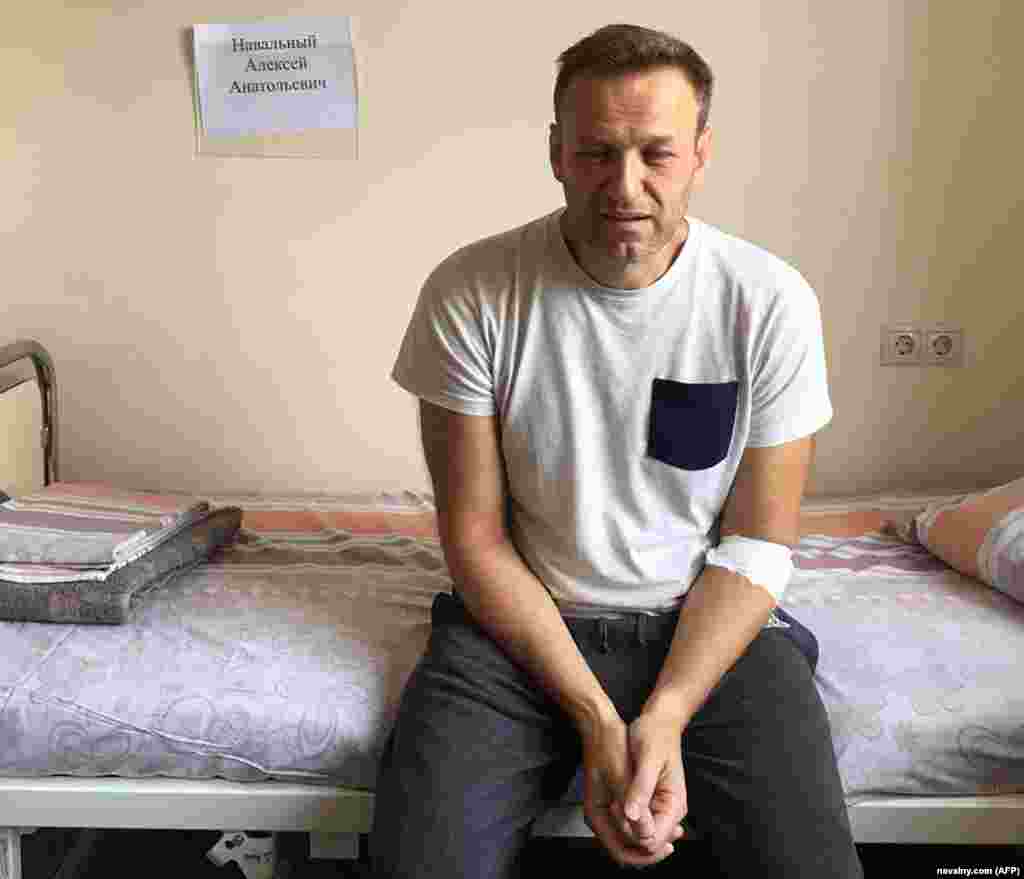
15/24A visibly unwell Navalny, his eyes red and puffy, sits on a hospital bed in Moscow on July 29, 2019, while serving a 30-day prison term on charges of calling an unauthorized protest. He said he believed he'd been poisoned, but doctors attributed his illness to an "acute allergic reaction."
Russian opposition leader Aleksei Navalny has been jailed more than 10 times since 2011 and, until August 4, 2023, was serving prison terms of nine years and 2 1/2 years. On August 4, he was sentenced to an additional 19 years in a maximum-security “special regime” prison.
Show moreShow less
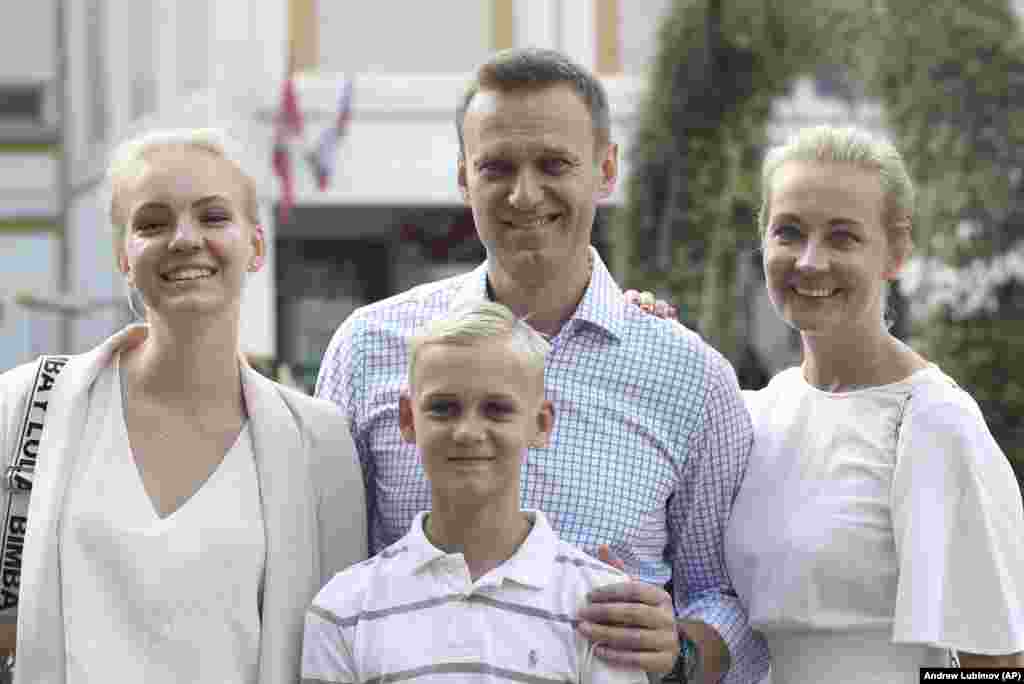
16/24Navalny and his family pose for a photo after voting during a city-council election in Moscow on September 8, 2019. Navalny claimed that the Russian government had frozen all of his bank accounts, as well as those of his wife, his two children, and his elderly parents.
Russian opposition leader Aleksei Navalny has been jailed more than 10 times since 2011 and, until August 4, 2023, was serving prison terms of nine years and 2 1/2 years. On August 4, he was sentenced to an additional 19 years in a maximum-security “special regime” prison.
Show moreShow less
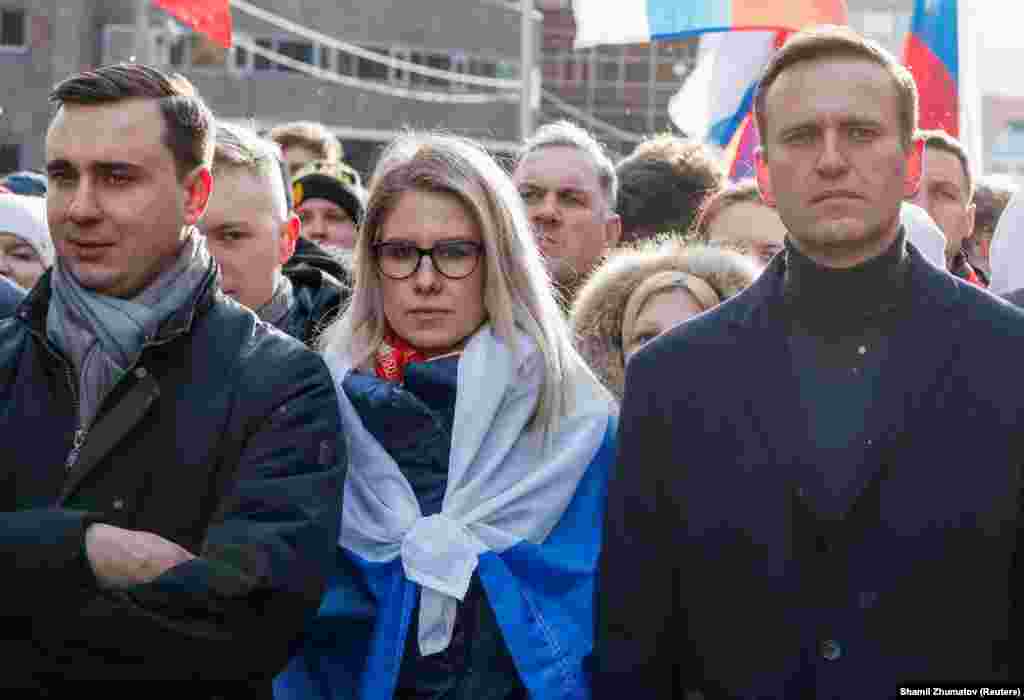
17/24Ivan Zhdanov(left), Lyubov Sobol(center), and Navalny take part in a rally to mark the fifth anniversary of the killing of opposition politician Boris Nemtsov outside the Kremlin walls in 2015 and to protest against proposed amendments to the constitution in Moscow on February 29, 2020.
Russian opposition leader Aleksei Navalny has been jailed more than 10 times since 2011 and, until August 4, 2023, was serving prison terms of nine years and 2 1/2 years. On August 4, he was sentenced to an additional 19 years in a maximum-security “special regime” prison.
Show moreShow less
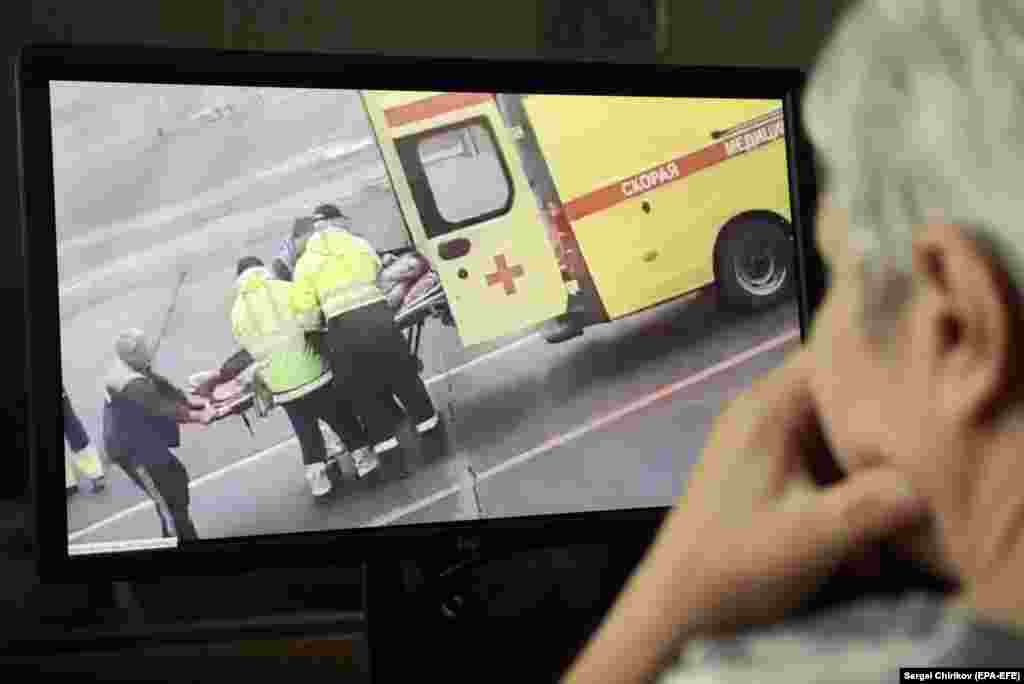
18/24A person watches a video showing Navalny being carried on a stretcher by an ambulance team in Omsk after falling gravely ill from suspected poisoning while aboard a flight from Tomsk to Moscow on August 20, 2020.
Russian opposition leader Aleksei Navalny has been jailed more than 10 times since 2011 and, until August 4, 2023, was serving prison terms of nine years and 2 1/2 years. On August 4, he was sentenced to an additional 19 years in a maximum-security “special regime” prison.
Show moreShow less
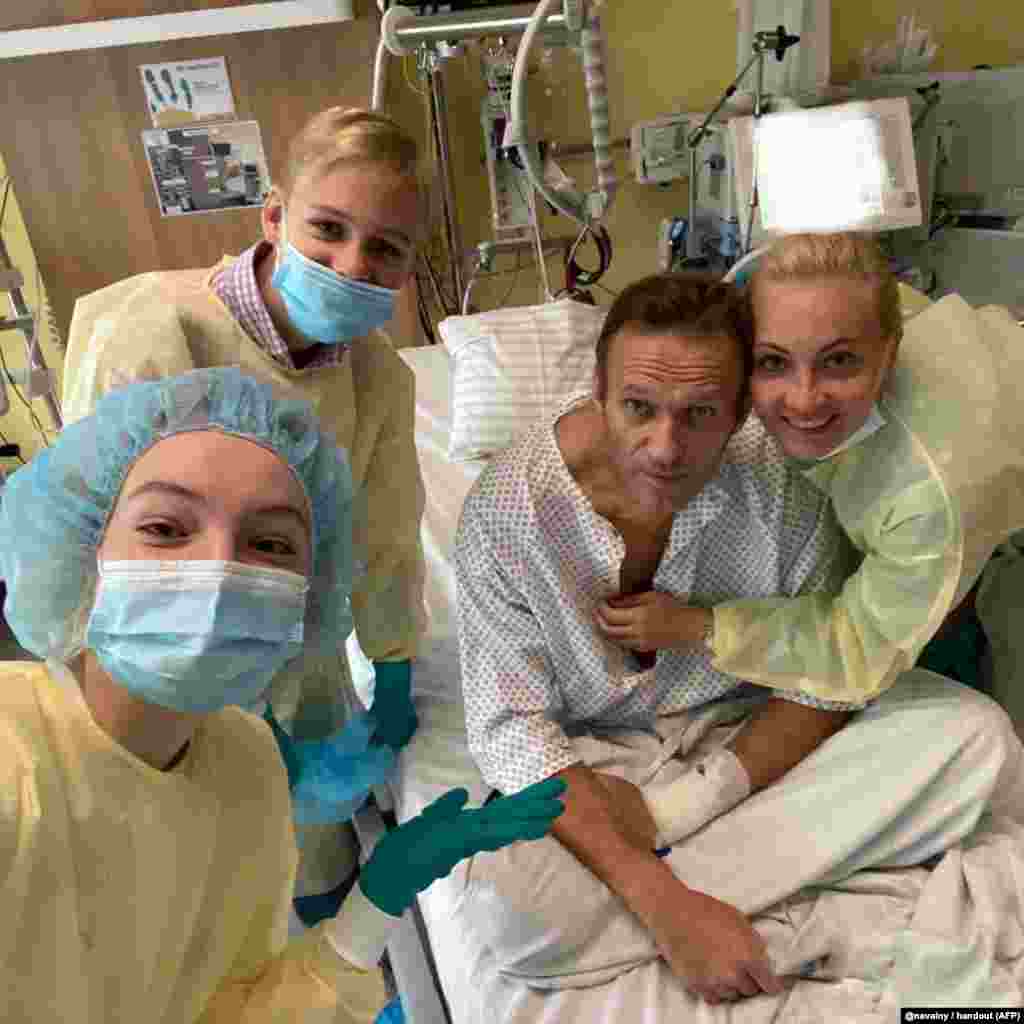
19/24Navalny poses for a picture with his family at Berlin's Charite hospital on September 15, 2020.
German doctors who treated Navalny announced that he had been poisoned with a nerve agent from the Novichok group, a deadly chemical weapon. Navalny spent weeks in a medically induced coma.
Russian opposition leader Aleksei Navalny has been jailed more than 10 times since 2011 and, until August 4, 2023, was serving prison terms of nine years and 2 1/2 years. On August 4, he was sentenced to an additional 19 years in a maximum-security “special regime” prison.
Show moreShow less
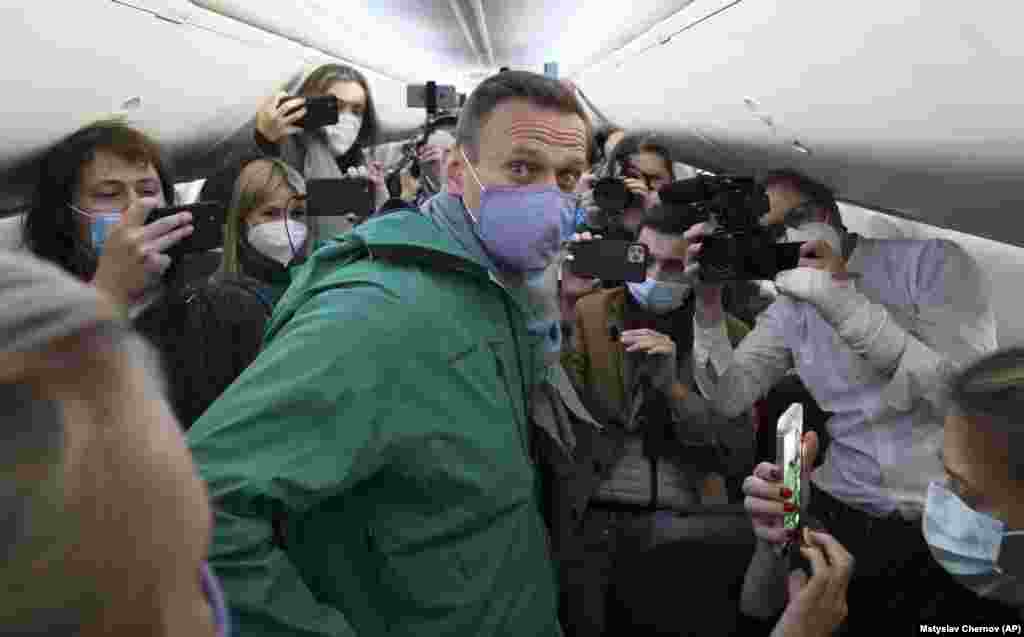
20/24Navalny is surrounded by journalists inside the plane in Berlin prior to his flight to Moscow on January 17, 2021.
After recovering from his poisoning, Navalny decided to return to Russia. Upon arrival in Moscow, he was detained on charges of violating the terms of his probation by leaving the country without permission.
Russian opposition leader Aleksei Navalny has been jailed more than 10 times since 2011 and, until August 4, 2023, was serving prison terms of nine years and 2 1/2 years. On August 4, he was sentenced to an additional 19 years in a maximum-security “special regime” prison.
Show moreShow less
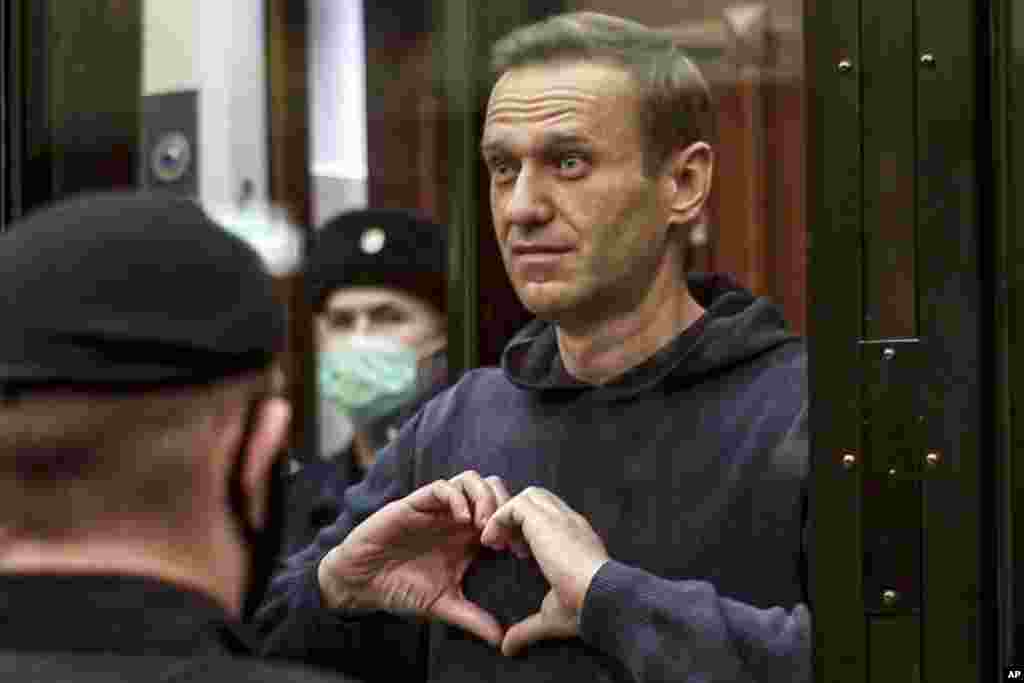
21/24Navalny makes the heart symbol during a hearing at the city court in Moscow on February 2, 2021. He was sentenced to two years and eight months in prison.
Russian opposition leader Aleksei Navalny has been jailed more than 10 times since 2011 and, until August 4, 2023, was serving prison terms of nine years and 2 1/2 years. On August 4, he was sentenced to an additional 19 years in a maximum-security “special regime” prison.
Show moreShow less
22/24People draw hearts with their cell-phone flashlights in support of Navalny in Moscow in February 2021. Opposition leaders urged people to shine their flashlights in a sign of solidarity with Navalny as the country experienced several weekends of nationwide protests.
Russian opposition leader Aleksei Navalny has been jailed more than 10 times since 2011 and, until August 4, 2023, was serving prison terms of nine years and 2 1/2 years. On August 4, he was sentenced to an additional 19 years in a maximum-security “special regime” prison.
Show moreShow less
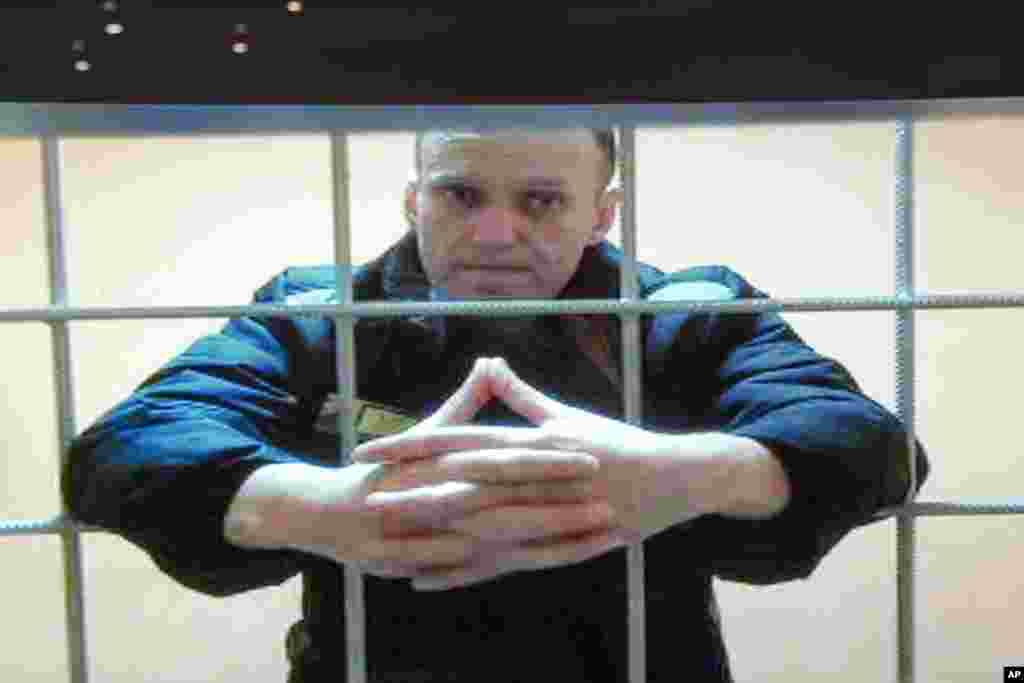
23/24Navalny appears via video link in a Moscow courtroom on May 24, 2022.
Lawyer Vadim Kobzev said on July 21, 2023, that Navalny was sent to solitary confinement for 13 days for "improperly introducing himself to a guard." It was his 17th time in a punitive solitary confinement cell since August 2022. A day earlier, prosecutors requested that the court sentence him to another 20 years on charges including extremism.
Russian opposition leader Aleksei Navalny has been jailed more than 10 times since 2011 and, until August 4, 2023, was serving prison terms of nine years and 2 1/2 years. On August 4, he was sentenced to an additional 19 years in a maximum-security “special regime” prison.
Show moreShow less
24/24Aleksei Navalny (second from left) listens as the guilty verdict against him is read out on August 4, 2023. He was sentenced to 19 years in Russia's harshest prison regime.
He was convicted under six articles of the Criminal Code, including creating and financing an extremist community, calling for extremism, rehabilitating Nazism, and involving minors in dangerous acts.
Russian opposition leader Aleksei Navalny has been jailed more than 10 times since 2011 and, until August 4, 2023, was serving prison terms of nine years and 2 1/2 years. On August 4, he was sentenced to an additional 19 years in a maximum-security “special regime” prison.
Show moreShow less
Previous slide
Next slide
The United States condemned the sentence in a statement issued by State Department spokesman Matthew Miller, who said the charges against Navalny were unfounded.
"This is an unjust conclusion to an unjust trial," Miller said. "For years, the Kremlin has attempted to silence Navalny and prevent his calls for transparency and accountability from reaching the Russian people."
Noting the secrecy of the trial and lack of access to evidence provided to his lawyers, Miller said Russian authorities "illustrated yet again both the baselessness of their case and the lack of due process afforded to those who dare to criticize the regime."
British Foreign Secretary James Cleverly condemned the jail term and said the United Kingdom calls for his immediate release.
Amnesty International called the new sentence "little more than a stealthily imposed life sentence" and "a sinister act of political vengeance that not only targets Navalny personally but serves as a warning to state critics across the country."
Volker Turk, the UN high commissioner for human rights, saidthe new sentence "raises renewed serious concerns about judicial harassment and instrumentalization of the court system for political purposes in Russia."
It was not immediately clear if Navalny's new sentence was added to his previous ones, or if he now faces a total of 19 years in prison.
Navalny spokeswoman Kira Yarmysh told AFP that the new sentence will take into account the around 2 1/2 years he already served as well as a 10-month house arrest in 2014-15.
Navalny's co-defendant, the former technical director of Navalny Live, Daniel Kholodny was sentenced to eight years in prison, Novaya Gazeta.Europe reported, citing his lawyer.
The case against Navalny dealt with the FBK, which, at the request of the prosecutor's office, was declared extremist in 2021, banning all its activities in Russia.
The "special regime" prison that the prosecution requested is a system in which inmates stay in cells either alone, in pairs, or in fours. The cells have additional metal bars on windows and doors, nonstop lighting and video surveillance. Inmates are not allowed to talk to cellmates and when they move inside the penitentiary, it is in a bowed position with their hands cuffed behind their back as they are escorted by guards and a dog.
They can request one or two hours of walking outside in specially fenced cubes where there is no direct sunlight. Special regime inmates are not allowed to communicate with friends or relatives, and can have no visits in the first 10 years of their sentences.
Navalny, one of President Vladimir Putin's fiercest critics, had predicted the harsh sentence in a post on social media a day earlier, saying he expected a sentence of 15 years to 20 years, despite what he claimed was "nonsensical" evidence presented during his closed-door trial.
He rejected all the charges against him as politically motivated and accused the Kremlin of seeking to keep him behind bars for life and to keep Russians from voicing dissent.
Navalny's current combined prison sentence is 11 1/2 years, including the embezzlement conviction, which was added to a shorter sentence for violating the terms of an earlier parole when he was medically evacuated after suffering a near-fatal poisoning.
All the charges are widely seen as retribution for his efforts to expose what he describes as the pervasive lawlessness, corruption, and repression by Putin and his political system.
Despite harassment, arrests, physical attacks, and the nerve-agent poisoning in August 2020, Navalny continues to play the role of opposition agitator, striving to remain relevant even in isolation.
RFE/RL's Russian Service is a multi-platform alternative to Russian state-controlled media, providing audiences in the Russian Federation with informed and accurate news, analysis, and opinion.