




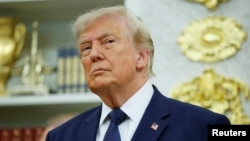
US President Donald Trump said Iran has requested that “talks” between the two countries continue, although he emphatically warned Tehran that the current cease-fire is no longer in effect amid a flurry of tit-for-tat strikes by both sides.
“The Islamic Republic of Iran has asked us to continue ‘talks,’” Trump wrote on Truth Social on July 10.
“We have agreed to do so, but the United States has stated to them, in no uncertain terms, that the Cease Fire is OVER!” he added.
Trump has often stated that Tehran has begged to resume negotiations with Washington, although such discussions have often broken up without apparent progress.
Speaking to reporters earlier this week, Trump said: “Iran called a while ago. They want to make a deal so badly. I just don’t know if they are worthy. I don’t know if they are going to honor the deal. That’s the problem.”
But Trump also said at the time that he would speak to Steve Witkoff and his son-in-law, Jared Kushner -- who have been acting as lead US negotiators -- about the possibility of resuming talks.
Qatari Mediators Arrive In Iran
Separately, Iranian media reported that a delegation from mediator Qatar arrived in Tehran on July 10 for talks
"The main purpose of the visit is reportedly to try to reinforce Qatar's role as a mediator following events on Tuesday [July 7]," Tasnim news agency reported.
Qatar has accused Iran of an attack on three tankers in the Strait of Hormuz on July 7 as hostilities in the region intensified amid what had been announced as a 60-day truce to allow full negotiations to take place between Washington and Tehran.
Iran has fired on ships transiting the crucial waterway, claiming that they attempted passage without getting proper permission from Tehran.
US forces responded by firing upon Iranian sites -- mostly coastal locations near the strait -- saying it was an effort to protect shipping in the waterway, through which some 20 percent of the world’s crude oil and natural gas supplies transited before the war.
US Central Command, which is responsible for American forces in the Middle East, sent out what it called a "fact check" on July 9, reiterating the US stance that the crucial Strait of Hormuz is an international waterway and that Tehran has no right to control it.
The recent spate of attacks in the region came as Iran held six days of ceremonies to mark the funeral of its slain supreme leader, Ayatollah Ali Khamenei, who was killed in the first day of the US-Israeli air strikes on February 28.
The extravagant public events drew hundreds of thousands of people across the Islamic republic, but one notable absence was Mojtaba Khamenei, the son of the late ruler and Iran's new supreme leader -- raising questions about his well-being and over the state of the country's leadership.

