Russia Claims Advances In Luhansk; Ukraine Says Situation 'Difficult'
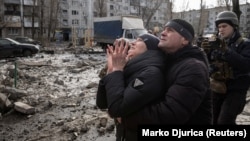
A woman reacts as her brother is rescued after an apartment block was heavily damaged by a missile strike in Pokrovsk in Ukraine's Donetsk region on February 15.
Russia has claimed its forces have broken through parts of Ukrainian defenses in the eastern Luhansk region, while Ukraine's military says its troops are repelling some attacks, but the situation is difficult.
The intensifying fighting on February 15 came as Ukraine pleaded with Western allies to speed up the supply of weapons and NATO defense ministers met for second day to discuss the issue.
It also comes as Russia's newest offensive ramps up in the Donbas region, and its forces -- both regular troops and mercenary soldiers -- press a monthslong effort to capture the Donetsk region city of Bakhmut.
Ukraine's General Staff said on February 15 that the focus of fighting was around not only Bakhmut, but also Lyman, Avdiyivka, and Kupyansk.
Russian troops carried out 17 air strikes in addition to 28 attacks from rocket systems on civilian infrastructure in Pokrovsk in the Donetsk region and in the Kherson region, the General Staff of the Ukrainian Armed Forces said in a later report on February 15.
"There are wounded and dead among the civilian population. A residential high-rise building was almost destroyed, and the hospital in Beryslav was fired upon again," the General Staff said.
Donetsk Governor Pavlo Kyrylenko said three people died and 11 were injured in the attack on Pokrovsk, where residential buildings had been hit. The shelling also damaged four high-rise buildings and a school, said Kyrylenko, who once again called on the residents of the region to evacuate.
Authorities in Kyiv said earlier that air-defense units had detected six balloons apparently launched by Russia and shot most of them down. Kyiv authorities said the balloons could carry reconnaissance equipment and were launched to "detect and exhaust our air-defense forces."
The city administration said in a statement that authorities would carefully examine the debris.
There was no comment from the Russian Defense Ministry, which claimed earlier on February 15 that Russia troops had broken through two fortified lines of Ukrainian defenses but did not specify where.
"Even the more fortified second line of defense of the enemy could not hold the breakthrough of the Russian military," the ministry said in a post to Telegram.
Not long after, however, President Volodymyr Zelenskiy’s office issued a statement saying Ukrainian forces had turned back some attacks in Luhansk, but that the situation was difficult.
And Serhiy Hayday, the head of the Luhansk regional military administration, said that Russia was pouring men and equipment into the region.
"There is a lot of shelling, aviation is already involved. Attacks are coming in waves from different directions," Hayday said in a video posted to his Telegram channel. "We see that they are transferring mobilized people. We also see that there is more equipment."
Meeting in Brussels for two days of talks, NATO defense ministers have tried to address concerns that Western stockpiles of weapons and ammunition are beginning to run low, while also finding ways to continue supplying Ukraine with weaponry.
Still, NATO officials have continued to resist Ukraine’s appeals to send fighter jets.
Speaking at a news conference in Brussels on February 15, U.S. Defense Secretary Lloyd Austin sounded an upbeat note about Ukraine’s fighting abilities.
Elderly Brothers Live Among The Ruins Of A Former No-Man's-Land In Ukraine
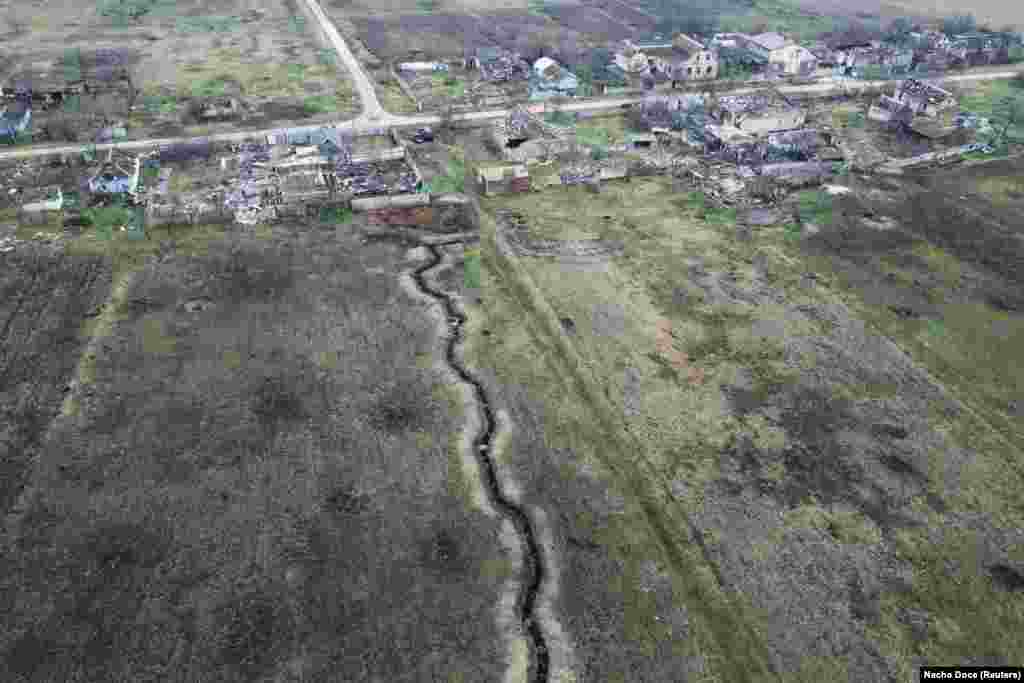
1/14Trenches snake through the ground behind the house of 80-year-old Stepan Kovalyov and his 79-year-old wife, Tetyana, in the village of Posad-Pokrovske, which is about 36 kilometers northwest of the city of Kherson in southern Ukraine.
The village was captured by Russian forces during the invasion on February 25, 2022, the day after Moscow launched what it describes as a "special military operation."
The Kovalyov brothers and their wives have chosen to spend their final days living without electricity or heating among the ruins of what had been no-man's-land in the war-ravaged village of Posad-Pokrovske in Ukraine's southern Kherson region.
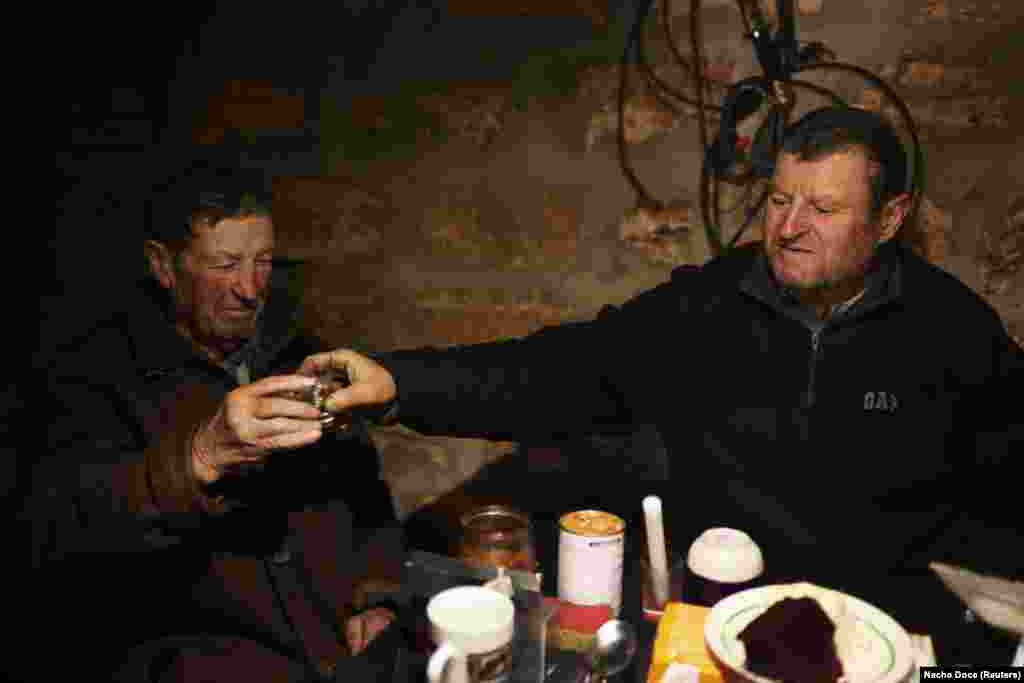
2/14Despite the shattered landscape, the Kovalyov brothers, Stepan (left) and his 77-year-old brother, Volodymyr, have vowed to live out their final days with their wives on their lands. Living off their meager state pensions and relying on relatives and donated food, they realize their lives will not be easy.
The Kovalyov brothers and their wives have chosen to spend their final days living without electricity or heating among the ruins of what had been no-man's-land in the war-ravaged village of Posad-Pokrovske in Ukraine's southern Kherson region.
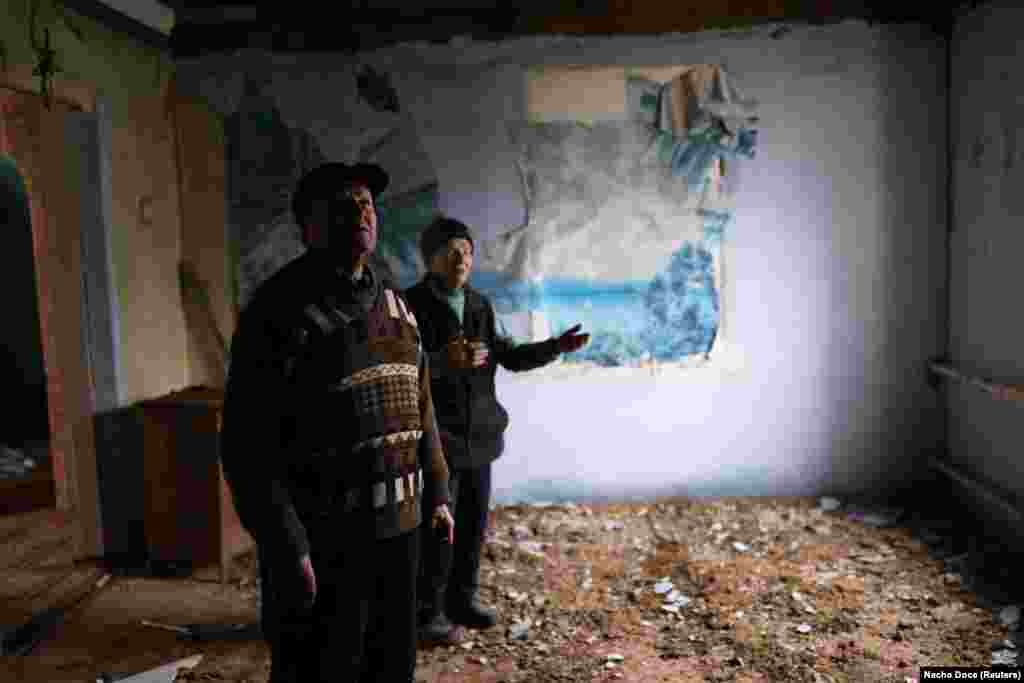
3/14Stepan and Tetyana stand inside their war-damaged home. Many of the buildings in the small village, which had an estimated 2,300 people, were destroyed during the fighting. "We are 80, we’ve worked all our lives in the same garden, and now we’re waiting for death," Stepan said.
The Kovalyov brothers and their wives have chosen to spend their final days living without electricity or heating among the ruins of what had been no-man's-land in the war-ravaged village of Posad-Pokrovske in Ukraine's southern Kherson region.
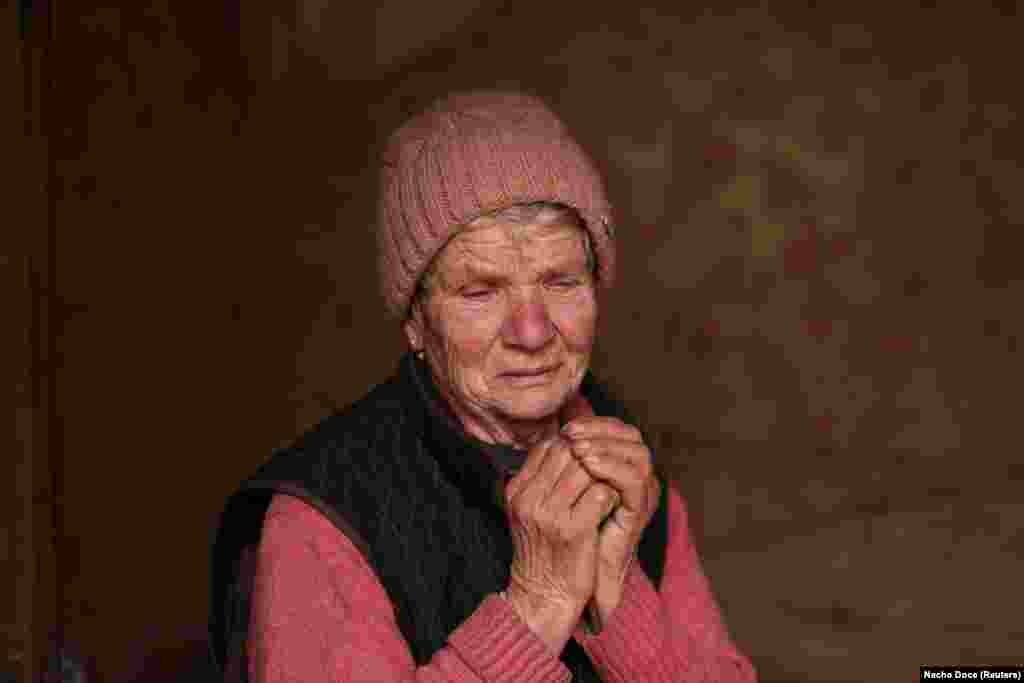
4/14Tetyana recalls returning to her destroyed home and finding that their livestock, which included four cows and dozens of chickens and pigs, were gone.
The Kovalyov brothers and their wives have chosen to spend their final days living without electricity or heating among the ruins of what had been no-man's-land in the war-ravaged village of Posad-Pokrovske in Ukraine's southern Kherson region.
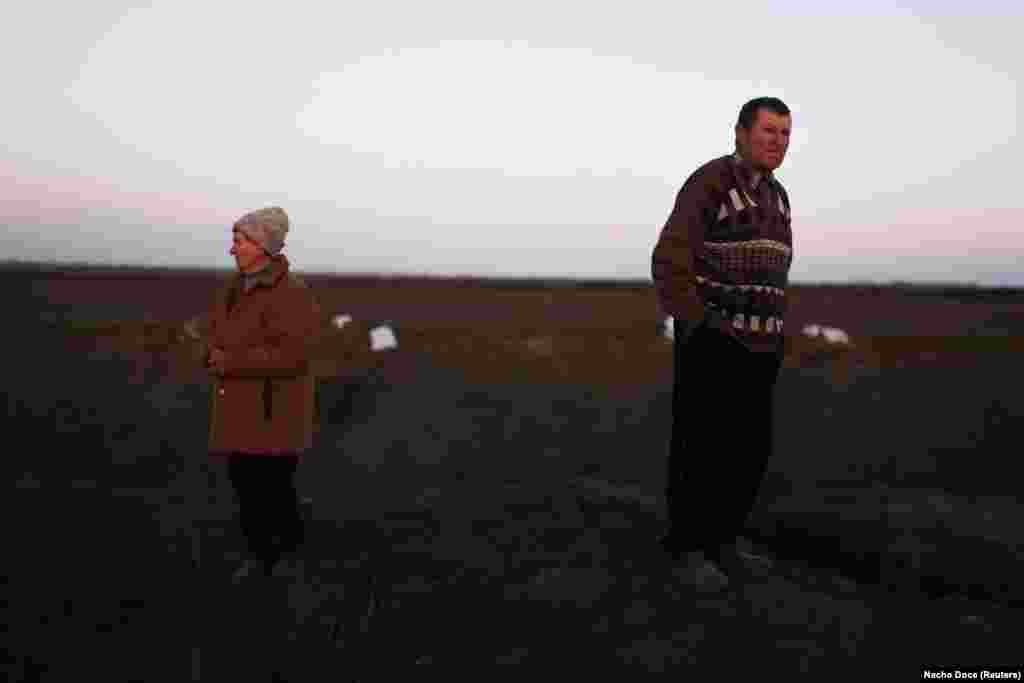
5/14Before the war, Stepan and Tetyana worked the land by growing barley and vegetables. Now their fields are unusable due to the mines and unexploded ordnance.
The Kovalyov brothers and their wives have chosen to spend their final days living without electricity or heating among the ruins of what had been no-man's-land in the war-ravaged village of Posad-Pokrovske in Ukraine's southern Kherson region.
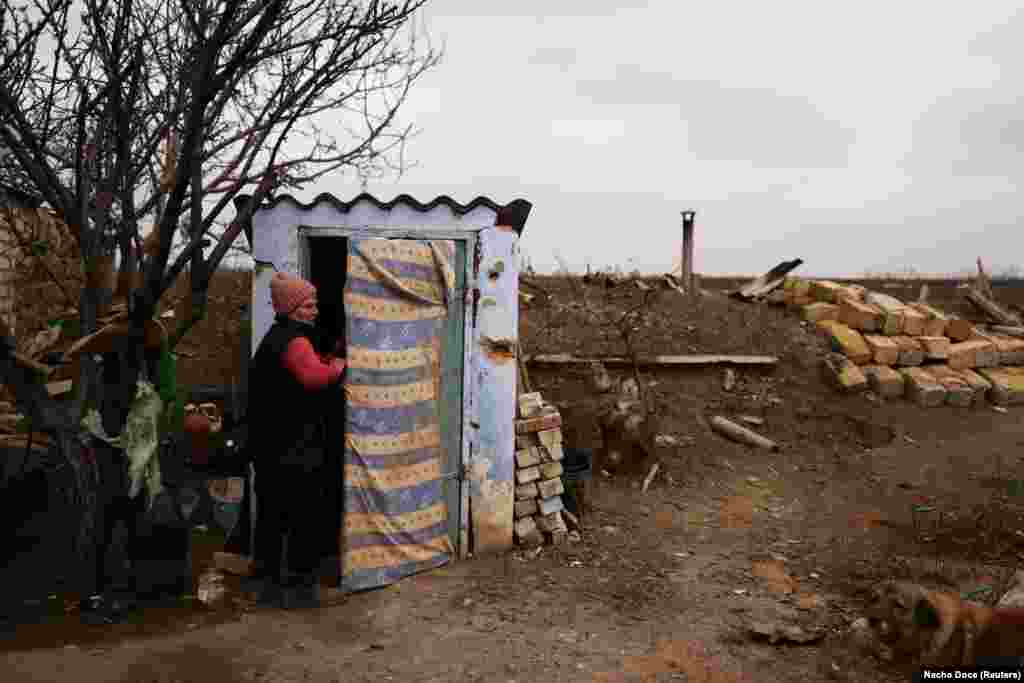
6/14Tetyana enters the shrapnel-scarred cellar where she and Stepan now live.
The Kovalyov brothers and their wives have chosen to spend their final days living without electricity or heating among the ruins of what had been no-man's-land in the war-ravaged village of Posad-Pokrovske in Ukraine's southern Kherson region.
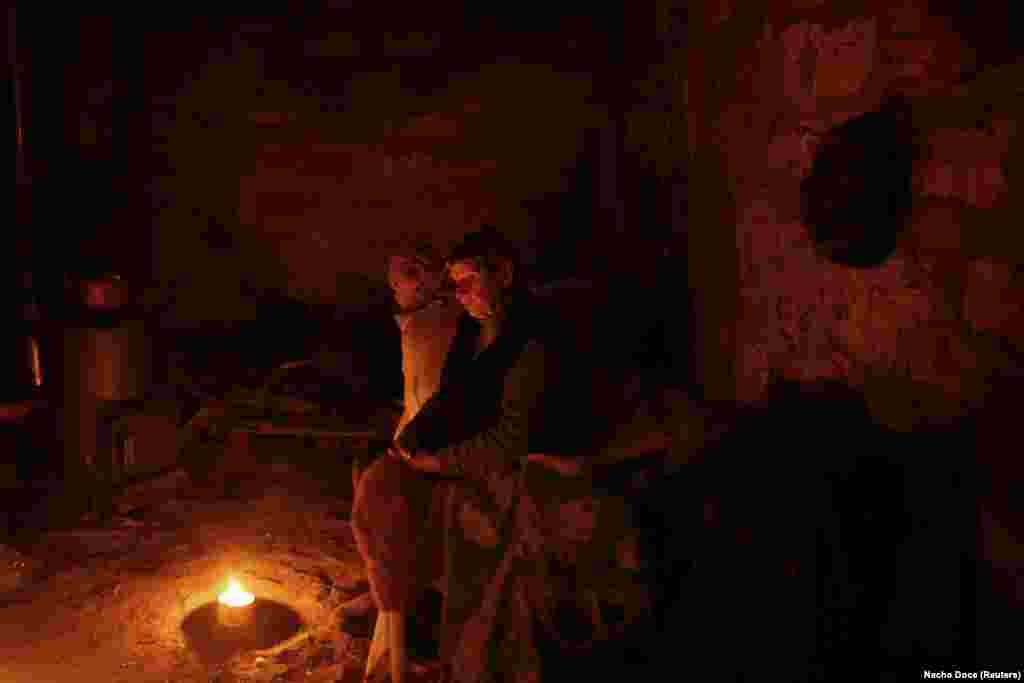
7/14Lit by candles, the cellar her late son Oleksandr had built as a food store is now their home.
The Kovalyov brothers and their wives have chosen to spend their final days living without electricity or heating among the ruins of what had been no-man's-land in the war-ravaged village of Posad-Pokrovske in Ukraine's southern Kherson region.
8/14Stepan's brother, Volodymyr, lives a street over with his family and pet cat. He, his wife, Tetyana, and their 21-year-old granddaughter, Svitlana, all live in the only room in the house that still has a roof.
The Kovalyov brothers and their wives have chosen to spend their final days living without electricity or heating among the ruins of what had been no-man's-land in the war-ravaged village of Posad-Pokrovske in Ukraine's southern Kherson region.
9/14Tetyana recalls how her house was hit by a shell in October. "There was lots of smoke, I couldn't see anything," she said. "It was raining, and parts of the roof were falling in."
The Kovalyov brothers and their wives have chosen to spend their final days living without electricity or heating among the ruins of what had been no-man's-land in the war-ravaged village of Posad-Pokrovske in Ukraine's southern Kherson region.
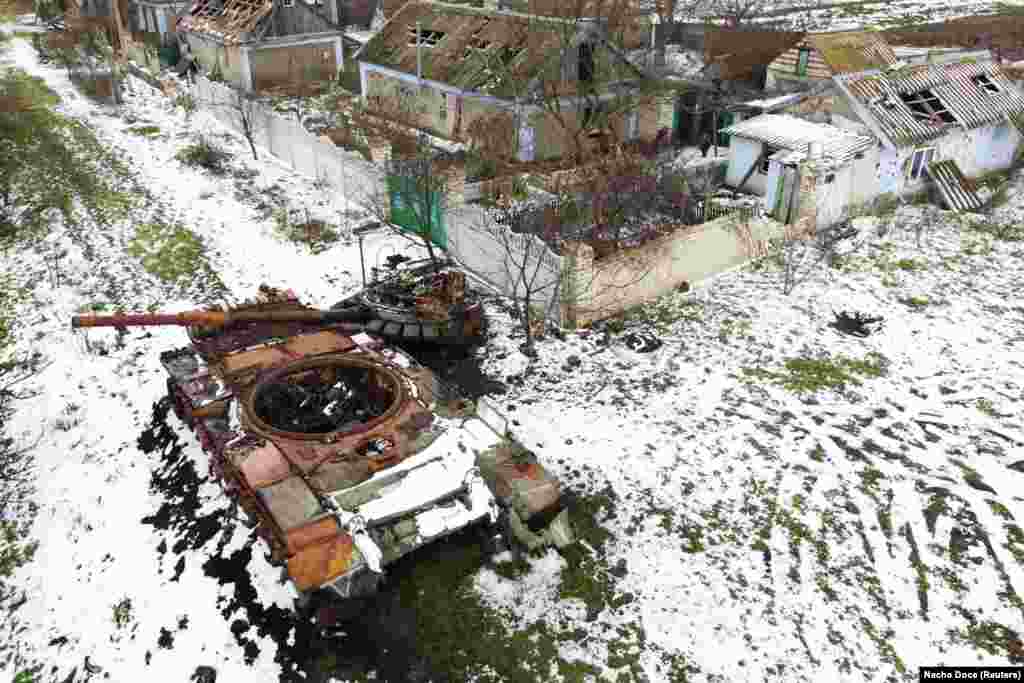
10/14A destroyed Russian tank rusts near the Kovalyov brothers' destroyed homes.
The clashes coincided with a Ukrainian counteroffensive that eventually pushed Moscow's forces across the Dnieper River.
The Kovalyov brothers and their wives have chosen to spend their final days living without electricity or heating among the ruins of what had been no-man's-land in the war-ravaged village of Posad-Pokrovske in Ukraine's southern Kherson region.
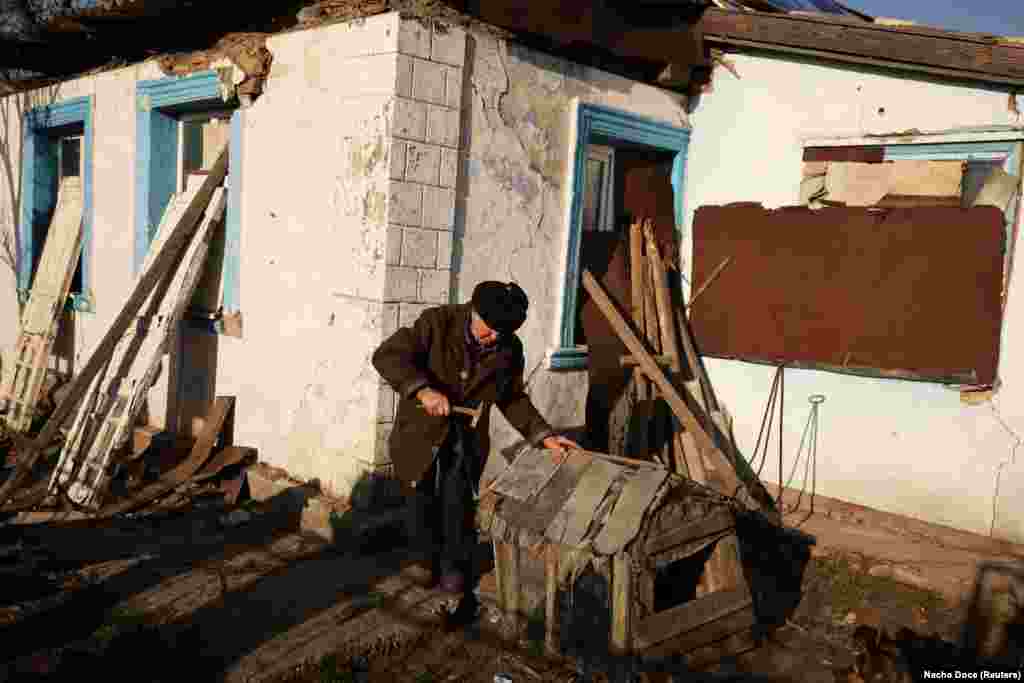
11/14Volodymyr repairs a doghouse in front of his shattered home where boards cover the blown-out windows.
The Kovalyov brothers and their wives have chosen to spend their final days living without electricity or heating among the ruins of what had been no-man's-land in the war-ravaged village of Posad-Pokrovske in Ukraine's southern Kherson region.
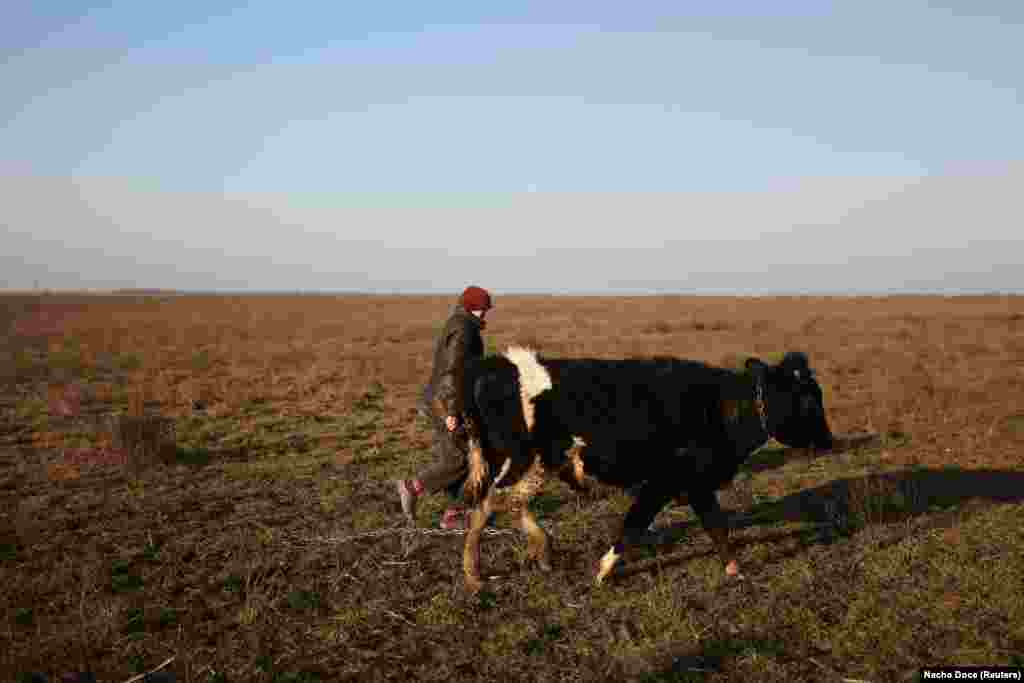
12/14Svitlana, who is disabled, guides the family's cow to the safe part of the fields near their house.
The Kovalyov brothers and their wives have chosen to spend their final days living without electricity or heating among the ruins of what had been no-man's-land in the war-ravaged village of Posad-Pokrovske in Ukraine's southern Kherson region.
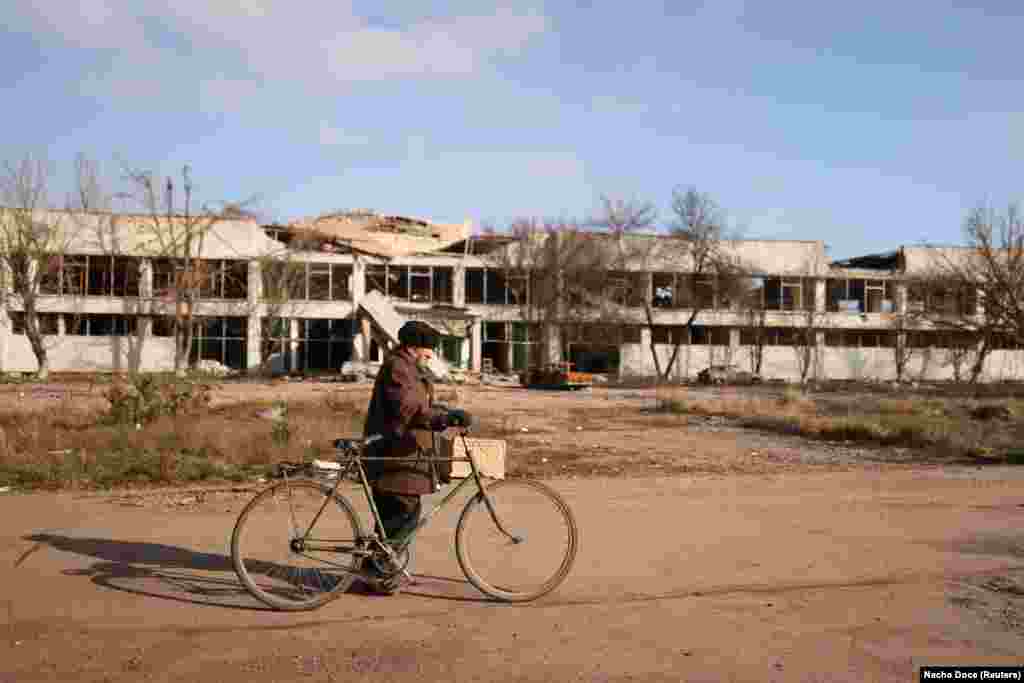
13/14In a landscape scarred by war, Volodymyr walks his bicycle to a delivery point where volunteers provide food for the last holdouts who still live in the village.
The Kovalyov brothers and their wives have chosen to spend their final days living without electricity or heating among the ruins of what had been no-man's-land in the war-ravaged village of Posad-Pokrovske in Ukraine's southern Kherson region.
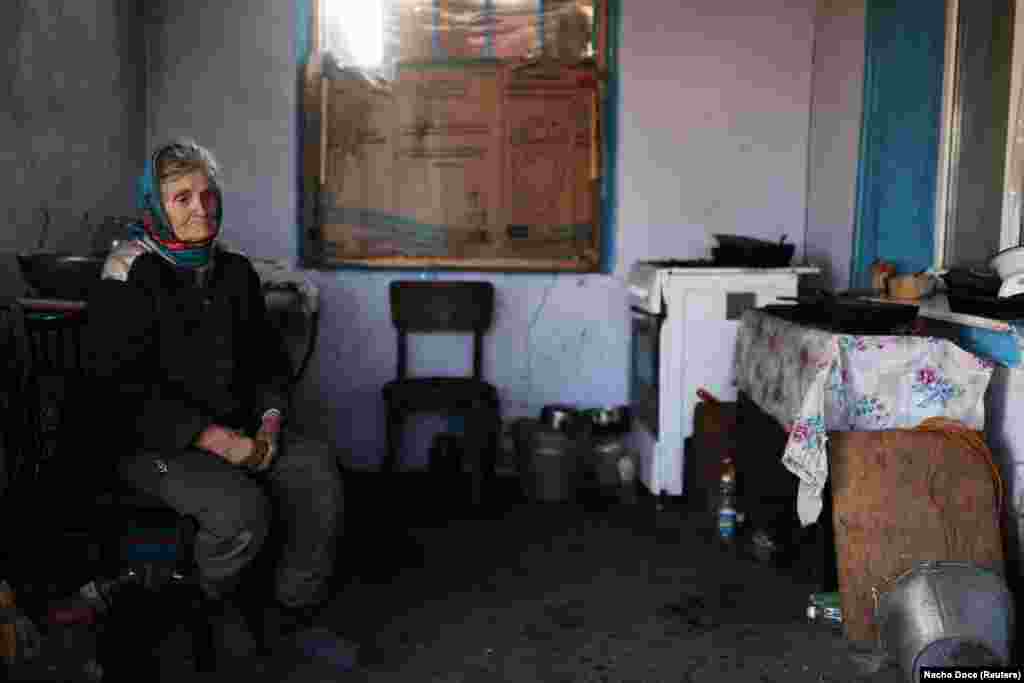
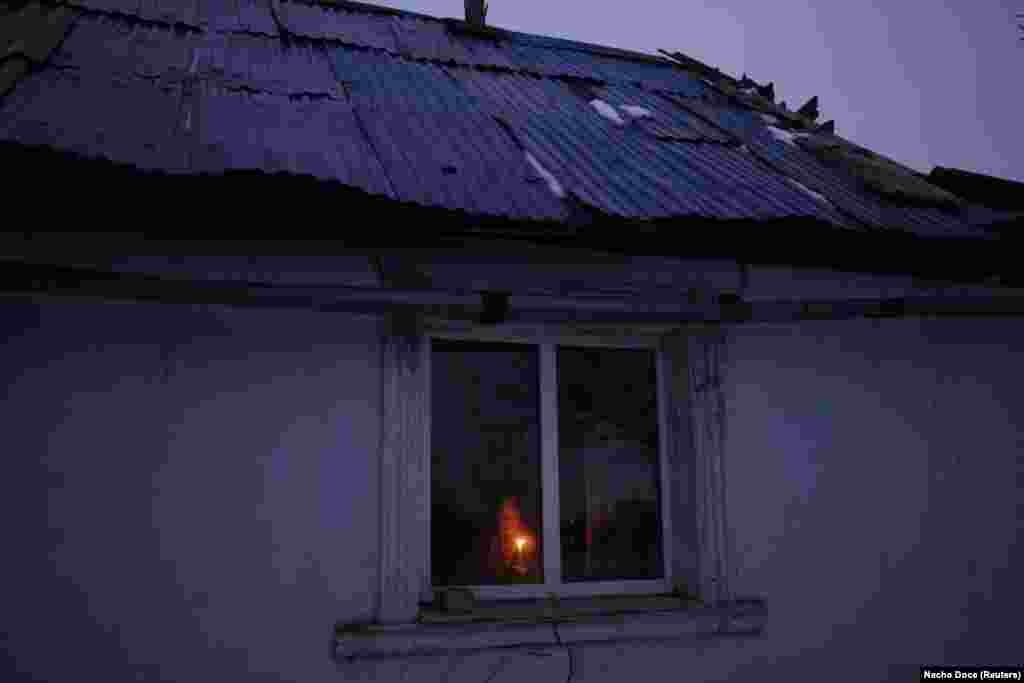
14/14Tetyana looks out the window of the only room of her house that still has a roof.
Though the brothers occasionally enjoy an odd glass of horilka, a Ukrainian spirit, the couples keep largely to themselves.
The Kovalyov brothers and their wives have chosen to spend their final days living without electricity or heating among the ruins of what had been no-man's-land in the war-ravaged village of Posad-Pokrovske in Ukraine's southern Kherson region.
Previous slide
Next slide
“Russia continues to pour large numbers of additional people into the fight, and those people are ill-trained and ill-equipped and, because of that, we see them incurring a lot of casualties,” Austin said.
"I think [the Ukrainians] will have a real good chance of making a pretty significant difference on the battlefield and establishing the initiative. And being able to exploit that initiative going forward,” he said.

RFE/RL's Ukrainian Service has seen its audience grow significantly since Russia's full-scale invasion in February 2022 and is among the most cited media outlets in the country. Its bold, in-depth reporting from the front lines has won many accolades and awards. Its comprehensive coverage also includes award-winning reporting by the Donbas.Realities and Crimea.Realities projects and the Schemes investigative unit.