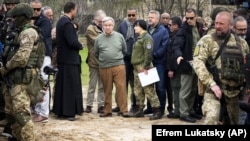
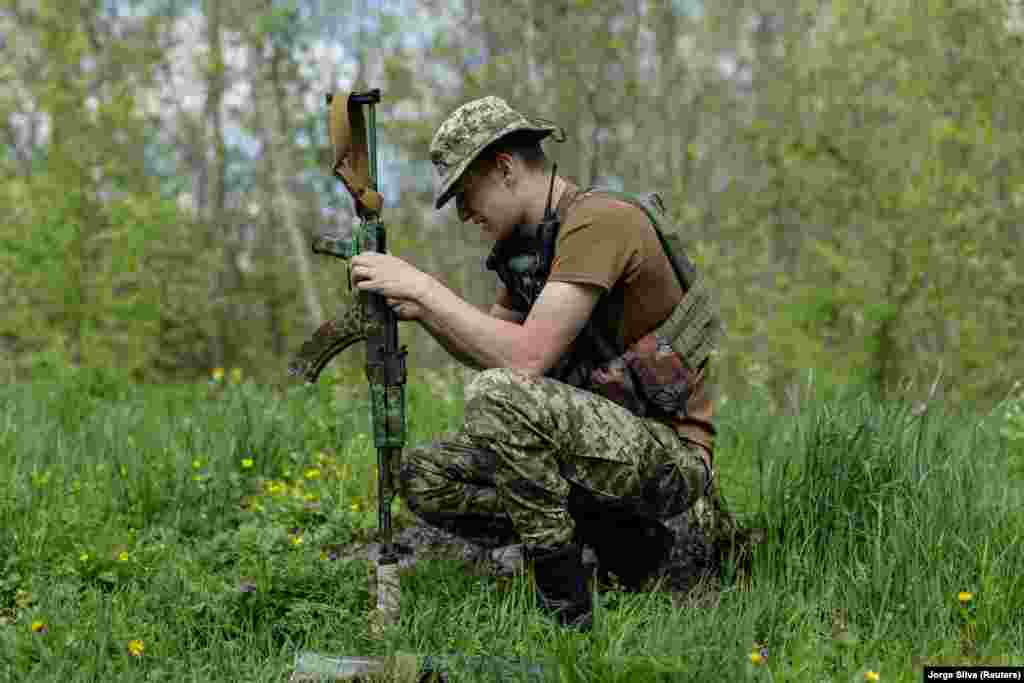
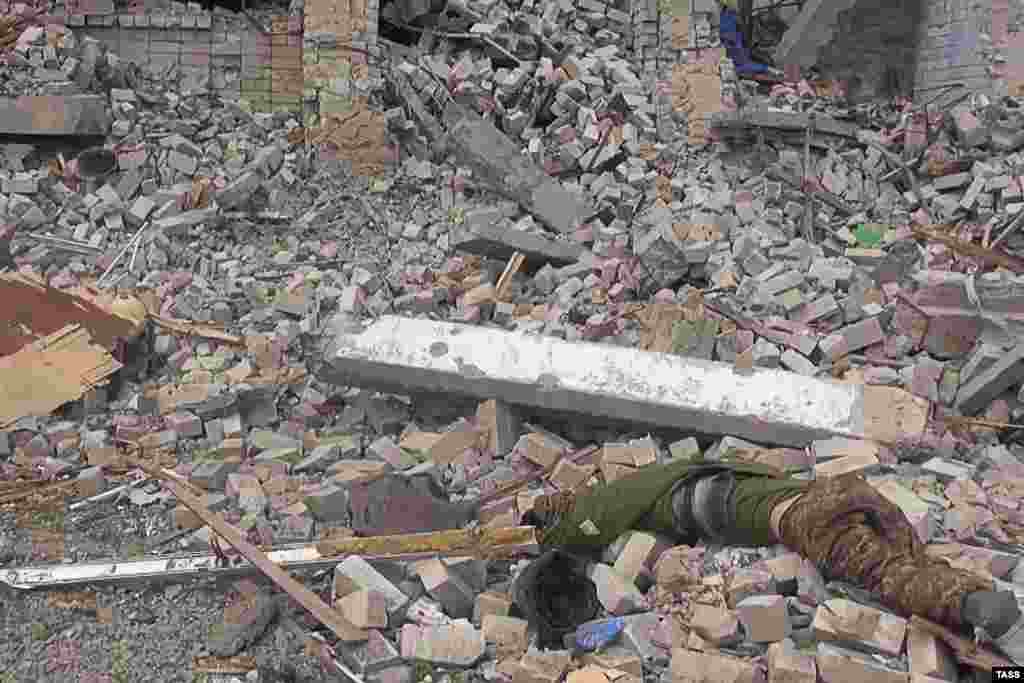
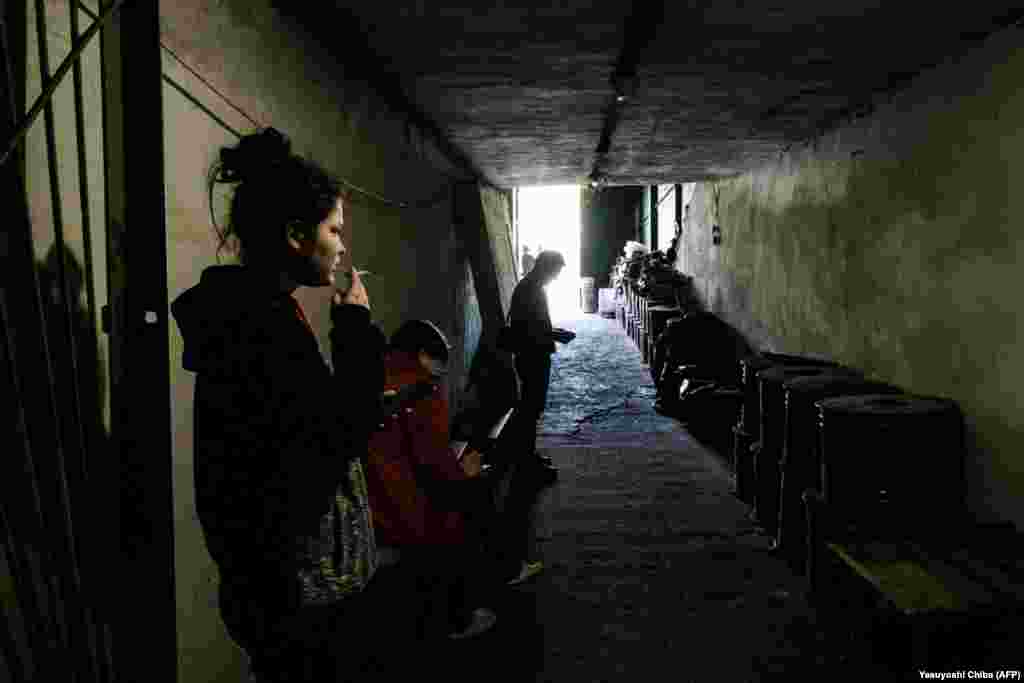
UN Secretary-General Antonio Guterres (center) stands at the site of a mass grave in Bucha, on the outskirts of Kyiv, during a visit on April 28.
Ukraine has condemned a Russian air strike on Kyiv during a visit by UN Secretary-General Antonio Guterres as a "heinous act of barbarism," as U.S. President Joe Biden seeks tens of billions of dollars more in funding to help Ukraine defeat the Russian invasion.
Two strikes hit in the Shevchenkivskiy district of the capital, Mayor Vitaliy Klitschko said on Telegram.
There was no immediate information about casualties, but a close aide to the UN chief sent a message to journalists confirming they were safe.
Ukrainian officials responded on Twitter to the attack on Kyiv, one of the boldest since Russian forces retreated from around the capital weeks ago.
"By this heinous act of barbarism Russia demonstrates once again its attitude toward Ukraine, Europe, and the world,” Foreign Minister Dmytro Kuleba said.
Mykhaylo Podolyak, a senior aide to Ukrainian President Volodymyr Zelenskiy, noted that Guterres had visited Moscow and had a meeting with Russian President Vladimir Putin earlier this week.
"The day before he was sitting at a long table in the Kremlin, and today explosions are above his head," Podolyak said.
Guterres earlier decried the "absurdity" of Moscow's war in Ukraine. The UN chief toured several towns just outside Kyiv -- including Bucha and Borodyanka -- where the corpses of civilians, some showing signs of torture, were found after Russian troops withdrew earlier this month.
The apparent evidence of atrocities has prompted calls from several countries, as well as the UN and the International Criminal Court (ICC), for investigations to determine whether war crimes were committed.
"I fully support the ICC and I appeal to the Russian Federation to accept, to cooperate with the ICC," Guterres said after visiting the two locations. "But when we talk about war crimes, we cannot forget that the worst of crimes is war itself. The war is an absurdity in the 21st century. The war is evil. There is no way a war can be acceptable in the 21st century."
Undercover In Ukraine's Occupied Kherson: 'You Don't Know What Will Happen Tomorrow'
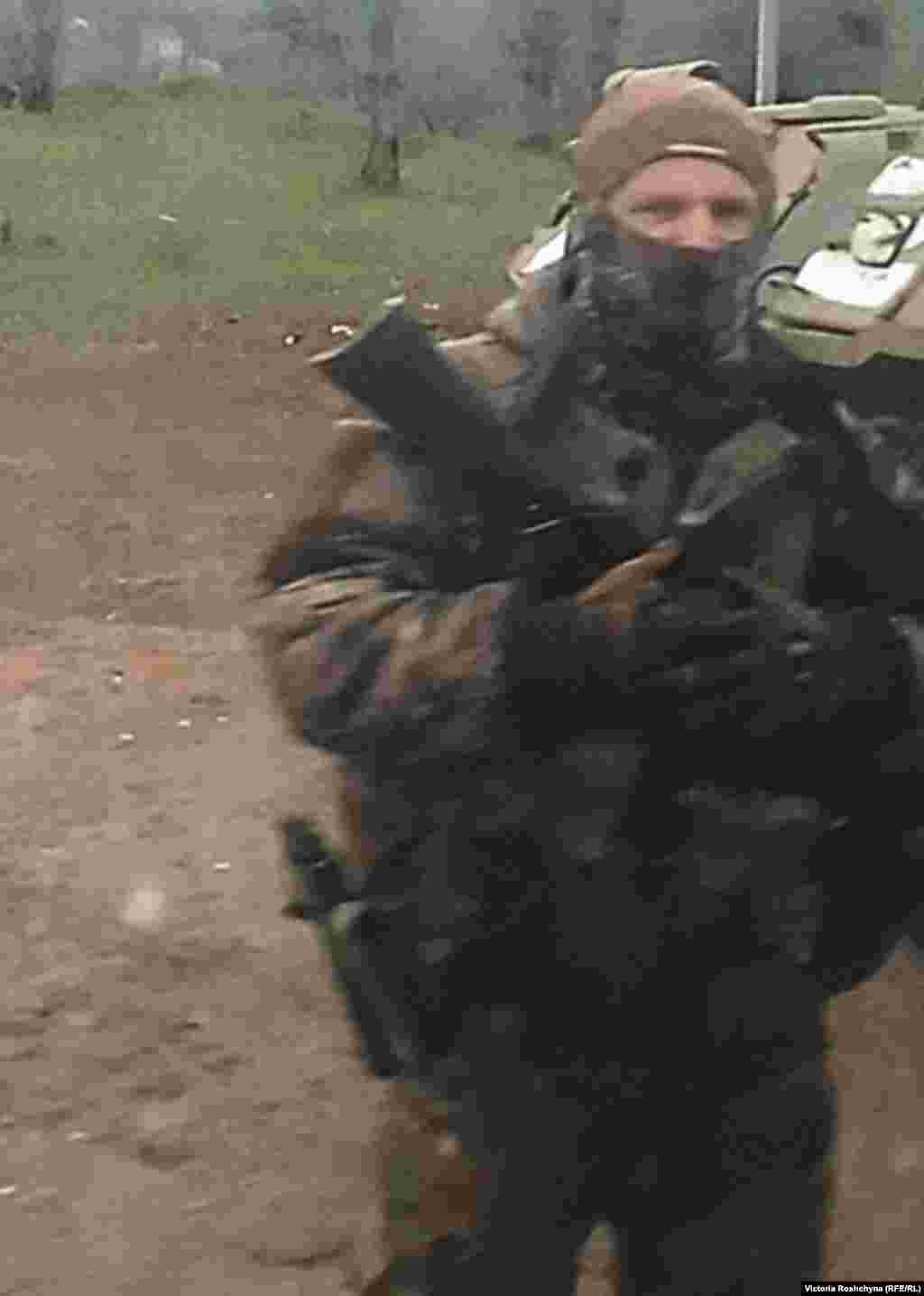
1/16A Russian servicemen outside one of the occupied villages near Kherson.
"We are from Donetsk. How do you feel about May 9?" one soldier asked RFE/RL at a checkpoint, referring to the date on which Russia commemorates Victory Day over Nazi Germany. After checking documents, those manning checkpoints often ask for cigarettes.
Kherson is the only Ukrainian provincial capital to have fallen during Moscow's invasion of its western neighbor. Earlier this month, RFE/RL reporter Viktoria Roshchyna traveled undercover to the city and nearby settlements to speak with people who are living under Russian occupation and to discuss the problems they face.
Show moreShow less
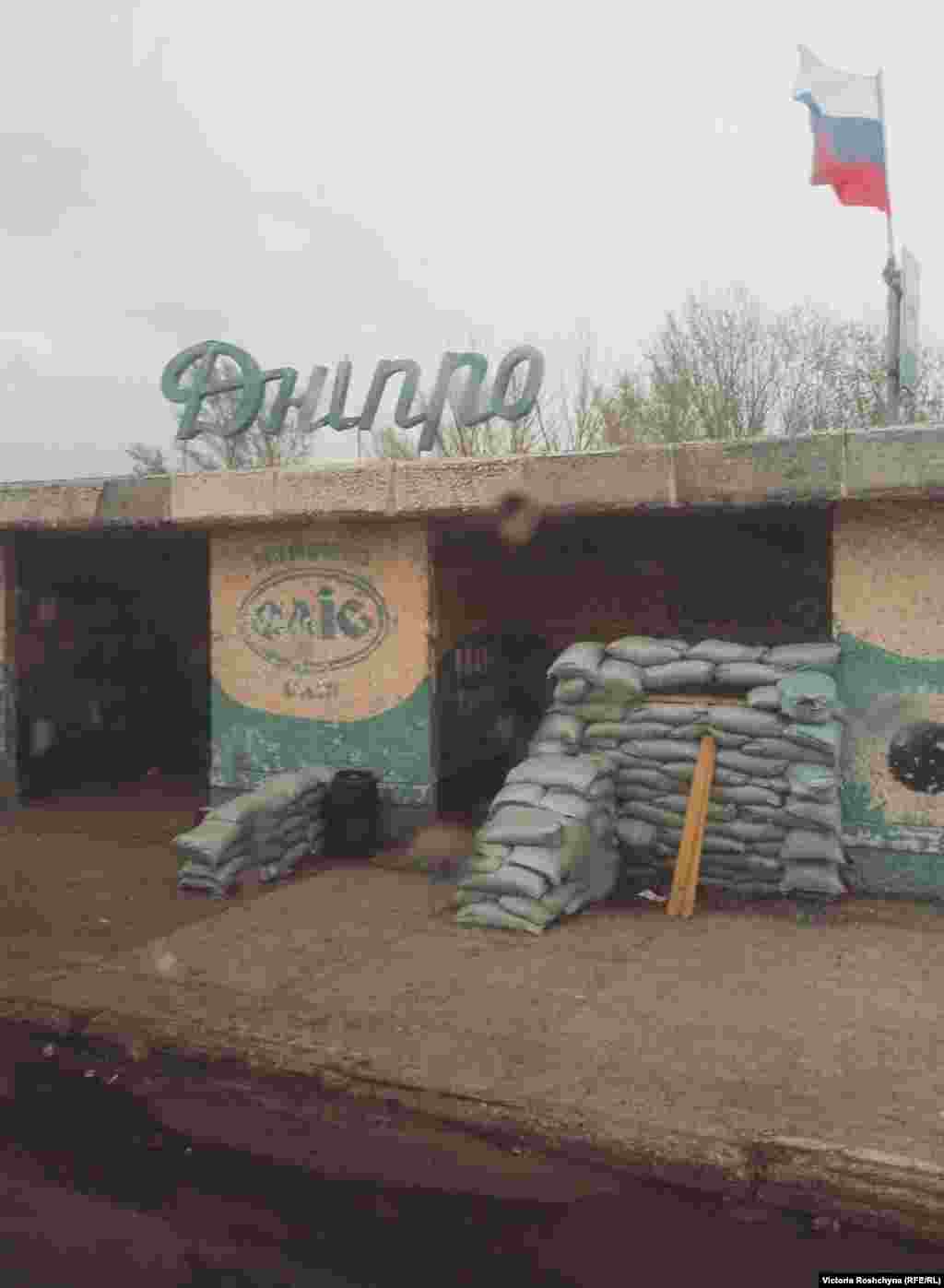
2/16A Russian checkpoint in the occupied Kherson region in April 2022.
The road to Kherson is nearly empty. On the way you can find broken equipment, plundered gas stations, and shell craters. Fields and forests -- what the Kherson region has always been famous for -- are now "sown" with the equipment of the Russian occupiers.
“People were sowing and planning the harvest. And now what? ” one local driver told RFE/RL.
Kherson is the only Ukrainian provincial capital to have fallen during Moscow's invasion of its western neighbor. Earlier this month, RFE/RL reporter Viktoria Roshchyna traveled undercover to the city and nearby settlements to speak with people who are living under Russian occupation and to discuss the problems they face.
Show moreShow less
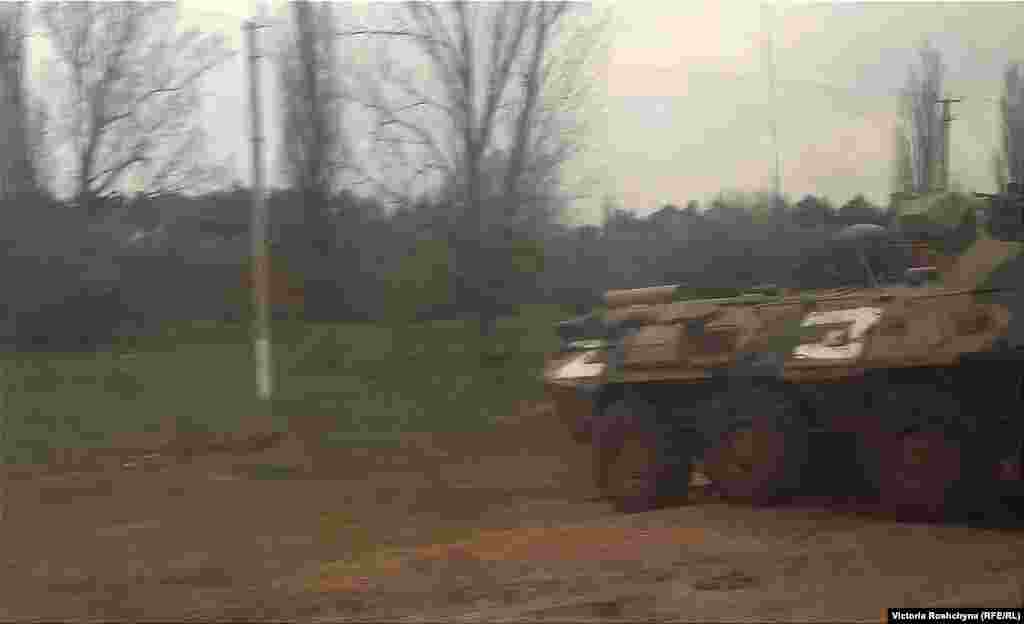
3/16A Russian armored personnel carrier near one of the villages in the occupied Kherson region.
"A lot of vehicles are coming in from Crimea. Every night, we hear them move," one local resident said. "When our troops start a counterattack, it will be hot."
Kherson is the only Ukrainian provincial capital to have fallen during Moscow's invasion of its western neighbor. Earlier this month, RFE/RL reporter Viktoria Roshchyna traveled undercover to the city and nearby settlements to speak with people who are living under Russian occupation and to discuss the problems they face.
Show moreShow less
4/16Occupying troops raise a Soviet victory banner, featuring the hammer and sickle, at Park Slavy (Park of Glory) in central Kherson. It's a copy of the flag raised over Berlin's Reichstag and is now an official symbol of the U.S.S.R.'s victory over Nazi Germany.
Kherson is the only Ukrainian provincial capital to have fallen during Moscow's invasion of its western neighbor. Earlier this month, RFE/RL reporter Viktoria Roshchyna traveled undercover to the city and nearby settlements to speak with people who are living under Russian occupation and to discuss the problems they face.
Show moreShow less
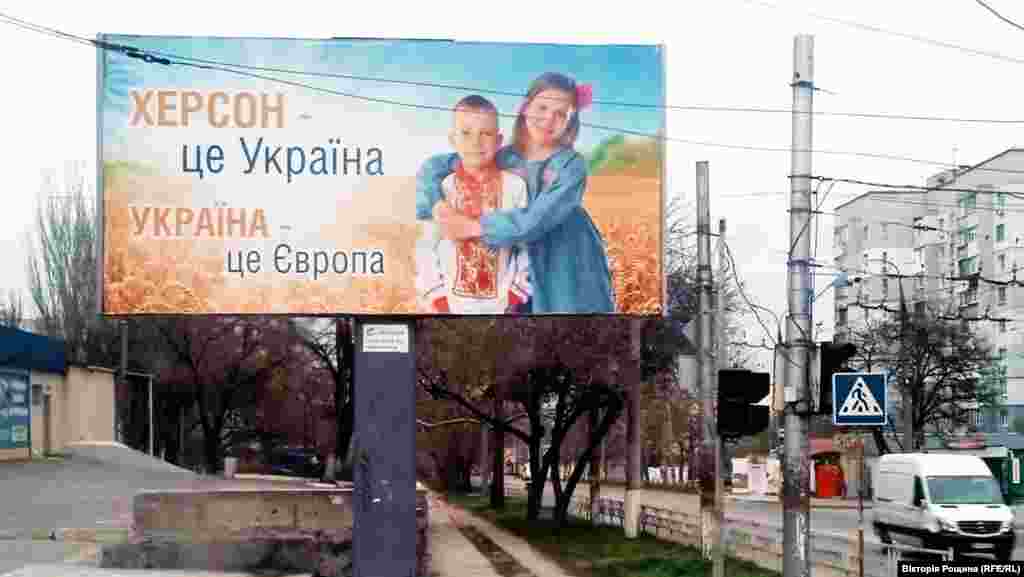
5/16A billboard in Kherson says: “Kherson is Ukraine. Ukraine is Europe."
"The occupiers are deeply disappointed because there is no support for them," says one local farmer. "They are not wanted here. The Kherson region is a deeply pro-Ukrainian territory. They were lucky with Crimea because there really was a large pro-Russian population there. Here, no."
Kherson is the only Ukrainian provincial capital to have fallen during Moscow's invasion of its western neighbor. Earlier this month, RFE/RL reporter Viktoria Roshchyna traveled undercover to the city and nearby settlements to speak with people who are living under Russian occupation and to discuss the problems they face.
Show moreShow less
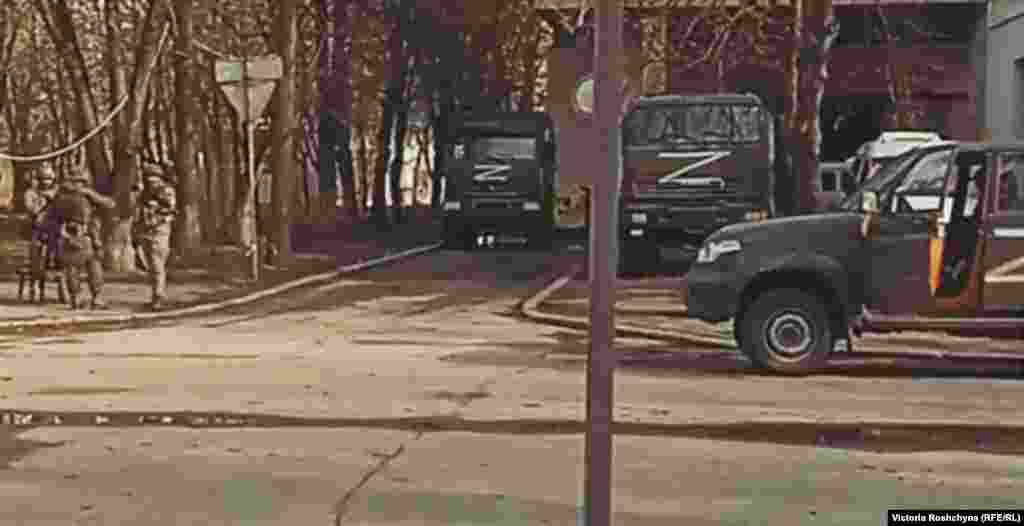
6/16Russian vehicles move through the streets of occupied Kherson.
"The sense of protection is completely absent," says one city resident. "When a person comes to you with a machine gun, you clearly understand that he can do anything with you."
Kherson is the only Ukrainian provincial capital to have fallen during Moscow's invasion of its western neighbor. Earlier this month, RFE/RL reporter Viktoria Roshchyna traveled undercover to the city and nearby settlements to speak with people who are living under Russian occupation and to discuss the problems they face.
Show moreShow less
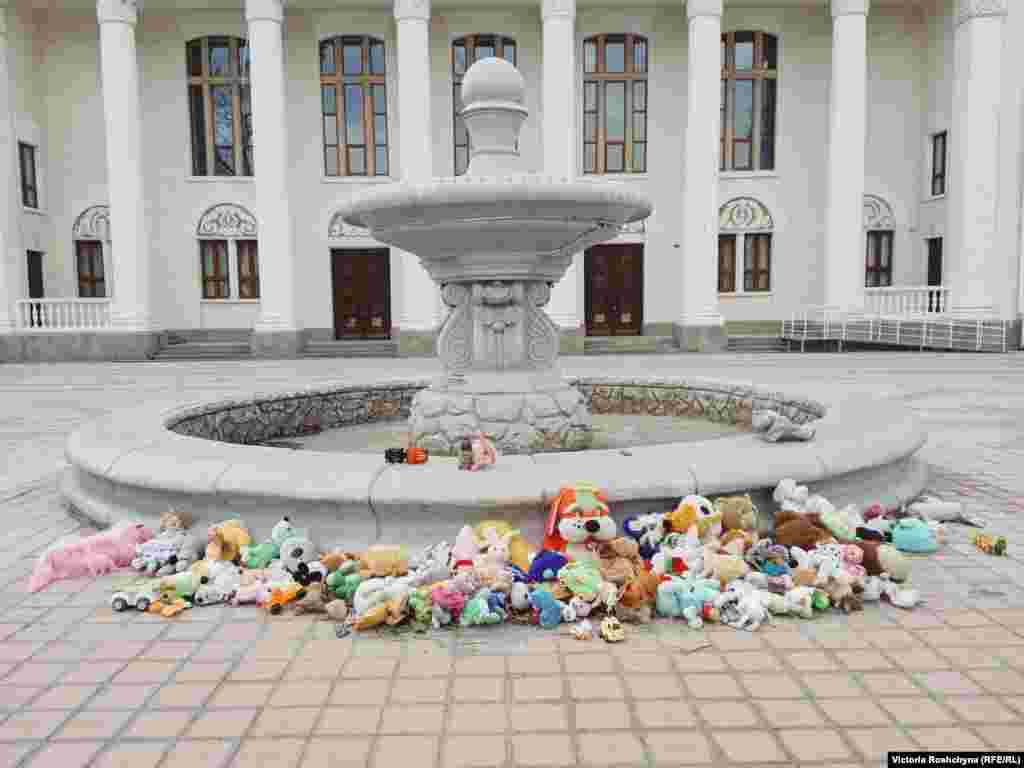
7/16An impromptu memorial for children who have died during the war in front of the Palace of Culture in the town of Nova Kakhovka in the Kherson region.
"This building is opposite the Russian commandant's office," said one man as he walked by. "They bring toys here so that they can see and remember."
Kherson is the only Ukrainian provincial capital to have fallen during Moscow's invasion of its western neighbor. Earlier this month, RFE/RL reporter Viktoria Roshchyna traveled undercover to the city and nearby settlements to speak with people who are living under Russian occupation and to discuss the problems they face.
Show moreShow less
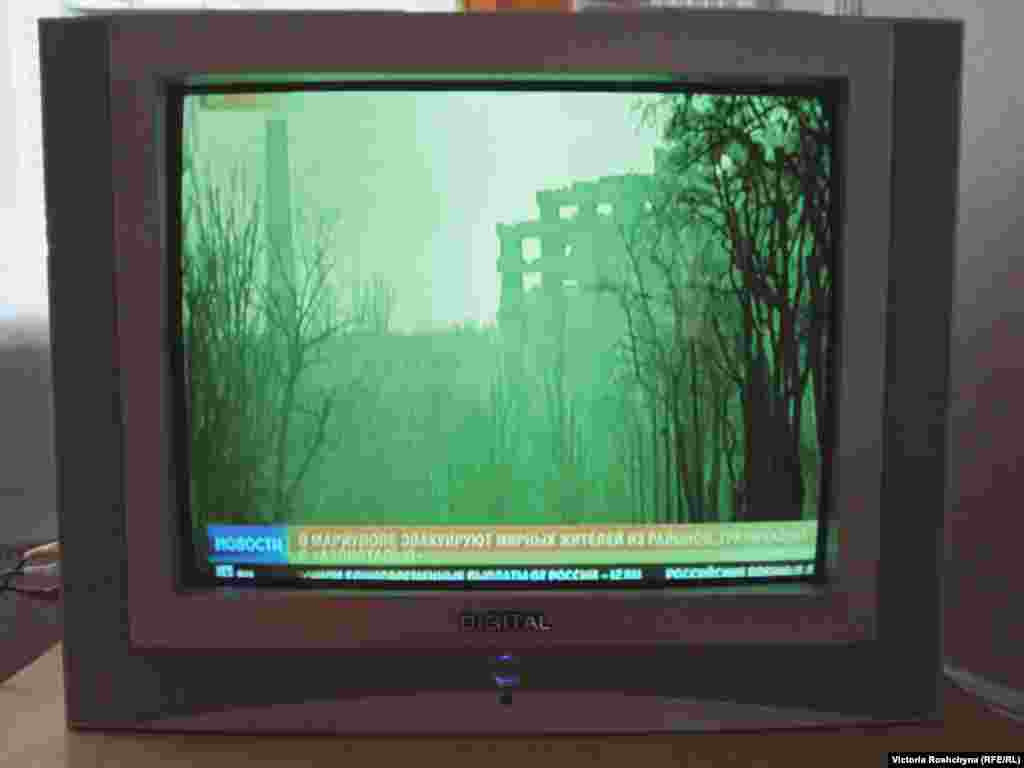
8/16A pro-Russia TV channel broadcasting the "liberation operation" in occupied Kherson.
"As soon as they entered the city, they drowned out the Ukrainian channels and launched their own. After a while, cable TV and radio stations were turned off. Not a single Ukrainian newspaper is published in Kherson," said a local media expert, who also warned of the dangers of reporting in the occupied territories.
"You know, we used to think that a camera and a microphone were a means of protection," he said. "But now, it is a 'red rag' to the occupiers. Going out and filming something is putting yourself in danger.”
Kherson is the only Ukrainian provincial capital to have fallen during Moscow's invasion of its western neighbor. Earlier this month, RFE/RL reporter Viktoria Roshchyna traveled undercover to the city and nearby settlements to speak with people who are living under Russian occupation and to discuss the problems they face.
Show moreShow less
9/16Russian troops patrol near the Kherson Regional State Administration.
"All thinking Kherson residents are for Ukraine, of course," one local resident told RFE/RL. "But now there is some uncertainty -- and this gives rise to fear. You don't know what will happen tomorrow."
Kherson is the only Ukrainian provincial capital to have fallen during Moscow's invasion of its western neighbor. Earlier this month, RFE/RL reporter Viktoria Roshchyna traveled undercover to the city and nearby settlements to speak with people who are living under Russian occupation and to discuss the problems they face.
Show moreShow less
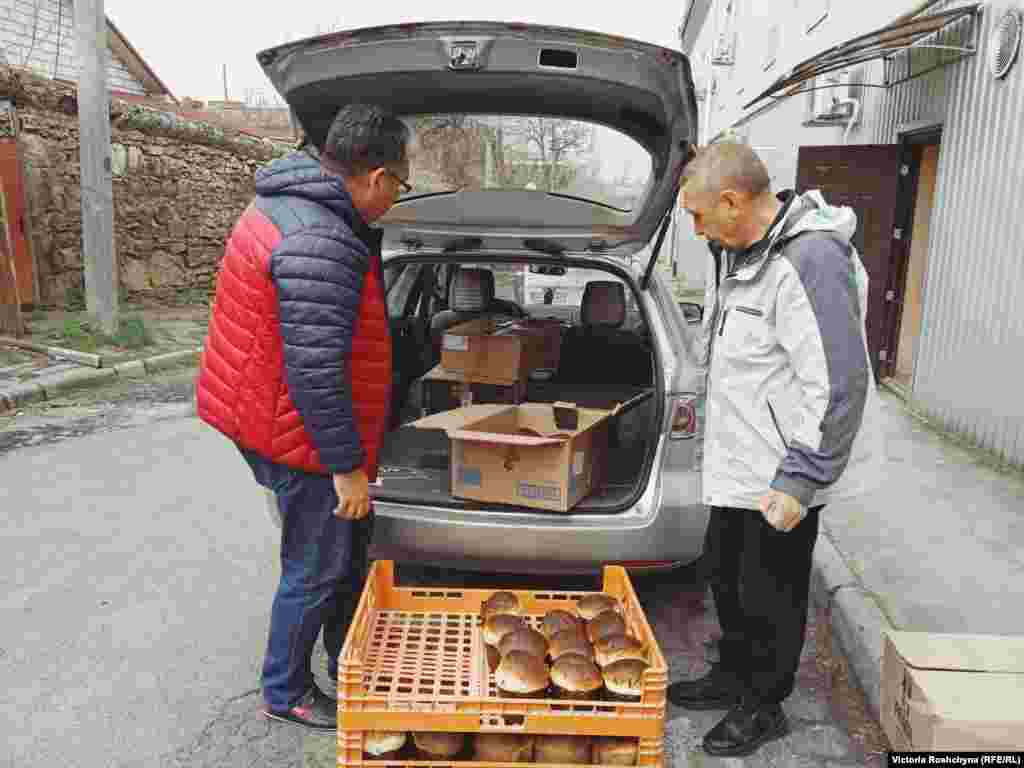
10/16Volunteers from occupied Kherson prepare and distribute Easter cakes for residents of nearby settlements who are under heavy shelling.
According to one local volunteer, the occupiers have "artificially created a humanitarian catastrophe in Kherson in order to import goods from Crimea. They do not allow any humanitarian convoys from Ukraine to pass through. All of this is delivered by volunteers at their own risk."
Kherson is the only Ukrainian provincial capital to have fallen during Moscow's invasion of its western neighbor. Earlier this month, RFE/RL reporter Viktoria Roshchyna traveled undercover to the city and nearby settlements to speak with people who are living under Russian occupation and to discuss the problems they face.
Kherson is the only Ukrainian provincial capital to have fallen during Moscow's invasion of its western neighbor. Earlier this month, RFE/RL reporter Viktoria Roshchyna traveled undercover to the city and nearby settlements to speak with people who are living under Russian occupation and to discuss the problems they face.
Show moreShow less
12/16Medicines are prepared for delivery in occupied Kherson.
"It is very difficult to supply medicines to the Kherson region now," says Iryna, a local volunteer. "The invaders do not give us 'green corridors.' Drivers who carry medical supplies often disappear. They take away their phones, cars, and the medicines themselves."
Kherson is the only Ukrainian provincial capital to have fallen during Moscow's invasion of its western neighbor. Earlier this month, RFE/RL reporter Viktoria Roshchyna traveled undercover to the city and nearby settlements to speak with people who are living under Russian occupation and to discuss the problems they face.
Show moreShow less
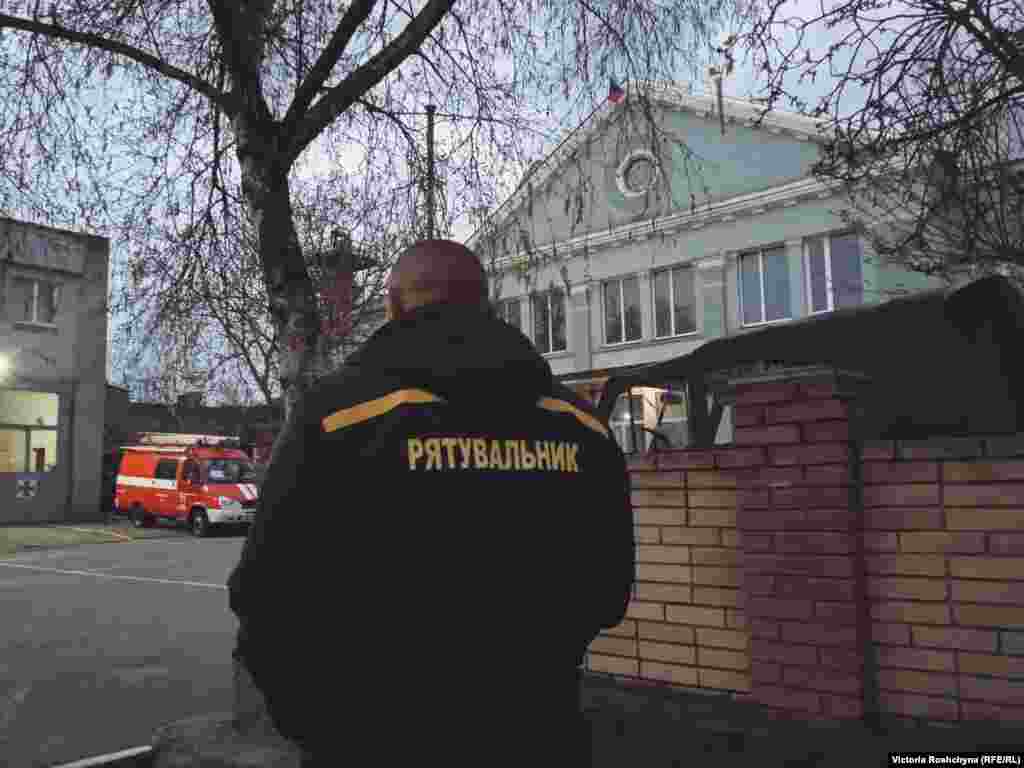
13/16A rescue worker in occupied Nova Kakhovka walks toward the State Emergency building where a Russian flag now flies.
While some rescue workers left when the occupation began, others remained to assist their fellow citizens. "As for the fact that the government abandoned Kherson, this is just an insult," said a local volunteer. "There is no feeling yet that we will be liberated."
Kherson is the only Ukrainian provincial capital to have fallen during Moscow's invasion of its western neighbor. Earlier this month, RFE/RL reporter Viktoria Roshchyna traveled undercover to the city and nearby settlements to speak with people who are living under Russian occupation and to discuss the problems they face.
Show moreShow less
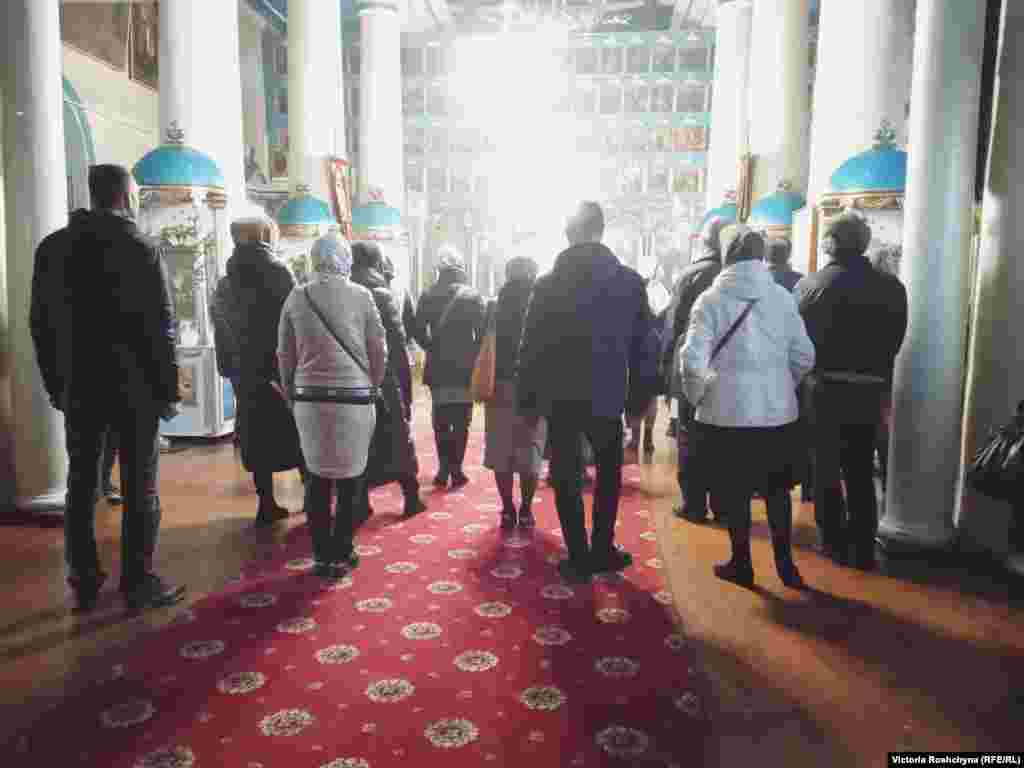
14/16People attend a church service in occupied Kherson.
"We pray. We do our jobs. Of course, we want Ukraine to be here," said a local clergymen. "I also have a family. They also cry. But I try to avoid politics."
Kherson is the only Ukrainian provincial capital to have fallen during Moscow's invasion of its western neighbor. Earlier this month, RFE/RL reporter Viktoria Roshchyna traveled undercover to the city and nearby settlements to speak with people who are living under Russian occupation and to discuss the problems they face.
Show moreShow less
15/16A Russian checkpoint in occupied Nova Kakhovka in the Kherson region.
According to Kherson Mayor Ihor Kolykhayev, more than 40 percent of residents have left the city, including more than 3,000 children. In a Facebook post on April 16, Ukraine's ombudswoman for human rights, Lyudmyla Denisova, said that Russia intends to hold a "referendum" to create a "People's Republic of Kherson."
According to the Denisova, Russian troops intend to turn off all communications in Kherson and to stop anyone entering or exiting the city between May 1 and May 10. The vote they reportedly plan to stage mirrors what occurred in the occupied Luhansk and Donetsk regions in 2014.
Kherson is the only Ukrainian provincial capital to have fallen during Moscow's invasion of its western neighbor. Earlier this month, RFE/RL reporter Viktoria Roshchyna traveled undercover to the city and nearby settlements to speak with people who are living under Russian occupation and to discuss the problems they face.
Show moreShow less
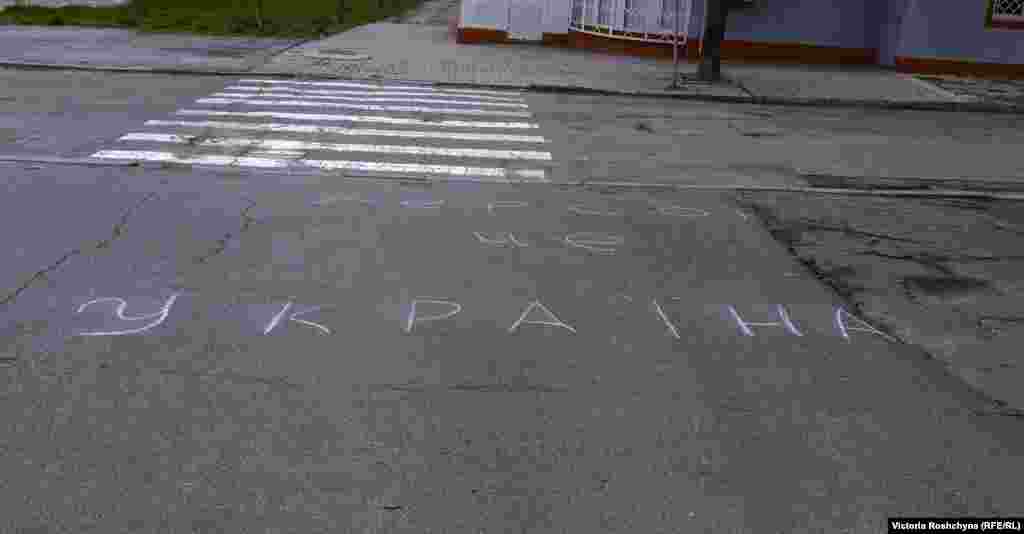
16/16An inscription on the asphalt: "Kherson is Ukraine."
Kherson is the only Ukrainian provincial capital to have fallen during Moscow's invasion of its western neighbor. Earlier this month, RFE/RL reporter Viktoria Roshchyna traveled undercover to the city and nearby settlements to speak with people who are living under Russian occupation and to discuss the problems they face.
Show moreShow less
Previous slide
Next slide
Later on April 28, Ukraine’s prosecutor-general accused 10 Russian soldiers of being “involved in the torture of peaceful people” in Bucha. Iryna Venediktova said that the soldiers of the 64th Guards Motor Rifle Brigade of the Russian armed forces are suspected of "cruelty toward civilians and other war crimes."
In an interview with RFE/RL's Ukrainian Service on April 28, Podolyak said evidence of war crimes committed by Russian troops in Bucha and other towns near Kyiv is one reason peace talks are stalled and he sees no reason at present to hold a face-to-face meeting of the negotiating teams.
He also played down the possibility of talks between Zelenskiy and Putin, saying Ukraine will be ready for such a meeting "when the legal positions are ready," but that this won't be any time soon.
Britain's Ministry of Defense warned early on April 28 that Russia's Black Sea Fleet retained the ability to strike Ukrainian and coastal targets.
Despite losing the landing ship Saratov and the cruiser Moskva, Russia still has some 20 naval vessels, including submarines, in the Black Sea operational zone, the ministry said on Twitter.
In its daily intelligence report, the ministry said that Russia was temporarily unable to replace its lost vessels, as Turkey's Bosphorus Strait connecting the Black Sea with the Sea of Marmara and the Mediterranean "remains closed to all non-Turkish warships."
In Brussels, NATO Secretary-General Jens Stoltenberg said the alliance is ready to back Ukraine in its war against Russia even if the conflict stretches for years.
"We need to be prepared for the long term.... There is absolutely the possibility that this war will drag on and last for months and years," Stoltenberg told a youth summit on April 28, adding that the alliance will help Kyiv upgrade its Soviet-era weapons to modern Western military equipment.
The Fight For Eastern Ukraine
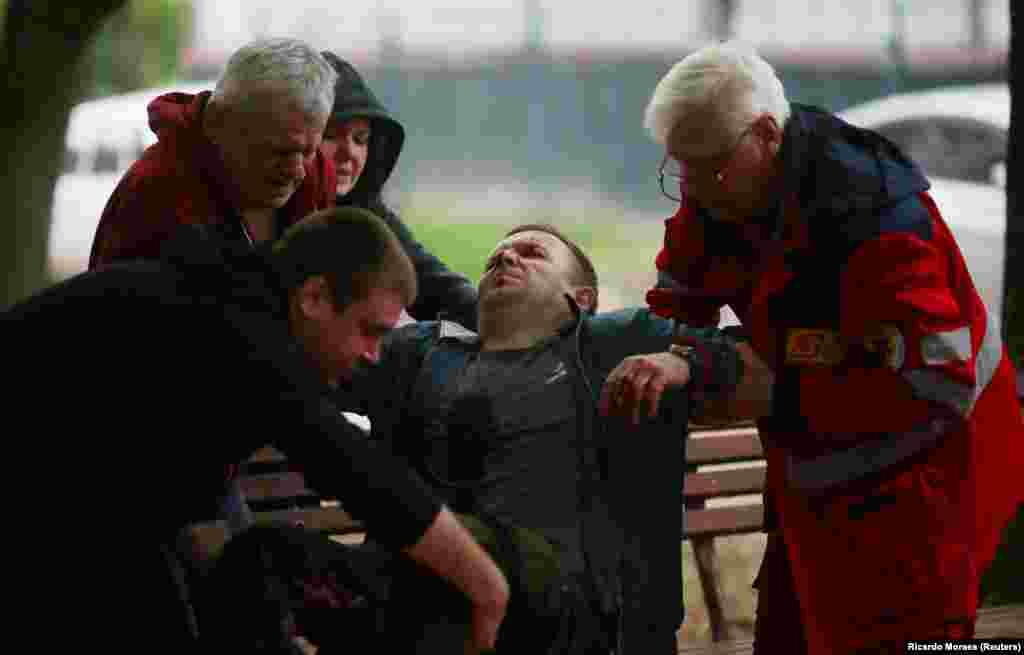
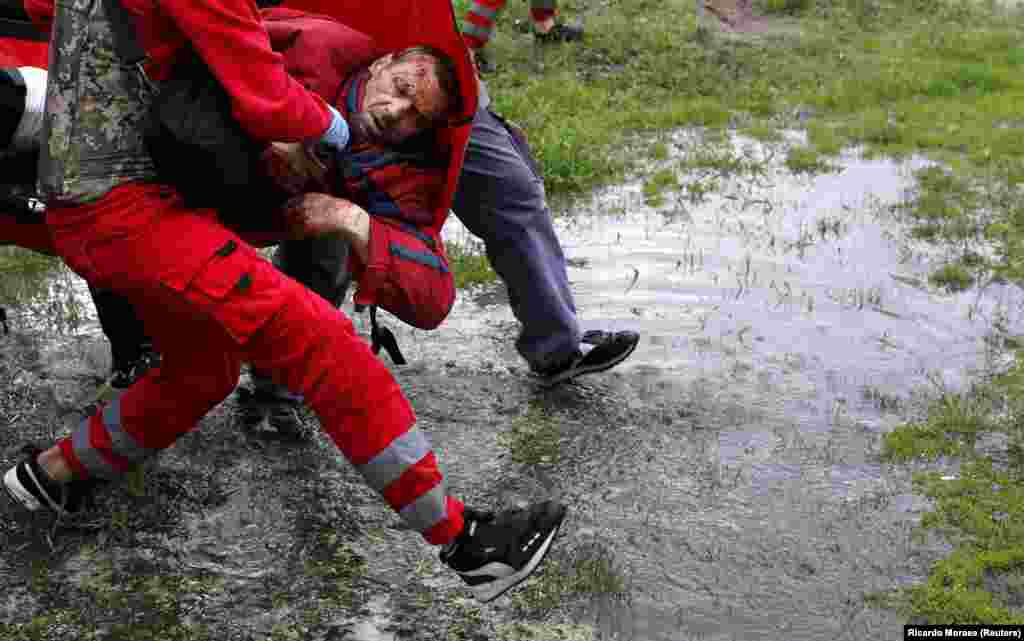
1/16Medical workers help a man who was badly injured during shelling of Kharkiv on April 27.
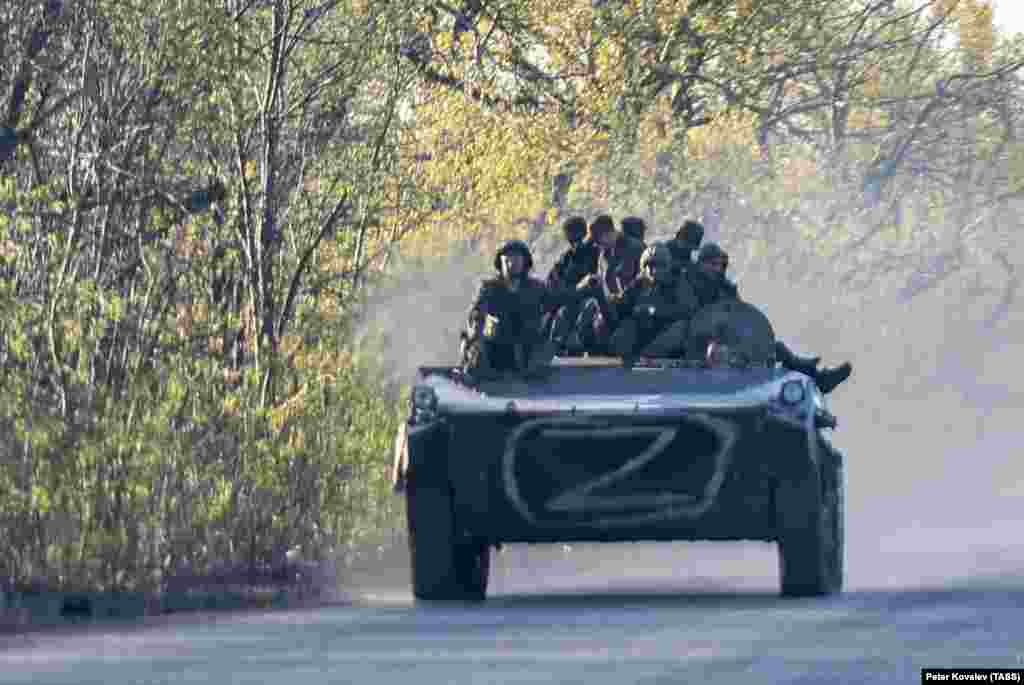
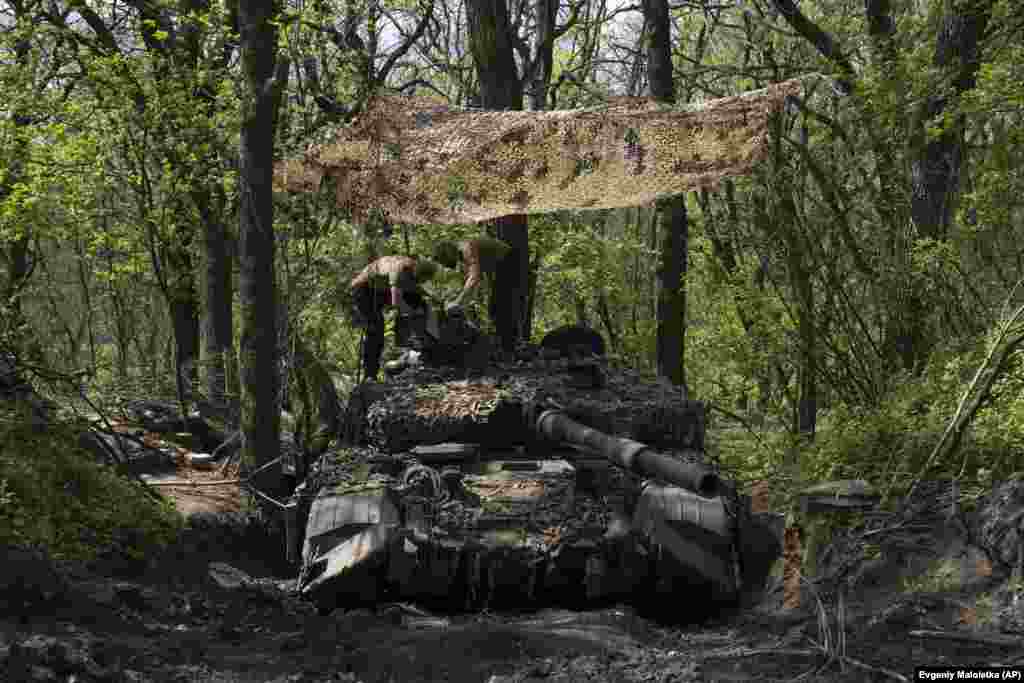
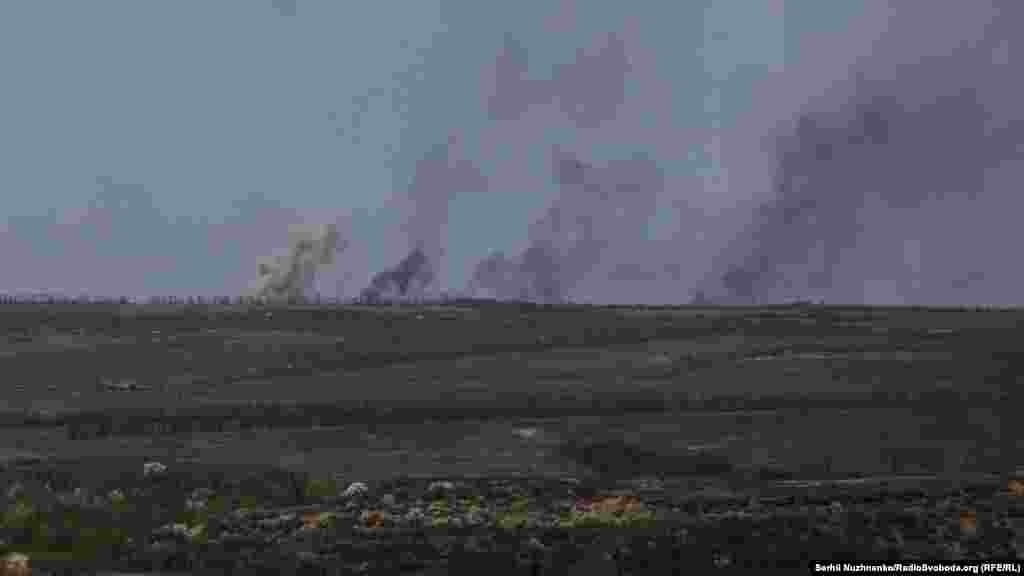
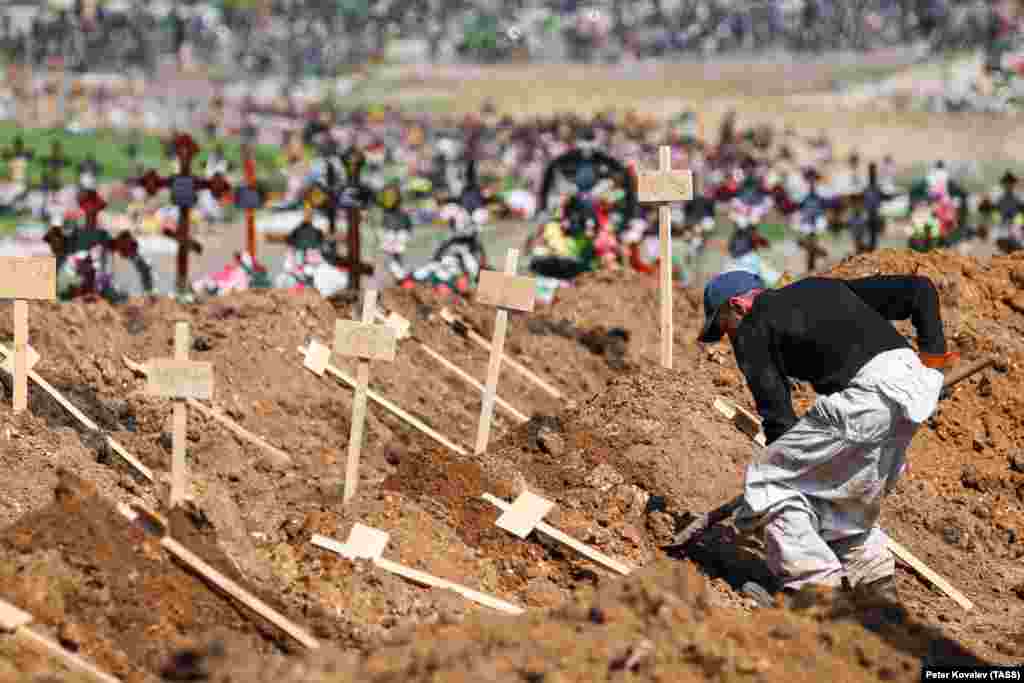
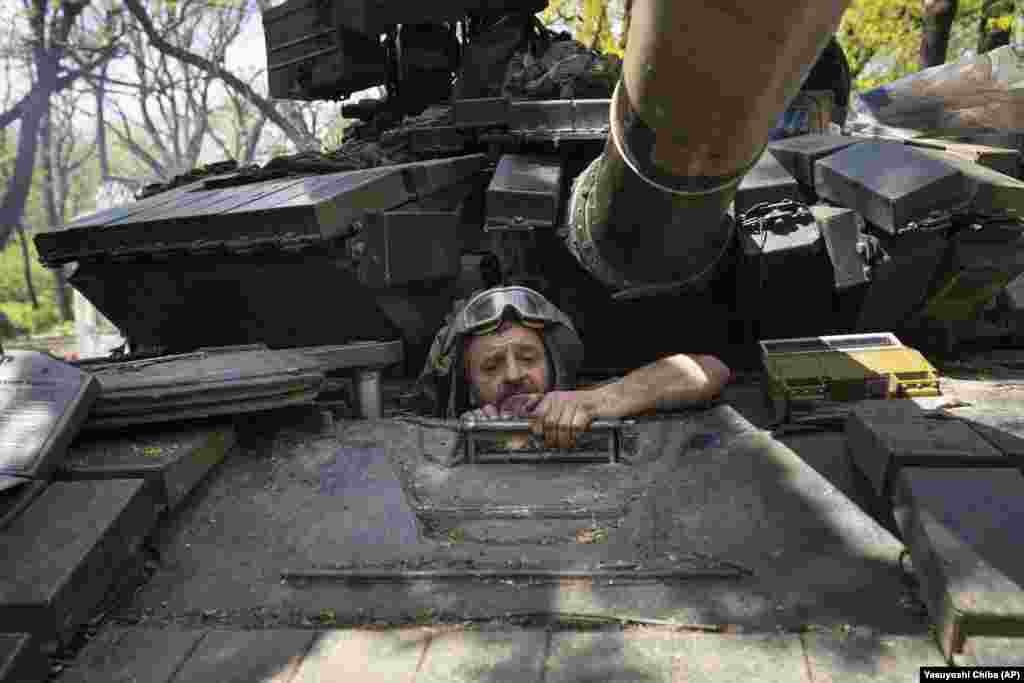
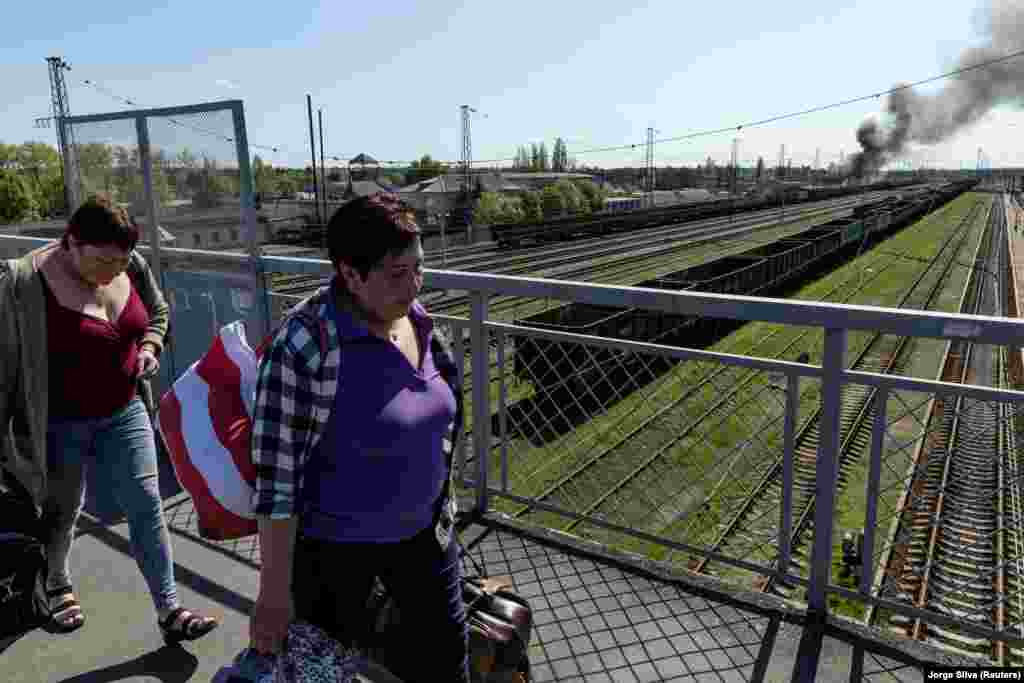
Violence has escalated in recent days in and around the Donbas Region as Russia's invasion of Ukraine enters what the Kremlin calls a new "phase."
Show moreShow less
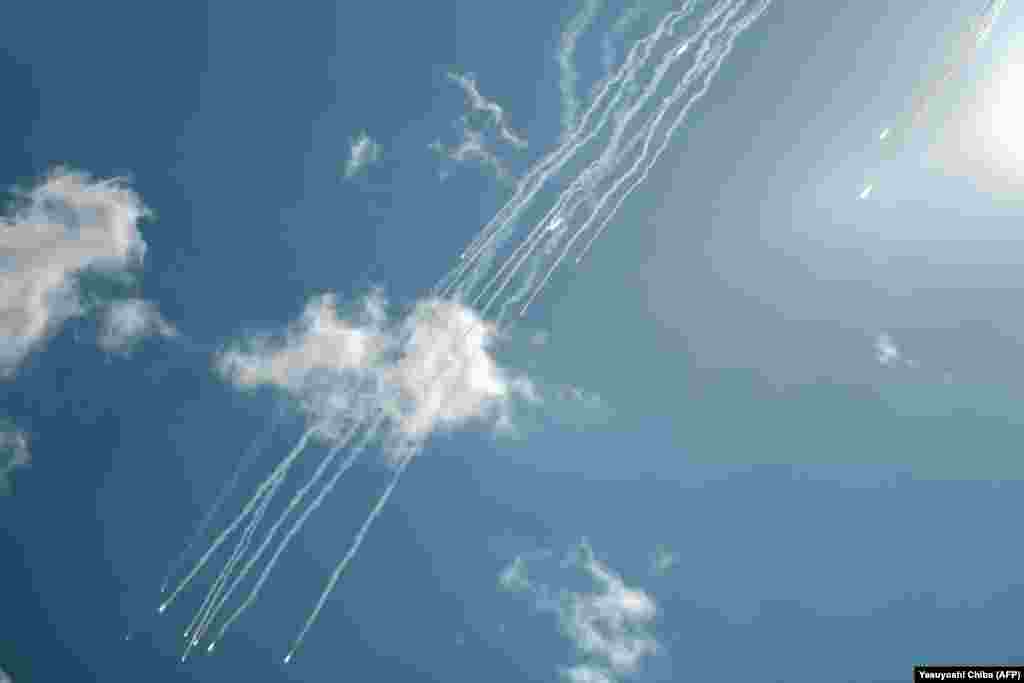
2/16Decoy flares are released by a Sukhoi SU-25 that was providing air support to Ukrainian troops during fighting near Yampil, in the Donetsk region on April 27.
Violence has escalated in recent days in and around the Donbas Region as Russia's invasion of Ukraine enters what the Kremlin calls a new "phase."
Show moreShow less
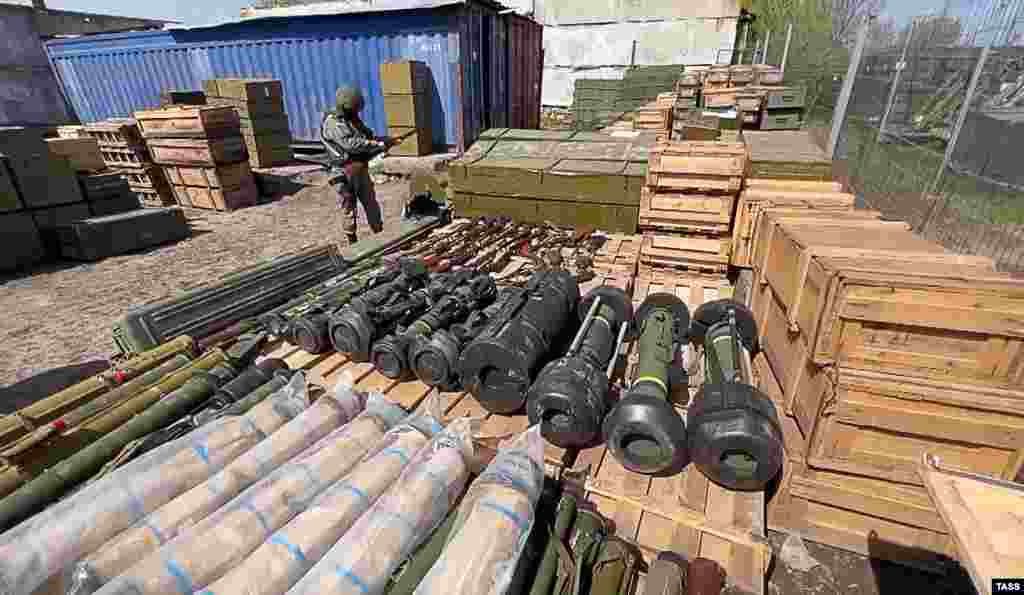
9/16Western anti-tank weapons are displayed in an arms depot that the Russian Defense Ministry says was captured by Russian troops. The photo was released on April 27.
Violence has escalated in recent days in and around the Donbas Region as Russia's invasion of Ukraine enters what the Kremlin calls a new "phase."
Show moreShow less
Previous slide
Next slide
The United States, NATO's biggest member, has already provided $3 billion worth of weapons to Ukraine since the start of Russia's unprovoked invasion.
In Washington, Biden announced on April 28 that he will request another $33 billion from Congress to support Ukraine, a move that represents a dramatic escalation of U.S. funding for the country. Biden said the spending is necessary "to support Ukraine in its fight for freedom" and would meet Ukraine's needs through September.
The request includes more than $20 billion for weapons, ammunition, and other military assistance, as well as $8.5 billion in direct economic assistance to the government and $3 billion in humanitarian and food security aid.
The assistance package is more than twice as large as the $13.6 billion in defense and economic aid enacted last month to assist Ukraine and Western allies that is now almost exhausted.
Russia has told the West to stop sending arms to Ukraine, saying large Western deliveries of weapons were inflaming the conflict.
Addressing lawmakers in St. Petersburg on April 27, Putin warned against foreign interference in Ukraine.
"If someone intends to intervene in the ongoing events from the outside, and create strategic threats for Russia that are unacceptable to us, they should know that our retaliatory strikes will be lightning fast," said Putin, according to video of his address supplied by Russian media.
With reporting by AP, AFP, BBC, CNN, dpa, and Reuters
RFE/RL journalists report the news in 24 languages in 18 countries where a free press is banned by the government or not fully established. We provide what many people cannot get locally: uncensored news, responsible discussion, and open debate.