Accessibility links

Breaking News

Deadly Russian Strike Hits Museum In Kupyansk As Battle For Bakhmut Picks Up

Updated
A view shows a crater left by a Russian missile strike in the city of Kupyansk, Kharkiv region, on April 25.

A Russian missile strike on a museum in the eastern Ukrainian city of Kupyansk killed at least one person and wounded 10 others, an attack that President Volodymyr Zelenskiy described as "barbaric," as heavy fighting for the control of Bakhmut intensified over the past day, the military reported.

Oleh Synehubov, the head of the Kharkiv Regional Military Administration, told RFE/RL that the April 25 strike on the Kupyansk city center involved S-300-type missiles, one of which hit the Museum of Local History.

Synehubov said rescue work continues, with officials saying at least one more person may be under the rubble.

"The terrorist country is doing everything to destroy us completely. Our history, our culture, our people. Killing Ukrainians with absolutely barbaric methods," Zelenskiy wrote on Telegram, adding, "We must and will respond!"

Meanwhile, the Ukrainian military said Russian forces unleashed more waves of assaults on Bakhmut over the past day, but neither side managed to make critical advances in the monthslong battle for the city in the eastern region of Donetsk.

"Fierce battles are going on for the city of Bakhmut," the General Staff of the Armed Forces of Ukraine said in its daily report on April 25, adding that Moscow's main push on the battlefield remained focused on the Bakhmut-Avdiyivka-Maryinka front line.

Russian forces launched 62 air strikes and six missile strikes against Ukrainian military positions and civilian objectives, the General Staff said in its report.

IN PHOTOS: As heavy fighting for control of the shattered city of Bakhmut in eastern Ukraine continues unabated, one Ukrainian unit explains how it is struggling to hold off Moscow's forces.

'We're Tired': Ukraine's Exhausted Forces Hold Their Positions In The Battlefield City Of Bakhmut
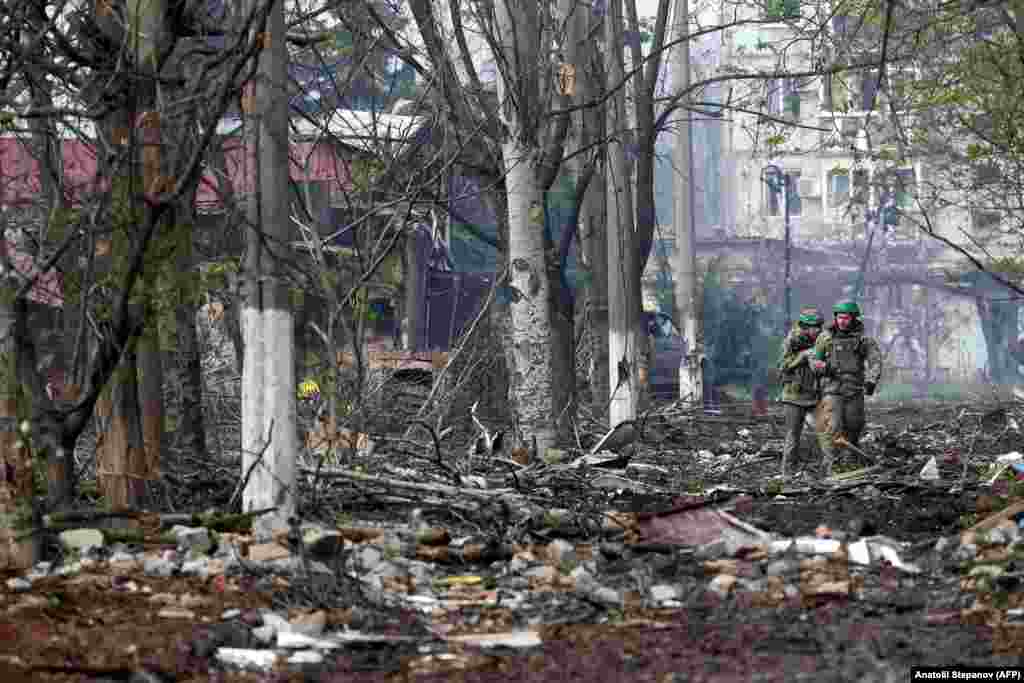
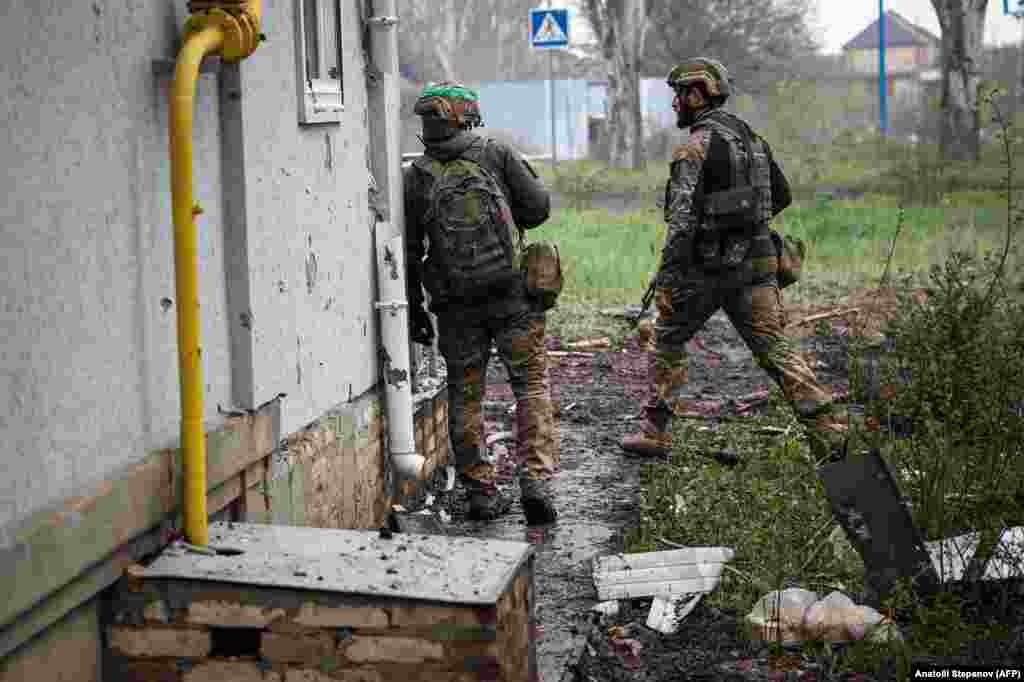
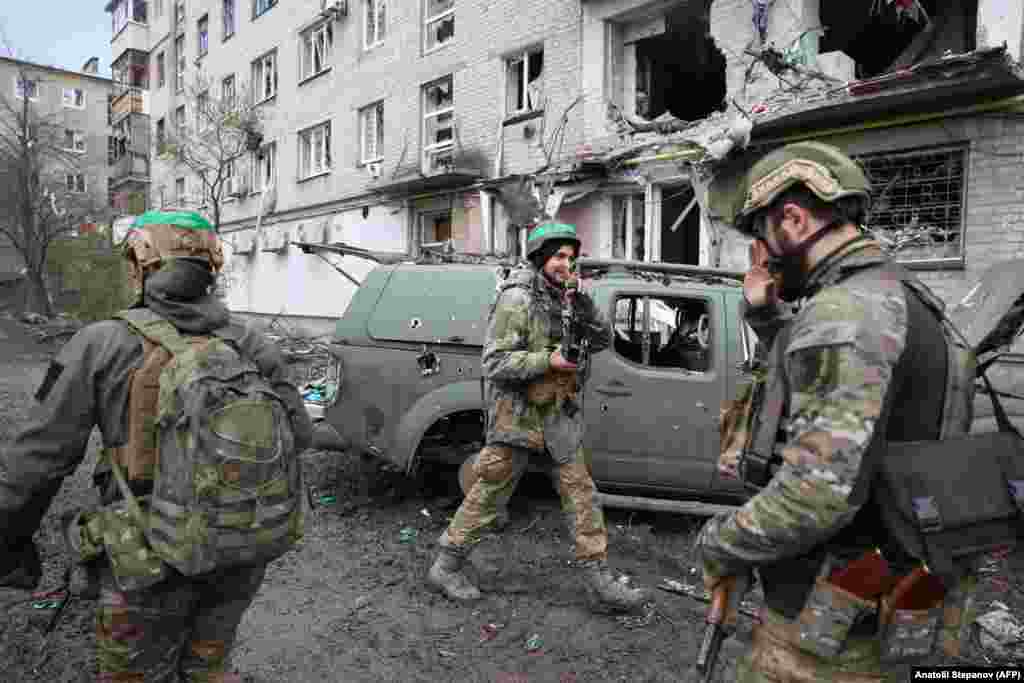
Ukrainian soldiers patrol the devastated frontline city of Bakhmut on April 23. Russian forces unleashed more assault waves over the past day but neither side managed to make critical advances in the monthslong battle for the shattered city, the Ukrainian military said on April 25.
1/12 Ukrainian soldiers patrol the devastated frontline city of Bakhmut on April 23. Russian forces unleashed more assault waves over the past day but neither side managed to make critical advances in the monthslong battle for the shattered city, the Ukrainian military said on April 25.
As heavy fighting for control of the shattered city of Bakhmut in eastern Ukraine continues unabated, one Ukrainian unit explains how it is struggling to hold off Moscow's forces.
Ukrainian Deputy Defense Minister Hanna Malyar <a href="https://www.radiosvoboda.org/a/news-maliar-donbas-boyi/32377664.html" target="_blank">described</a>&nbsp;the ongoing fighting in Bakhmut as a &quot;continuous dynamic process.&quot;<br />
<br />
Malyar said on Telegram on April 25: &quot;We can lose positions in battle today, and regain them the next day; that is why the military prefers to talk about the result after the operation is over.&quot;
2/12 Ukrainian Deputy Defense Minister Hanna Malyar described the ongoing fighting in Bakhmut as a "continuous dynamic process."

Malyar said on Telegram on April 25: "We can lose positions in battle today, and regain them the next day; that is why the military prefers to talk about the result after the operation is over."
As heavy fighting for control of the shattered city of Bakhmut in eastern Ukraine continues unabated, one Ukrainian unit explains how it is struggling to hold off Moscow's forces.
A Ukrainian soldier runs for cover from Russian shelling in Bakhmut.<br />
<br />
<br />
&nbsp;
3/12 A Ukrainian soldier runs for cover from Russian shelling in Bakhmut.


As heavy fighting for control of the shattered city of Bakhmut in eastern Ukraine continues unabated, one Ukrainian unit explains how it is struggling to hold off Moscow's forces.
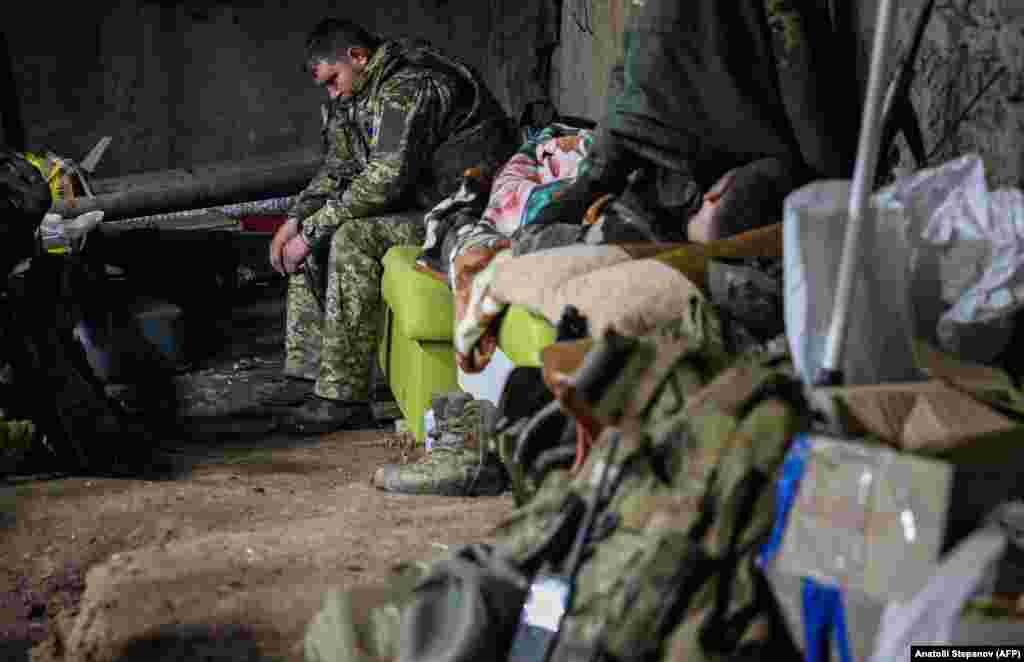
Ukrainian soldiers rest in a dimly lit and cramped basement as artillery rumbles above.<br />
<br />
&quot;We&#39;re tired,&quot; said a deputy battalion commander whose call sign is Philosopher. &quot;Little by little, (Russian forces) are nibbling away little pieces.&quot;&nbsp;
4/12 Ukrainian soldiers rest in a dimly lit and cramped basement as artillery rumbles above.

"We're tired," said a deputy battalion commander whose call sign is Philosopher. "Little by little, (Russian forces) are nibbling away little pieces." 
As heavy fighting for control of the shattered city of Bakhmut in eastern Ukraine continues unabated, one Ukrainian unit explains how it is struggling to hold off Moscow's forces.
&quot;On our side, we&#39;re tired. People are exhausted,&quot; Philosopher told AFP, describing how his forces from the 93rd Brigade were coming within just three meters of Russian troops while under a constant barrage of artillery, mortar, and tank fire.<br />
&nbsp;
5/12 "On our side, we're tired. People are exhausted," Philosopher told AFP, describing how his forces from the 93rd Brigade were coming within just three meters of Russian troops while under a constant barrage of artillery, mortar, and tank fire.
 
As heavy fighting for control of the shattered city of Bakhmut in eastern Ukraine continues unabated, one Ukrainian unit explains how it is struggling to hold off Moscow's forces.
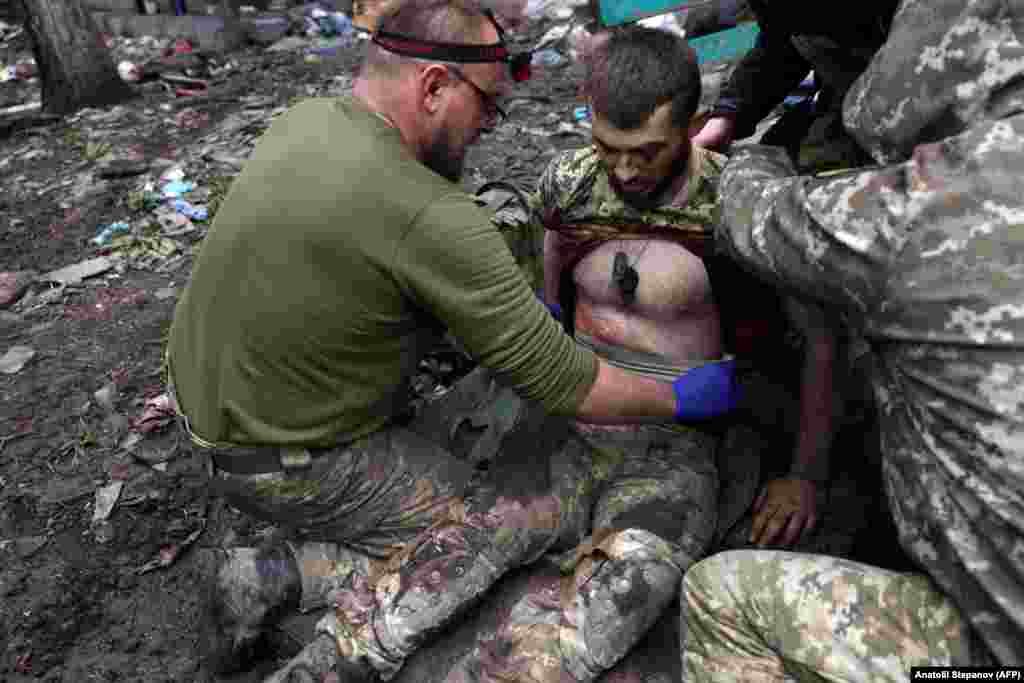
Military paramedics treat a wounded Ukrainian soldier.<br />
<br />
&quot;Each day we resist here gives more opportunities for other units to prepare for a counterattack,&quot; Philosopher added. &quot;Our vulnerability is that we are starved for shells.&quot;
6/12 Military paramedics treat a wounded Ukrainian soldier.

"Each day we resist here gives more opportunities for other units to prepare for a counterattack," Philosopher added. "Our vulnerability is that we are starved for shells."
As heavy fighting for control of the shattered city of Bakhmut in eastern Ukraine continues unabated, one Ukrainian unit explains how it is struggling to hold off Moscow's forces.
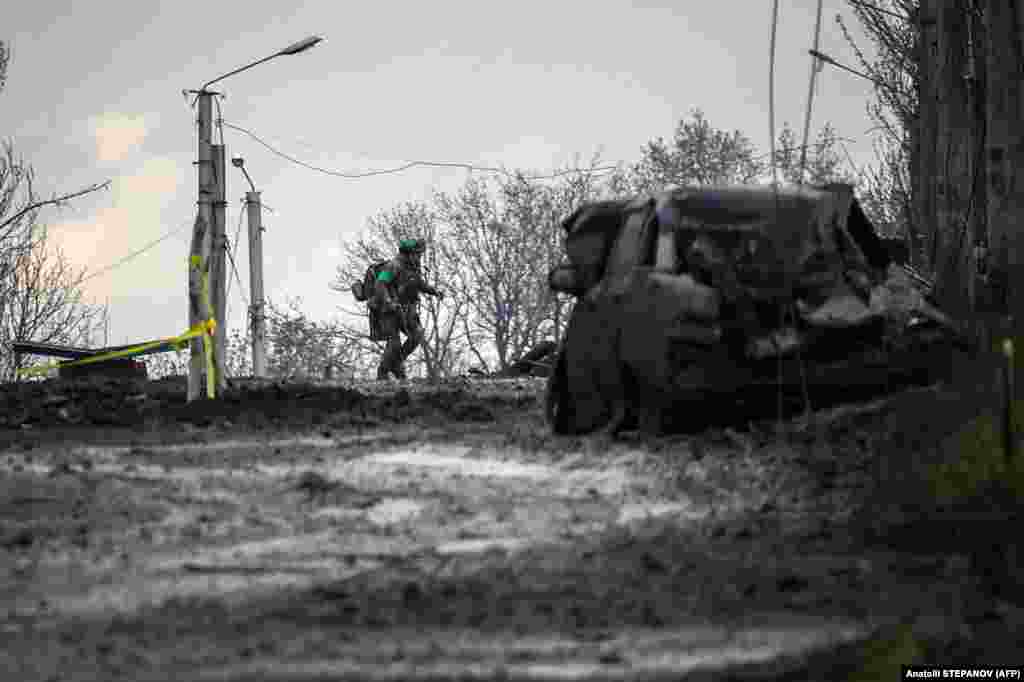
Kyiv&#39;s fighters are still able to resupply their troops in the beleaguered city from nearby Chasiv Yar via &quot;the Road of Life,&quot; where burnt-out vehicles and craters mark the muddied and devastated landscape.<br />
<br />
&quot;If you cut (the road), everyone in Bakhmut is dead. No supplies. No ammunition. No food. Nothing. It would be completely cut off,&quot; a soldier told AFP while his crew stacked rows of newly delivered shells.
7/12 Kyiv's fighters are still able to resupply their troops in the beleaguered city from nearby Chasiv Yar via "the Road of Life," where burnt-out vehicles and craters mark the muddied and devastated landscape.

"If you cut (the road), everyone in Bakhmut is dead. No supplies. No ammunition. No food. Nothing. It would be completely cut off," a soldier told AFP while his crew stacked rows of newly delivered shells.
As heavy fighting for control of the shattered city of Bakhmut in eastern Ukraine continues unabated, one Ukrainian unit explains how it is struggling to hold off Moscow's forces.
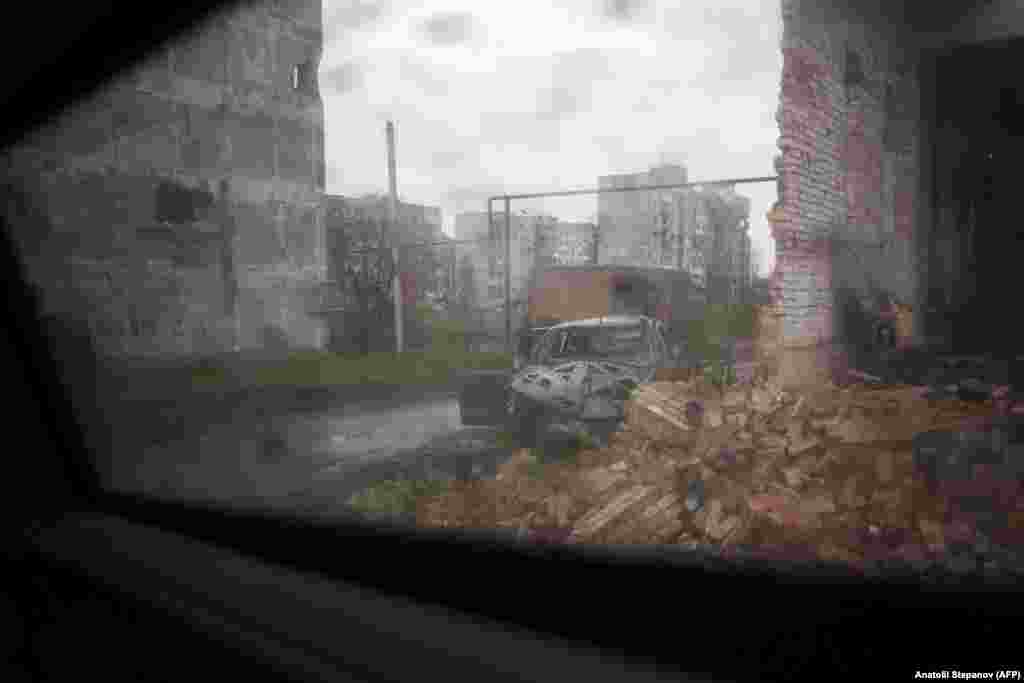
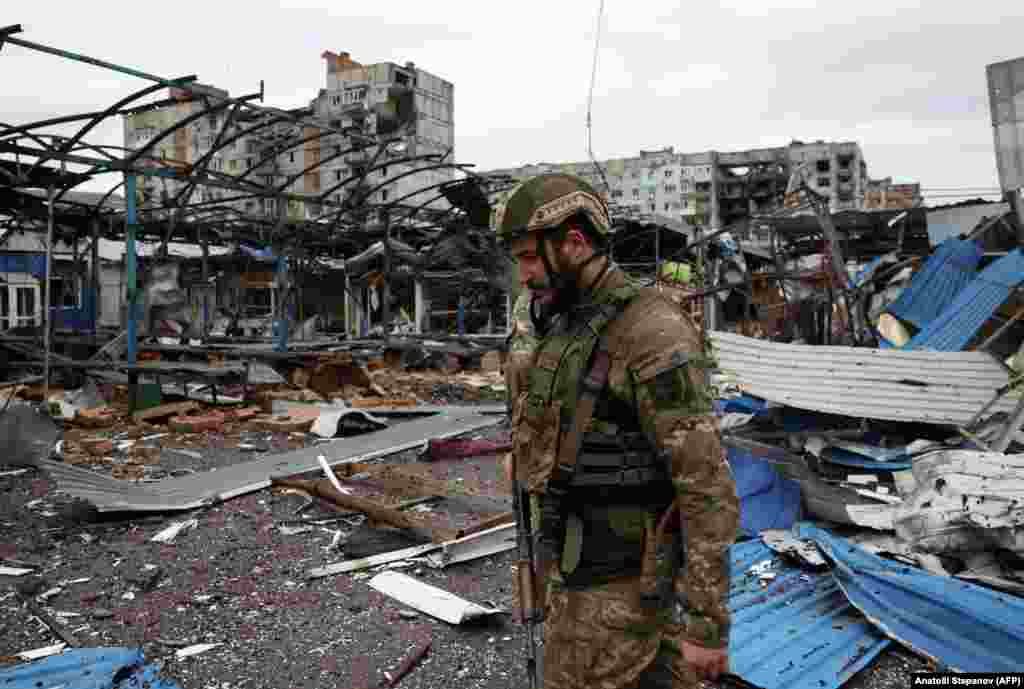
A Ukrainian soldier walks near residential buildings in Bakhmut damaged by shelling.
8/12 A Ukrainian soldier walks near residential buildings in Bakhmut damaged by shelling.
As heavy fighting for control of the shattered city of Bakhmut in eastern Ukraine continues unabated, one Ukrainian unit explains how it is struggling to hold off Moscow's forces.
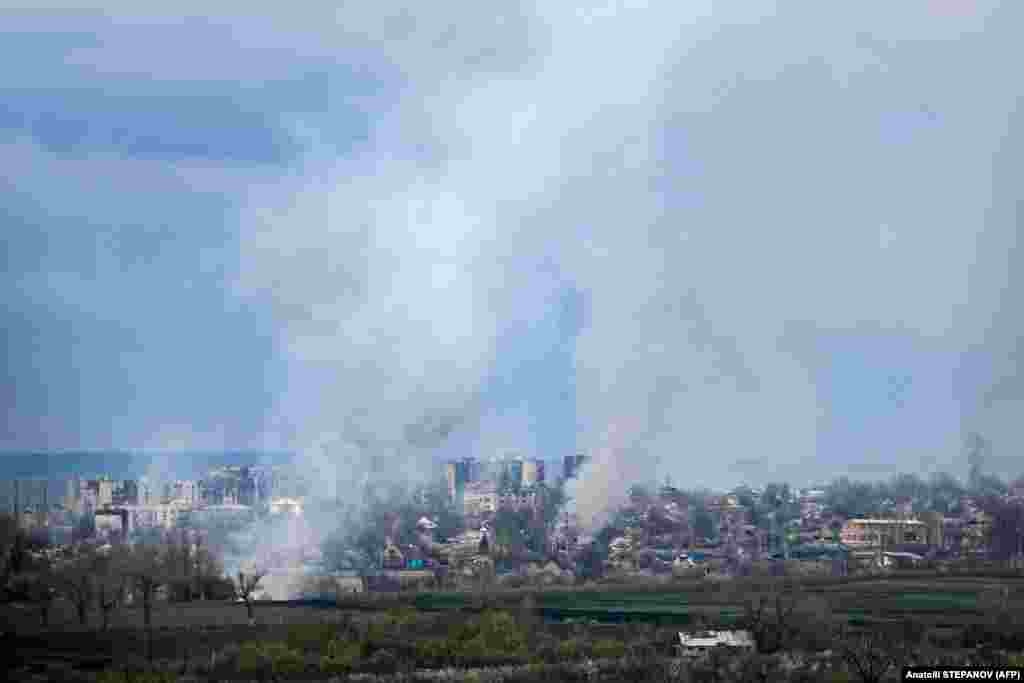
Smoke rises over the ruins of Bakhmut. A 38-year-old infantryman named&nbsp;Andriy said:&nbsp;&quot;There are no buildings left. Everything, everything, everything is completely destroyed. It will have to be demolished anyway.&quot;
9/12 Smoke rises over the ruins of Bakhmut. A 38-year-old infantryman named Andriy said: "There are no buildings left. Everything, everything, everything is completely destroyed. It will have to be demolished anyway."
As heavy fighting for control of the shattered city of Bakhmut in eastern Ukraine continues unabated, one Ukrainian unit explains how it is struggling to hold off Moscow's forces.
Ukrainian soldiers from the Aidar Assault Battalion said they need advanced artillery and ammunition to match and outgun Russian forces if they are to succeed in fending off encirclement.
10/12 Ukrainian soldiers from the Aidar Assault Battalion said they need advanced artillery and ammunition to match and outgun Russian forces if they are to succeed in fending off encirclement.
As heavy fighting for control of the shattered city of Bakhmut in eastern Ukraine continues unabated, one Ukrainian unit explains how it is struggling to hold off Moscow's forces.
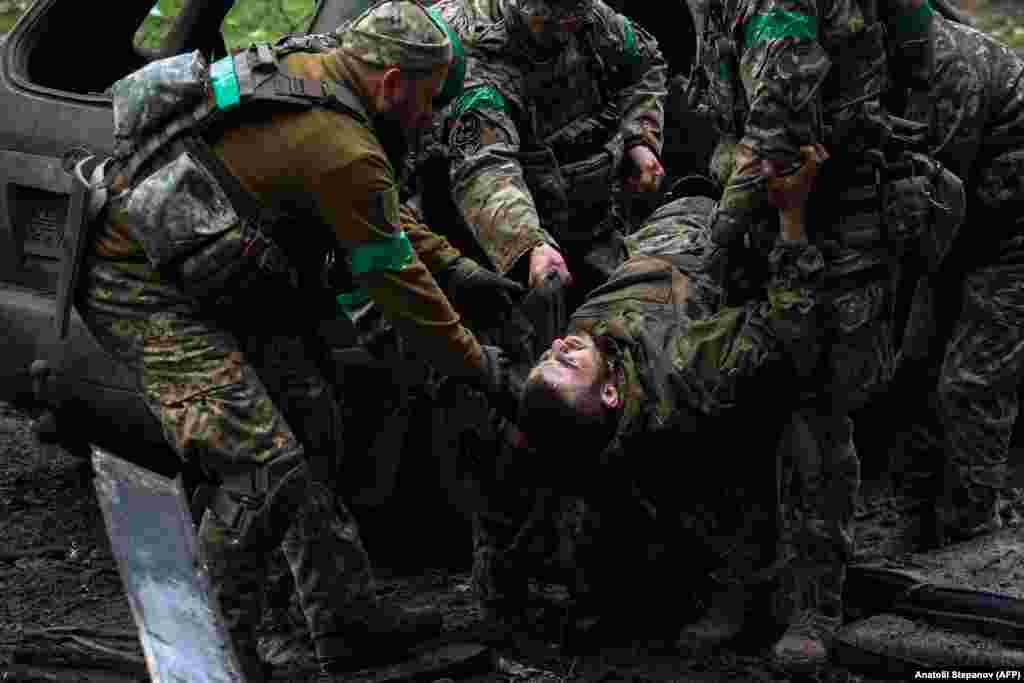
Ukrainian soldiers carry an injured comrade.<br />
<br />
Kyiv admits that its forces have paid a heavy price defending &quot;Fortress Bakhmut,&quot; a city that held around 70,000 people before the Russian invasion.&nbsp;
11/12 Ukrainian soldiers carry an injured comrade.

Kyiv admits that its forces have paid a heavy price defending "Fortress Bakhmut," a city that held around 70,000 people before the Russian invasion. 
As heavy fighting for control of the shattered city of Bakhmut in eastern Ukraine continues unabated, one Ukrainian unit explains how it is struggling to hold off Moscow's forces.
A soldier salutes the victory sign from a colleague in Ukrainian-controlled western Bakhmut.<br />
<br />
Analysts believe Bakhmut holds little strategic value but has acquired political significance as both sides continue the bloodiest infantry battle since World War II.
12/12 A soldier salutes the victory sign from a colleague in Ukrainian-controlled western Bakhmut.

Analysts believe Bakhmut holds little strategic value but has acquired political significance as both sides continue the bloodiest infantry battle since World War II.
As heavy fighting for control of the shattered city of Bakhmut in eastern Ukraine continues unabated, one Ukrainian unit explains how it is struggling to hold off Moscow's forces.
Previous slide
Next slide

Ukrainian defenders also repelled 43 Russian attacks on Bakhmut and Maryinka, the report said.

Ukrainian Deputy Defense Minister Hanna Malyar, meanwhile, described the ongoing fighting in Bakhmut as a "continuous dynamic process."

Malyar said on Telegram on April 25: "We can lose positions in battle today, and regain them the next day; that is why the military prefers to talk about the result after the operation is over."

Malyar's comments came a day after Ukrainian commanders denied a Russian claim that mercenaries from the Wagner Group almost completely controlled the city.

In Washington, National Security Council spokesman John Kirby warned that Russian forces can step up their offensive actions once the weather begins to get warmer.

"We know that in the spring, when the weather improves -- and it is already starting to improve -- we can expect that the Russians will want to go on the offensive in some areas. We don't know exactly where and how they will do it, but we want to be sure that Ukrainians are able to defend themselves better against it," Kirby told Voice of America on April 24.

At the same time, Kirby added, if Ukrainian forces decide to conduct their own counteroffensive operations, they must have the appropriate capabilities.

Military experts have reported -- and Ukrainian leaders have hinted -- that a major spring counteroffensive by Ukraine is in the works.

Russian state news agency RIA said on April 25 that Moscow has begun using its new T-14 Armata battle tanks in the war, firing on Ukrainian positions but not yet participating in a "direct assault."

The tank has an unmanned turret that a crew controls remotely from "an isolated armored capsule located in the front of the hull," the report said.

But, according to British military intelligence, Russian forces have complained about the poor condition of the first of the tanks to arrive.

"Eleven years in development, the program has been dogged with delays, reduction in planned fleet size, and reports of manufacturing problems," the British intelligence report said.

Off the battlefield, the International Working Group on Russian Sanctions, a pro-Ukraine group of scholars, called on Western nations to impose stricter sanctions on Moscow.

The scholars called for a reduction on the price cap on Russian oil to $30 a barrel from $60; a total embargo on Russian steel, iron, and diamonds; and an easing of regulations to seize Russian assets abroad.

The group consists of some 40 scholars -- including Michael McFaul of Stanford University and a former U.S. ambassador to Russia.

With reporting by AP and Reuters
  • 16x9 Image

    RFE/RL's Ukrainian Service

    RFE/RL's Ukrainian Service has seen its audience grow significantly since Russia's full-scale invasion in February 2022 and is among the most cited media outlets in the country. Its bold, in-depth reporting from the front lines has won many accolades and awards. Its comprehensive coverage also includes award-winning reporting by the Donbas.Realities and Crimea.Realities projects and the Schemes investigative unit.

This item is part of
XS
SM
MD
LG