

EU Ambassadors Prolong Russia Sanctions Over Ukraine
By RFE/RL
BRUSSELS -- European Union ambassadors have prolonged asset freezes and visa bans on 146 individuals and 37 entities that, according to the bloc, have threatened Ukraine's territorial integrity.
The decision to prolong the measures by six months was taken on September 7, ahead of a September 15 deadline.
The sanctions were first introduced in March 2014 in response to Russia’s illegal annexation of Crimea.
Their targets include companies in Crimea and various battalions formed by the Russia-backed separatists in eastern Ukraine, as well as Russian politicians like Deputy Prime Minister Dmitry Rogozin and Dmitry Kiselyov, a state media executive and presenter whom many regard as the Kremlin's chief propagandist.
The EU's economic sanctions that target Russia's energy, military, and financial sectors are up for renewal on January 31 but will be discussed by EU leaders when they meet for an EU summit in October in Brussels.
A decision on the measures is expected when the EU heads of state and governments meet again in December.
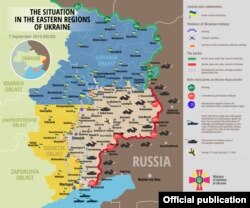
Here is today's map of the security situation in eastern Ukraine, according to the National Security and Defense Council (CLICK TO ENLARGE):
Prominent Crimean Tatar Activist Released From Psychiatric Clinic
By the Crimean Desk of RFE/RL's Ukrainian Service
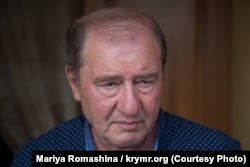
A noted Crimean Tatar activist has been released from a psychiatric hospital in Russia-occupied Crimea.
Ilmi Umerov, the former deputy chairman of the Crimean Tatars' self-governing body, the Mejlis, was charged with separatism in May after he made public statements opposing Moscow's forcible annexation of the peninsula from Ukraine in March 2014.
In August, Umerov was forcibly admitted to a psychiatric clinic for a month of assessment tests.
Umerov's relatives and lawyers said he was released from the clinic on September 7.
The lawyers added that they will seek the transfer of their client, who suffers from heart problems, diabetes, and Parkinson’s disease, to a cardiology clinic.
Human rights groups have urged the Russia-backed authorities in Crimea to drop the charges against Umerov and provide him with necessary medical treatment.
The Moscow-based Memorial Human Rights Center has called the case against Umerov "illegal and politically motivated."
An excerpt:
On the morning of July 20, the idyllic calm of Kiev’s leafy center was shattered. A bomb planted beneath award-winning journalist Pavel Sheremet’s red Subaru exploded, killing him instantly and raining down fiery debris on the quiet boulevard. Triggered by remote control, the assassination was intentionally visible, loud, and meant to send a message. What made the loss so hard for Kiev’s journalist community was that the 44-year-old Sheremet had survived the intimidation and censorship that followed the collapse of the Soviet Union, moving from his native Belarus to Russia and finally to Ukraine, fleeing authoritarian presidents who aimed to control the press to secure their own political stability. Sheremet’s death has made many in the media fear that Ukraine has returned to its darker days of journalism.
Whether or not Sheremet’s killing was meant to send a message, the authorities’ response has sent its own. Knowing Ukraine’s miserable record for investigating violence against journalists, Ukrainian President Petro Poroshenko quickly announced that U.S. investigators from the FBI would also be joining the case. But in the months since Poroshenko’s announcement, the investigation has stalled or never started in the first place — to date, there have been no arrests, and no suspects have been identified. Even a statement by the prosecutor-general noting that the first deputy head of the national police had Sheremet under surveillance before the killing was not enough to impel the official to return early from his vacation to answer questions.