

Ukraine presses NATO chief for defensive weapons
By Robin Emmott
KIEV, Sept 22 (Reuters) -- Ukraine pressed NATO on Tuesday for Western weaponry to help defend itself against pro-Russian separatists but the head of the alliance resisted for fear of threatening a fragile ceasefire with Russian-backed rebels.
In Kiev's imposing Soviet-era government buildings, Ukraine's political leadership told NATO Secretary-General Jens Stoltenberg that their armed forces were no match for Russia, and needed help.
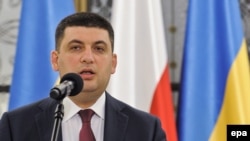
"Our heroes, our warriors belong to an army that was neglected for decades...they face aggression and need defensive weaponry," the speaker of the parliament, Volodymyr Hroysman, told Stoltenberg making his first visit to Ukraine as head of NATO, 18 months after Russia seized Ukraine's Crimean peninsula.
Prime Minister Arseny Yatseniuk, sitting alongside Stoltenberg at a national security council meeting, was equally blunt in depicting a threat from Russia which, however, denies it has provided weapons to the rebels in the east.
"Defence capabilities are essential to us in the face of a nuclear country, which has spent tens of billions of dollars on modernising its army," Yatseniuk said.
Diplomats said the issue of weaponry was raised at the security council, but the tone was less strident than in public. Initially, defensive equipment, for the Ukrainians, could include more communication equipment, they said.
Hours earlier, Stoltenberg had signed agreements to help modernise the Ukrainian armed forces.
But Stoltenberg said that was as far as NATO would go, telling Reuters in an interview that "NATO does not provide or supply weapons."
"The main focus now is the implementation of the Minsk agreement," Stoltenberg said, adding that Monday was the first day since the peace deal was signed in February in which no violations of the ceasefire had been registered.
EUROPE'S OUTPOST
The ebb in violence in Ukraine's east, where the West say Russia is supporting and arming separatists and has positioned its own heavy weapons, was an opportunity for new momentum for diplomacy, Stoltenberg said.
Ukrainian President Petro Poroshenko, while accepting that non-NATO Ukraine could not expect direct military aid, portrayed his country as a bulwark against Russian aggression that could one day threaten other parts of the continent.
"De jure we are not allies, but de facto we are much more than partners. Ukraine is the most eastern outpost of the Euro-Atlantic area," Poroshenko said.
Stoltenberg sees Ukraine as the most complex of Europe's many crises and backs the 11-step Minsk peace deal signed in February that set an end-year deadline for implementation.
He sees the alliance's role mainly limited to helping rebuild the Ukrainian army after years of mismanagement that was reflected in defeats by the pro-Russian rebels.
Former president Viktor Yanukovich dropped a bid to join NATO in 2010 to please Moscow. When he moved last year to decline an EU partnership deal and draw closer to Moscow, he was toppled by protests dubbed by Russia a Western-backed coup.
The current pro-Western leadership under Poroshenko now sees NATO membership as the only way to protect its territory. NATO, however, wants to avoid provoking Moscow.
Russia opposes any potential expansion of NATO to former communist areas of eastern and southeastern Europe, part of a battle for influence that lies at the heart of the conflict in Ukraine.

NATO chief stops short of backing Ukraine membership
Kiev, Sept 22, 2015 (AFP) -- The head of NATO said Tuesday that "Ukraine can rely on" the Western military alliance but stopped short of infuriating Russia by backing the ex-Soviet republic's membership in the Cold War-era bloc.
NATO Secretary General Jens Stoltenberg also repeated his charge from Monday that Russia was supplying pro-Moscow insurgents with weapons and troops in direct violation of a seven-month ceasefire and political reconciliation deal.
Stoltenberg completed his first visit to the war-torn country by attending a sessions of Ukraine's National Security and Defence Council -- a rare honour for a foreign dignitary that underscores Kiev's desire to one day join the Alliance.
"Russia continues to support separatists forces in the east with weapons and troops. This is a violation of the territorial integrity of Ukraine," Stoltenberg told reporters after the Kiev security meeting.
"In this difficult time Ukraine can rely on NATO. NATO provides Ukraine with political and practical support."
Poroshenko's underfunded forces have been grateful for the help but still insist on shipments of offensive weapons that countries such as the United States and Britain refuse to provide.
Ukraine's 49-year-old leader -- elected in the wake of last year's popular ouster of a Russian-backed president -- has set for his impoverished country the goal of applying for EU membership by 2020 and later joining the 28-nation NATO bloc.
Poroshenko said Tuesday that more and more Ukrainians wanted to pull out of Russia's historic orbit and anchor their future with the West.
- Vow to hold referendum -
And he repeated his promise to one day hold a referendum on NATO that would set his government's future course.
"When, thanks to national reforms, we create all the criteria necessary for Ukraine to meet NATO membership, I will decide to hold a national referendum that will record the will of Ukraine people," Poroshenko said.
Recent polls suggest that Ukrainians back joining the Alliance's military umbrella in the face of what Kiev's leaders view as Russia's aggression in the strife-torn east.
The Kremlin denies all involvement in the 17-month conflict and calls the revolt a free expression of the mostly Russian-speaking region's will.
Europe's bloodiest conflict since the Balkans wars of the 1990s has claimed the lives of nearly 8,000 people and driven about 1.5 million from their homes.
The new NATO chief -- a former Norwegian prime minister whom some have criticised for being too lenient with Moscow -- stressed that the Brussels-based organisation was not trying to create a new standoff with Russia.
"NATO doesn't seek a confrontation with Russia. NATO continues to strive for a more cooperative and constructive cooperation with Russia," he said.
"But it has to be based on some fundamental values, like respect of the borders of your neighbours."
Russia has long viewed NATO's expansion into former Soviet and Moscow-run territories of central and eastern Europe as a national security threat.
Moscow has repeatedly vowed to take unspecified reciprocal measures should NATO one day expand further east.
Poroshenko Says Staying Out Of NATO Was 'Criminal'
Ukrainian President Petro Poroshenko has said that staying out of the NATO military alliance was a "criminal" policy that his government is ready to reverse.
But Poroshenko said it will be up to a popular vote to decide on membership.
Poroshenko was speaking on September 22 while chairing a meeting of Ukraine's security council.
NATO Secretary-General Jens Stoltenberg was in attendance at the meeting in Kyiv.
NATO officials have said that Ukraine must carry out political, economic, and military reforms before the country can even be considered for membership.
Stoltenberg told the meeting that "Ukraine can rely on NATO" and that "NATO provides Ukraine with political and practical support."
Ukraine has been fighting with separatist rebels in the east since April 2014 in a conflict that has resulted in the deaths of more than 7,900 people.
Kyiv and Western governments accuse Moscow of directly backing the rebels, something the Kremlin denies.
Based on reporting by AP and Interfax
Here is a map of the latest situation in the Donbas combat zone, courtesy of the Ukrainian Defense MInistry (click image to enlarge):
