



Here's an update from our news desk:
German Chancellor Angela Merkel has said a European Union free trade agreement with Ukraine is not directed against Russia.
Merkel also told a German-Ukrainian economic conference in Berlin on October 23 that Germany wanted good economic ties with both Ukraine and Russia.
"In contrast, we want Ukraine to have good economic relations with the European Union, with Germany but at the same time also with Russia," she said.
The EU-Ukraine Association Agreement was signed last year. Backers regard the deal as crucial for anchoring Ukraine to the West, while Moscow views it as a challenge to Russian interests in its so-called near abroad.
Merkel also urged Ukraine to continue with its economic reforms and tackle corruption and roll back the influence of oligarchs. She said German businesses are ready to invest there if the right conditions are in place.
Ukrainian Prime Minister Arseniy Yatsenyuk told the gathering that Ukraine has started to see some positive signs in its economy in recent months but added that the country needed Germany's help to implement its reforms.
Based on reporting by Reuters
The Daily Beast has a very good story on the upcoming local elections in Dnipropetrovsk, where it seems oligarchic politics are still alive and well:
In Ukraine’s history there have never been so many good deeds performed by politicians as there are being performed right now in Dnipropetrovsk, an eastern industrial region that never succumbed to the pro-Russian separatists. There is public transport for 5 cents, a kilogram of potatoes for 14 cents, free water, free summer camp and even free traffic safety school for children. But this is Ukraine, and the acts are anything but altruistic. They come ahead of the most important mayoral elections in the city’s history, due to take place on October 25. The race is already displaying the worst aspects of dirty politics and, some say, threatening to prompt another Ukrainian revolution.
Gone are the days when Dnipropetrovsk was a closed military city in the Soviet Union known for its rocket production. Now it is the capital of Ukraine’s richest region, the key to eastern Ukraine and a prize for the taking. After ex-Ukrainian President Viktor Yanukovych fled to Russia, his party with its heartland in Russian-speaking eastern Ukraine collapsed, leaving the political playing field wide open. Now rival oligarch clans are battling for control, with mayoral candidate Borys Filatov backed by Igor Kolomoisky and Filatov’s rival Oleksandr Vilkul backed by oligarchs who once stood behind Yanukovych. Because of his feud with Kolomoisky, however, Ukrainian President Petro Poroshenko has decided to cast his lot with his avowed enemy, creating an unofficial alliance with Yanukovych’s former party to keep Filatov from office.
When Kolomoisky was appointed governor of the Dnipropetrovsk Region after the Euromaidan revolution, Filatov became head of his administration. He oversaw the building of fortifications and equipping of volunteer battalions, funded by the Dnipropetrovsk business community, credited with stopping the separatists from gaining a foothold in the region as they did in the neighboring Donetsk. Last October, Filatov won a seat in Ukrainian parliament on the ticket for the Dill party, also backed by Kolomoisky. Then in March, after clashes over the oligarch’s control over key oil and gas assets, Poroshenko fired Kolomoisky, ending his reign as governor.
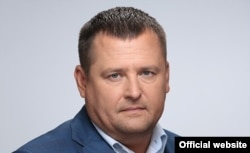
Now sitting in a luxury restaurant overlooking the Dnieper River, Filatov warns that Dnirpopetrovsk and Ukraine are at risk of falling back into the pre-Maidan status quo. Burly with an intense stare, Filatov cuts the image of a strong man; in fact, he’s a former television anchor and speaks with poise. “This is revenge by the Party of the Regions that has now changed its colors and become Opposition Bloc,” he tells The Daily Beast, referring to Yanukovych’s former party, now under a new name.
Filatov says after Maidan he never expected Vilkul to run for office with his history as a high-ranking Party of the Regions official who was vice prime minister until the collapse of Yanukovych’s government in 2014. Responsible for infrastructure and transport in the region, Filatov and others accuse Vilkul of orchestrating attacks on protestors in Dnipropetrovsk during the revolution by titushki, paid men in track suits usually brought in from the regions to assault protestors.
Filatov’s real ire, however, is for Poroshenko, who he says has chosen to back Vilkul instead of him, allying with the group he came to power opposing instead of with Filatov’s reform agenda.
[...]
Read the entire article here