



Kyiv announces Russian-food ban:
Ukraine has announced it will ban food products from Russia starting on January 10, a response to a similar ban by Moscow.
The sanctions, published on Ukraine's government website on January 2, include meat, fish, and dairy products as well as vegetables and fruit.
A similar Russian ban came into effect on January 1.
The tit-for-tat moves come in the wake of Ukraine's decision to implement a free-trade pact with the European Union despite Russian opposition.
Russian officials said that the ban on Ukrainian food imports was necessary to protect its internal market, claiming that European products could reach Russia by way of Ukraine without paying import duty.
An initial attempt to finalize the pact had failed in 2013, sparking protests in Kyiv that led to the ouster of Ukraine's pro-Russian president, followed by Russia's annexation of Ukraine's Crimea, and a Russian-backed separatist uprising in eastern Ukraine. (AP, dpa)
Barring any major developments, that ends the live blog for today.
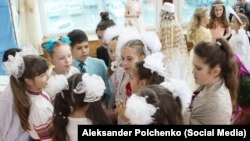
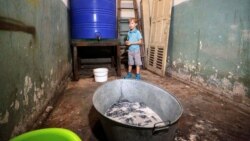
New feature from Andrei Kolokoltsev on the shutting down of a Ukrainian-language drama school for children in Crimea.
The main news is that Crimea electricity situation does not seem at all close to resolution:
Residents of Crimea face several more months of power shortages as Russia appears to have ended a contract with Ukraine to deliver electricity to the peninsula it annexed in 2014.
A Kremlin spokesman said January 1 that Russian President Vladimir Putin will not renew the contract, which expired on New Year's day, as long as Kyiv keeps insisting on stipulating in the contract that the peninsula belongs to Ukraine.
"It can be assumed with a great degree of probability that the president will opt not to sign a contract on such terms," which would amount to an abnegation of Russia's annexation, Kremlin press secretary Dmitry Peskov said.
After a month of on-and-off electricity supplies from Ukraine due to sabotage of the high-voltage transmission lines feeding the peninsula, power to Crimea was officially cut off at midnight December 31 when the contract expired, Russian media reported.
If Kyiv agrees to drop its demand for a clause designating Crimea as part of Ukraine, Peskov said, then Russia would be more inclined to renew the contract.
To support the Kremlin's apparent decision not to renew the contract, Putin commissioned an opinion poll to determine whether Crimean residents want to be a part of Ukraine to continue getting power supplies from the Ukrainian company Ukrenegro.
Russian news agencies reported on January 1 that Crimeans voted overwhelmingly by over 90 percent against renewing the contract under those circumstances, even if it meant experiencing more minor disruptions in supply.
The Kremlin said Putin will be guided by the results of the poll, which was conducted by a state-owned polling organization, in making a decision about the now-lapsed power supply contract with Ukraine.
Without power from Ukraine, officials have warned that Crimeans will continue to experience at least minor electricity shortages and rolling blackouts for three or four months until Moscow can complete construction of undersea cables transmitting more power supplies from Russia.
Russian Energy Minister Alexander Novak has said the power shortages will be particularly acute at peak times of usage, when shortfalls of up to 10 percent are possible.