

An excerpt:
In January Ukraine’s president, Petro Poroshenko, congratulated the country on surviving its first winter without buying Russian gas. It had instead bought European gas which, as Poroshenko pointed out proudly, was 30% more expensive.
This sums up the core problem facing the Ukrainian economy. It is not corruption, a serious issue about which little can be done in the short term, but the ideologically driven choice to sever all ties with Russia, the country that has historically been its major trading partner and chief investor.
In little over a year, living standards in Ukraine have fallen by half, the currency has lost 350% of its value, and inflation has skyrocketed to 43%. Yet, even as the economy has collapsed, the government has insisted on economic policies that can only be termed suicidal.
By tearing up contracts with Russia in 2014, Ukraine’s defence and aviation industries lost 80% of their income. Once the pride of Kiev, airline manufacturer Antonov went bankprupt and rocket engine producer Yuzhmash is now working just one day a week.
By severing banking ties with Moscow, Kiev has denied itself investment and a vital economic lifeline – the remittances sent back home by zarobitchane, Ukraine’s migrant workers. Up to seven millionUkrainians work in Russia, sending back $9bn in 2014 – three times the total foreign direct investment Ukraine got last year.
A Travesty Of A Mockery Of A Sham: RFE/RL's Brian Whitmore talks about the Russian trial of Ukrainian military pilot Nadia Savchenko:
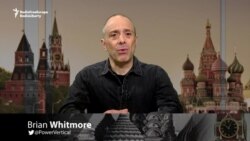

WATCH: Ukrainian pilot Nadia Savchenko refused to recognize the authority of the Russian court where she is on trial for murder. In her final statement to the court, she said the Russian people would rise up to protest against President Vladimir Putin.

A news update from RFE/RL's Rikard Jozwiak in Brussels:
EU Extend Asset Freezes Over Crimea Annexation
BRUSSELS -- EU ambassadors on March 9 extended asset freezes and visa bans on 146 people and 37 entities that according to the EU have benefited from Russia’s annexation of Crimea or been responsible for actions against Ukraine's territorial integrity.
The list, which will be prolonged by six months, includes Russian Deputy Prime Minister Dmitry Rogozin, Russian presidential adviser Sergei Glazyev, and Dmitry Kiselyov, who many regard as the Kremlin's chief propagandist.
The entities include several companies in Crimea and various battalions formed by the Russian-backed separatists in eastern Ukraine.
Three people, all deceased, were removed from the list, including Igor Sergun, the former director of the GRU, the main intelligence directorate of the Russian armed forces. Sergun died unexpectedly in Lebanon at the beginning of the year.
The decision will come into force later this week.
On March 2, the United States announced that it had prolonged similar sanctions. The main economic sanctions against Russia's energy and bank sectors are up for renewal at the end of July.