


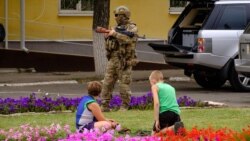
That concludes our live-blogging of the Ukraine crisis for Wednesday, March 15, 2016. Check back here tomorrow for more of our continuing coverage. Thanks for reading and take care.
UN Says Nearly 10,000 People Killed In Eastern Ukraine Conflict Since 2014
By RFE/RL
Almost 10,000 people have been killed in eastern Ukraine since a conflict broke out between Ukraine and Russia-backed separatists in mid-April 2014, the Office of UN's High Commissioner for Human Rights (OHCHR) said in a report published on March 15.
"The total death toll from mid-April 2014 to 12 March 2017 is at least 9,940, with at least 23,455 people injured," the report said, adding that the estimate was conservative.
"These figures include Ukrainian armed forces, civilians, and members of armed groups. Over 2,000 are civilians who have been killed in hostilities," the report added.
The number of civilians injured due to the conflict is estimated at between 7,000 and 9,000.
The new report focuses specifically on the period from November 16 to February 15. It says that during that time, "the UN Human Rights Monitoring Mission recorded 130 conflict-related civilian casualties: 23 deaths and 107 injuries."
Ukrainian-born journalist and RFE/RL contributor Mykola Semena explains to Ron Synovitz why he kept working in Crimea after the territory was annexed by Russia in 2014 -- and why he has risked his personal freedom in order to defend free speech and freedom of the press there.
Crimean Journalist Risks Jail By Refusing To Follow Kremlin Line
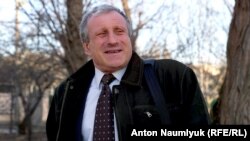
In February 2014, when masked Russian troops without insignia seized control of the Crimean Peninsula from Ukraine, Simferopol-based journalist Mykola Semena grabbed his camera to photograph the invasion that was being denied by the Kremlin.
Weeks later, after Moscow's disputed annexation of the territory, Semena made a fateful decision.
Aged 63 at the time, he opted to remain in the regional capital with his wife in order to document how life was changing in Crimea under the new Russia-installed authorities.
More than ever in his 50-year career, Semena said recently, he saw the urgency of working as an independent journalist in Crimea.
To carry out that work, he became a contributor to RFE/RL's Krym.Realii (Crimea Realities) website, which was set up after Russia's annexation of Crimea in March 2014 and now operates out of RFE/RL's Kyiv bureau.
Meanwhile, Crimea-based media outlets were taken over by the Russian state or by pro-Russia managers.
Journalists who didn't fall into line would either be forced out of work or forced out of Crimea.
Semena didn't fall into line.
Now he faces a possible five-year prison sentence on charges of calling for "the violation of the territorial integrity of Russia."
Read the entire article here.