

Naftogaz executive cooperating in U.S. probe of Giuliani:
By RFE/RL
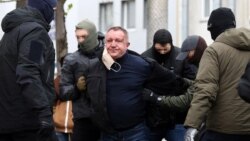
U.S. federal prosecutors are planning to interview Andrew Favorov, an executive of the Ukrainian state-owned Naftogaz oil and gas conglomerate, as part of an investigation into the business dealings of Rudy Giuliani and two of his Soviet-born business associates.
A lawyer for Favorov confirmed to AP on November 19 that the dual Ukrainian-U.S. citizen is scheduled to meet voluntarily with prosecutors.
Favorov has since November 2018 headed the integrated gas division of Naftogaz, responsible for natural-gas production, and the wholesale and retail sale of gas.
The lawyer, Lanny Breuer, declined to say when or where Favorov would be interviewed.
The Justice Department is investigating Giuliani, President Donald Trump’s personal attorney, for possible campaign-finance violations and a failure to register as a foreign agent as part of its probe.
Giuliani's close associates Lev Parnas and Igor Fruman have been indicted on charges of federal campaign-finance violations, conspiracy, making false statement, and falsification of records.
They and Giuliani have been involved in back-channel meetings with current and former Ukrainian officials regarding investigations into former Vice President Joe Biden, his son Hunter, and Democratic Party activities in the 2016 presidential election.
In March, Parnas and Fruman approached Favorov at an energy conference in Texas to offer a partnership in a venture to export U.S. liquefied gas to Ukraine. They also discussed the possibility of Favorov replacing his ultimate superior, Naftogaz CEO Andriy Kobolyev.
Giuliani has denied taking part in the two suspects' efforts to seal a gas deal in Ukraine.
Before joining Naftogaz, Favorov was a managing partner and director of Energy Resources of Ukraine. A graduate of Georgetown University in Washington, Favorov was in 2010-14 the commercial director of the DTEK energy holding owned by billionaire Rinat Akhmetov. (w/Fortune and AP)
We are now closing the live blog for today, but we'll be back again tomorrow morning to follow all the latest developments. Until then, you can keep up with all our other Ukraine coverage here.
We're about to close the live blog in a moment, but before we go we'll point you in the direction of this feature by Glenn Kates:

And speaking of Prystaiko, here's more from our news desk on his meeting with Maas today:
Ukraine FM Ready To Accept 'Reasonable Compromise' In Upcoming Peace Talks
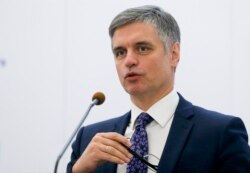
Ukrainian Foreign Minister Vadym Prystaiko says Kyiv is ready to accept a "reasonable compromise" next month during the so-called Normandy format talks on ending the bloody five-year conflict in eastern Ukraine.
"We are going to the Normandy meeting with open ideas, an open mind, ready to accept a reasonable compromise," Prystaiko told reporters on November 19 in Kyiv during a joint news conference with German Foreign Minister Heiko Maas.
The leaders of Ukraine, Russia, Germany, and France are scheduled to meet in December in an effort to end the conflict between Ukrainian government forces and Russia-backed separatists in parts of the Donbas and Luhansk regions that has killed more than 13,000 people since 2014.
Ukrainian President Volodymyr Zelenskiy came to office this year vowing to end the war, but some of his critics have accused him of making too many concessions to Moscow.
The last round of Normandy talks took place in 2016. A 2015 peace plan that was brokered by France and Germany in Minsk has set a series of cease-fires in eastern Ukraine, but they have generally failed to hold and little progress has been made toward ending the conflict.
Several good-faith measures have been taken, such as a prisoner swap and a troop pullback from strategic areas, as efforts intensify to bring peace to the region.
Maas said following the meeting with Prystaiko that Germany and France will do all they can to assist the sides in reaching a permanent solution to the conflict.
He added that "from our point of view, it's time for Russia to step up to the plate" to help end the conflict.
Along with supporting separatists in eastern Ukraine, Russia annexed Ukraine's Crimea Peninsula in 2014 after a Moscow-backed president was ousted in street protests. The annexation has not been recognized by the international community.
The European Union and United States have provided crucial military and economic help in an effort to bolster Kyiv’s efforts to turn toward the West and remain free of Russian domination.
With reporting by Reuters and Interfax