

EU Says Attacks In Eastern Ukraine Violate Minsk Deal
The European Union says that increasing attacks in government-held areas in eastern Ukraine violate February's cease-fire deal that was agreed in Minsk.
"The renewed escalation of the conflict...as a result of attacks on several government-controlled areas today and in the night of 10 August on Starohnativka violates the spirit and the letter of the Minsk Agreements," the EU's External Action Service said in a statement on August 11.
Also on August 11, the Russian Foreign Ministry said the situation on the front line had deteriorated in recent days and urged Kyiv to end its "irresponsible actions" in eastern Ukraine.
On August 10, the Ukrainian military reported the heaviest shelling by pro-Russian separatists since the Minsk truce was signed in February.
The fragile Minsk cease-fire is marred by daily violations.
More than 6,400 people have been killed in the military conflict between Ukrainian armed forces and pro-Russia separatists in parts of Ukraine's eastern regions of Luhansk and Donetsk since April 2014.
Based on reporting by Reuters
That concludes our live-blogging of the Ukraine crisis for today. Check back here tomorrow morning for more of our continuing coverage.
An excerpt:
Not so long ago in eastern Europe, a region on the periphery of a country in crisis took up arms against the new government.
With the help of fighters, weapons, cash and a massive propaganda campaign from its big neighbour, the separatists declared independence and held an illegal referendum that supposedly backed unification with its powerful ally.
The world did not recognise the sovereignty of this crime-ridden, hyper-militarised breakaway region, but with the backing of its big ally it paralysed the rest of the country’s plans for economic development and integration with the West.
The neighbouring country, under an increasingly autocratic president, used its media to convince residents of the isolated province that the rest of the country was now run by murderous fascists intent on brutally suppressing them.
A large portion of the region’s population fled the chaos, and those who remained saw the economy collapse, criminality thrive and peace plans and ceasefires come and go.
With time came a kind of bleak stability; elections were held, a new currency was launched and politician-warlords held sway for as long as they enjoyed the favour of the big neighbour.
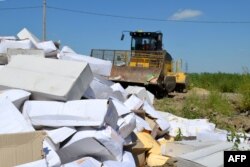
Russia to add new countries to its food import ban list
MOSCOW, Aug 11 (Reuters) - Russia said on Tuesday it planned to add new countries to the list of those from which it has banned food imports in retaliation for Western sanctions imposed on Moscow over the Ukraine crisis.
Deputy Prime Minister Arkady Dvorkovich did not name the countries to be added to the list. "I think the decision is to be made in the nearest time," Russian news agencies quoted him as saying.
Interfax news agency said the list would be expanded by seven countries. Russia banned most Western food imports last August.
Ukraine, Montenegro, Albania, Iceland, Liechtenstein, Georgia and Norway have aligned themselves with a recent decision by the EU to extend its sanctions against Russia for another year, the EU said in a recent statement.
Of these countries, only Norway is subject to the existing Russian counter-sanctions on food, which cover the United States, Canada and Australia as well as the EU.
The EU and other Western powers imposed sanctions against Russian firms and individuals in response to Moscow's role in the Ukraine crisis and annexation of the Crimea peninsula in 2014.
Russia's food ban, currently in place until Aug. 5, 2016, covers a wide range of imports including meat, fish, dairy products, fruit and vegetables.
Dvorkovich also said he expected Russia to export between 25 million and 27 million tonnes of grain in the 2015/16 marketing year.