


Ukraine Accuses Russia Of Using 'Phosphorus' In Avdiyivka Offensive
Kherson has been constantly targeted by Russian shelling from across the Dnieper River.
Ukraine has accused Russian forces of using phosphorus during their current assault on Avdiyivka in the eastern region of Donetsk, where heavy fighting has been reported over the past three days as Moscow attempts to break through the town located just north of Donetsk city.
"Avdiyivka. Our land, a Ukrainian city. The Russians threw a lot of manpower in this direction. They use phosphorus, along with their cannon fodder [troops]," Andriy Yermak, the head of Ukraine's presidential administration, said on Telegram.
It was not immediately clear whether Yermak was referring to white phosphorus munitions, which are not banned under international law but whose use is strictly regulated as the chemical can cause deep burns. The treatment of wounds caused by white phosphorus is very difficult in battlefield conditions.
The assault on Avdiyivka, seen as the largest Russian attack in the east since the start of Ukraine's counteroffensive several months ago, has reportedly involved some 2,000 troops, numerous armored vehicles, and air support.
In a message on Telegram, President Volodymyr Zelenskiy commended the defenders of Avdiyivka, where Ukrainian forces repelled 20 attacks in 24 hours, according to the General Staff on October 13.
"I am grateful to every soldier, every unit for their resilience," Zelenskiy wrote.
Ukrainian forces fought a total of 64 close-quarter battles as they continued their incremental advance in the Bakhmut area of Donetsk and in the southern direction of Melitopol, the military said.
A total of 68 combat clashes took place at the front on October 13, the General Staff said in its evening assessment. Enemy attacks and shelling were reported in the areas near Kupyansk in the Kharkiv region. Ukrainian forces also successfully repelled about 10 enemy attacks in the Maryinka area of the Donetsk region.
The General Staff also reported the downing of a Russian fighter jet and an Orlan-10 drone. There was no comment from the Russian Defense Ministry.
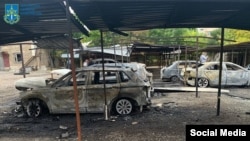
One person died and up to 24 were injured in a Russian attack on the city of Pokrovsk early on October 13, the Donetsk regional prosecutor's office said.
The Interior Ministry said nine employees of the Department of Social Protection of the Population and two female visitors were among the injured. Government buildings, two medical facilities, and two apartment buildings were destroyed, the ministry added.
Pokrovsk is located in the western part of the Donetsk region several kilometers from the front line.
In The Ruins Of Ukraine's Besieged City Of Vuhledar

1/11At around 5 a.m. we set off toward Vuhledar in Ukraine's eastern Donetsk region. Steam from the Kurakhiv Thermal Power Plant drifts into the dawn sky as we drive.
RFE/RL photographer Serhiy Nuzhnenko was granted access to Ukrainian positions in the eastern city of Vuhledar. The town has been under near-constant attack from Russian forces since the beginning of the invasion.
2/11The towers of the Vuhledar coal mine seen during the drive to the besieged town.
Driving in the gloom before sunrise minimizes the risk of being targeted by Russian kamikaze drones. Bomb-dropping quadcopters are also used on these eastern roads to target military equipment and sometimes even cars.
RFE/RL photographer Serhiy Nuzhnenko was granted access to Ukrainian positions in the eastern city of Vuhledar. The town has been under near-constant attack from Russian forces since the beginning of the invasion.
3/11A soldier walks past ruined buildings in Vuhledar. The town was once home to around 14,000 people. Now, just a few hundred civilians -- and the Ukrainian military -- remain.
RFE/RL photographer Serhiy Nuzhnenko was granted access to Ukrainian positions in the eastern city of Vuhledar. The town has been under near-constant attack from Russian forces since the beginning of the invasion.
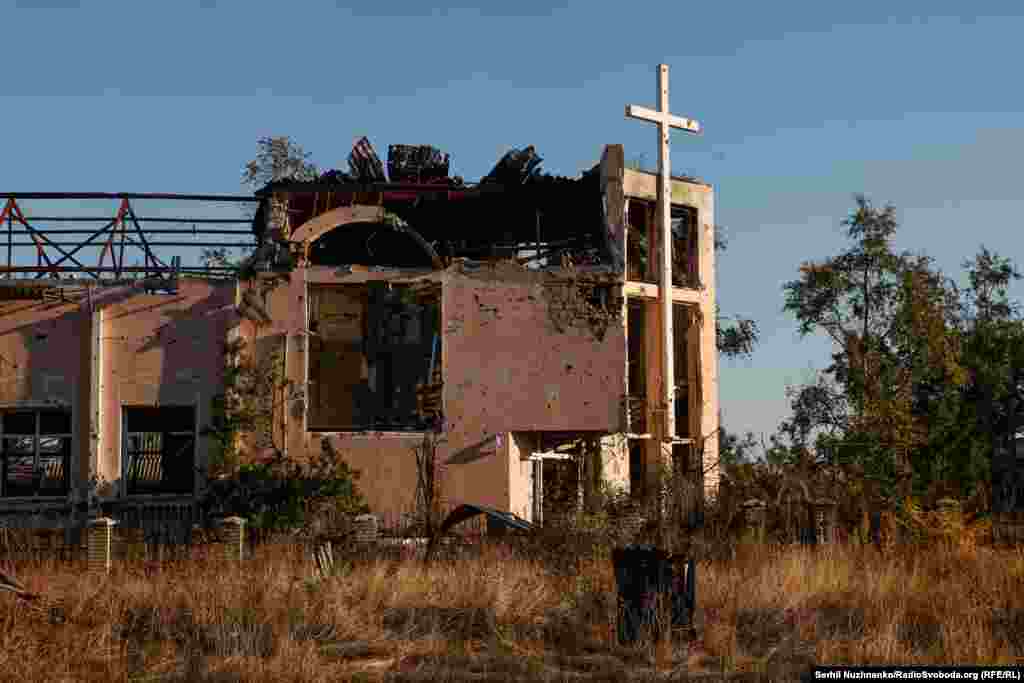
4/11A damaged church in Vuhledar.
Residents remaining in the town rely on volunteers, and the Ukrainian military, to supply them with food and medicine.
RFE/RL photographer Serhiy Nuzhnenko was granted access to Ukrainian positions in the eastern city of Vuhledar. The town has been under near-constant attack from Russian forces since the beginning of the invasion.
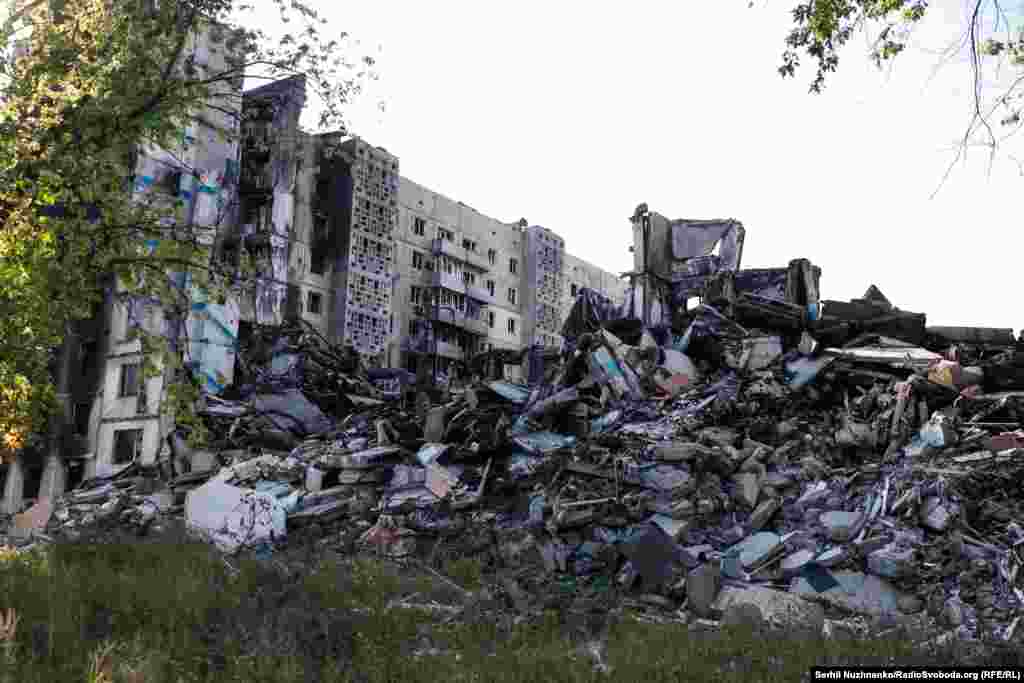
5/11The ruins of a building in Vuhledar. The town’s name means “gift of coal.”
Since March 2022, Russian forces have made repeated attempts to storm the town.
RFE/RL photographer Serhiy Nuzhnenko was granted access to Ukrainian positions in the eastern city of Vuhledar. The town has been under near-constant attack from Russian forces since the beginning of the invasion.
7/11A Ukrainian soldier monitors Russian positions while piloting a drone from inside a building in Vuhledar. The town lies near a strategically crucial highway and railway line.
RFE/RL photographer Serhiy Nuzhnenko was granted access to Ukrainian positions in the eastern city of Vuhledar. The town has been under near-constant attack from Russian forces since the beginning of the invasion.
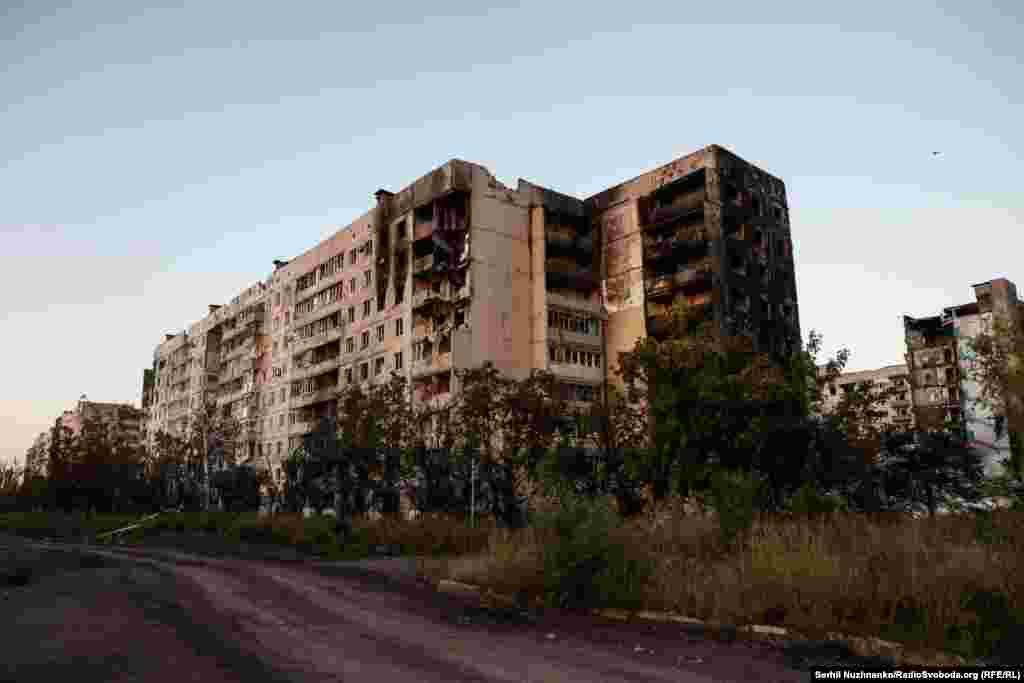
8/11A burned-out apartment block.
Remaining residents of Vuhledar now survive mostly underground in basements that offer shelter from the splinters of shrapnel that frequently ricochet through the streets.
RFE/RL photographer Serhiy Nuzhnenko was granted access to Ukrainian positions in the eastern city of Vuhledar. The town has been under near-constant attack from Russian forces since the beginning of the invasion.
9/11In the time we spend in the frontline town, a wide array of different projectiles can be heard flying into Vuhledar from Russian positions.
RFE/RL photographer Serhiy Nuzhnenko was granted access to Ukrainian positions in the eastern city of Vuhledar. The town has been under near-constant attack from Russian forces since the beginning of the invasion.
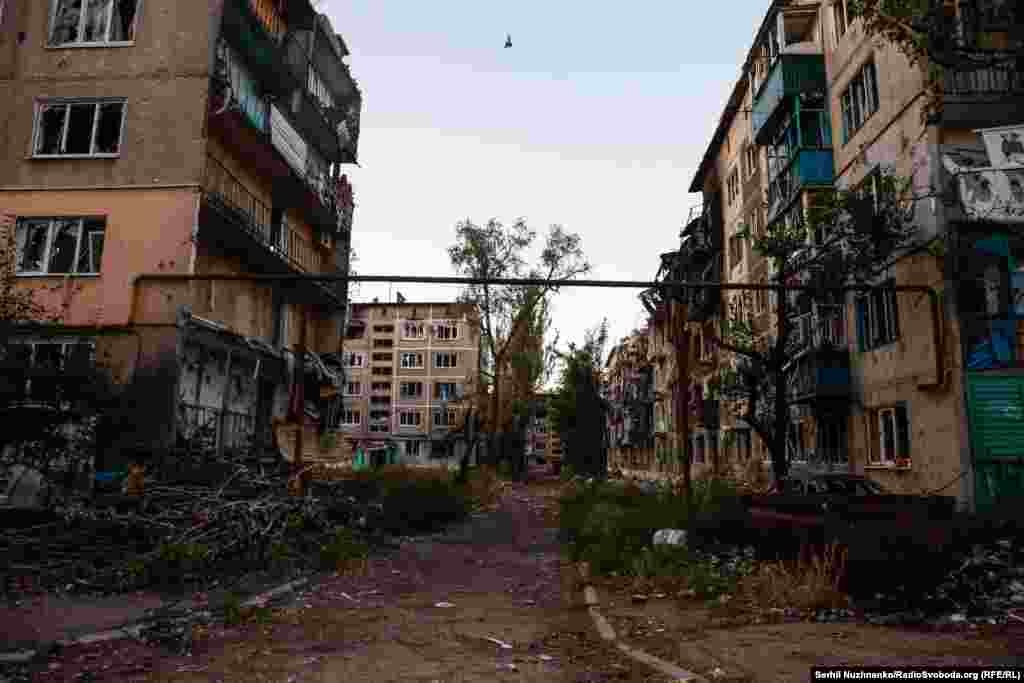
10/11Almost no undamaged buildings remain in the town, which is shelled several times each day by the Russian military.
RFE/RL photographer Serhiy Nuzhnenko was granted access to Ukrainian positions in the eastern city of Vuhledar. The town has been under near-constant attack from Russian forces since the beginning of the invasion.
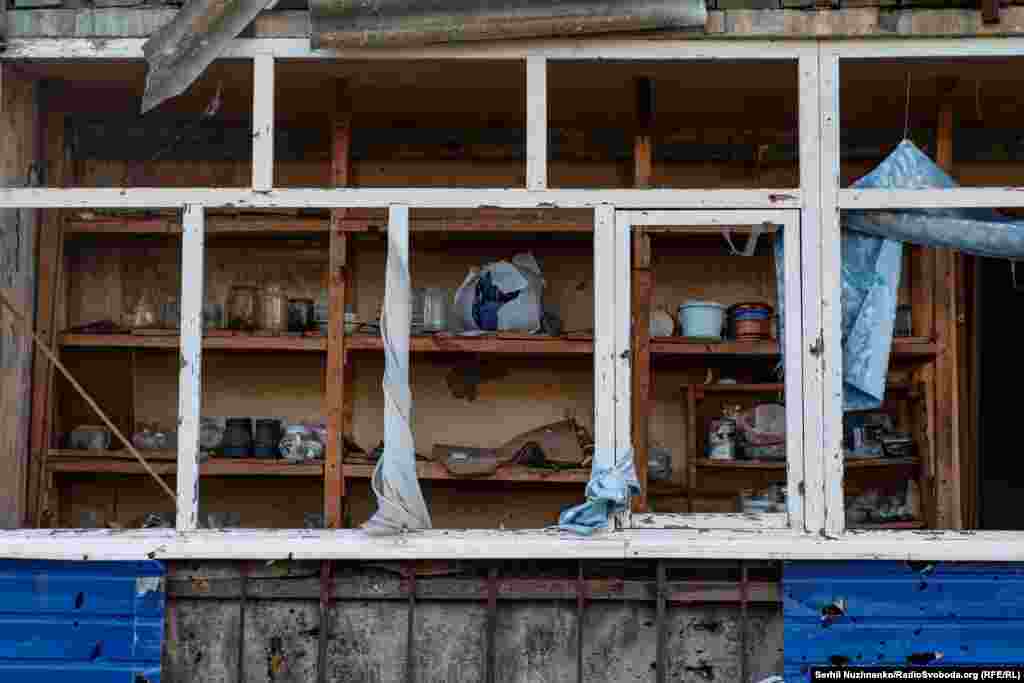
11/11Remnants of a peaceful life seen through windows blown out by explosions.
The photos in this gallery were made in late September and published on October 12. The Ukrainian military often requires lengthy embargoes before images from military positions can be published.
RFE/RL photographer Serhiy Nuzhnenko was granted access to Ukrainian positions in the eastern city of Vuhledar. The town has been under near-constant attack from Russian forces since the beginning of the invasion.
Previous slide
Next slide
Russia has also stepped up its shelling of Kherson, striking the southern Ukrainian region 100 times in 24 hours, killing civilians and causing widespread damage, a regional official said on October 13.
Kherson Governor Oleksandr Prokudin said Russian forces used artillery, mortars, Grad missiles, tanks, and drones to pound the region and its capital, Kherson city, which was shelled 49 times.
"Two people were killed and six more were wounded, one of them a child," Prokudin said, adding that education facilities, houses, apartment blocks, a medical institution, and an industrial platform in Kherson's Beryslav district were destroyed in the strikes.
A Russian drone later on October 13 struck a car in Beryslav, wounding a man and killing his wife, Prokudin said.
Kherson, which was partially liberated by Ukrainian troops one year ago, has been constantly targeted by Russian shelling from across the Dnieper River.

RFE/RL's Ukrainian Service has seen its audience grow significantly since Russia's full-scale invasion in February 2022 and is among the most cited media outlets in the country. Its bold, in-depth reporting from the front lines has won many accolades and awards. Its comprehensive coverage also includes award-winning reporting by the Donbas.Realities and Crimea.Realities projects and the Schemes investigative unit.