




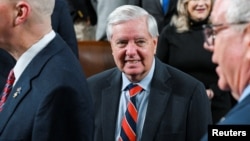
WASHINGTON -- A bipartisan group of US senators on July 14 introduced the Sanctioning Russia Act of 2026, unveiling a revised package of sanctions and tariffs aimed at squeezing Moscow's war finances while seeking to overcome concerns that had stalled earlier versions of the legislation.
The bill, which has gathered more than 26 bipartisan co-sponsors, with supporters expecting that number to quickly grow, has taken on added political significance following the sudden death of Senator Lindsey Graham of South Carolina, one of its chief architects, over the weekend.
Senate Democratic Leader Chuck Schumer of New York called for an immediate floor vote, saying the legislation should be passed "in honor of Lindsey," while Senate Majority Leader John Thune of South Dakota said he was "hopeful we can make that happen."
The legislation represents the culmination of more than a year of bipartisan negotiations, with Graham announcing just one day before his death that lawmakers had reached agreement with the White House on key provisions after months of discussions.
According to colleagues, Graham had returned from Ukraine shortly before his death and had spoken with US President Donald Trump about the sanctions package, expressing optimism that the administration was finally on board.
“He was absolutely ecstatic," Democratic Senator Richard Blumenthal of Connecticut, Graham's chief Democratic partner on the bill, said of their final conversation. "I've never heard him quite as exuberant.”
Blumenthal said he supports naming the legislation after Graham, calling it "part of his legacy."
Bill Shifts Focus To Major Buyers Of Russian Energy
The revised legislation significantly reshapes an earlier proposal that had drawn criticism from lawmakers and US allies over the breadth of its tariff provisions.
Rather than imposing a blanket 500 percent tariff on countries buying Russian energy, the new version authorizes tariffs of up to 100 percent targeting the top five purchasers of Russian oil and natural gas, a group that sponsors said includes China and India.
The legislation also creates exemptions for countries importing less than 15 percent of Russia's annual natural gas exports, provided they are taking "significant steps" to reduce their dependence on Russian energy.

Supporters said the changes were designed to reduce unintended economic consequences for US allies while maintaining pressure on the Kremlin's most important source of revenue.
"The vast majority of Russia's income, particularly used toward its war of aggression in Ukraine, is made up from its exports of Russian oil and gas," a Senate aide said, describing the legislation as narrowly tailored to target that sector.
Beyond tariffs, the bill mandates sanctions within 30 days of enactment against Russian President Vladimir Putin, senior political and military leaders, state-owned enterprises, financial institutions, energy projects, oligarchs, and foreign companies supporting Russia's defense industrial base.
It also broadens sanctions against Russia's so-called "shadow fleet" of aging, reflagged oil tankers used to circumvent existing restrictions on Russian energy exports.
Compared with previous versions, the new legislation also removes language making sanctions contingent on Russia's participation in peace negotiations, making many of the penalties mandatory instead.
White House Flexibility Remains Central Compromise
A key element of negotiations with the Trump administration centered on preserving presidential flexibility.
The revised bill grants the president authority to waive sanctions under certain circumstances, reflecting White House concerns that the executive branch retains room to act when doing so serves US national interests.
At the same time, Democratic negotiators secured tighter oversight provisions requiring the administration to notify Congress and justify any sanctions waivers.

The compromise followed months of negotiations involving Graham, Blumenthal, Democratic Senator Jeanne Shaheen of New Hampshire, and senior administration officials, including Treasury Secretary Scott Bessent.
Trump on July 14 said the legislation had "a good chance" of passing, although he suggested adding sanctions targeting Iran and Hezbollah. Blumenthal opposed reopening negotiations, saying the bill already had White House approval and should move forward without further changes.
Supporters See Pressure On Kremlin's War Machine
Backers argue the legislation directly targets the financial foundation of Russia's invasion of Ukraine by attacking revenues from oil and gas exports.
“If the Kremlin is able to fund its war machine through the sale of oil and gas, it's going to be able to keep going," Shaheen said. "It's going to stop those purchases. It's going to make clear those purchases come with real costs.”
Blumenthal described the proposal as imposing "sledgehammer sanctions" on Russia and its supporters, while Republican Senator Katie Britt of Alabama said Graham believed the measure would become "the most consequential thing" he accomplished during his Senate career.
Senators who traveled with Graham to Ukraine last week said he viewed the legislation as a turning point that could strengthen Kyiv's position both on the battlefield and in any future peace negotiations.
Daniel Fried, a former US assistant secretary of state for Europe and Eurasia who served under seven administrations, said the revised legislation's greatest strength lies in its sharper focus on Russian energy exports.
"The strongest provision is Section 113 directed against Russian oil and gas exports," Fried told RFE/RL.
“That section is more practical than the original version, but may prove a challenge to implement. Still, its passage could do good at the right time: putting pressure on Russia to end the war.”
House Opposition Highlights First Legislative Hurdle
Despite broad Senate momentum, the proposal faces criticism in the House of Representatives.
Representative Gregory Meeks of New York, the top House Democrat on foreign policy, argued the legislation grants Trump excessive tariff authority rather than mandating automatic sanctions against Moscow.
"This is not so much a sanctions bill as it is a massive backdoor authority for President Trump to impose more tariffs, including on our European allies," Meeks said.
He warned that the sanctions ultimately remain subject to presidential discretion and urged lawmakers instead to pursue bipartisan legislation built around the Ukraine Support Act passed by the House earlier this year.
The criticism underscores that while Senate supporters believe they are close to securing sufficient votes, the legislation could still face significant debate before reaching Trump's desk.
Blumenthal, however, expressed confidence the bill is nearing passage.
“This bill has been negotiated over almost two years, painstakingly, sometimes painfully," he said. "I think we have the votes.”

