



Accessibility links

Breaking News

Uzbek Man Kills Himself After Public Humiliation Over Cotton Quota

A “Cotton Contract” is shown from the 2011 harvest. The “contract” obligates the signer to participate in the harvest, with punishment for “not fulfilling the commands,” including meeting a daily quota.
1/9 A “Cotton Contract” is shown from the 2011 harvest. The “contract” obligates the signer to participate in the harvest, with punishment for “not fulfilling the commands,” including meeting a daily quota.
Uzbek authorities have increased the use of forced labor by adults and older children in the cotton sector during the past year in an effort to shift the burden away from younger children in response to public scrutiny and international pressure. Human Rights Watch --> http://www.hrw.org/news/2013/01/25/uzbekistan-forced-labor-widespread-cotton-harvest found that for the 2012 harvest, the Uzbek government forced over 1 million of its own citizens -- children and adults, including its teachers, doctors, and nurses – to harvest cotton in abusive conditions on threat of punishment. Uzbek authorities refused to allow international monitors into the country for the fourth year in a row and arrested and intimidated local activists and independent journalists who attempted to report on the forced labor situation. (9 PHOTOS)
A child picks cotton in September 2012, Suyima Pakhtakor, Jizzakh.
2/9 A child picks cotton in September 2012, Suyima Pakhtakor, Jizzakh.
Uzbek authorities have increased the use of forced labor by adults and older children in the cotton sector during the past year in an effort to shift the burden away from younger children in response to public scrutiny and international pressure. Human Rights Watch --> http://www.hrw.org/news/2013/01/25/uzbekistan-forced-labor-widespread-cotton-harvest found that for the 2012 harvest, the Uzbek government forced over 1 million of its own citizens -- children and adults, including its teachers, doctors, and nurses – to harvest cotton in abusive conditions on threat of punishment. Uzbek authorities refused to allow international monitors into the country for the fourth year in a row and arrested and intimidated local activists and independent journalists who attempted to report on the forced labor situation. (9 PHOTOS)
Boy picking cotton, October 2012
3/9 Boy picking cotton, October 2012
Uzbek authorities have increased the use of forced labor by adults and older children in the cotton sector during the past year in an effort to shift the burden away from younger children in response to public scrutiny and international pressure. Human Rights Watch --> http://www.hrw.org/news/2013/01/25/uzbekistan-forced-labor-widespread-cotton-harvest found that for the 2012 harvest, the Uzbek government forced over 1 million of its own citizens -- children and adults, including its teachers, doctors, and nurses – to harvest cotton in abusive conditions on threat of punishment. Uzbek authorities refused to allow international monitors into the country for the fourth year in a row and arrested and intimidated local activists and independent journalists who attempted to report on the forced labor situation. (9 PHOTOS)
A woman who identified herself as a teacher picks cotton in Jizzakh Province on September 25, 2012.
4/9 A woman who identified herself as a teacher picks cotton in Jizzakh Province on September 25, 2012.
Uzbek authorities have increased the use of forced labor by adults and older children in the cotton sector during the past year in an effort to shift the burden away from younger children in response to public scrutiny and international pressure. Human Rights Watch --> http://www.hrw.org/news/2013/01/25/uzbekistan-forced-labor-widespread-cotton-harvest found that for the 2012 harvest, the Uzbek government forced over 1 million of its own citizens -- children and adults, including its teachers, doctors, and nurses – to harvest cotton in abusive conditions on threat of punishment. Uzbek authorities refused to allow international monitors into the country for the fourth year in a row and arrested and intimidated local activists and independent journalists who attempted to report on the forced labor situation. (9 PHOTOS)
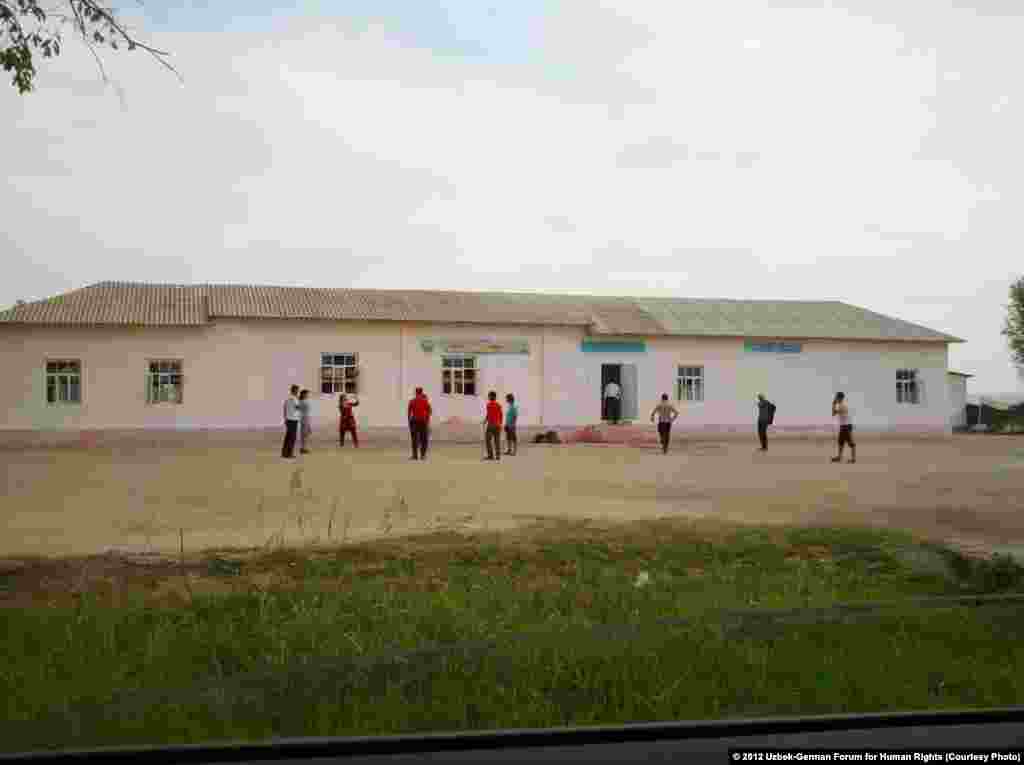
Students, ages 16 to 18, from the Transportation College of Tashkent sent to pick cotton in the Komil district of Jizzakh Province play volleyball in front of the barracks where they will stay until their quota is fully harvested. Refusing participation is not an option; students are threatened with expulsion from school.
5/9 Students, ages 16 to 18, from the Transportation College of Tashkent sent to pick cotton in the Komil district of Jizzakh Province play volleyball in front of the barracks where they will stay until their quota is fully harvested. Refusing participation is not an option; students are threatened with expulsion from school.
Uzbek authorities have increased the use of forced labor by adults and older children in the cotton sector during the past year in an effort to shift the burden away from younger children in response to public scrutiny and international pressure. Human Rights Watch --> http://www.hrw.org/news/2013/01/25/uzbekistan-forced-labor-widespread-cotton-harvest found that for the 2012 harvest, the Uzbek government forced over 1 million of its own citizens -- children and adults, including its teachers, doctors, and nurses – to harvest cotton in abusive conditions on threat of punishment. Uzbek authorities refused to allow international monitors into the country for the fourth year in a row and arrested and intimidated local activists and independent journalists who attempted to report on the forced labor situation. (9 PHOTOS)
The College of Construction and Communal Services, Tashkent region, is closed for the cotton harvest. Students age 16 and up attend these “colleges.”
6/9 The College of Construction and Communal Services, Tashkent region, is closed for the cotton harvest. Students age 16 and up attend these “colleges.”
Uzbek authorities have increased the use of forced labor by adults and older children in the cotton sector during the past year in an effort to shift the burden away from younger children in response to public scrutiny and international pressure. Human Rights Watch --> http://www.hrw.org/news/2013/01/25/uzbekistan-forced-labor-widespread-cotton-harvest found that for the 2012 harvest, the Uzbek government forced over 1 million of its own citizens -- children and adults, including its teachers, doctors, and nurses – to harvest cotton in abusive conditions on threat of punishment. Uzbek authorities refused to allow international monitors into the country for the fourth year in a row and arrested and intimidated local activists and independent journalists who attempted to report on the forced labor situation. (9 PHOTOS)
Defoliants are sprayed while workers harvest cotton nearby.
7/9 Defoliants are sprayed while workers harvest cotton nearby.
Uzbek authorities have increased the use of forced labor by adults and older children in the cotton sector during the past year in an effort to shift the burden away from younger children in response to public scrutiny and international pressure. Human Rights Watch --> http://www.hrw.org/news/2013/01/25/uzbekistan-forced-labor-widespread-cotton-harvest found that for the 2012 harvest, the Uzbek government forced over 1 million of its own citizens -- children and adults, including its teachers, doctors, and nurses – to harvest cotton in abusive conditions on threat of punishment. Uzbek authorities refused to allow international monitors into the country for the fourth year in a row and arrested and intimidated local activists and independent journalists who attempted to report on the forced labor situation. (9 PHOTOS)
A typical barracks adjacent to the cotton fields where adults and children live during the cotton harvest. Workers sleep on the floors and in many cases do not have access to potable water.
8/9 A typical barracks adjacent to the cotton fields where adults and children live during the cotton harvest. Workers sleep on the floors and in many cases do not have access to potable water.
Uzbek authorities have increased the use of forced labor by adults and older children in the cotton sector during the past year in an effort to shift the burden away from younger children in response to public scrutiny and international pressure. Human Rights Watch --> http://www.hrw.org/news/2013/01/25/uzbekistan-forced-labor-widespread-cotton-harvest found that for the 2012 harvest, the Uzbek government forced over 1 million of its own citizens -- children and adults, including its teachers, doctors, and nurses – to harvest cotton in abusive conditions on threat of punishment. Uzbek authorities refused to allow international monitors into the country for the fourth year in a row and arrested and intimidated local activists and independent journalists who attempted to report on the forced labor situation. (9 PHOTOS)
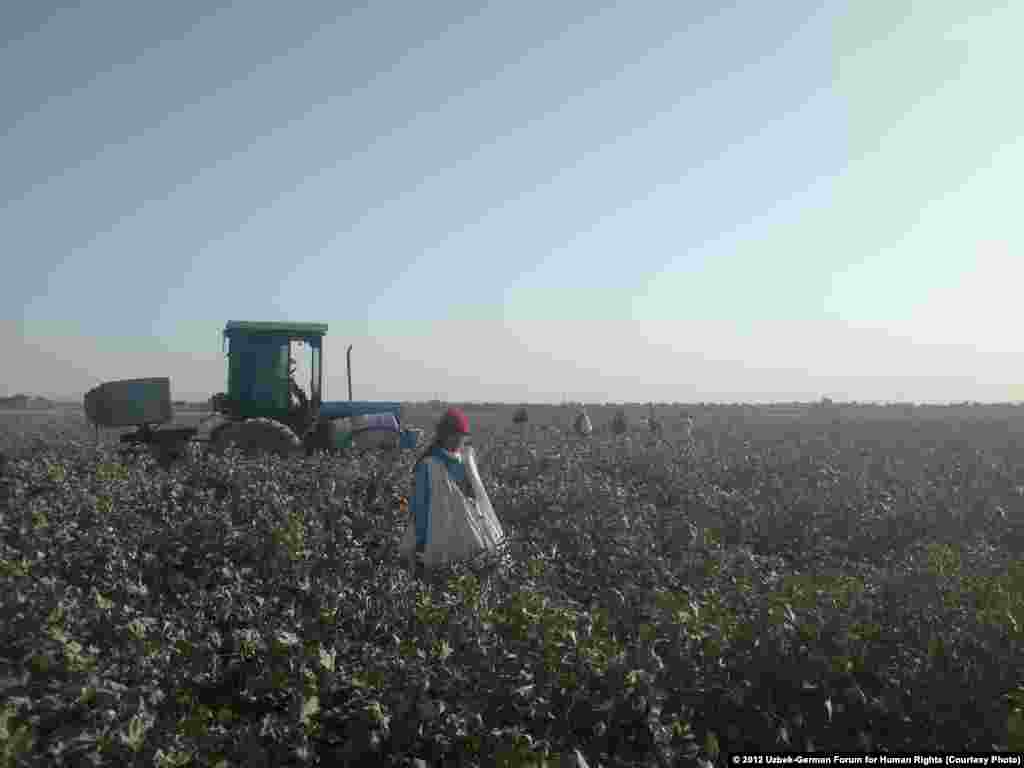
At each cotton field, like this one in Tashkent Province, police are present or notified if anyone comes to take photos or interview people. The authorities frequently harass Uzbek human rights defenders when they try to monitor the cotton harvest.
9/9 At each cotton field, like this one in Tashkent Province, police are present or notified if anyone comes to take photos or interview people. The authorities frequently harass Uzbek human rights defenders when they try to monitor the cotton harvest.
Uzbek authorities have increased the use of forced labor by adults and older children in the cotton sector during the past year in an effort to shift the burden away from younger children in response to public scrutiny and international pressure. Human Rights Watch --> http://www.hrw.org/news/2013/01/25/uzbekistan-forced-labor-widespread-cotton-harvest found that for the 2012 harvest, the Uzbek government forced over 1 million of its own citizens -- children and adults, including its teachers, doctors, and nurses – to harvest cotton in abusive conditions on threat of punishment. Uzbek authorities refused to allow international monitors into the country for the fourth year in a row and arrested and intimidated local activists and independent journalists who attempted to report on the forced labor situation. (9 PHOTOS)
Previous slide
Next slide
TASHKENT -- A father of four has committed suicide after being forced to pick cotton then humiliated publicly for underperforming in the western region of Karakalpakistan.

Safarboy Karimov was found hanging from a tree early on October 18, just days after government officials berated him at a public meeting for not meeting a cotton-picking quota.

RELATED: Uzbekistan Signs Contracts At Cotton Fair Worth $1 Billion

A witness at the meeting told RFE/RL's Uzbek Service that at least one official told Karimov he would be better off hanging himself than coming to another mandatory nightly meeting without meeting the quota.

Uzbeks who are forced to pick cotton have described to RFE/RL the intense official pressure that drives them to work past midnight to meet daily quotas and then rise at 5:00 a.m. to return to the fields.

Three other Uzbeks from the same region who were being forced to pick cotton fled Uzbekistan this week.

Uzbekistan is one of the world's biggest exporters of cotton, but child and other forced labor practices in its state-dominated cotton industry have prompted calls for global boycotts.

Uzbek authorities reported signing contracts worth $1 billion to sell cotton from its 2013 harvest at an annual cotton fair held in Tashkent on October 16-17.

China is its biggest cotton buyer.

  • 16x9 Image

    RFE/RL's Uzbek Service

    RFE/RL's Uzbek Service relies on innovation and a wide network of local sources and platforms to uncover news and engage with audiences in one of the world’s most restrictive societies.

XS
SM
MD
LG