



Accessibility links

Breaking News

Viktor Tsoi And The Russia That Never Was

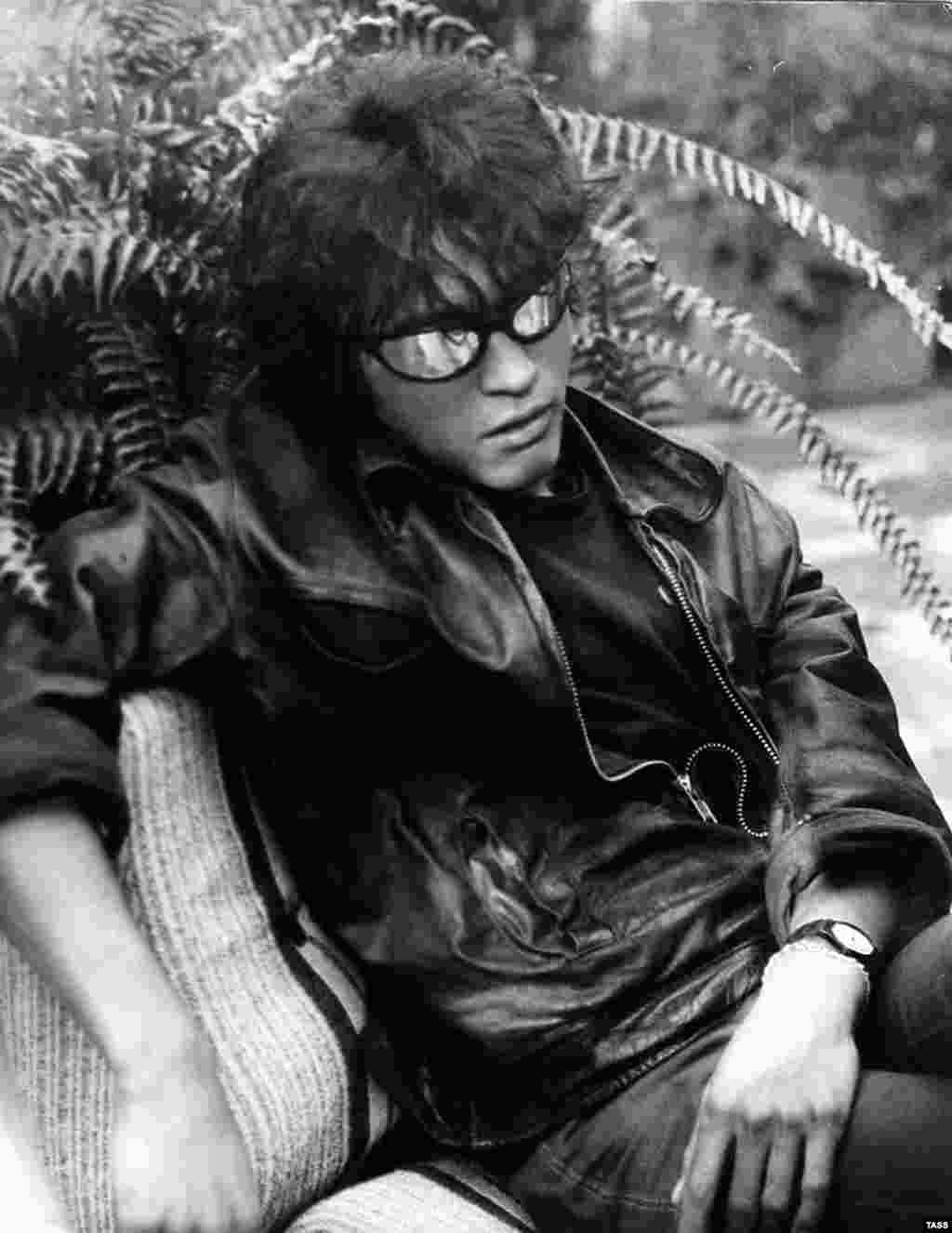
Viktor Tsoi was born in Leningrad in June 1962. His family heritage was Korean. He was kicked out of a Soviet art academy at the age of 15. Two years later, in 1979, he began writing songs.
1/6 Viktor Tsoi was born in Leningrad in June 1962. His family heritage was Korean. He was kicked out of a Soviet art academy at the age of 15. Two years later, in 1979, he began writing songs.
Viktor Tsoi, front man for the popular Soviet band Kino, died in a car crash on August 15, 1990. Twenty-five years later, the lasting influence of the man often dubbed Russia's Jim Morrison continues to be felt.
Also in 1982, Tsoi formed the band Kino and the group recorded its first album, 45. The song Elektrichka, about a man stuck on a commuter train going in the wrong direction, was taken as a metaphor for life in the Soviet Union and was promptly banned by the authorities.
2/6 Also in 1982, Tsoi formed the band Kino and the group recorded its first album, 45. The song Elektrichka, about a man stuck on a commuter train going in the wrong direction, was taken as a metaphor for life in the Soviet Union and was promptly banned by the authorities.
Viktor Tsoi, front man for the popular Soviet band Kino, died in a car crash on August 15, 1990. Twenty-five years later, the lasting influence of the man often dubbed Russia's Jim Morrison continues to be felt.
Tsoi and Kino quickly became a sensation. In 1983, they debuted their song I Declare My Home (A Nuclear-Free Zone). In 1986, the band released (We Want) Changes! -- an anthem calling on the young generation to become more active and demand political change. The song made Kino's reputation across the Soviet Union.
3/6 Tsoi and Kino quickly became a sensation. In 1983, they debuted their song I Declare My Home (A Nuclear-Free Zone). In 1986, the band released (We Want) Changes! -- an anthem calling on the young generation to become more active and demand political change. The song made Kino's reputation across the Soviet Union.
Viktor Tsoi, front man for the popular Soviet band Kino, died in a car crash on August 15, 1990. Twenty-five years later, the lasting influence of the man often dubbed Russia's Jim Morrison continues to be felt.
Tsoi married Marianna Rodovanskaya in 1985. Later that year, their son, Aleksandr, was born. Marianna, who died of cancer in 2005, was Tsoi's heir and controlled the rights to his music after his death.
4/6 Tsoi married Marianna Rodovanskaya in 1985. Later that year, their son, Aleksandr, was born. Marianna, who died of cancer in 2005, was Tsoi's heir and controlled the rights to his music after his death.
Viktor Tsoi, front man for the popular Soviet band Kino, died in a car crash on August 15, 1990. Twenty-five years later, the lasting influence of the man often dubbed Russia's Jim Morrison continues to be felt.
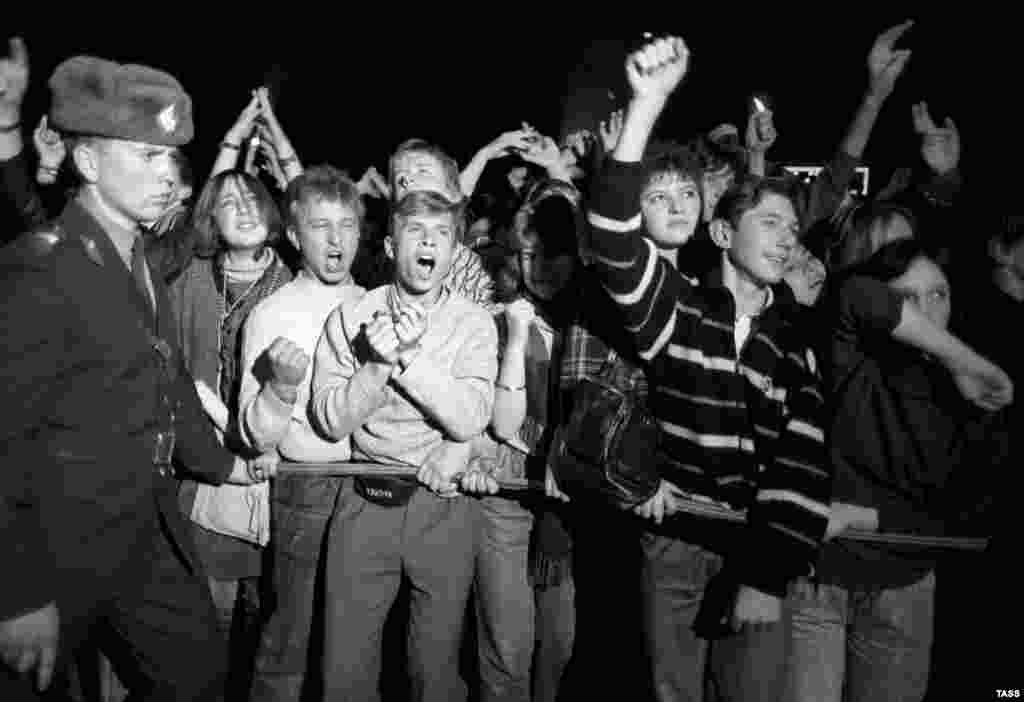
After his tragic death in August 1990 in a car crash, Tsoi's friends and fans held a tribute concert in Moscow. Earlier that year, Kino had played its largest concert ever -- bringing 62,000 fans to Moscow's Luzhniki Stadium.
5/6 After his tragic death in August 1990 in a car crash, Tsoi's friends and fans held a tribute concert in Moscow. Earlier that year, Kino had played its largest concert ever -- bringing 62,000 fans to Moscow's Luzhniki Stadium.
Viktor Tsoi, front man for the popular Soviet band Kino, died in a car crash on August 15, 1990. Twenty-five years later, the lasting influence of the man often dubbed Russia's Jim Morrison continues to be felt.
The photo shows a portrait of Tsoi in downtown St. Petersburg. In 2014, United Russia lawmaker Yevgeny Fyodorov caused a sensation by claiming that the CIA wrote Tsoi's songs as part of its effort to destroy the Soviet Union. Tsoi's son has sued Fyodorov for defaming his father.
6/6 The photo shows a portrait of Tsoi in downtown St. Petersburg. In 2014, United Russia lawmaker Yevgeny Fyodorov caused a sensation by claiming that the CIA wrote Tsoi's songs as part of its effort to destroy the Soviet Union. Tsoi's son has sued Fyodorov for defaming his father.
Viktor Tsoi, front man for the popular Soviet band Kino, died in a car crash on August 15, 1990. Twenty-five years later, the lasting influence of the man often dubbed Russia's Jim Morrison continues to be felt.
Previous slide
Next slide

Viktor Tsoi embodied late-Soviet cool before it was overtaken by post-Soviet kitsch and defined late-Soviet hip before it was overrun by post-Soviet glitz.

He epitomized late-Soviet sincerity before it gave way to post-Soviet cynicism and channeled late-Soviet angst before it morphed into post-Soviet nihilism.

Tsoi -- who died in an automobile accident a quarter of a century ago, on August 15, 1990, at the tragically young age of 28 -- would be in his 50s today.

We never got to see Tsoi in middle age. Like all iconic figures who die before their time, the trail-blazing Soviet rocker remains frozen in our minds: iconoclastic and irreverent, clad in black jeans and a T-shirt, a wild mane of black hair flopping in the breeze.

A guitar in his hand and a cigarette dangling from his mouth. Always a cigarette dangling from his mouth.

Tsoi is a reminder of a more hopeful time -- one that probably seems even more hopeful in retrospect. A time of introspection and anxiety, but also a time of promise. A time when anything and everything seemed possible.

Tsoi played the last concert of his life on June 24, 1990, at Moscow's Luzhniki Stadium before a capacity crowd of 62,000. He closed the concert with his iconic protest anthem "Peremen" (Change).

Less than two months later he was dead.

No, we never got to see Tsoi in middle age. But we have seen the generation he inspired. And for most of them, the hopes and ideals of their youth died not long after Tsoi did.

Some of them are among those running Russia today. Some are among those cheering them on. And some are still holding out hope for that promise of change that was never truly fulfilled.

And Tsoi remains frozen in time, a symbol of the post-Soviet Russia that never was.

This item is part of
XS
SM
MD
LG