




WASHINGTON -- The US Senate delivered one of its strongest bipartisan endorsements of Ukraine since President Donald Trump returned to office, voting 86-12 on July 28 to advance sweeping legislation aimed at tightening economic pressure on Russia and Iran.
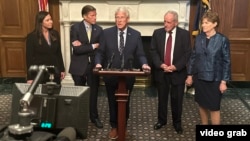
The procedural vote, held just hours after the funeral of Senator Lindsey Graham of South Carolina, the bill's chief architect, came immediately after Ukrainian President Volodymyr Zelenskyy made a personal appeal to senators behind closed doors before watching the vote from the Senate chamber.
The legislation, formally named the Lindsey O. Graham Sanctioning Russia and Iran Act of 2026, authorizes Trump to impose tariffs of up to 200 percent on the world's largest purchasers of Russian oil and natural gas while expanding sanctions targeting Russia's financial institutions, political elites, oligarchs, and the "shadow fleet" used to evade existing restrictions. It also extends sanctions on Iran through 2031.

Although the bill still faces final Senate passage and subsequent consideration in the House after the August recess, Tuesday's overwhelming vote underscored rare bipartisan consensus that economic pressure remains one of Washington's most powerful tools against Moscow.
Throughout the evening, senators repeatedly framed the legislation as not simply another sanctions package but a strategic effort to deprive President Vladimir Putin of the revenues financing Russia's war in Ukraine.
Zelenskyy Presses Senators
Emerging from his meeting with senators, Zelenskyy described the legislation as carrying significance far beyond its direct economic impact.
“This bill is very important," he said. "Sanctions pressure on Russia is very important. It's not only about the money Russia uses to finance this war. It is also a big signal to Europe, a big signal to Ukraine and big support for our people.”
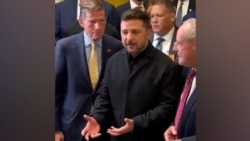


He expressed hope the legislation would become law, saying he was grateful for the bipartisan discussion and optimistic about a positive outcome.
Beyond sanctions, Zelenskyy said the conversation focused extensively on Ukraine's battlefield needs, particularly strengthening the country's domestic defense industry.
He said Ukraine wants to expand production of systems capable of destroying Iranian-made Shahed drones and Russian unmanned aircraft while continuing to develop modern electronic warfare capabilities.
At the same time, he stressed that Kyiv's most urgent military requirement remains additional air defense.
"The real problem is anti-ballistic systems and anti-ballistic missiles," Zelenskyy said, adding that he had conveyed those requirements earlier Tuesday during his meeting with President Donald Trump before repeating them to senators.
His remarks reflected Ukraine's increasingly consistent message that while battlefield support remains indispensable, sustained economic pressure on Moscow has become equally important to shortening the war.
Economic Weapon Against Putin
Republican Senator Jim Risch of Idaho, chairman of the Senate Foreign Relations Committee, said the measure had been carefully negotiated with the White House over an extended period.
“There was large bipartisan support," Risch said. "The president helped. We worked with the president on it. This is the right thing to do at this time.”
He urged the House to move quickly once the Senate completes its passage of the legislation.

Risch also highlighted remarks made during the senators' meeting by both Zelenskyy and Finnish President Alexander Stubb, saying both leaders believed the legislation could have an impact equal to -- or even greater than -- developments on the battlefield.
"This piece of legislation may have more effect than anything that's done on the battlefield," Risch said, arguing that cutting Russia's revenue stream strikes directly at Putin's ability to sustain the war.
Democratic Senator Richard Blumenthal of Connecticut, Graham's principal Democratic partner in crafting the legislation over the past year and a half, called the vote "a profoundly solid vote for Ukraine."
"Ukraine's fight is our fight," Blumenthal said, arguing that the legislation would stop "the flow of blood money" financing Russia's invasion.
Responding to a question about the message being sent to Putin, Blumenthal delivered perhaps the night's strongest political statement.
“This bill says to Vladimir Putin: your days of war are numbered. You are on the losing side. Better to come to the table now than sacrifice more lives, waste more money, crater your economy, destroy your standing in the world. America stands with Ukraine,” he said.
Republican Senator Roger Wicker of Mississippi described the vote as "more than a tribute" to Graham, calling it an overwhelming bipartisan demonstration that lawmakers across the political spectrum support increasing economic pressure on Russia.

He cautioned, however, that Ukraine still faces difficult months ahead.
“The momentum is in the Ukrainians' favor," Wicker said, "but winter's coming on in just a few months, and there's much more to do.”
Democratic Senator Jeanne Shaheen of New Hampshire said the legislation is designed not simply to punish Russia but to eliminate the financial engine sustaining its military campaign.
"The goal of this bill is to cut off the money that is fueling this war," she said.
Shaheen noted that the measure specifically targets Russia's energy exports and the shadow fleet transporting oil while identifying China as the largest purchaser of Russian energy.
She argued that reducing Russia's revenue also has broader geopolitical implications because of Beijing's support for Moscow.
Republican Senator Katie Britt of Alabama portrayed the vote as both a tribute to Graham and a demonstration of American resolve.
"We heard from President Zelensky in this room, and then we walked out there and did something," Britt said.
“We showed the world that we stand for strength, we stand for peace, and we stand with Ukraine.”
She recalled Graham telling colleagues that, despite his lengthy Senate career, he believed this legislation would become the most consequential achievement of his public service.
Targeting Russia's Biggest Energy Customers
A central feature of the legislation is its focus on countries continuing to purchase Russian oil and natural gas despite Moscow's invasion of Ukraine.
Senators stressed repeatedly that the bill has been significantly narrowed from earlier drafts to avoid penalizing US allies while concentrating economic pressure on the principal buyers financing Russia's war.
Blumenthal said the measure authorizes -- but does not require -- the president to impose tariffs of up to 200 percent on the five largest purchasers of Russian oil and gas and on the countries most involved in helping Russia evade existing sanctions.

“It's carefully crafted to make sure we are not hitting our allies," he said. "Let's be really blunt: China and India are the main culprits here.”
According to Blumenthal, recent US tariffs on India demonstrated the potential effectiveness of the approach by contributing to a significant reduction in Indian purchases of Russian oil.
He argued that combining tariffs with sanctions creates powerful economic leverage that could ultimately force Moscow toward negotiations.
The legislation also extends sanctions on Iran through 2031, reflecting senators' argument that Russian and Iranian security cooperation has become increasingly intertwined through Tehran's supply of drones and military technology.
Momentum Shifts To House
Despite the Senate's overwhelming bipartisan vote, the legislation still faces another hurdle.
The House is not scheduled to return until after the August recess, delaying final congressional approval.
Nevertheless, senators expressed confidence that Tuesday night's vote would generate momentum.
Several lawmakers noted that bipartisan House members attended Zelenskyy's meeting with senators, which they viewed as an encouraging sign.

Shaheen acknowledged concerns among some House Democrats regarding the president's tariff authority but argued that many critics remain unfamiliar with revisions made during negotiations.
Blumenthal likewise argued that lawmakers serious about supporting Ukraine should rally behind the Senate compromise because it has White House backing and stands the best chance of becoming law.
For Zelenskyy, who spent the day moving between meetings with President Trump and senators and Graham's funeral service, the vote represented another demonstration that despite political divisions in Washington, bipartisan congressional support for Ukraine remains substantial.
The overwhelming 86-12 procedural vote, combined with repeated bipartisan declarations that "America stands with Ukraine," delivered perhaps the clearest message of the day: Congress intends to increase the economic cost of Russia's war.

