



And more from our news desk on the foreign ministers' meeting:
The foreign ministers of Ukraine, Russia, Germany, and France have agreed on a package of steps for a resumption of the cease-fire in eastern Ukraine.
In a joint statement after talks in Berlin on July 2, the ministers said the steps include reopening talks no later than July 5 on a cease-fire to be monitored by the Organization for Security and Cooperation in Europe (OSCE).
Russia also expressed readiness to grant Ukrainian border guards access to Russian territory to take part in controlling two border crossings once the cease-fire is in place.
German Foreign Minister Frank-Walter Steinmeier described the Berlin meeting as “constructive,” adding that all participants “realize what responsibility we bear.”
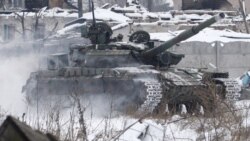
Ukrainian forces pressed ahead with a military offensive against pro-Russian separatists in the east after President Petro Poroshenko ended a cease-fire June 30.
BREAKING: German Foreign Minister Frank-Walter Steinmeier says Russia, Ukraine, Germany, and France backed the idea of using observers from the Organization for Security and Cooperation in Europe at border-crossing points at the Russian-Ukrainian border. Steinmeier spoke after talks with his Russian, Ukrainian, and French counterparts in Berlin.
Talks have begun in Berlin:
The foreign ministers of Germany, France, Russia, and Ukraine have begun talks in Berlin over the Ukraine crisis.
Ahead of the July 2 meeting, Steinmeier said the crisis cannot be resolved without a cease-fire.
Separately, NATO Secretary-General Anders Fogh Rasmussen said in Berlin Russia's actions in Ukraine "threaten the peace and security we have built after the fall of the Berlin Wall."
He spoke after talks with German Chancellor Angela Merkel.
The German leader said it is "very regrettable that during the 10 days of the unilateral cease-fire declared by the Ukrainian President [Petro Poroshenko], there was no significant embrace of Poroshenko's peace plan."
Ukrainian forces pressed ahead with a military offensive against pro-Russian separatists in the east after Poroshenko ended the truce June 30.
From our news desk:
Germany's foreign minister says the Ukraine crisis cannot be resolved without a cease-fire.
Speaking ahead of talks in Berlin on July 2 with his counterparts from France, Russia, and Ukraine, Frank-Walter Steinmeier said there could only be negotiations "when the guns fall silent."
Separately, NATO Secretary-General Anders Fogh Rasmussen said in Berlin that Russia's actions in Ukraine "threaten the peace and security we have built after the fall of the Berlin Wall."
He spoke after talks with German Chancellor Angela Merkel.
The German leader said it is "very regrettable that during the 10 days of the unilateral cease-fire declared by the Ukrainian President [Petro Poroshenko], there was no significant embrace of Poroshenko's peace plan."
Ukrainian government forces pressed ahead with a military offensive against pro-Russian separatists in the country's east after Poroshenko ended the truce on June 30.
The Ukrainian Security Service, or SBU, says its agents on July 1 detained a criminal gang in Kharkiv responsible for recruiting local citizens to join armed gangs loyal to the separatist Luhansk People's Republic.
The SBU says the criminal group includes seven Kharkiv residents aged between 25 and 50. They allegedly looked for potential recruits with previous weapons training and military experience, and reportedly promised monetary rewards in exchange for killing Ukrainian military recruiters.


A funeral ceremony for slain Russian television journalist Anatoly Klyan was held today in Moscow. The body of the 68-year-old cameraman was lying in repose at the main studio of his employer of more than 40 years, state-controlled Channel One.
Klyan died after being shot in the stomach on June 30 in Ukraine's Donetsk region when a bus he was traveling on came under fire. Russian President Vladimir Putin has signed a decree to posthumously award Klyan the Order of Courage. (Reuters video)