

Now Canada is expanding its sanctions over Ukraine:
Canada has added 14 individuals to a list of people facing economic sanctions and travel bans over the Ukraine crisis.
Those targeted include leaders of the pro-Russian separatists in eastern Ukraine, including Russian citizens.
Prime Minister Stephen Harper in a statement said "Russia's illegal occupation of the Crimean peninsula and the provocative military activity remains a serious concern to Canada and the international comminuty."
Harper also said Canada supports Ukrainian President Petro Poroshenko's peace plan "and we will continue to apply pressure against Russia with our allies and partners. "
Canada's latest sanctions came as the EU on July 12 named 11 top Ukrainian separatists it has added to its list of individuals facing asset freezes and travel bans over the Ukraine crisis.
Some more details from our Ukrainian Service on the new EU sanctions:
Also included are the vice prime minister, Vasyl Nikitin, the chairman of the so-called Supreme Council, Aleksey Karyakin, the internal affairs minister, Yurij Ivakin, and the defense minister, Igor Plotnitsky.
The list also includes Nikolay Kozitsyn, commander of Cossack forces, and Oleksiy Mozgovy, responsible for military training of the separatists fighting against Ukrainian government forces.
The EU has now issued sanctions against a total of 72 individuals and two entities for threatening Ukraine's territorial integrity.
The EU Official Journal said the sanctions, agreed by EU ambassadors earlier this week, go into on July 12.
Russia has denounced the EU sanctions.
Moscow's envoy to the EU in Brussels, Vladimir Chizhov, said the blacklisting of the separatist leaders would not help efforts to find a political solution to the crisis.
And from our news desk, re the new EU sanctions.
The European Union has added 11 so-called officials of the self-declared separatist republics in eastern Ukraine to its list of individuals subject to travel bans and asset freezes over the Ukraine crisis.
The EU agreed the sanctions earlier this week, but the names were made public on July 12.
The new names include Aleksandr Borodai, the so-called prime minister of the self-declared Donetsk People's Republic.
The other Donetsk separatists hit with sanctions on July 12 include a so-called deputy prime minister and two ministers of the self-declared republic.
Luhansk separatists were also included in the list, including the so-called prime minister of their self-declared republic.
The EU has now issued sanctions against a total of 72 individuals and two entities for threatening Ukraine's territorial integrity.
Here's the biggest news so far this morning. From the Kyiv Post.
Eleven separatist leaders of the so-called Donetsk and Luhansk People’s Republics have made it on a new list of sanctions compiled by the European Union, bringing the total number of individuals subject to sanctions related to Ukraine’s territorial integrity to 72.
From our news desk:
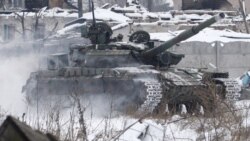
Ukraine's president has vowed to respond resolutely after 19 troops were killed by pro-Russian fighters in the east of the country.
Ukraine's Defense Ministry said 93 soldiers were wounded in the early rocket attack on July 11 near the Russian border.
The attack was a setback for government forces, who had seemingly gained the upper hand last week when they pushed the pro-Russian fighters out of their stronghold city of Slovyansk.
Ukraine President Petro Poroshenko said: "For every life of our soldiers, the militants will pay with tens and hundreds of their own."
Poroshenko warned that "not one terrorist will evade responsibility. Everybody will get what is coming to them."
Ukrainian government troops have been fighting for more than three months against separatists in eastern Ukraine, and in the last two weeks, they have cut the territory held by the rebels in half.
That concludes today's live blogging.
News just in from Brussels:
The European Union, Russia, and Ukraine on July 11 agreed to set up a consultation mechanism to address Russian concerns about Ukraine's Association Agreement signed with the EU last month.
Under the consultation mechanism, Russian will circulate a list of precise concerns or potential risks it feels might affect its economy as a result of the EU’s June 20 deal with Ukraine.
Experts from the three sides will try during the summer to find solutions to problems presented by Moscow that are related to technical regulations, standards, and customs.
The experts are to present a final report no later than September 1.
The EU trade Commissioner Karel De Gucht, Ukraine’s Foreign Minister Pavlo Klimkin, and Russia’s Minister for Economic Development Alexei Ulyukayev are due to meet in Brussels on September 12 to discuss remaining concerns.