



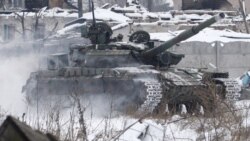
A re-upping of a chilling must-read from Scott Peterson of "The Christian Science Monitor" on four church killings in Slovyansk, seemingly by pro-Russian fighters. It begins:
On a warm June morning, a dozen masked, armed men burst into the Church of the Transfiguration in the Ukrainian town of Slaviansk, demanding to know who among its 300 congregants owned the four expensive vehicles parked in front.
Four men stepped forward – the church priest’s two grown sons, Ruvim and Albert Pavenko, and two deacons, Victor Brodarsky and Vladimir Velichko – and were quickly hustled out of the large, Soviet-era edifice, thrust into their cars, and forced to drive away with the rebels. After 35 agonizing days of searching came evidence that all four were dead.

Russian Foreign Minister Lavrov has downplayed last night's talks, according to Reuters, saying that there were no positive results regarding a cease-fire or political solution to the Ukraine crisis.
He did claim, however, that all issues related to the Russian humanitarian convoy stalled at the border with Ukraine have been resolved, Reuters said.
Moscow has misled before on this issue, though.
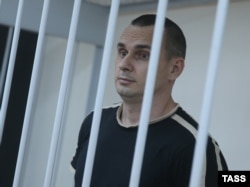
Ukrainian filmmaker Oleh Sentsov facing a trial in the Russian capital after being detained in Crimea and accused of planning terrorist attacks against authorities in that annexed region.

Reuters cites a report today in "Vedomosti" revisiting Russia's possible ban -- full or partial -- on imported cars if the West imposes any further sanctions over Moscow's actions vis-a-vis Ukraine.
The Russian paper noted that imported vehicles composed 27 percent of passenger cars sold in the first half of this year, 46 percent of the trucks sold were imports, and 13 percent of buses.
At least five foreign manufacturers -- Ford, Ford Renault, Hyundai, Toyota, and Volkswagen -- all have assembly plants in Russia whose cars wouldn't be targeted.