



In case you missed the news last night:
EU Agrees Fresh Sanctions Against Russia
Via AP and dpa:
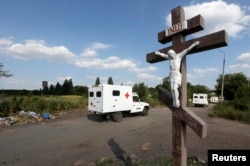
Malaysia plans to send investigators back to the crash site of a Malaysian passenger plane in eastern Ukraine.
Prime Minister Najib Razak said on September 6 that the team would gather physical evidence that would make it possible to bring to justice those responsible for shooting down the plane.
The Malaysia Airlines jet crashed on July 17 in an area in eastern Ukraine controlled by pro-Russian separatists, apparently shot down by a missile. All 298 people on board were killed.
International investigators have retrieved the remains of many, but possibly not all of the victims.
Searches at the crash site were halted on August 6 because of continued fighting in the immediate area.
Dutch authorities who are coordinating investigations by several countries have said they would publish a preliminary report into the disaster on September 9.
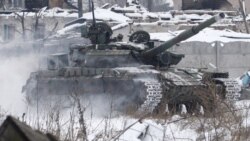
Pro-Kyiv military blogger Dmitry Tymchuk says "Russian terrorist troops" broke the cease-fire virtually as soon as it went into effect at 6:00 p.m. last night, making several attempts overnight -- "using rocket launchers and flamethrowers" -- to attack Ukrainian troop positions at Donetsk airport.
Ukrainian troops, he says, "in full compliance with the terms of the armistice," only fired back to defend their positions.
President Poroshenko quoted as saying that Ukrainian "troops will remain in their positions."
The latest from our newsroom:
Reports say pro-Russian separatists and government forces in eastern Ukraine appear to be observing a cease-fire that came into effect at 6:00 p.m. last night.
Ukrainian President Petro Poroshenko has said it was important now to start working on a long-term solution to the conflict, which has killed 2,600 people since April.
The separatists said the cease-fire agreement had not changed their policy of wanting to break away from Ukraine.
Western states that accuse Russia of supporting the separatists with troops and weapons have been skeptical of the deal.
Russia, which annexed Crimea in March in a move condemned by many and recognized by almost none, denies any direct involvement in the conflict.
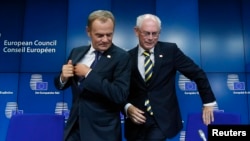
Even as the cease-fire began, EU ambassadors on September 5 agreed new tougher sanctions against Russia.
The measures are to be formally adopted on September 8. But diplomats said they could be suspended if the cease-fire holds and if Russia withdraws forces from Ukraine.
The 12-point agreement was signed at talks involving representatives of Ukraine and the separatists, alongside envoys from Russia and the OSCE in the Belarusian capital Minsk.
It came after the rebels' recent gains in their counteroffensive against government troops, which the West says were achieved with the support of several thousand Russian soldiers.
Some Russian nongovernmental groups have claimed at least 10,000-15,000 Russian troops have served in Ukraine fighting.
Russia denies sending soldiers across the border, and President Vladimir Putin earlier this week unveiled a cease-fire blueprint.
Reports say that under the cease-fire agreement, both sides should start pulling back their units from major flashpoints and exchanging prisoners on September 6.
Russia would also be allowed to send a humanitarian aid convoy to the region.
Ukrainian Prime Minister Arseniy Yatsenyuk said the agreement required US and EU backing because Kyiv could "not manage with Russia on our own."
Diplomats said the fresh EU sanctions include an expanded list of individuals under an EU travel ban and asset freeze, restrictions on Russian state-owned companies borrowing on EU markets, and a ban on sales of goods with dual military and civilian use.
U.S. President Barack Obama said the cease-fire had been agreed because of US and EU sanctions against Russia.
NATO, at a summit in Britain on September 5, approved a rapid-response force of several thousands soldiers that could be deployed quickly to the alliance's eastern borders, acknowledging the perceived threat from Russia.
With reporting by AFP and BBC
Barring any major developments that ends the live blogging for tonight.