



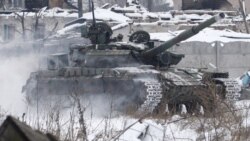
The Kremlin has slammed comments by the OSCE's media representative as "biased," Interfax reports:
Moscow on Monday slammed the representative on freedom of the media of the Organization for Security and Cooperation in Europe, Dunja Mijatovic, for "one more groundless and openly biased press release" with "artificial anxiety at the future of the Avdet newspaper, published by the Mejlis of the Crimean Tatar People."
"While she calls for law and order in Crimea, Mijatovic is well aware that the Mejlis and the Avdet newspaper controlled by it, which has repeatedly been warned about the unacceptability of public appeals for extremist activities, refuse to stay within the limits of law. In the Russian Federation, the requirements of law are the same for everyone, no exceptions are allowed," Russia's Foreign Ministry said in a statement.
"Mijatovic's reproaches appear to be strange in a situation where no mention is made of facts that are extremely important for freedom of expression in Crimea - granting official status to the Crimean Tatar language for the first time in modern history and the complete rehabilitation of the Crimean Tatar people," it said.
"It is deplorable that such overinflated attention to the mass media of the Russian Federation and Crimea as one of its constituents parts, attention that borders on bias, is exerting a negative effect on the quality of media freedom monitoring in the rest of the OSCE member states with their glaring violations that remain outside Mijatovic's proper attention," the ministry said.
"It should be well known in the OSCE, which has fewer member countries than Russia does ethnic groups, that in our country with its rich traditions of peaceful coexistence of various peoples and religious communities there exists special sensitivity for manifestations of extremism, the language of hate, and the fanning of ethnic strife. Along with invariable respect and support for ethnic organizations, we stand for the strict observance of national legislation by them," the statement said.
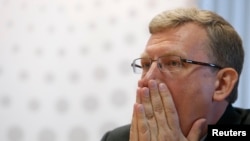
Former Russian Finance Minister Aleksei Kudrin talks to Reuters today in Moscow about the impact of international sanctions against Russia over its role in the Ukrainian conflict:
"The impact from sanctions will amount to about 1 percent of the potential GDP growth. So the GDP growth will be 1 percent less than it could have been without sanctions. The current slowdown in Russia is not caused by sanctions but by the absence of reforms in the economic system in the environment when oil prices are not rising but rather falling and our growth is declining. We need a different economic model, and it has not been produced."
"Speaking of losses, 1 percent of the GDP growth amounts to 700 billion rubles this year -- it's a loss of more than $20 billion just in GDP growth. And there will be more costs. The spending required on the Crimean territory will amount to about $3 billion annually. Additionally, there will be some extra expenses for security structures and a compensation for the impact of sanctions on our companies."
"There is a recession risk. We will be balancing on the edge of zero growth and a recession. Provided that no more sanctions are imposed, we will be balancing like that for a minimum of three years and possibly more depending on the resolution of the situation."
Here is today's situation map of eastern Ukraine in English by the National Security and Defense Council:
