



From a Newsweek piece titled "Ukrainian Intelligence Seize Arms Cache as They Uncover 'Russian' Plot to Attack Kiev":
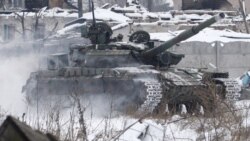
Russian special forces plotted a series of armed attacks against Ukrainian cabinet ministers and several other targets in Ukraine’s capital city of Kiev this week, according to a spokesperson for Ukraine’s counter-intelligence services (SSU), after a weapons cache was uncovered.
The explosive allegations come ahead of parliamentary elections in Ukraine on Sunday, and a suspected assassination attempt on a parliamentary candidate on Monday.
The SSU seized weapons including portable air defence systems and rocket propelled grenade launchers believed to belong to the group behind the plot from a location in Kiev, according to a press statement on the service’s official website also featuring pictures of the equipment.
Read the full article here.

From Russia's Interfax news agency about the current situation in Donetsk:
Hostilities subsided in Donetsk last night and the city was quiet as of 9:30 a.m. local time on Thursday.
Public utility services are operating normally, says a report posted on the Donetsk City Council's website.
DTEK electricians resumed power supply to the Donetsk water
filtering station damaged in the hostilities on July 21. Voda Donbasa workers will now restore the water filtering station and water mains.
Public transportation service is good.
Meanwhile, the army operation press center reported last night's
militia attempt to storm the Donetsk airport tower and clashes in the area of Novolaspa.
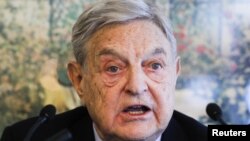
George Soros writes a compelling commentary about Russia and the Ukraine crisis titled "Wake Up, Europe" in the November 20 issue of "The New York Review of Books." Here's an excerpt:
Europe is facing a challenge from Russia to its very existence. Neither the European leaders nor their citizens are fully aware of this challenge or know how best to deal with it. I attribute this mainly to the fact that the European Union in general and the eurozone in particular lost their way after the financial crisis of 2008.
The fiscal rules that currently prevail in Europe have aroused a lot of popular resentment. Anti-Europe parties captured nearly 30 percent of the seats in the latest elections for the European Parliament but they had no realistic alternative to the EU to point to until recently. Now Russia is presenting an alternative that poses a fundamental challenge to the values and principles on which the European Union was originally founded. It is based on the use of force that manifests itself in repression at home and aggression abroad, as opposed to the rule of law. What is shocking is that Vladimir Putin’s Russia has proved to be in some ways superior to the European Union -- more flexible and constantly springing surprises. That has given it a tactical advantage, at least in the near term.
Europe and the United States -- each for its own reasons -- are determined to avoid any direct military confrontation with Russia. Russia is taking advantage of their reluctance. Violating its treaty obligations, Russia has annexed Crimea and established separatist enclaves in eastern Ukraine. In August, when the recently installed government in Kiev threatened to win the low-level war in eastern Ukraine against separatist forces backed by Russia, President Putin invaded Ukraine with regular armed forces in violation of the Russian law that exempts conscripts from foreign service without their consent.
Read the full commentary here.