



Here's another item from RFE/RL's news desk:
German Chancellor Angela Merkel says Russia's actions in Ukraine are a violation of international law and a threat to peace in Europe.
Speaking bluntly in an address to Germany's parliament today, Merkel said, "Nothing justifies the direct or indirect participation of Russia in the fighting in Donetsk and Luhansk."
She told the Bundestag that Russia's actions have "called the peaceful order in Europe into question and are a violation of international law."
But she suggested there was no swift solution, saying, "Our efforts to overcome this crisis will require patience and staying power."
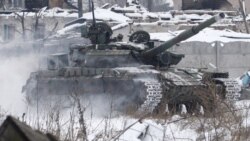
Germany has become increasingly frustrated over Moscow's refusal to heed Western calls to stop supporting pro-Russian separatists who have seized control of large parts of the Donetsk and Luhansk provinces in eastern Ukraine.
Close ties between Russia and Germany have been strained by the Ukraine crisis.
(Reuters)
Former "Le Monde" editor Natalie Nougayrede has been writing for "The Guardian" about an apparent shift in Germany's policy toward Russia:
One thing we know for sure about Angela Merkel: she takes time to ponder her decisions and she weighs her words carefully. So the speech the German chancellor gave in Australia, a few days after Vladimir Putin stormed out of the G20, may go down as a major shift in European geopolitics.
In a nutshell: Germany seems to be closing down Ostpolitik, the policy that has driven much of its diplomacy for decades. This has potentially huge repercussions that may shift the power games in Europe. Putin’s strong network of "Russland Versteher," people who "understand" and side with Russia in Germany, will now be severely put to the test. Other European countries will be paying close attention to how this change in German-Russian relations unfolds. It is also a testimony to the importance of the German-US relationship, which the Obama administration is clearly relying on in its dealings with Russia’s revisionism of the post-Cold war order.
It is worth listening to Merkel’s Sydney speech. In a few swift sentences, she cast the Putin regime not just as a nuisance in a nasty regional rivalry, but as a threat to the very heart of European wellbeing.
First, she contemplated how European powers had stumbled into war in 1914, through "no readiness to accept compromises” and “an arrogant belief in military superiority." It sounded like a description of Putin’s tactics in Ukraine. Then she referred to how the European project was built in the aftermath of the 20th century’s conflicts, leading to a union that has put its "faith in the cohesive effect of shared values." But she warned: "There are still forces that believe in the supposed law of the strong and disregard the strength of the law." Russia "regards one of its neighbours, Ukraine, as part of its sphere of influence,” said Merkel. All this "after the horrors of two World Wars." She was indignant. The EU "will make every effort to reach a diplomatic solution” with sanctions against Russia “on the necessary scale and for as long as needed."
Read the entire article here