



This is ITAR-TASS's take on the detention of the Estonia security officer. They claim an undercover operation:
An officer of the Estonian security police was detained on Friday on the territory of Russia’s north-western Pskov region while he was conducting an undercover operation, the public relations center of the Federal Security Service told ITAR-TASS.
More on the Estonian officer from our news desk:
Russia's Federal Security Service (FSB) says it did detain an Estonian security police officer but said it happened on its side of the border while the person was involved in an undercover operation.
Estonia had earlier summoned the Russian ambassador in Tallinn, Yury Merzlakov, to the Estonian Foreign Ministry for an explanation after Estonia said a security police officer had been abducted at gunpoint in Estonia and taken to Russia.
The Estonian Foreign Ministry called it a "very disturbing incident."
Estonia's Internal Security Service said the incident occurred at about 9 a.m. (local time) near the Luhamaa border post, and started with the jamming of radio communications and the setting off of a smoke grenade.
Estonia has opened a criminal case in the matter.
The incident comes two days after U.S. President Barack Obama spoke in Tallinn.


Barring any major developments that ends the live blogging for tonight.
The latest from our newsroom:
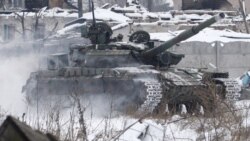
Reports say pro-Russian separatists and government forces in eastern Ukraine appear to be observing a cease-fire that came into effect at 6:00 p.m. last night.
Ukrainian President Petro Poroshenko has said it was important now to start working on a long-term solution to the conflict, which has killed 2,600 people since April.
The separatists said the cease-fire agreement had not changed their policy of wanting to break away from Ukraine.
Western states that accuse Russia of supporting the separatists with troops and weapons have been skeptical of the deal.
Russia, which annexed Crimea in March in a move condemned by many and recognized by almost none, denies any direct involvement in the conflict.
Even as the cease-fire began, EU ambassadors on September 5 agreed new tougher sanctions against Russia.
The measures are to be formally adopted on September 8. But diplomats said they could be suspended if the cease-fire holds and if Russia withdraws forces from Ukraine.
The 12-point agreement was signed at talks involving representatives of Ukraine and the separatists, alongside envoys from Russia and the OSCE in the Belarusian capital Minsk.
It came after the rebels' recent gains in their counteroffensive against government troops, which the West says were achieved with the support of several thousand Russian soldiers.
Some Russian nongovernmental groups have claimed at least 10,000-15,000 Russian troops have served in Ukraine fighting.
Russia denies sending soldiers across the border, and President Vladimir Putin earlier this week unveiled a cease-fire blueprint.
Reports say that under the cease-fire agreement, both sides should start pulling back their units from major flashpoints and exchanging prisoners on September 6.
Russia would also be allowed to send a humanitarian aid convoy to the region.
Ukrainian Prime Minister Arseniy Yatsenyuk said the agreement required US and EU backing because Kyiv could "not manage with Russia on our own."
Diplomats said the fresh EU sanctions include an expanded list of individuals under an EU travel ban and asset freeze, restrictions on Russian state-owned companies borrowing on EU markets, and a ban on sales of goods with dual military and civilian use.
U.S. President Barack Obama said the cease-fire had been agreed because of US and EU sanctions against Russia.
NATO, at a summit in Britain on September 5, approved a rapid-response force of several thousands soldiers that could be deployed quickly to the alliance's eastern borders, acknowledging the perceived threat from Russia.
With reporting by AFP and BBC