

More from RFE/RL's News Desk on Lavrov's address to the State Duma today:
Russia has lashed out at the West over Ukraine, saying the political turmoil and armed conflict there is the result of what Foreign Minister Sergei Lavrov called 25 years of efforts by Western countries to strengthen their own security at the expense of others.
Addressing Russia's lower parliament house on November 19, Lavrov said the West "must support the process of mutually acceptable agreements instead of supporting the party of war in Kyiv, closing its eyes on outrageous human rights violations, lawlessness, and war crimes."
Lavrov tempered the message by saying that there is no alternative to cooperation between Russia and the European Union.
But he blamed the EU for the strains and said Russia's relations with the West must be based on the assumption of equality, echoing a demand President Vladimir Putin set out on the first day of his third term in 2012.
BREAKING: Russian Foreign Minister Sergei Lavrov says that the conflict in eastern Ukraine is an internal issue and "all attempts to turn Russia into a party to the conflict are counterproductive and have no chance of success."
From RFE/RL's News Desk:
Foreign Minister Sergei Lavrov says Moscow will not pressure its "allies" to recognize Crimea as a part of Russia or to join it in recognizing Georgia's breakaway regions of South Ossetia and Abkhazia regions as independent states.
In a question-and-answer session following an address to Russia's lower parliament house on November 19, Lavrov said the security and economic groupings that Russia is currently building with other former Soviet republics are aimed to "protect the legitimate interests of our countries' security."
He said that "on some issues, including the status of Abkhazia, South Ossetia, or Crimean history, we are not making our partners share our assessments 100 percent, as we do not want to put them into an awkward position if for some reason it is uncomfortable for them."
The remarks appeared aimed to assuage concerns among ex-Soviet republics that Russia, which annexed Crimea in March in a move that Kyiv and the West say was illegal, wants to diminish their sovereignty or control their foreign policy.
A wonderful video from RFE/RL's Ukrainian Service:
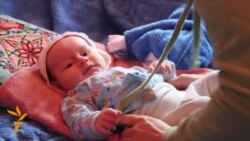

It’s been a tumultuous year for Halyna Trofanyuk. At the beginning of the year she traveled from her small village in western Ukraine to brave freezing conditions and brutal security forces at the protests in Kyiv. It was a decision that brought her to the very center of Ukraine’s political drama, but which also had far-reaching consequences for her personal life: a relationship won and lost, a grandson conceived on the Maidan. But what future will the baby have? Halyna is not optimistic -- and now says she’s sometimes ashamed to have joined the protests.
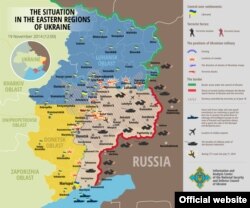
Here is today's situation map of eastern Ukraine by the National Security and Defense Council:
From RFE/RL's News Desk:
Ukraine says it will not tolerate pressure from any other country over whether or not it seeks to join NATO.
Foreign Ministry spokesman Yevhen Perebyynis made the remark to reporters in Kyiv on November 19, after the BBC quoted Kremlin spokesman Dmitry Peskov as saying in an interview that Moscow wants "a 100 percent guarantee that no one would think about Ukraine joining NATO."
Hitting back with a reference to Russia's annexation of Crimea and support for pro-Russian separatists in eastern Ukraine, Perebyynis said Kyiv would like guarantees that Moscow will not interfere in Ukraine's internal affairs, send in troops, or annex Ukrainian territories.
The U.S. ambassador to Ukraine, Geoffrey Pyatt, told journalists on November 19 that any decision on seeking to join NATO could be made only by the Ukrainian people, not by Russia, Europe, or the United States.
The Canadian ambassador to Ukraine, Roman Waschuk, made a similar statement on November 19.