


G7 Ministers Urge Russia To Find Those Behind 'Abhorrent' Navalny Poisoning; UN Rights Chief Calls For Probe
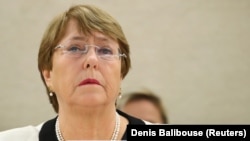
U.N. High Commissioner for Human Rights Michelle Bachelet (file photo)
The foreign ministers of the Group of Seven nations have condemned the "confirmed poisoning" of Russian opposition politician Aleksei Navalny, and demanded that Russia quickly find and prosecute those behind the "abhorrent" attack.
"We, the G7 foreign ministers of Canada, France, Germany, Italy, Japan, the United Kingdom and the United States of America and the High Representative of the European Union, are united in condemning, in the strongest possible terms, the confirmed poisoning" of Navalny, they said in a joint statement released by the U.S. State Department on September 8.
The top diplomats from the major industrial democracies also called on Russia "to urgently and fully establish transparency on who is responsible for this abhorrent poisoning attack and…to bring the perpetrators to justice."
Navalny, a 44-year-old anti-corruption campaigner who has led nationwide protests against Russian President Vladimir Putin, was flown to Germany on August 22, two days after falling ill on a flight in Siberia.
German experts say tests show that he was poisoned with a Soviet-style military-grade nerve agent from the Novichok group, prompting international calls on Russia to swiftly investigate the case.
Russian authorities have refused to open a criminal investigation, saying that no hard evidence of poisoning has been found.
The Kremlin has also vehemently denied allegations by Navalny’s team, his relatives, and others who believe that Russian authorities are behind the poisoning.
Navalny continues to be treated at Berlin’s Charite Hospital, which on September 7 said the Kremlin foe had been removed from his medically induced coma and that he was responding to verbal stimuli.
However, the hospital also said that it remains "too early to gauge the potential long-term effects of his severe poisoning."
Germany briefed the G7, which the United States is chairing this year, on its determination that Navalny "is the victim of an attack with a chemical nerve-agent of the 'Novichok' group, a substance developed by Russia," the G7 statement said.
"Any use of chemical weapons, anywhere, anytime, by anybody, under any circumstances whatsoever, is unacceptable and contravenes the international norms prohibiting the use of such weapons," it added.
The G7 ministers said that they will “continue to monitor closely how Russia responds to international calls for an explanation of the hideous poisoning."
The statement came on the same day as the United Nations high commissioner for human rights called for for the Russian government to "fully investigate" the poisoning of opposition politician Aleksei Navalny, calling the incident an "assassination attempt."
In her September 8 statement, High Commissioner Michelle Bachelet said that German specialists have "unequivocal proof" that Navalny was poisoned by a Novichok nerve agent while flying from the Siberian city of Tomsk to Moscow.
"Navalny was clearly someone who needed state protection even if he was a political thorn in the side of the government," Bachelet said, noting that Navalny had been repeatedly harassed and attacked for years before the August 20 poisoning.
Run-Ins Endured By Aleksei Navalny, Russia's Leading Opposition Figure
1/15Aleksei Navalny in court in December 2011 after his arrest during an unauthorized anti-government march in Moscow. Navalny was sentenced to 15 days detention for “resisting law enforcement officers.” It was the first of what would later become a regular occurrence for the opposition figure.
Pictures from some of the dozens of encounters Russia’s leading opposition figure has had with police, the courts, and unknown assailants through his years of public activism. Navalny has been jailed more than 10 times and has spent hundreds of days in custody since 2011.
2/15A sign expressing support for Navalny scrawled on the back of a truck outside the detention center where Navalny was being held after his December 2011 arrest. In February 2011, Navalny described President Vladimir Putin’s political party, United Russia, as “the party of crooks and thieves” in a radio interview. The phrase was widely picked up by opposition groups.
Pictures from some of the dozens of encounters Russia’s leading opposition figure has had with police, the courts, and unknown assailants through his years of public activism. Navalny has been jailed more than 10 times and has spent hundreds of days in custody since 2011.
3/15Navalny is escorted to a court session in Moscow in May 2012. He was detained during an opposition rally a day after the May 7 inauguration of Putin. Navalny was sentenced to another 15 days of jail for "participating in an illegal public event."
Pictures from some of the dozens of encounters Russia’s leading opposition figure has had with police, the courts, and unknown assailants through his years of public activism. Navalny has been jailed more than 10 times and has spent hundreds of days in custody since 2011.
4/15A journalist films Navalny’s Moscow apartment after it was ransacked by police on June 11, 2012. Russian police raided several opposition leaders' homes amid widespread anti-government protests in the spring and summer of 2012.
Pictures from some of the dozens of encounters Russia’s leading opposition figure has had with police, the courts, and unknown assailants through his years of public activism. Navalny has been jailed more than 10 times and has spent hundreds of days in custody since 2011.
5/15Masked men drive away after searching Navalny’s Moscow office on June 12, 2012. Navalny was later summoned for questioning by police, which prevented his participation in a planned protest.
Pictures from some of the dozens of encounters Russia’s leading opposition figure has had with police, the courts, and unknown assailants through his years of public activism. Navalny has been jailed more than 10 times and has spent hundreds of days in custody since 2011.
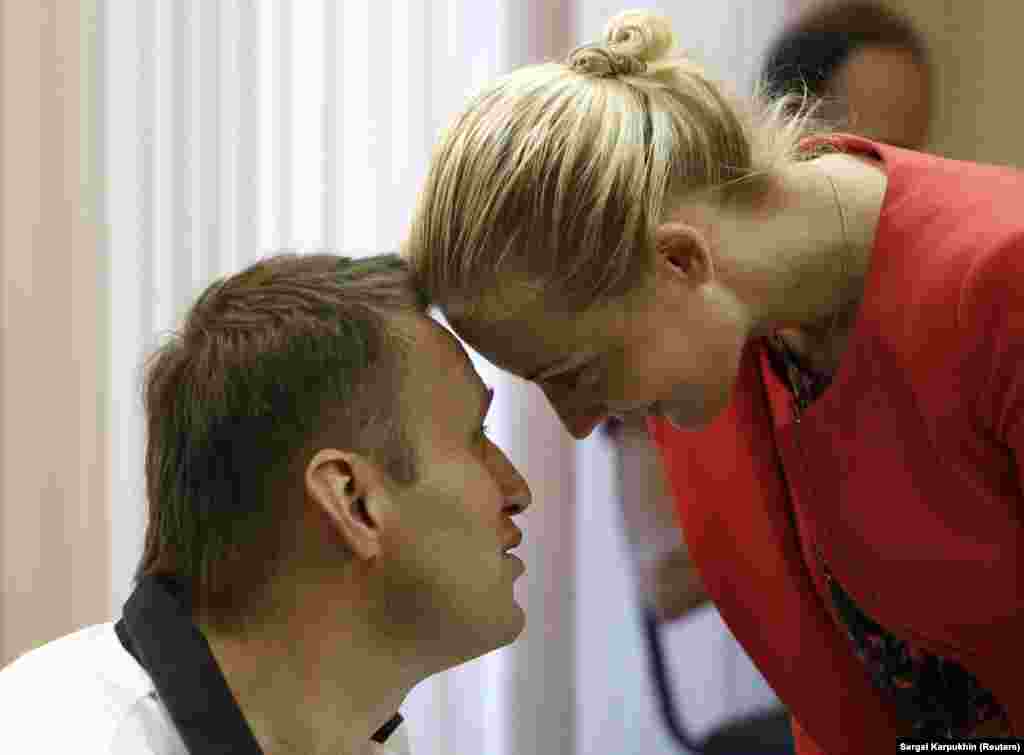
6/15Navalny and his wife, Yulia, during a break in court proceedings in Kirov in July 2013. Navalny was charged with stealing 16 million rubles ($500,000) from a state timber firm. He rejected the charges as trumped up. The court handed down a five-year prison term that was later reduced to a suspended sentence after widespread public protests.
Pictures from some of the dozens of encounters Russia’s leading opposition figure has had with police, the courts, and unknown assailants through his years of public activism. Navalny has been jailed more than 10 times and has spent hundreds of days in custody since 2011.
7/15Navalny and his brother Oleg (inside cage) during a court hearing in Moscow in December 2014. The pair were convicted of stealing around $500,000 from Russian firms during business dealings dating back several years. They rejected the charges. Aleksei Navalny’s sentence was suspended, but his brother served a full prison term of 3 1/2 years, being released in June 2018.
Pictures from some of the dozens of encounters Russia’s leading opposition figure has had with police, the courts, and unknown assailants through his years of public activism. Navalny has been jailed more than 10 times and has spent hundreds of days in custody since 2011.
8/15Navalny being detained after leaving a radio station in Moscow in January 2015. Shortly before, Navalny had snipped off an electronic bracelet he was required to wear while under house arrest for his 2014 suspended sentence.
Pictures from some of the dozens of encounters Russia’s leading opposition figure has had with police, the courts, and unknown assailants through his years of public activism. Navalny has been jailed more than 10 times and has spent hundreds of days in custody since 2011.
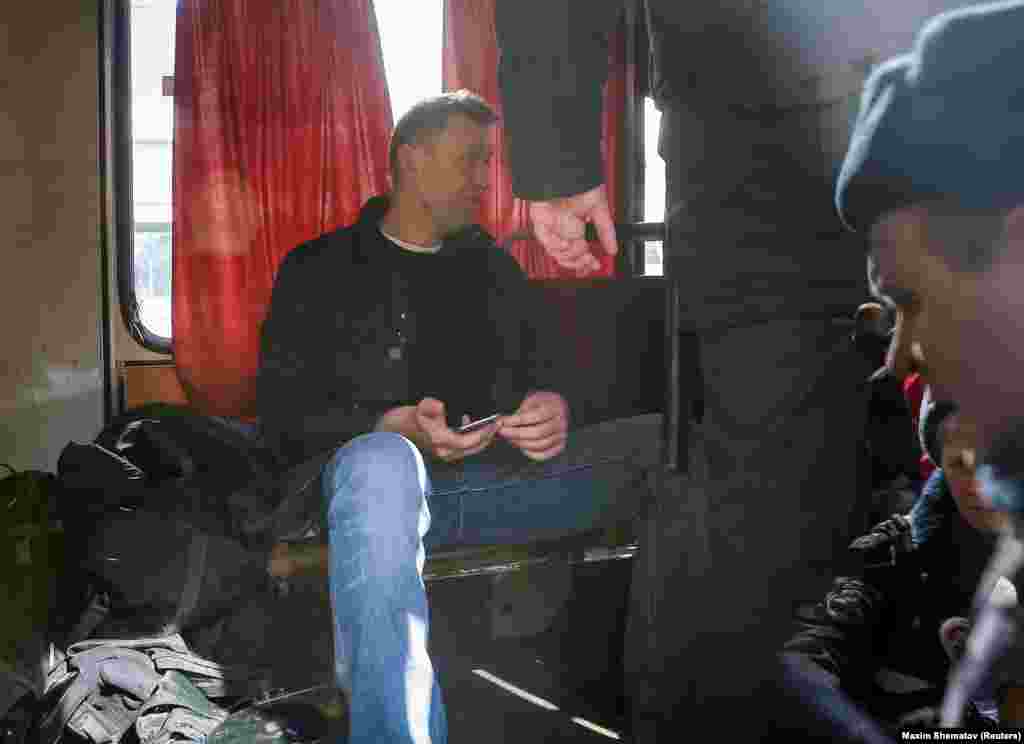
9/15Navalny sitting in a police van after being seized by police during a massive Moscow rally in March 2017. He was fined $350 for taking part in what the authorities called an illegal protest.
Pictures from some of the dozens of encounters Russia’s leading opposition figure has had with police, the courts, and unknown assailants through his years of public activism. Navalny has been jailed more than 10 times and has spent hundreds of days in custody since 2011.
10/15Navalny on his way to the hospital after being splashed with green dye by unknown assailants in Moscow in April 2017. He suffered burns to his eye in the attack.
Pictures from some of the dozens of encounters Russia’s leading opposition figure has had with police, the courts, and unknown assailants through his years of public activism. Navalny has been jailed more than 10 times and has spent hundreds of days in custody since 2011.
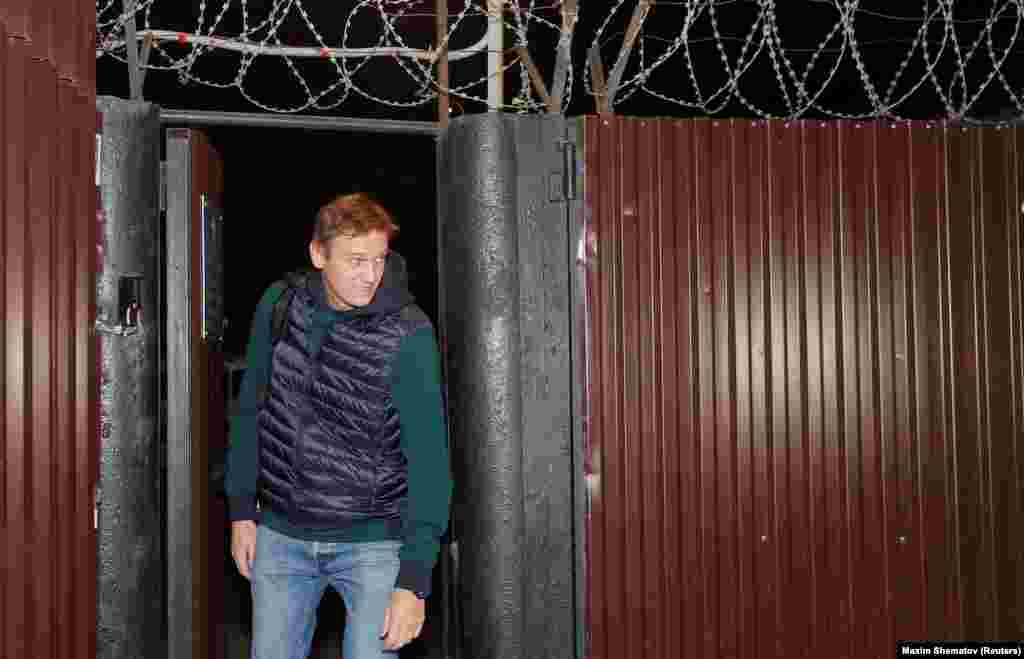
11/15Navalny leaves a Moscow jail in October 2018 after serving 20 days on charges of staging illegal protests.
Pictures from some of the dozens of encounters Russia’s leading opposition figure has had with police, the courts, and unknown assailants through his years of public activism. Navalny has been jailed more than 10 times and has spent hundreds of days in custody since 2011.
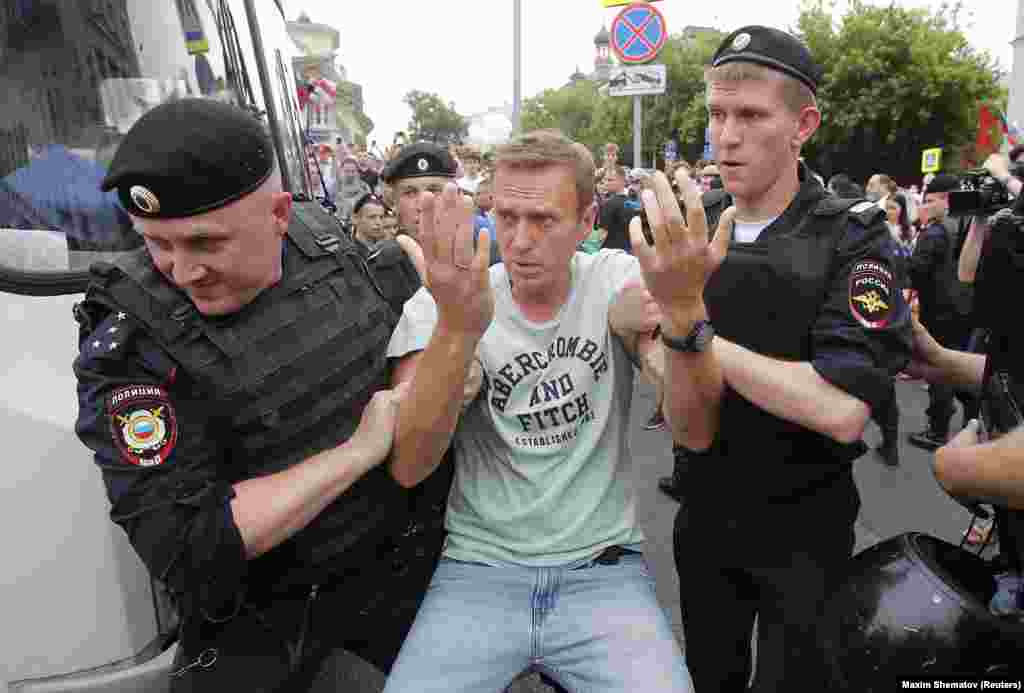
12/15Police detain Navalny during a rally in support of investigative journalist Ivan Golunov, who was detained by police and accused of drug possession on June 12, 2019.
Pictures from some of the dozens of encounters Russia’s leading opposition figure has had with police, the courts, and unknown assailants through his years of public activism. Navalny has been jailed more than 10 times and has spent hundreds of days in custody since 2011.
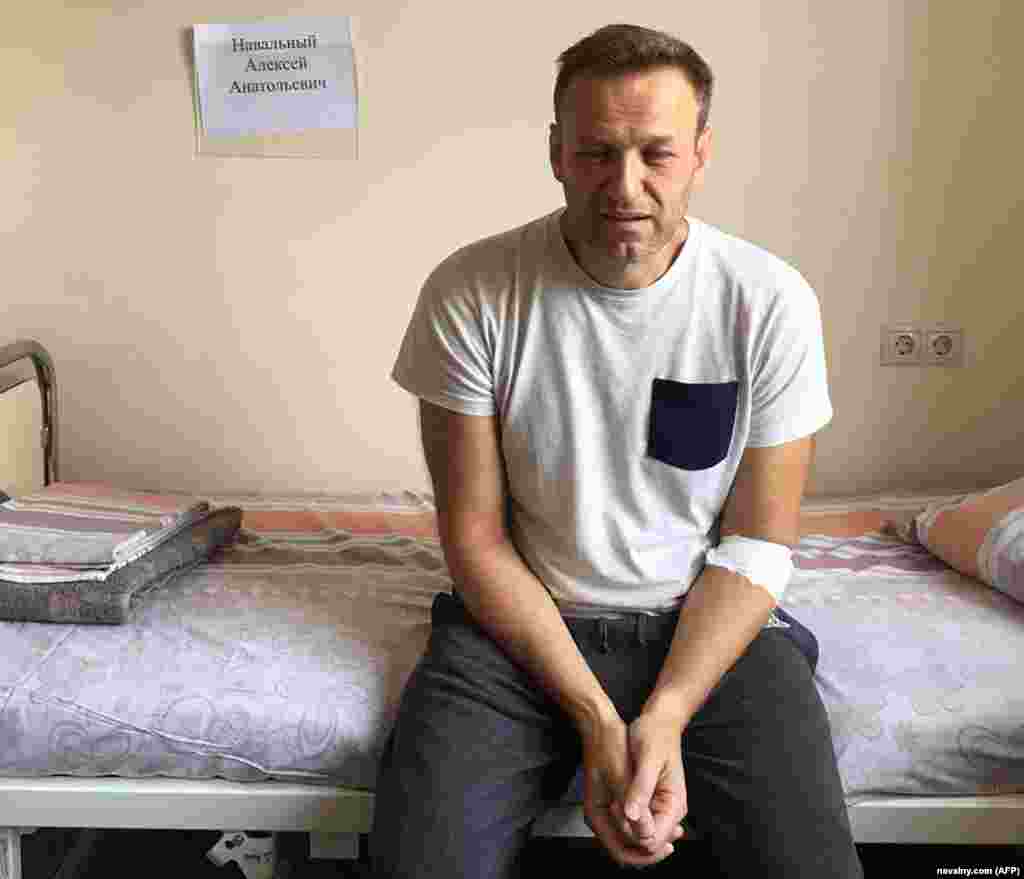
13/15Navalny, his eyes red and puffy, sits on a hospital bed in Moscow on July 29, 2019, after feeling unwell in his Moscow cell while serving a prison term on charges of calling an unauthorized rally. He said he believed he'd been poisoned. Doctors attributed it to an "acute allergic reaction."
Pictures from some of the dozens of encounters Russia’s leading opposition figure has had with police, the courts, and unknown assailants through his years of public activism. Navalny has been jailed more than 10 times and has spent hundreds of days in custody since 2011.
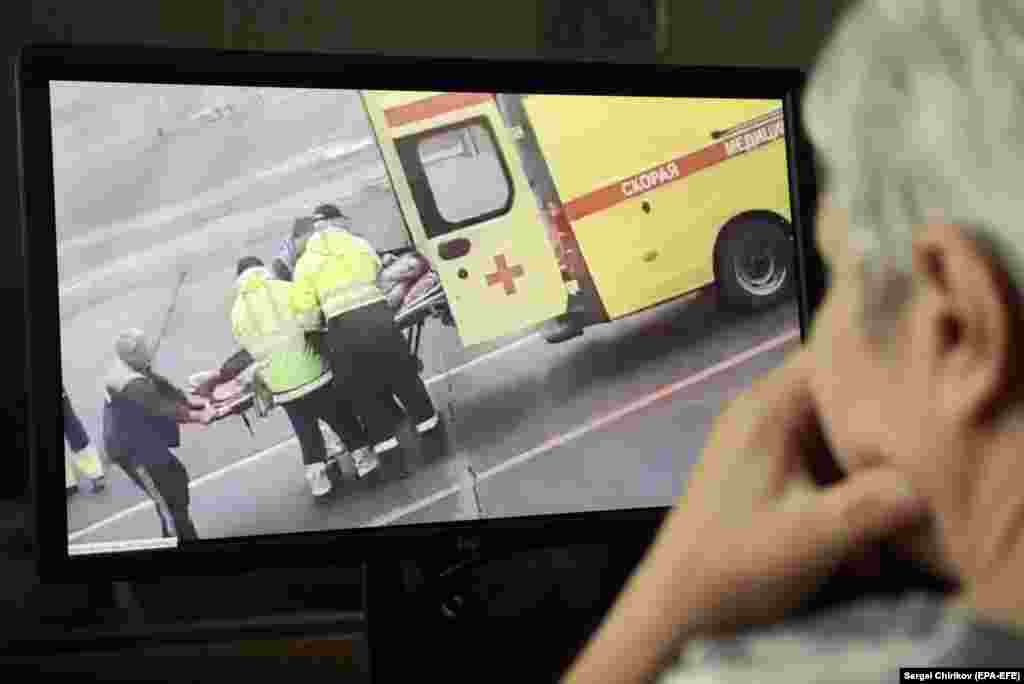
14/15A person watches a video on social media showing Navalny being carried on a stretcher by an ambulance team in Omsk after falling gravely ill from suspected poisoning while aboard a flight from Tomsk to Moscow on August 20.
Pictures from some of the dozens of encounters Russia’s leading opposition figure has had with police, the courts, and unknown assailants through his years of public activism. Navalny has been jailed more than 10 times and has spent hundreds of days in custody since 2011.
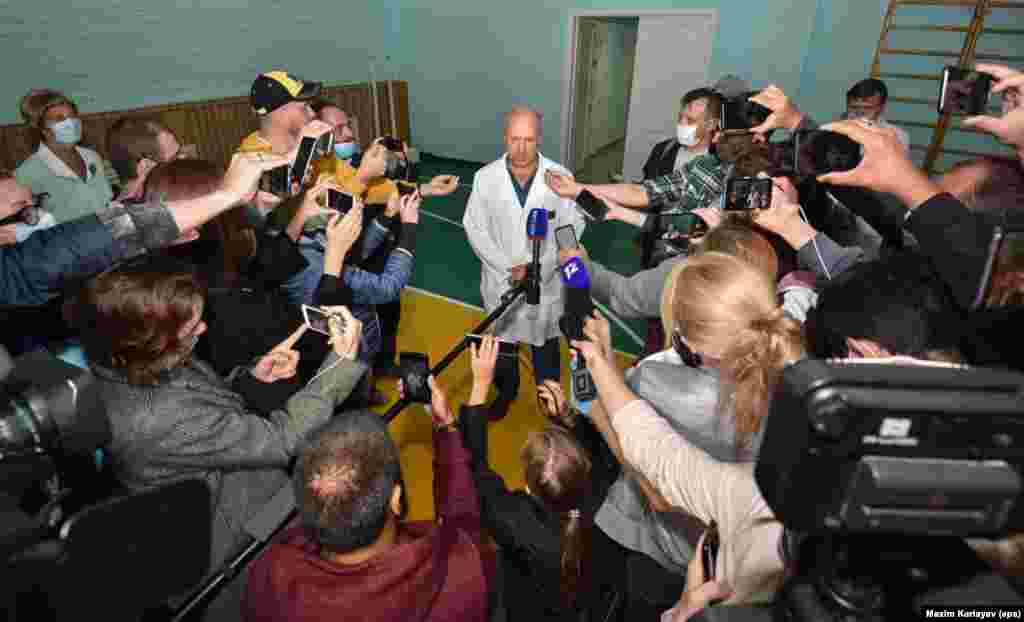
15/15A doctor at an Omsk hospital tells journalists that Navalny had been placed in an induced coma.
Pictures from some of the dozens of encounters Russia’s leading opposition figure has had with police, the courts, and unknown assailants through his years of public activism. Navalny has been jailed more than 10 times and has spent hundreds of days in custody since 2011.
Previous slide
Next slide
"It is not good enough to simply deny he was poisoned…It is incumbent on the Russian authorities to fully investigate who was responsible for this crime -- a very serious crime that was committed on Russian soil," she said.
Bachelet added that numerous "current or former Russian citizens" had been targeted for assassination by poison or other means both within Russia and abroad, saying it was "profoundly disturbing."
Among the Kremlin opponents who have been killed or targeted in recent years are investigative journalist Anna Politkovskaya, former Russian security officer Aleksandr Litvinenko, former Russian Deputy Prime Minister and opposition leader Boris Nemtsov, and former Russian double agent Sergei Skripal, among others.
Skripal and his daughter, Yulia, were poisoned by Novichok in the British city of Salisbury in 2018, and British investigators have implicated Russian security agencies.
Germany’s minister for Europe, Michael Roth, said on September 8 that Berlin was looking at "the entire set of instruments" in deciding how to respond to Navalny's poisoning.
Chancellor Angela Merkel has said "only Russia can and must answer" questions about the case.
In the United States, the top Democrat and the top Republican on the House Foreign Affairs Committee are calling for a formal U.S. investigation into whether “Russia has used chemical weapons in violation of international law or has used lethal chemical weapons against its own nationals” — a request they say triggers a required 60-day evaluation period under the 1991 Chemical and Biological Weapons Control and Warfare Elimination Act.
In a letter on September 8, Eliot Engel (New York), the Democratic chairman of the committee, and Michael McCaul (Texas), the panel’s ranking member, urged President Donald Trump to enact additional sanctions on Russia if “the Russian government is once again determined to have used a chemical weapon against one of its own nationals.”
The White House last week described Navalny’s poisoning “completely reprehensible” and said Washington was working with the international community to "hold those in Russia accountable.”
Meanwhile, the German Embassy in Moscow told the Russian news agency TASS on September 8 that that the German ambassador would "take part in a discussion" at the Russian Foreign Ministry the next day.
The chief toxicologist of the Omsk region, where Navalny was treated after his flight to Moscow made an emergency landing in the city of Omsk, said on September 8 that "there wasn’t a single indication of poisoning" in the Navalny case.
Aleksandr Sabayev called the German diagnosis "just a fanciful assumption…with no documented or clinical proof."

RFE/RL's Russian Service is a multi-platform alternative to Russian state-controlled media, providing audiences in the Russian Federation with informed and accurate news, analysis, and opinion.