



Afghanistan
Police Say Fighting In Northeast Afghanistan Ended With Heavy Taliban Casualties
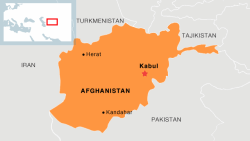
Afghan police say government forces have killed 27 Taliban fighters during "intense fighting" that lasted nearly 24 hours in the northeastern province of Badakhshan.
The provincial police chief, Colonel Sakhidad, said fighting in Badakhshan's Jurm district ended in the early hours of April 11.
Sakhidad said eight of the dead militants were foreign fighters, including Tajik nationals.
Six soldiers were killed and 12 wounded in fighting, he added.
According to local officials, fighting began when Taliban militants attacked security outposts in the district's Dara-e Khistak village early on April 10.
"Reinforcements backed by aircraft were quickly sent to support security forces," the officials said.
The Taliban said it has "inflicted casualties" on government forces in Jurm but didn't provide details.
In a separate incident on April 11, at least 11 people were injured in a blast in Parwan Province in Kabul's north.
There were no immediate claims of responsibility for the blast.
April 11 has been relatively peaceful, a day after three separate attacks killed at least 15 people across Afghanistan.

More News
Pakistani Taliban Attempts Land Grab To Boost Insurgency Against Islamabad
A middle-aged lawyer, Nia Beg, is anxious after a large incursion by Islamist militants rattled his homeland in northwestern Pakistan this month.
Beg is Kalash, and he follows the ancient pagan religion practiced in Bumburet and other remote valleys collectively called Kalash in the northwestern district of Chitral, which borders eastern Afghanistan.
He says that attacks by scores of Tehrik-e Taliban Pakistan (TTP) on several villages in Kalash pose hard questions about the security of Chitral, which had rarely seen Taliban violence and is one of Pakistan's top tourist destinations because of its unique culture and natural beauty.
"My children ask me, 'How will we now go to school or walk freely in our village?'" he told RFE/RL's Radio Mashaal after the Taliban incursion into Chitral that began on September 6.
Pakistan claimed to have repulsed the attack and forced the TTP militants to retreat into Afghanistan.
On September 6, the military said four soldiers and 12 militants were killed in clashes. In a sign that all was not well in Chitral, the government imposed a three-day curfew in the mountainous region.
On September 10, the military said it killed seven more militants in ongoing "sanitization" operations. Gunship helicopters were also used, which suggests some of the TTP militants were well entrenched.
"Residents of Kalash are extremely frightened because the Taliban are religious extremists," Abdul Majeed Qureshi, a local Muslim leader, told Radio Mashaal.
"We want the Taliban attacks to end permanently," he added.
The once-peaceful Chitral region now appears to be in the crosshairs of the TTP, whose insurgency has grown remarkably after its ideological and organizational ally, the Afghan Taliban, returned to power in Afghanistan two years ago.
Experts say the surprise incursion into Chitral showcases the TTP's attempt to reestablish a territorial foothold in Pakistan.
After its emergence in 2007, the TTP controlled large areas in the northwestern Khyber Pakhtunkhwa Province. But by 2014, Islamabad's military operations had forced it to flee into neighboring Afghanistan, which shares a more than 2,600-kilometer border with Pakistan.
"Chitral's complex terrain and geographical importance made it a significant option for the TTP to challenge the state’s territorial control," said Abdul Sayed, a Sweden-based researcher who tracks the TTP.
"The TTP's attack on Chitral is part of its ambition to establish a stronghold on the Pakistani side of the border," he added.
Chitral, now divided into Upper and Lower Chitral districts, consists of high-altitude valleys in the Hindu Kush Mountains. It borders the eastern Afghan provinces of Kunar, Nuristan, and Badakhshan. A narrow strip of Afghan territory separates it from China and Tajikistan, which gives the region great strategic significance.
"The TTP wants to carve out a new safe haven that could serve its objectives," said Ihsanullah Tipu Mehsud, director of news at Khorasan Diary, a website tracking militant groups in Afghanistan and Pakistan.
Mehsud argues that the TTP's incursion into Chitral "is very dangerous" because the group might want to carve out other sanctuaries in the Khyber Pakhtunkhwa and Balochistan provinces, which form Pakistan's western border with Afghanistan.
After its emergence in 2007 as an umbrella alliance of Pakistani Taliban groups, the TTP swiftly extended its control over large parts of the South Waziristan, North Waziristan, Mohmand, Bajaur, and Swat districts in Khyber Pakhtunkhwa.
Years of TTP attacks and the Pakistani Army's counterinsurgency killed more than 80,000 Pakistanis, predominantly ethnic Pashtuns. The violence also displaced more than 6 million Pashtuns.
"The TTP is seeking to restore some of the territorial control it once enjoyed in regions such as Swat and Waziristan," Mehsud said.
TTP violence has risen dramatically since the Taliban seized power in Afghanistan in August 2021. The Taliban-led government brokered negotiations between Islamabad and the TTP, but these ended in November after the TTP formally declared that its cease-fire with Islamabad was over.
According to the Pakistani Institute for Conflict and Security Studies, a think tank in Islamabad, this August was the most violent month since November 2014.
The TTP claimed some 147 attacks that month. During the first eight months of the year, 227 Pakistanis were killed and 497 were injured in 22 suicide attacks, mostly claimed by the Pakistani Taliban.
The Pakistani military and law enforcement have endured mounting losses. At least 120 soldiers and military officers were killed in militant attacks in the first six months of this year. The police, particularly in Khyber Pakhtunkhwa, have had similar losses.
Rising TTP violence has sharply deteriorated relations between longtime allies Pakistan and the Afghan Taliban.
Islamabad swiftly closed its main border crossing with Afghanistan in Torkham, which is some 400 kilometers to the south. It has also launched a crackdown on an estimated 3 million Afghan refugees and migrants in the country.
“We expect the Afghan interim authorities…to ensure that Afghan territory is not used as a launching pad for terrorist attacks against Pakistan," said the Foreign Ministry in Islamabad on September 11 in response to a Taliban statement demanding the reopening of Torkham.
The border crossing was reopened on September 15.
Sayed said the mountainous border between Chitral and the eastern Afghan province of Nuristan comprises deserted areas known as No-Man's Land.
“This could give the Afghan Taliban the pretext that the TTP has not attacked from areas under their control,” he said.
Mehsud said the TTP attack was also encouraged by the relatively small presence of security forces in Chitral. It is also the only region where the Pakistani border fencing with Afghanistan is incomplete.
"Things are reaching a boiling point between the two countries," Mehsud noted. "Pakistan might launch surgical attacks or kinetic actions inside Afghanistan to target the TTP leaders and their bases."
On September 10, an improvised explosive device targeted a senior TTP commander, Badshah Khan, in the southeastern Afghan province of Paktika.
In Chitral, civilians remain anxious in the aftermath of the TTP attack.
"People are worried that if the Taliban continues to attack, tourists will stop coming," said Ihkamuddin, a local politician in Bumburet.
Taliban Said To Suspect Detained NGO Workers Of Promoting Christianity
Local officials in the central Afghan province where the Taliban detained 18 staffers for a long-serving humanitarian NGO earlier this month suggest the group was suspected of spreading Christianity, RFE/RL's Radio Azadi has learned.
Taliban intelligence and other officials in Kabul have remained silent over the detentions.
The International Assistance Mission (IAM) humanitarian group in Afghanistan on September 15 announced the detention of 18 team members from its offices in Ghor Province between September 3 and 13. It said they all appear to have been transferred to the Afghan capital, Kabul.
IAM and other information suggested the detainees comprise 17 Afghan nationals and a female American surgeon.
Early on September 16, IAM said it still "has not been informed of the reasons for the detention of our staff."
But Taliban officials in Ghor have accused them of spreading Christianity, which can be punished under strict interpretations of Islamic law in Afghanistan.
In a written message to Radio Azadi, Abdul Hai Zaim, the head of information and culture for the Taliban-led government for Ghor Province, confirmed the arrest of the IAM employees and claimed -- without providing evidence -- that they had been promoting Christianity.
The fundamentalist Taliban, who retook control of Afghanistan as U.S.-led international forces withdrew in 2021, have imposed a particularly harsh form of Shari'a law on the country when they have been in power at various points in the past four decades.
The internationally unrecognized Taliban-led government in Afghanistan has been accused by UN and other international officials of grave human rights offenses against non-Muslims, women, and minorities.
IAM said on September 16 that it had inquired with the Taliban-led Afghan government's Finance Ministry and was "working together with the UN and ACBAR, the coordinating body for NGOs in Afghanistan," to seek the release of the staff members.
IAM has worked in Afghanistan for nearly six decades, it said.
"IAM has worked in Afghanistan alongside Afghan communities for 57 years and we value and respect local customs and cultures. We stand by the principle that 'aid will not be used to further a particular political or religious standpoint,'" it said, adding, "All IAM staff agree to abide by the laws of Afghanistan."
- By AP
U.S. Military Orders New Interviews On Deadly 2021 Afghan Airport Attack As Criticism Persists
The Pentagon's Central Command has ordered interviews of roughly two dozen more service members who were at the Kabul airport when suicide bombers attacked during U.S. forces' chaotic Afghanistan withdrawal, as criticism persists that the deadly assault could have been stopped. The interviews are meant to see if service members who were not included in the original investigation have new or different information. The decision, according to officials, does not reopen the administration’s investigation into the deadly bombing and the withdrawal two years ago. But the additional interviews will likely be seized on by congressional critics, mostly Republican. To read the original story by AP, click here.
Pakistan Reopens Afghan Border Gate
Bustling traffic returned to Pakistan's Torkham checkpoint on September 15 as the crucial crossing on the border with Afghanistan reopened for trucks and pedestrians. Families with children and people seeking medical treatment entered Pakistan while others were returning to Afghanistan. The border gate was closed after a reported gunfight between the Afghan Taliban and Pakistani paramilitary patrols on September 6. The closure left thousands of people stranded and business owners complained of serious losses.
'They Deserve Some Peace': U.S. Envoy Rejects Support For Anti-Taliban Factions In Afghanistan
A top U.S. diplomat to Afghanistan has categorically ruled out Washington's support for a new war in the nation, saying Afghans "deserve some peace" after more than four decades of international conflict ended two years ago when American and international troops left as Taliban militants seized power.
In an interview with RFE/RL's Radio Azadi, Karen Decker, the chargé d’affaires of the U.S. mission to Afghanistan, dismissed any support for anti-Taliban armed factions such as the National Resistance Front (NRF) and the Afghanistan Freedom Front (AFF), saying Afghans themselves have been adamantly against the launch of any new conflict.
“No. Absolutely not! We do not support renewed conflict in Afghanistan. Full stop," she said in response to a question about whether Washington would support these groups.
"The one overwhelming message I hear from Afghans inside the country is no more war," she said, adding that Washington would "support" and "promote" a dialogue among Afghans.
Most of its neighbors have resisted supporting another round of war in Afghanistan after the hard-line Islamist Taliban swept to power in the wake of the final withdrawal of U.S.-led NATO troops two years ago.
After the pro-Western Afghan republic collapsed on August 15, 2021, some defunct Afghan security force members joined the NRF and other smaller groups to attack Taliban forces in the northern provinces of Panjshir and Baghlan. This raised the possibility that four decades of war in Afghanistan could enter a new phase.
Ahmad Massoud, the NRF’s leader in exile, recently visited Moscow in what was seen as an effort to win support for the NRF and pressure the Taliban, which has marked its two years in power so far by severely restricting rights and freedoms, especially for women.
Decker, however, questioned whether the Kremlin could support a new Afghanistan conflict.
"The Russians are kind of busy right now doing something else in Ukraine, so I don't know if that is a realistic scenario," she noted in a thinly veiled reference to Moscow's full-scale invasion of Ukraine, which continues to take a heavy toll on its military resources.
“Any proxy warfare? Absolutely not,” she said. “The Afghan people have had more than 40 years of war. They deserve some peace.”
Decker said that Washington supports a dialogue among Afghans to work out the future of their country, including forming an inclusive government.
After returning to power, the Taliban's internationally unrecognized government has refused to share power with other Afghan political groups and armed factions.
Instead, it has recreated its extremist Islamic emirate. Exclusively led by senior Taliban leaders, the de facto government has banned women from education, work, and public life. The Taliban has also denied Afghans many fundamental rights and freedoms.
Taliban officials, however, point to a commission as evidence of their willingness to embrace reconciliation among citizens in the country.
The commission has invited former senior government members and state officials to come back to the country as long as they do not participate in politics.
Pakistani Police Detain Hundreds Of Afghan Citizens In Karachi
Hundreds of Afghan citizens have been detained in Pakistan's southern province of Sindh, most of them in the port city of Karachi, for allegedly not possessing legal residency documentation. But many Afghans complained they were held by police despite having the correct documents. Sindh Province Governor Kamran Tessori said on September 11 that Pakistan's federal government had decided to repatriate illegal Afghan immigrants.
Taliban Detains 18 Staffers At Humanitarian NGO's Offices, Including American Surgeon
The ruling Taliban has detained 18 staff members of the International Assistance Mission (IAM) in Afghanistan from the humanitarian group's offices in the central Ghor Province, including an American surgeon. The IAM said in a statement on September 15 that it believed all 18 of the team members had been transferred to the Afghan capital, Kabul. The group said the detentions had taken place over 11 days. The long-serving NGO said, "We are unaware of the circumstances that led to these incidents and have not been advised of the reason for the detention of our staff members." To read the original story by RFE/RL's Radio Azadi, click here.
The Azadi Briefing: Shrinking Food Assistance Hits Afghans Hard
Welcome to The Azadi Briefing, an RFE/RL newsletter that unpacks the key issues in Afghanistan. To subscribe for free, click here.
I'm Malali Bashir, senior editor for women's programs at RFE/RL's Radio Azadi. Here's what I've been tracking and what I'm keeping an eye on in the days ahead.
The Key Issue
Millions of impoverished Afghans are bearing the brunt of receding international aid to Afghanistan, the world's largest humanitarian crisis.
International organizations operating in the country have been forced to cut their assistance to Afghans in the fields of health care and food aid in recent months, largely due to funding shortages.
The UN World Food Program (WFP) said last week that it would cut emergency assistance to 2 million vulnerable Afghans by the end of the month because of a "massive funding shortage."
Meanwhile, the International Committee of the Red Cross stopped funding 25 hospitals across Afghanistan on August 31, citing a lack of resources.
The drop in foreign assistance has directly impacted the lives of Afghans, many of whom are reeling from the devastating economic impact of the Taliban's seizure of power in 2021.
"We used to survive on food assistance [from the WFP]," Zarmina, a resident of the northern province of Parwan, told RFE/RL's Radio Azadi. "But now this assistance has been cut off and my situation is dire."
Zarmina, 27, is the sole breadwinner for her family of six. She said her family received around 4,000 afghanis ($50) worth of food handouts every six weeks from the WFP.
"There's no work for me," she said. "It's very difficult. What are we going to do?"
Why It's Important: Declining international assistance will worsen the devastating humanitarian crisis in Afghanistan.
Around 6 million people -- out of a population of around 40 million -- are already on the brink of starvation, according to the UN.
Wahidullah Amani, the spokesperson for the WFP in Afghanistan, told Radio Azadi that the lack of aid will specifically affect women and children, the most vulnerable segments of society.
"My children suffer from malnourishment because they don't have enough food to eat," Hamidullah, a resident of the southeastern province of Khost, told Radio Azadi.
"All Afghans have the same problem. We ask all humanitarian organizations to help Afghans," added Hamidullah, who is the head of an extended family of 20.
What's Next: The cash-strapped Taliban government, which is unrecognized and under international sanctions, appears unable or unwilling to alleviate the economic and humanitarian crisis in the country.
Some Afghans have called on the militant group to do more to create employment opportunities and deliver food to the most needy. "The government should solve these problems and provide a chance for people to find work," said Samiullah, a resident of the eastern province of Nangarhar.
The Week's Best Stories
Afghanistan has seen a surge in the number of female suicides since the Taliban takeover, making the country one of the few in the world where more women take their own lives than men. The spike comes amid the Taliban's severe restrictions on women's lives, including their right to education and employment.
What To Keep An Eye On
China has become the first country to formally name a new ambassador to Afghanistan since the Taliban takeover.
The Chinese envoy presented his credentials to the Taliban's prime minister at a ceremony in Kabul on September 13.
The Taliban government has not been recognized by any country in the world. It was unclear if Beijing's appointment was a step towards formal recognition.
"This is the normal rotation of China's ambassador to Afghanistan, and is intended to continue advancing dialogue and cooperation between China and Afghanistan," China's Foreign Ministry said in a statement.
Why It's Important: It is unclear if the appointment signals China's growing interest in Afghanistan.
After the Taliban takeover, there was a surge in Chinese traders visiting Afghanistan to explore business opportunities and ink deals. The Taliban has boasted of Beijing's interest in expanding trade and investing billions of dollars in Afghanistan's mining sector.
But experts have said that China's relationship with the Taliban has been limited and largely transactional.
Experts said Beijing's primary concern in Afghanistan is the threat posed by members of the Turkestan Islamic Party (TIP), an Uyghur extremist group. The Taliban has been accused of sheltering the militants.
That's all from me for now. Don't forget to send me any questions, comments, or tips that you have. You can always reach us at azadi.english@rferl.org.
Until next time,
Malali Bashir
If you enjoyed this briefing and don't want to miss the next edition, subscribe for free here. It will be sent to your inbox every Friday.
Key Afghan-Pakistan Border Crossing Reopens Week After Gunbattle
Customs officials reopened a key border crossing between Afghanistan and Pakistan to trucks and pedestrians early on September 15, nine days after the Torkham checkpoint was closed when a gunbattle reportedly erupted between Taliban troops and Pakistani border guards.
The gateway is on a key transit route between the tense South Asian neighbors and is a vital link for residents on both sides of the border. It lies at the end of Pakistan's N-5 National Highway about 5 kilometers west of the Khyber Pass summit.
Sporadic closures have raised fears of deteriorating Pakistan-Taliban relations two years after the radical fundamentalist group took control of Afghanistan as U.S.-led international troops withdrew after two decades of war.
The Afghan Taliban's alleged support of Tehrik-e Taliban Pakistan (TTP) extremists is at the center of tensions.
The closure created massive lines of hundreds of stranded trucks and left thousands, including sick people seeking medical treatment across the border, seeking shelter in local mosques and other places.
The head of the Afghan-Pakistani Joint Chamber of Commerce said the closure had cost businesses millions of dollars.
The acting foreign minister for the Taliban-led Afghan government late on September 14 urged Pakistani authorities to reopen transit routes. That discussion followed a week of efforts to reach agreement on ensuring security and other aspects of a reopening.
The Pakistani Army took control of the area of Khyber district from Torkham to the Lundi Kotal checkpoint after a firefight on September 6 between Pakistani and Taliban troops.
There were contradictory reports of casualties in that incident, which reportedly began when Pakistani guards intervened after the Taliban tried to erect a structure on the Afghan side of the gate.
Torkham has undergone sporadic closures since the Taliban-led government in Afghanistan took over in August 2021.
In early August, Torkham was closed briefly after another clash between Pakistani border forces and Taliban guards.
Hoping For A Sweeter Future: Kandahar's Impoverished Farmers Increase Raisin Exports
Workers prepare grapes for raisin production in Kandahar on September 11.
The region, once famous for its pomegranates and grapes, has exported 10,000 tons of raisins worth $32 million from the cash-strapped, impoverished country, which is facing a catastrophic humanitarian crisis under the leadership of the Taliban, which took control in 2021.
Afghanistan's Kandahar Province exported 10,000 tons of raisins last year, with many of the producers still employing traditional techniques. It's one of the few cash crops left in the country, which is currently experiencing both an economic and humanitarian crisis under the Taliban.
- By AP
Afghan Soldier Who Was Arrested At U.S.-Mexico Border After Fleeing Taliban Is Granted Asylum
An Afghan soldier who fled the Taliban and traveled through nearly a dozen countries before being arrested at the Texas-Mexico border and detained for months has been granted asylum, allowing him to remain in the United States, his brother said on September 13. Abdul Wasi Safi, 27, is one of tens of thousands of Afghan citizens who fled to the United States following the withdrawal of its forces from Afghanistan in August 2021. The soldier worried that if he wasn't granted asylum, he could be sent back to Afghanistan, where he would likely be killed by the Taliban because he had worked with the U.S. military. Two of his brothers live in Houston. To read the original story by AP, click here.
- By Reuters
China Becomes First To Name New Afghan Ambassador Under Taliban
China has become the first country to formally name a new ambassador to Afghanistan since the Taliban takeover, after its envoy presented credentials at a ceremony in Kabul. The Taliban has not been officially recognized by any foreign government, and Beijing did not indicate whether the September 13 appointment signaled any wider steps toward formal recognition of the Taliban. "This is the normal rotation of China's ambassador to Afghanistan, and is intended to continue advancing dialogue and cooperation between China and Afghanistan," China's Foreign Ministry said in a statement. "China's policy towards Afghanistan is clear and consistent." To read the original story by Reuters, click here.
Hundreds Arrested In New Pakistani Crackdown On Afghan Refugees
Police in the southern Pakistani province of Sindh have arrested more than 250 Afghan refugees and migrants as part of a new crackdown aimed at repatriating undocumented Afghans.
Most of the arrests and detentions have occurred in Karachi since September 11. The seaport is the capital of Sindh and also serves as the key industrial and trade hub for the Muslim nation.
"The government has directed the police and other [law enforcement] organizations to arrest Afghans living illegally in Sindh and elsewhere in the country," Kamran Tissori, the governor of Sindh, told journalists on September 11.
Afghan refugees and Pakistani human rights campaigners say the arrests are aimed at harassing mostly impoverished Afghans who cannot return to Taliban-ruled Afghanistan because of security fears or economic reasons.
"The mass arrest of Afghan refugees is based on their racial profiling," Muniza Kakar, a lawyer who has voluntarily represented Afghan refugees arrested in Karachi, wrote on X, the social media platform formerly known as Twitter.
Kakar said that many of the detained Afghans possessed cards issued by the Pakistani government identifying them as Afghans.
"Urgent action needed to protect refugee rights," she wrote.
Afghan refugees in Pakistan complain of harassment and a lack of information and help in completing the paperwork needed for extending their stay in the country.
“After my Pakistani visa ended in July, I repeatedly applied to extend it but the government, unfortunately, has not processed it,” said one such refugee, who said his name was Ahmad.
“The Pakistani government announcement has created huge pressure and most of us now face mental health problems,” he told RFE/RL’s Radio Azadi.
The Pakistani government issued Proof of Registration cards for more than 1 million Afghans that expired on June 30.
Qaiser Khan Afridi, a spokesman for the United Nations High Commissioner for Refugees (UNHCR), told Radio Mashaal that the UNHCR is discussing the issue with the federal authorities in Islamabad.*
"I am extremely afraid of being arrested whenever I go to the market to buy groceries," said Aimal Habibi, an Afghan refugee in Sindh.
Since the early 1980s, Pakistan has hosted one of the largest refugee populations in the world.
But it has not signed the 1951 UN Convention Relating to the Status of Refugees. It also is not a signatory of the 1967 protocol, which broadens the definition of who can be considered a refugee.
Islamabad currently hosts about 1.4 million documented Afghan refugees. An equal number of undocumented Afghans are estimated to also be living in the country.
*Correction: A previous version of this story misquoted the spokesman for the UNHCR about an extension of the deadline.
At An Impasse: Pakistani-Afghan Border Still Closed As Tensions Rise
A man takes a nap under a truck near the Pakistani-Afghan border at Torkham on September 11.
Hundreds of trucks and travelers were left stranded a week into the closure of the border, after a gunfight erupted across the frontier that left a Taliban guard and an Afghan civilian dead on September 6.
Trucks remain stranded amid growing tensions at the border between Afghanistan and Pakistan, following a firefight that led to the closure of the countries' main crossing point.
Support Grows As Hunger Strike By Afghan Activists In Germany Enters Second Week
A hunger strike by a group of Afghan rights activists to protest the anti-female policies of the ruling Taliban has entered its second week as they seek international recognition of the militants' policies as "gender apartheid."
The protest that began on September 1 in the German city of Cologne comes after the Taliban rulers who seized power in the country two years ago banned women from education and from working in most economic sectors. The hard-line Islamist group has also banned women from visiting parks and imposed strict restrictions on their movement and how they can appear in public.
Zarmina Paryani, whose sister Tamana Zaryab Paryani was taken to the hospital on the night of September 9 after her health rapidly deteriorated because of the hunger strike, struck a defiant tone, saying that "until Tamana’s demands are heard, she will not end her strike.”
"She told doctors she could not leave her comrades alone and returned straight to the protest camp from the hospital,” Zarmina Paryani told RFE/RL’s Radio Azadi.
The two sisters and several other Afghan women activists said they launched the strike after hundreds of protests inside Afghanistan and internationally failed to produce any results.
The protest has attracted solidarity and support from rights activists in Europe and Pakistan, they say.
“There is gender apartheid in Afghanistan,” said Ziauddin Yousafzai, the father of Pakistani Nobel laureate Malala Yousafzai, who visited the protesters in Cologne on September 11.
“Under the Taliban, there is no notion of a public life for women,” he told RFE/RL’s Radio Mashaal.
In the Pakistani capital, Islamabad, Roqia Saee, an Afghan women’s rights activist, is leading a hunger strike in solidarity with the activists in Cologne.
“We will continue the strike until the United Nations, countries of the region and the world, and those who support human rights pay attention to our demand,” she told Radio Azadi.
Since July, UN experts and senior officials have said the Taliban’s systematic restrictions on women and girls could amount to "gender apartheid."
The Taliban, however, has so far resisted all international and domestic pressure calling for a change in policies toward women.
Roadside Bomb Targets Pakistani Security Personnel
Pakistani authorities say a roadside bomb blast killed a security officer and wounded several people, including civilians, in the northwestern city of Peshawar. The improvised explosive device targeted a passing vehicle on September 11 belonging to a paramilitary corps deployed to patrol an area bordering Afghanistan. The Tehrik-e Taliban Pakistan (TTP), an extremist group linked to the Taliban in Afghanistan, has claimed responsibility for the attack.
'Their Freedoms Have Been Taken Away': Afghanistan Sees Surge In Female Suicides Under Taliban Rule
Shabana had a bright future ahead of her. She was studying to become a doctor and preparing to get married.
But the Taliban's takeover of Afghanistan in 2021 turned her life upside down. The militant group's ban on women attending university forced her to abandon her studies. Then her fiance, who is based abroad, broke off their engagement.
Shabana, who was in her 20s, last month committed suicide in her hometown of Charikar, the provincial capital of the northern province of Parwan.
She is among the growing number of women and girls who have taken their own lives in Afghanistan, one of the few countries in the world where experts estimate that more women are committing suicide than men.
The surge in the number of female suicides in the country has been linked by experts to the Taliban's severe restrictions on women. The hard-line Islamist group has banned women from education and most forms of employment, effectively denied them any public role in society, and imposed strict limitations on their mobility and appearance.
Although there are no official figures, Afghan mental-health professionals and foreign organizations have noted a disturbing surge in female suicides in the past two years.
"Today, women and girls make up most of the patients suffering from mental conditions in Afghanistan," said Mujeeb Khpalwak, a psychiatrist based in Kabul.
"If we look at the women who were previously working or studying, 90 percent suffer from mental health issues now," Khpalwak added. "They face tremendous economic uncertainty after losing their work and are very anxious about their future."
Many Afghan women say they have been turned into virtual prisoners in their homes since the Taliban takeover. The vast majority of women are unemployed. And most say they are gripped by hopelessness.
Violence against women, meanwhile, has increased under the Taliban. The militants have scrapped legal assistance programs and special courts that were designed to combat violence against women and girls.
Forced and early marriages of teenage girls have also spiked across Afghanistan, with parents marrying off their adolescent daughters to avoid forced marriages to Taliban fighters.
Maryam Saeedi, an Afghan women's rights activist, says some women see suicide as the only way to escape their plight. "They commit suicide to end their problems, which is dangerous," she told RFE/RL's Radio Azadi.
Maryam, a resident of Kabul, says her 16-year-old sister has suffered from extreme depression since the Taliban banned girls above the sixth grade from going to school. "My sister's mental health has suffered tremendously," she told Radio Azadi. "It is tough for girls to cope after all their freedoms have been taken away."
The Taliban has said that 360 people committed suicide in the country last year, without offering any details. Unofficial figures suggest that the number of female suicides has surged since 2021, when the Western-backed Afghan government collapsed.
The World Health Organization revealed in 2018 that around 2 million Afghans -- out of a population of around 40 million -- suffered from mental distress.
"These numbers are likely much higher today," Action Against Hunger, a U.S.-based nongovernmental organization, said in a statement on September 5. It added that Afghanistan was grappling with an "unprecedented but unseen mental-health crisis."
Khpalwak, the psychiatrist, says that the country lacks the resources to address what he called a mental-health epidemic.
"The number of mental-health patients is rapidly rising, but the treatment available to them is not enough," he said. "Women psychiatrists cannot work because of the restrictions on their work. There is an urgent need to address the growing mental-health crisis."
Faiza Ibrahimi of RFE/RL's Radio Azadi contributed reporting to this story
- By AP
Pakistani Soldier Killed In Shoot-Out With Militants Near Afghan Border, Military Says
A Pakistani soldier was killed in an overnight shoot-out with militants in the country's northwest, near the border with Afghanistan, the military said. A military statement late on September 9 said the shoot-out took place in Mir Ali, a major town of North Waziristan that served as a safe haven for militants for decades. It said the military had been searching for terrorists there. The shoot-out took place following Pakistan's closing of the key northwestern Torkham border crossing with Afghanistan after border guards from the two sides exchanged fire on September 6. To read the original story by AP, click here.
- By Reuters
Afghan Meth Trade Surges As Taliban Clamps Down On Heroin, UN Says
Methamphetamine trafficking in and around Afghanistan has surged in recent years, even as the Taliban has curbed heroin trafficking since taking power, a United Nations report said on September 10. "The surge in methamphetamine trafficking in Afghanistan and the region suggests a significant shift in the illicit drug market and demands our immediate attention," said Ghada Waly, executive director of the UN Office of Drugs and Crime. The Taliban, which regained power in August 2021, announced a ban the following April on the production of narcotics in Afghanistan, the world's main opium producer. To read to the original story by Reuters, click here.
Thousands Stranded Along Closed Border Crossing Between Afghanistan And Pakistan
Pakistan's main border crossing with Afghanistan remained shut on September 8, stranding thousands of civilians and halting hundreds of vehicles carrying goods between the two countries.
Islamabad closed the Torkham border crossing following a clash with Taliban forces three days earlier.
The move has left thousands of civilians, mostly Afghans, waiting to cross and largely stalled trade between the countries as hundreds of trucks, some carrying perishable goods such as fruits and vegetables, wait on both sides of the Torkham crossing.
"We are trapped here," said Nabiullah, an Afghan man returning to his country after receiving medical treatment in the northwestern Pakistani city of Peshawar.
"We are in trouble and waiting for the border crossing to reopen," he told RFE/RL’s Radio Mashaal.
Radio Azadi has learned that a Taliban border guard and a civilian were killed in the shooting.
Taliban officials in the eastern Afghan province of Nangarhar, where Torkham is located, say high-level talks continue with Pakistan to reopen the crossing. Pakistani officials have not commented on the issue.
In Landi Kotal, a Pakistani town near Torkham, stranded Afghans said the closure is preventing the repatriation of two dead bodies to Afghanistan for burial.
"People here are facing great difficulties," Imran, one of the stranded Afghans, told Radio Azadi.
"There are many Afghan patients, women and children here.”
The September 6 clash followed a large incursion of Tehrik-e Taliban Pakistan (TTP) militants into the remote northwestern Pakistani district of Chitral, which borders eastern Afghanistan some 400 kilometers north of Torkham.
Relations between erstwhile allies Pakistan and Afghanistan’s Islamist Taliban rulers have rapidly deteriorated after the TTP ended a cease-fire with Islamabad last November. The TTP, an ideological and organizational ally of the Taliban, has been bolstered by the return of the militants to power in Afghanistan two years ago.
"Deteriorating political relations between Afghanistan and Pakistan are also resulting in declining trade and economic ties between them," Abdul Naseer Rashtia, the head of an Afghan trading association, told Radio Azadi.
“This causes Afghan investors to suffer greatly and badly affects their trade and transit," he added.
Torkham and other border crossings between the two neighbors have been frequently closed because of clashes or political disagreements over the past two decades.
Islamabad has fenced most of its more than 2,500-kilometer border with Afghanistan. Closing the border with its landlocked neighbor remains a significant lever to pressure Kabul during crises.
The Azadi Briefing: Border Clashes And Closures Mark Deteriorating Pakistan-Taliban Ties
Welcome to The Azadi Briefing, an RFE/RL newsletter that unpacks the key issues in Afghanistan. To subscribe, click here.
I'm Abubakar Siddique, a senior correspondent at RFE/RL's Radio Azadi. Here's what I've been tracking and what I'm keeping an eye on in the days ahead.
The Key Issue
Pakistani border guards and Afghan Taliban fighters exchanged fire on September 6, the latest flare-up along the disputed border. Both sides accused each other of starting the firefight.
In response, Islamabad has closed a key crossing, leaving hundreds of trucks and thousands of people on both sides of the border stranded.
On the same day as the border clashes erupted, the Pakistani military said four soldiers had been killed in clashes with militants in the northwestern Chitral district, which borders eastern Afghanistan.
The Tehrik-e Taliban Pakistan (TTP) extremist group, which is believed to be based in Afghanistan, said in a September 6 statement that a large number of its fighters had entered Chitral.
In response, Islamabad called on the Afghan Taliban to rein in the TTP, which has close organizational and ideological ties with the Afghan militant group.
Why It's Important: The border clashes have highlighted the deteriorating relations between Pakistan and the Afghan Taliban, longtime allies that have fallen out over the Afghan militant group’s alleged support to the TTP.
The Taliban takeover of Afghanistan in 2021 has bolstered the TTP, which has intensified its attacks against Pakistani security forces. Peace talks held last year between Pakistan and the TTP, which were mediated by the Afghan Taliban, failed to end the violence.
The location of the TTP’s latest attack in Pakistan is also significant. Chitral, located in the remote north of Pakistan, has been a relatively stable area that has not witnessed major militant activity. The TTP’s attacks there suggest the militants could be trying to open a new front in their war against Islamabad.
What's Next: More border clashes and closures are expected as relations between Pakistan and the Taliban continue to deteriorate.
The Afghan Taliban is unlikely to crack down or expel the TTP. If the TTP continues its attacks inside Pakistan, Islamabad could resort to military action inside Afghanistan. Such a scenario would likely escalate tensions even further.
What To Keep An Eye On
The UN's World Food Program (WFP) said a “massive funding shortage” has forced it to cut emergency assistance to 2 million Afghans.
The WFP says it will only be able to provide food aid to 3 million people -- out of a population of around 40 million -- starting in October.
“Amid already worrying levels of hunger and malnutrition, we are obliged to choose between the hungry and the starving, leaving millions of families scrambling for their next meal," Hsiao-Wei Lee, WFP's country director and representative in Afghanistan, said in a statement on September 5.
The WFP is seeking an additional $1 billion over the next six months to provide 21 million Afghans with lifesaving aid. The UN body estimates that more than 3 million Afghans are on the brink of starvation.
Why It's Important: Cuts in emergency aid are likely to further worsen the devastating humanitarian crisis in Afghanistan, the worst in the world. It is also likely to add to fears of a widespread famine in the country.
In June, the UN revised its annual aid budget for Afghanistan from $4.6 billion to $3.2 billion this year, citing reduced funding from international donors.
The cash-strapped Taliban government, which is unrecognized and under international sanctions, appears unable to fill the gap.
That's all from me for now. Don't forget to send me any questions, comments, or tips that you have.
Until next time,
Abubakar Siddique
If you enjoyed this briefing and don't want to miss the next edition, subscribe here. It will be sent to your inbox every Friday.
- By RFE/RL
HRW Says Taliban's Denial Of Basic Women's Rights Is A Crime Against Humanity
Human Rights Watch (HRW) says the Taliban authorities in Afghanistan are committing a crime against humanity with their treatment of women and girls and has called for an international investigation to "provide a path toward accountability."
Since ousting the Western-backed Afghan government and taking over the country in August 2021, the Taliban has placed restrictions on women's appearance, freedom of movement, right to work and study, and access to society.
HRW said in a report issued on September 8 that while men in Afghanistan have also been subject to "serious violations" of their human rights, the underlying discrimination against women is evident from the "all-encompassing restrictions targeting women."
According to the rights group, the Taliban's "widespread and systematic attack against women" constitutes "a crime against humanity of persecution targeting women and girls." An International Criminal Court investigation is needed as it "could provide a path toward accountability for the crime against humanity of gender persecution," it added.
"The Taliban's cruel and methodical denial of the basic rights of women and girls to remove them from public life has received global attention," Elizabeth Evenson, international justice director at HRW, said in the report.
"Coordinated support by concerned governments is needed to bring the Taliban leaders responsible to justice," she added.
Afghan women are banned from secondary and higher education and are only permitted to work in a limited number of jobs. They also are not allowed to travel away from their homes without being accompanied by a male relative. With respect to dress codes, women must cover themselves almost completely or face severe punishment.
The HRW report noted that women and some men who have protested against the Taliban policies violating women's rights have frequently been detained and sometimes tortured.
Two years since it overran the country and ousted the Western-backed Afghan government, the hard-line Taliban has failed to live up to promises of moderation and has instead severely curbed women's freedoms, waged a brutal crackdown on dissent, and reintroduced the militants' brutal form of justice.
In a July report, UN experts said he situation of girls and women in Afghanistan was the worst in the world and added that systematic restrictions on women and girls could amount to "gender apartheid."
- By Reuters
Afghans At Grave Risk As UN Food Agency Cuts Rations
Baba Karim pushes his wheelbarrow in Kabul on September 3. The 45-year-old is one of the estimated 36 million Afghans -- around 90 percent of the population -- who are in need of food assistance.
The UN World Food Program (WFP) cut rations for another 2 million Afghans this month and is warning of a "catastrophic" winter if funding runs out, with little food for remote communities. With the cut in aid and a drop in his earnings, one father is worried about feeding his five children.
Border Crossing Between Pakistan, Afghanistan Remains Closed Following Clashes
A key border crossing between Pakistan and Afghanistan remained closed for a second consecutive day on September 7, one day after clashes between Pakistani and Taliban border forces at Torkham. Abdul Basir Zabuli, a spokesman for the Taliban-led police in Afghanistan's eastern Nangarhar Province, where the crossing lies, was quoted by Reuters as saying that authorities from both countries were trying to determine the reason for the clashes. To read the original story by RFE/RL’s Radio Mashaal, click here.
- By AFP
Pakistani Troops Clash With 'Hundreds' Of Pakistan Taliban Near Afghan Border
Pakistani troops repelled a cross-border raid from Afghanistan by Pakistani Taliban militants on September 6, a senior official said. The Pakistani military said four of its troops were killed. Twelve militants also died in the clash. Mohammad Ali, deputy commissioner of the Chitral district, told AFP that hundreds of militants stormed the border armed with light and heavy weapons. The Pakistan military said the group attacked two outposts in the area. Before the army’s announcement, the Tehrik-e Taliban claimed to have captured two villages and some army checkpoints. Ali told RFE/RL that some roads had been closed. To read the original story by AFP, click here.
Editors' Picks
Top Trending
Russia's Navy Has A Dry Dock Problem. Again.
2First-Person Firepower: Ukrainian Drone Unit Hunts Down Russian Armor
3Ukraine's Zelenskiy Hails Destruction Of Russian Air-Defense System In Occupied Crimea
4Is Armenia Turning To The West?
5Central Asians Fight Lack Of Schools, Textbooks, And Teachers. Except For Turkmenistan, Which Struggles To Find Pupils.
6Kyiv Presses Offensive In South, East As Zelenskiy Thanks Allies Latest 'Support Packages'
7Romanian Farmers Ask Government To Continue Ban On Ukrainian Grain Products
8How Mahsa Amini's Death Became A Rallying Call For Thousands Of Iranians
9Putin Calls Soviet Invasions Of Budapest And Prague A 'Mistake' He Claims West Is Repeating In Ukraine
10Images Show Wagner Camp In Belarus Continues To Shrink
Subscribe