



Accessibility links

Breaking News

A Quarter-Century Later, Sarajevans Still Haunted By Siege

Updated
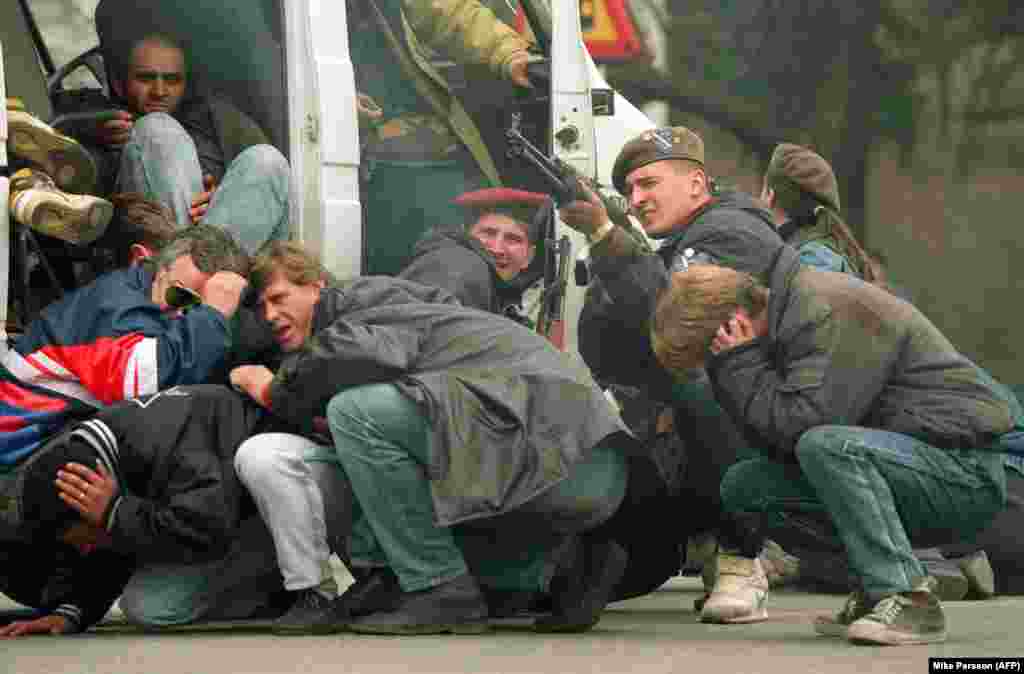
In an iconic picture that captures the opening moments of the siege, a Bosnian soldier takes aim to return fire after Serb gunmen shot into a crowd of peace demonstrators on April 6, 1992.
1/15 In an iconic picture that captures the opening moments of the siege, a Bosnian soldier takes aim to return fire after Serb gunmen shot into a crowd of peace demonstrators on April 6, 1992.
April 5 marks 25 years since the first casualties in what would turn out to be a 1,425-day siege of the Bosnian capital, Sarajevo, by Bosnian Serb forces. More than 10,000 residents died as a result of shelling or other aspects of the blockade, the longest siege of any capital city in the history of modern warfare.
A tower burns in downtown Sarajevo on June 8, 1992, as paramilitary groups in the surrounding hills fire mortars and artillery down on the blockaded city.
2/15 A tower burns in downtown Sarajevo on June 8, 1992, as paramilitary groups in the surrounding hills fire mortars and artillery down on the blockaded city.
April 5 marks 25 years since the first casualties in what would turn out to be a 1,425-day siege of the Bosnian capital, Sarajevo, by Bosnian Serb forces. More than 10,000 residents died as a result of shelling or other aspects of the blockade, the longest siege of any capital city in the history of modern warfare.
A man cradles the head of a woman badly injured by shelling in Sarajevo on June 27, 1992. 
3/15 A man cradles the head of a woman badly injured by shelling in Sarajevo on June 27, 1992. 
April 5 marks 25 years since the first casualties in what would turn out to be a 1,425-day siege of the Bosnian capital, Sarajevo, by Bosnian Serb forces. More than 10,000 residents died as a result of shelling or other aspects of the blockade, the longest siege of any capital city in the history of modern warfare.
An injured girl in a Sarajevo hospital on August 3, 1992. A United Nations <a href="https://web.archive.org/web/20010222115037/http://www.ess.uwe.ac.uk/comexpert/ANX/VI-01.htm#I.H" target="_blank">report</a>&nbsp;concluded that at the height of the siege, more than 3,000 shells were falling on the city each day.
4/15 An injured girl in a Sarajevo hospital on August 3, 1992. A United Nations report concluded that at the height of the siege, more than 3,000 shells were falling on the city each day.
April 5 marks 25 years since the first casualties in what would turn out to be a 1,425-day siege of the Bosnian capital, Sarajevo, by Bosnian Serb forces. More than 10,000 residents died as a result of shelling or other aspects of the blockade, the longest siege of any capital city in the history of modern warfare.
A family cutting firewood nearly one year into the siege in the hills that surround the city, which together with surrounding areas had a population of around 525,000 before the blockade.
5/15 A family cutting firewood nearly one year into the siege in the hills that surround the city, which together with surrounding areas had a population of around 525,000 before the blockade.
April 5 marks 25 years since the first casualties in what would turn out to be a 1,425-day siege of the Bosnian capital, Sarajevo, by Bosnian Serb forces. More than 10,000 residents died as a result of shelling or other aspects of the blockade, the longest siege of any capital city in the history of modern warfare.
Bosnian Serb soldiers patrol a mountain road to prevent Bosnian troops from breaking through to Sarajevo on April 17, 1994.
6/15 Bosnian Serb soldiers patrol a mountain road to prevent Bosnian troops from breaking through to Sarajevo on April 17, 1994.
April 5 marks 25 years since the first casualties in what would turn out to be a 1,425-day siege of the Bosnian capital, Sarajevo, by Bosnian Serb forces. More than 10,000 residents died as a result of shelling or other aspects of the blockade, the longest siege of any capital city in the history of modern warfare.
A man calls for help for one of the casualties of a mortar explosion.
7/15 A man calls for help for one of the casualties of a mortar explosion.
April 5 marks 25 years since the first casualties in what would turn out to be a 1,425-day siege of the Bosnian capital, Sarajevo, by Bosnian Serb forces. More than 10,000 residents died as a result of shelling or other aspects of the blockade, the longest siege of any capital city in the history of modern warfare.
A man mourns his wife in one of Sarajevo&#39;s ever-expanding cemeteries in 1993.&nbsp;
8/15 A man mourns his wife in one of Sarajevo's ever-expanding cemeteries in 1993. 
April 5 marks 25 years since the first casualties in what would turn out to be a 1,425-day siege of the Bosnian capital, Sarajevo, by Bosnian Serb forces. More than 10,000 residents died as a result of shelling or other aspects of the blockade, the longest siege of any capital city in the history of modern warfare.
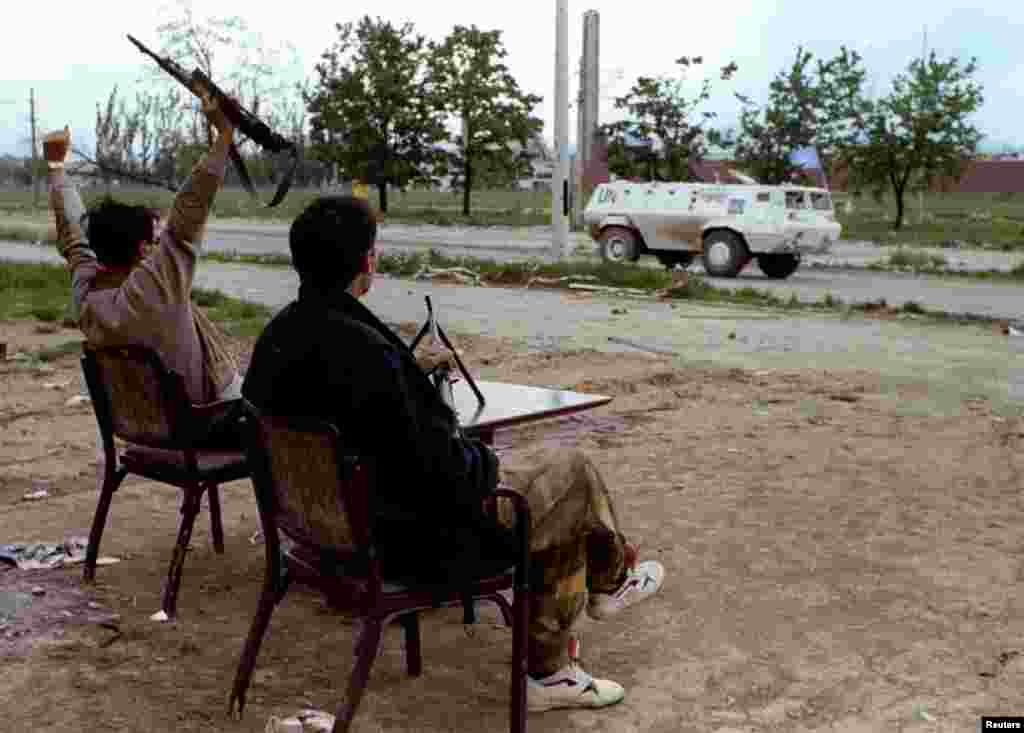
Bosnian soldiers wave to a passing UN vehicle near Sarajevo airport on May 14, 1993. The UN airlift to the Bosnian capital, called Operation Provide Promise, lasted from July 1992 to January 1996, making it the longest-running humanitarian airlift in history.
9/15 Bosnian soldiers wave to a passing UN vehicle near Sarajevo airport on May 14, 1993. The UN airlift to the Bosnian capital, called Operation Provide Promise, lasted from July 1992 to January 1996, making it the longest-running humanitarian airlift in history.
April 5 marks 25 years since the first casualties in what would turn out to be a 1,425-day siege of the Bosnian capital, Sarajevo, by Bosnian Serb forces. More than 10,000 residents died as a result of shelling or other aspects of the blockade, the longest siege of any capital city in the history of modern warfare.
A house burning in Sarajevo after a direct hit from a mortar in 1994. A UN commission <a href="https://web.archive.org/web/20010222115037/http://www.ess.uwe.ac.uk/comexpert/ANX/VI-01.htm" target="_blank">concluded</a> in 1994, with the siege still continuing, that property damage &quot;includes specifically protected targets such as hospitals and medical complexes, medical facilities...medical personnel, as well as cultural property&quot; and tens of thousands of apartments.
10/15 A house burning in Sarajevo after a direct hit from a mortar in 1994. A UN commission concluded in 1994, with the siege still continuing, that property damage "includes specifically protected targets such as hospitals and medical complexes, medical facilities...medical personnel, as well as cultural property" and tens of thousands of apartments.
April 5 marks 25 years since the first casualties in what would turn out to be a 1,425-day siege of the Bosnian capital, Sarajevo, by Bosnian Serb forces. More than 10,000 residents died as a result of shelling or other aspects of the blockade, the longest siege of any capital city in the history of modern warfare.
A young couple runs across the infamous Sniper Alley in Sarajevo in 1995. Snipers in the surrounding hills, combined with the relentless mortar rounds bursting on the streets, made even a trip to collect water a perilous task during the 44 months of the siege.
11/15 A young couple runs across the infamous Sniper Alley in Sarajevo in 1995. Snipers in the surrounding hills, combined with the relentless mortar rounds bursting on the streets, made even a trip to collect water a perilous task during the 44 months of the siege.
April 5 marks 25 years since the first casualties in what would turn out to be a 1,425-day siege of the Bosnian capital, Sarajevo, by Bosnian Serb forces. More than 10,000 residents died as a result of shelling or other aspects of the blockade, the longest siege of any capital city in the history of modern warfare.
French cardinal Roger Etchegaray (left) and Bosnian cardinal Vinko Puljc in Sarajevo on August 15, 1995. Cardinal Etchegaray brought a message from Pope John Paul II of solidarity with Sarajevans.
12/15 French cardinal Roger Etchegaray (left) and Bosnian cardinal Vinko Puljc in Sarajevo on August 15, 1995. Cardinal Etchegaray brought a message from Pope John Paul II of solidarity with Sarajevans.
April 5 marks 25 years since the first casualties in what would turn out to be a 1,425-day siege of the Bosnian capital, Sarajevo, by Bosnian Serb forces. More than 10,000 residents died as a result of shelling or other aspects of the blockade, the longest siege of any capital city in the history of modern warfare.
Civilians injured by a mortar in Sarajevo&#39;s central market await treatment in a hospital corridor on February 5, 1994. The woman at left died before doctors could attend to her.
13/15 Civilians injured by a mortar in Sarajevo's central market await treatment in a hospital corridor on February 5, 1994. The woman at left died before doctors could attend to her.
April 5 marks 25 years since the first casualties in what would turn out to be a 1,425-day siege of the Bosnian capital, Sarajevo, by Bosnian Serb forces. More than 10,000 residents died as a result of shelling or other aspects of the blockade, the longest siege of any capital city in the history of modern warfare.
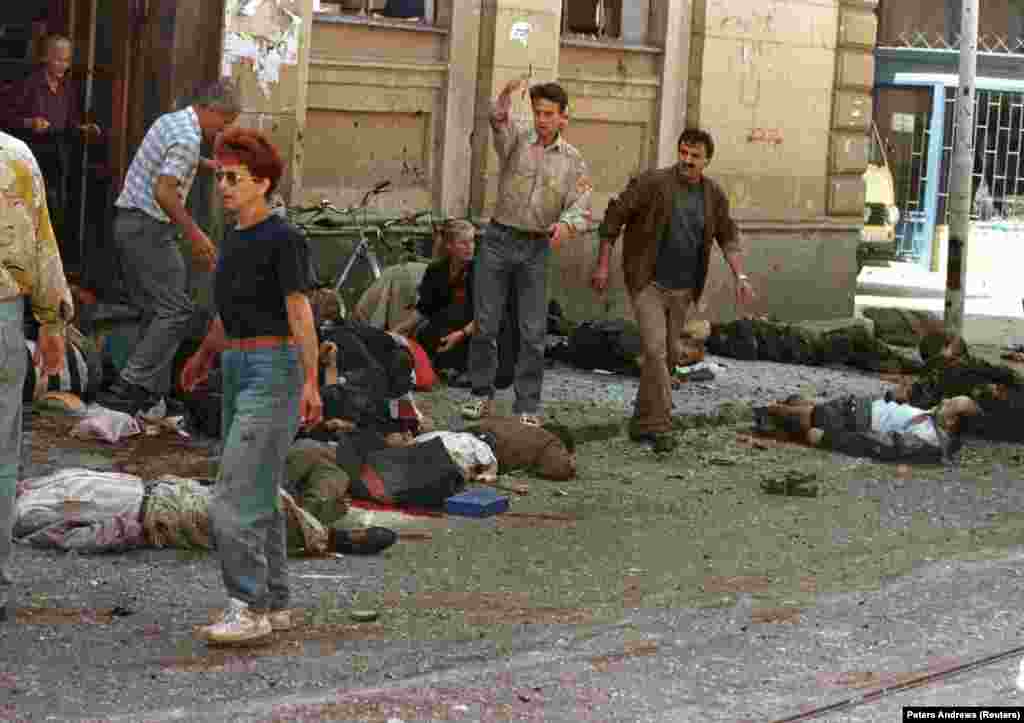
The scene after mortars slammed into the crowded Markale marketplace in central Sarajevo on August 28, 1995. Forty-three people died in this, the second of two deliberate attacks on the market that came to be known as the Markale Massacres. The August shelling was among the reasons cited for NATO&#39;s bombing of Bosnian Serb forces, which started later the same month.
14/15 The scene after mortars slammed into the crowded Markale marketplace in central Sarajevo on August 28, 1995. Forty-three people died in this, the second of two deliberate attacks on the market that came to be known as the Markale Massacres. The August shelling was among the reasons cited for NATO's bombing of Bosnian Serb forces, which started later the same month.
April 5 marks 25 years since the first casualties in what would turn out to be a 1,425-day siege of the Bosnian capital, Sarajevo, by Bosnian Serb forces. More than 10,000 residents died as a result of shelling or other aspects of the blockade, the longest siege of any capital city in the history of modern warfare.
A Serb woman sells goods in a market as a shop burns behind her in Ilidzia, a Serb-held suburb of Sarajevo on March 9, 1996, three days before it was due to come under Croat and Muslim rule.
15/15 A Serb woman sells goods in a market as a shop burns behind her in Ilidzia, a Serb-held suburb of Sarajevo on March 9, 1996, three days before it was due to come under Croat and Muslim rule.
April 5 marks 25 years since the first casualties in what would turn out to be a 1,425-day siege of the Bosnian capital, Sarajevo, by Bosnian Serb forces. More than 10,000 residents died as a result of shelling or other aspects of the blockade, the longest siege of any capital city in the history of modern warfare.
Previous slide
Next slide

Editor's Note: April 5 is the 25th anniversary of the shootings in Sarajevo of two peace demonstrators, the first casualties in what would be a 1,425-day siege of the Bosnian capital by Bosnian Serb forces.

SARAJEVO -- For more than 500 years, the hills surrounding Sarajevo were a place for leisurely strolls, family picnics, and stunning views of the ancient city below.

That all changed a quarter of a century ago with the start of a 44-month siege of the Bosnian capital, where more than 11,500 people* died amid shelling, sniper fire, and a near-total blockade from Bosnian Serbs positioned on the same peaks where children had played just days earlier.

"That was our favorite spot," says Dino Mustafic, a 47-year-old director who lived through the longest siege in the history of modern warfare and still calls Sarajevo his home. "And then suddenly, during the war, it became the symbol of evil and death. Here were the lines of fire from which the city was hit without any obstacles."

WATCH: The Siege That Devastated Sarajevo
The Siege That Devastated Sarajevo
please wait

No media source currently available

0:00 0:01:59 0:00

While pockmarked buildings scattered around Sarajevo still bear the wounds from almost four years of intense conflict, Bosnia's capital is reemerging physically from the devastation. But its psyche remains a shell of the strong, confident place where many of the world's greatest athletes gathered at the Winter Olympic Games in 1984.

Prior to the siege, which lasted a year longer than the siege of Leningrad by Nazi forces in World War II, Sarajevo was a microcosm of Bosnia: a mix of Orthodox Serbs, Catholic Croats, and Muslim Bosniaks.

But a February 29-March 1 independence referendum highlighted differences between the groups and turned up the heat on simmering tensions that were sweeping across then-Yugoslavia as Belgrade tried to keep the country from tearing apart at the seams.

Bosniaks and Bosnian Croats supported an independent state. Bosnian Serbs, whose strategic goal was to create a new Bosnian Serb state that would include Bosniak-majority areas, didn't and boycotted the vote as their leaders discouraged participation.

The day the referendum ended, an Orthodox wedding in Sarajevo turned to tragedy when a Muslim gunman opened fire in a dispute as the wedding procession, waving Serbian flags, wound its way through the old bazaar area of the city.

Serbian paramilitaries quickly responded by setting up barricades in the center of the city, but the peaceful demonstrations that followed helped defuse the situation.

But across the country, sporadic fighting was breaking out, and when Serb policemen killed two officers and a civilian, a state of emergency was declared and the Serbs rebuilt their barricades.

ALSO READ: Susan Sontag's Lasting Gift To Sarajevans Under Siege

This time, protests were futile and, on April 5, Suada Dilberovic, a Muslim, and Olga Sucic, a Catholic, were shot by gunmen as they crossed the Vrbanja Bridge, which spans the Miljacka River and joined the city's two sides for centuries.

"Those demonstrations were fascinating because they gathered a great number of citizens, tens of thousands, who, unarmed, went out of their homes and said that they didn't want war, that they wanted peace, who wanted to stop all that and believed that they could do it as citizens," Mustafic says.

"They quickly realized after shots were fired from the Holiday Inn hotel as to what our reality was: that the logic of soldiers, of military boots, gunpowder will defeat our desire that there be no war."
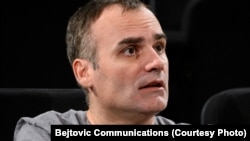
Dino Mustafic: "I will strive, because of the generations that will come after us, to tell everything as it was."

Without fresh water, power, or food, Mustafic and tens of thousands of his fellow Sarajevans would endure almost four years of daily fire from heavy artillery and snipers in the once-idyllic nearby hills.

Onetime Bosnian Serb commander Stanislav Galic stood trial for his part in the 1,425-day siege of the city and acknowledged the ferocity of the military action -- the term ethnic cleansing arose from the conflict in Bosnia -- he was directing.

"For a citizen of Sarajevo, there was no place to hide from the attacks. He wasn't safe at home, in schools, or in hospitals," he said during his trial at the International Criminal Tribunal for the former Yugoslavia in The Hague. In December 2003, Galic was sentenced to 20 years in prison by the court.

Though he was on the other side of the gun barrel, filmmaker Nihad Kresevljakovic agrees with Galic's assessment.

He, too, lived through the siege and has stayed in Sarajevo. At times during the onslaught he would look up at the peaks surrounding the city wondering if, and when, the shells would stop raining down.

"The lines of these mountains and hills around Sarajevo were the borders of the universe for us down here," he recalls as he sits on Vrbanja Bridge.

"Somehow, it is like you are observing this painting and after years of siege you start wondering whether there is anything beyond those lines. Really, that sensation of the siege is linked to this image of the horizon and city borders."

In October 1995, the siege was finally lifted by a cease-fire agreement. Two months later, the Dayton peace accords split Bosnia into two highly autonomous regions with power in the country divided along ethnic lines.

Though the fighting has long stopped, tensions still simmer just below the surface. Even a stroll through Sarajevo today evokes mixed feelings.

Amid new buildings, shopping centers, and a constant stream of the newest-model cars zipping through the streets, reminders of the siege are everywhere.

Cemeteries, hit hard by the mortars fired from the hills above, now crop up in the oddest of places: a soccer field, a park, a garden. They show the indiscriminate toll inflicted by 14 months of nearly continuous shelling.

For Mustafic, the memories of his childhood playground in the Trebevic hills high above have yet to overtake the nightmares founded on his experience down in the city during the siege. But he's trying.

"I will strive, because of the generations that will come after us, to tell everything as it was. But also to find in myself the strength to wake up all those memories which will recall in me the sense of beauty and life which I also know, and that is life in peace, in harmony, in unity," he says.

"And I really want Trebevic -- I think it is gradually recovering -- to again become the spot that it was before the war."

* The death toll for the siege has been changed to reflect a more accurate figure.
This item is part of
XS
SM
MD
LG