




Bosnia-Herzegovina is under mounting pressure to address the future of thousands of stranded migrants and asylum seekers, with the EU and a top European human rights official joining a chorus of calls demanding that authorities address the unfolding humanitarian crisis.
The dire situation of migrants is “unacceptable and needs to be solved urgently," Peter Stano, spokesperson for the EU's foreign affairs chief Josep Borrell, said on January 15.
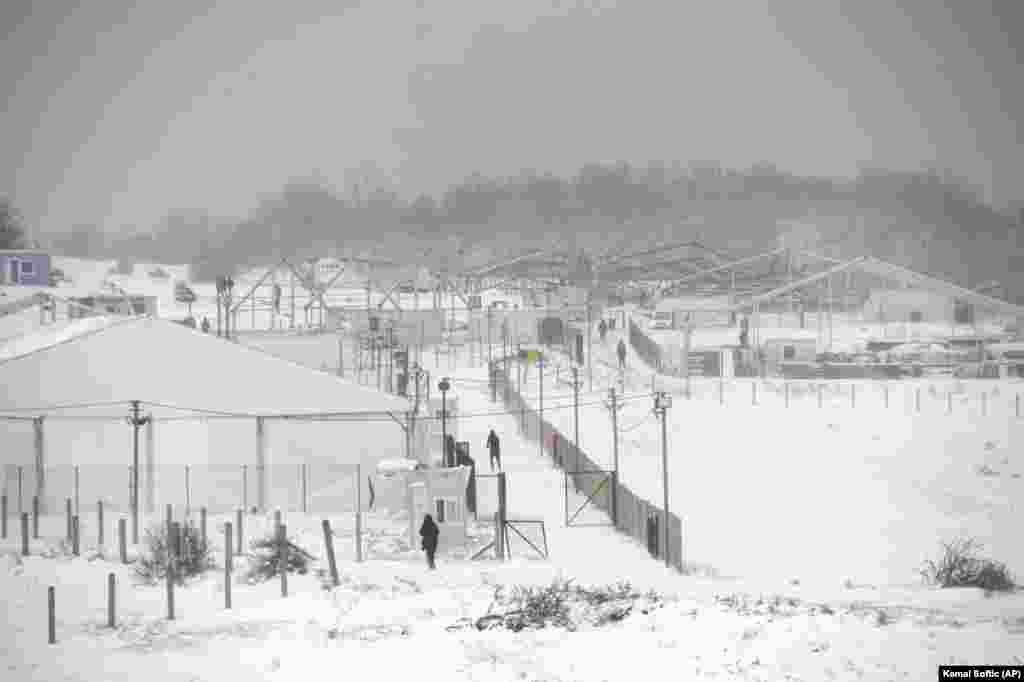
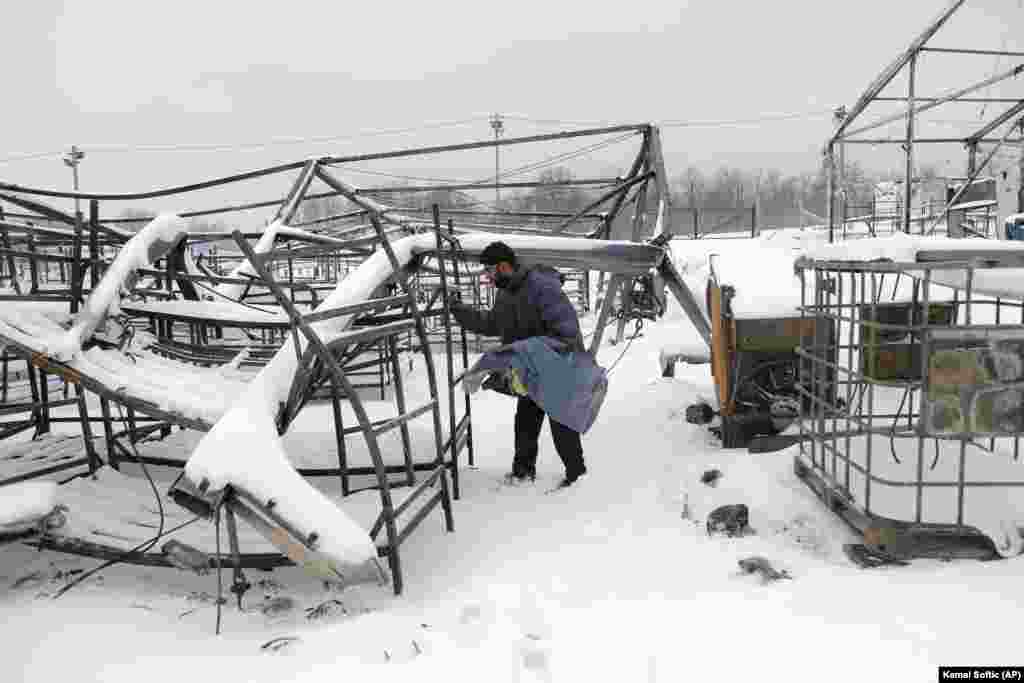
In northwestern Bosnia, some 900 people have been sleeping without shelter in the improvised Lipa camp, braving snow and subzero temperatures for more than three weeks.
The tent camp was erected last year as temporary accommodation during the coronavirus pandemic and was shut on December 23, 2020. Then a fire that broke out during the evacuation of residents destroyed much of the camp.
Authorities first said they would move the migrants to another location, but after facing resistance from locals they ended up setting up military tents at the old site instead.
This week, around 750 migrants were placed in heated tents at the Lipa camp and showers were installed, although conditions still remain rough.
Migrants In Bosnia Face Freezing Winter Without Shelter




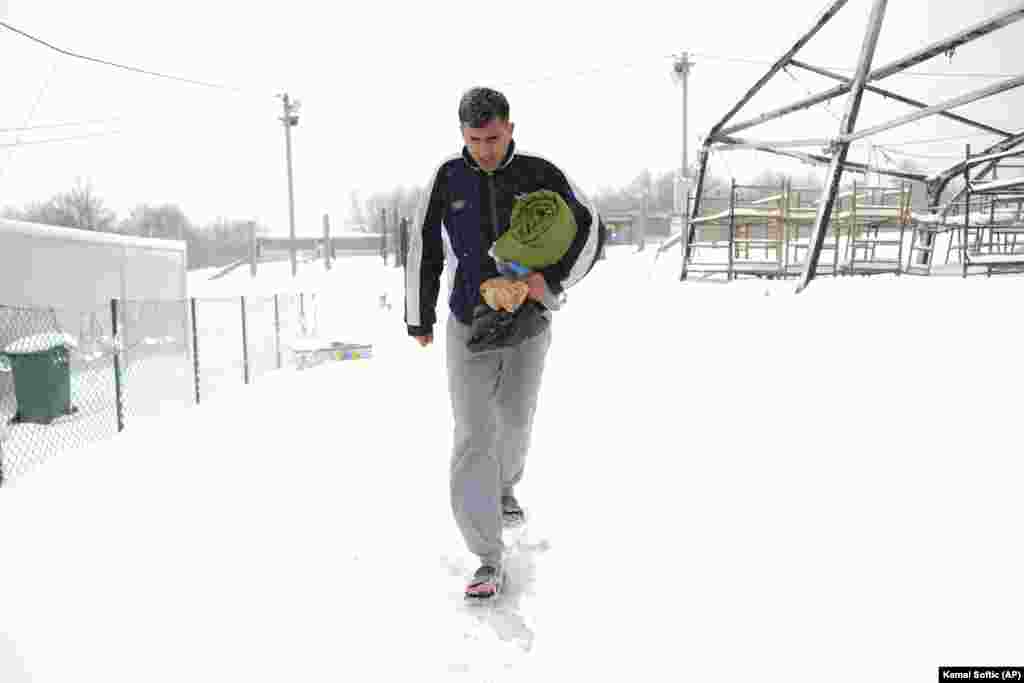


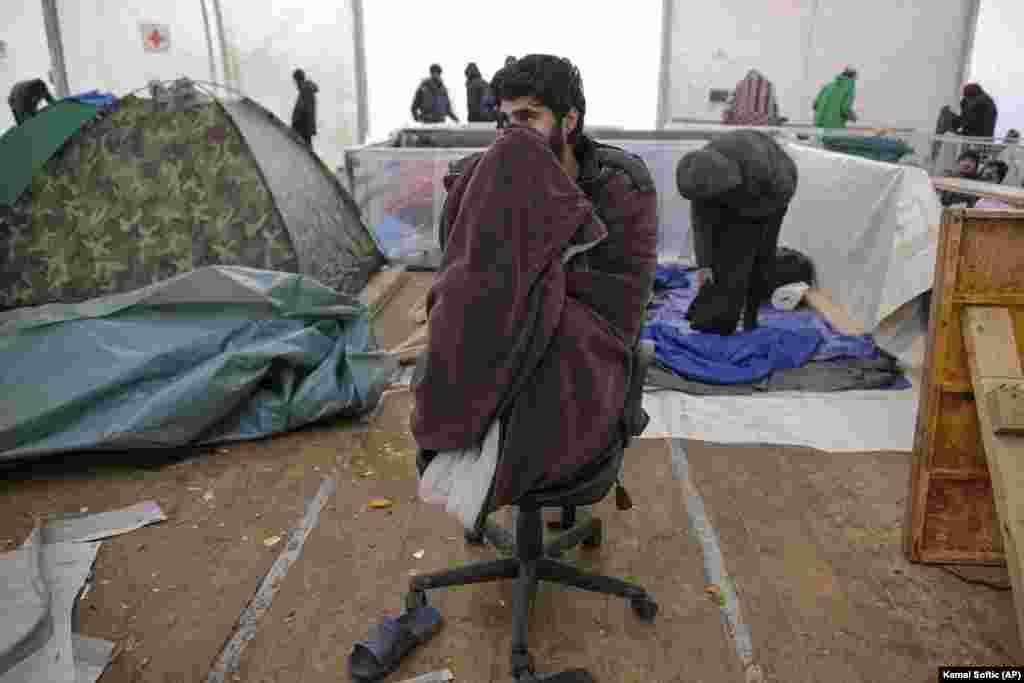
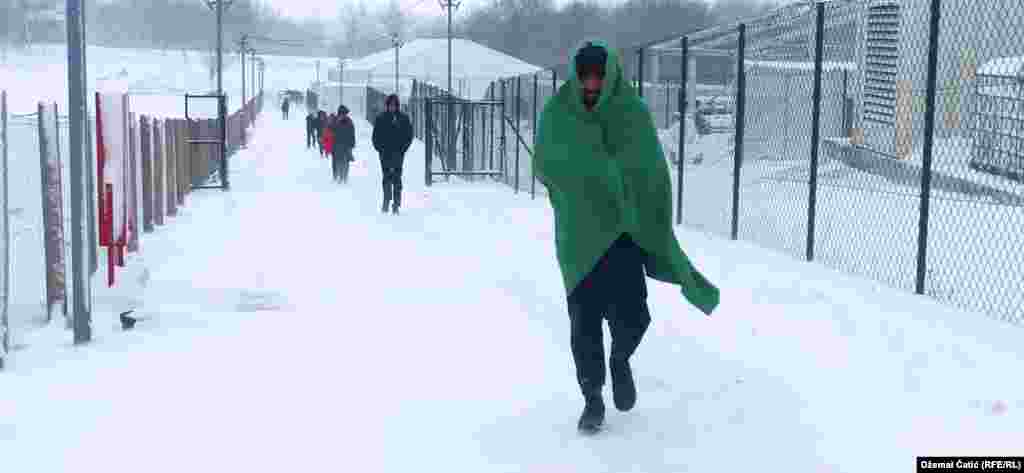


Many of those in the camp are from Pakistan, Afghanistan, and Syria. They are among around 9,000 migrants, refugees, and asylum seekers stuck in Bosnia trying to cross into EU member Croatia in order to reach wealthier countries in the bloc.
"We are urging them repeatedly to set up functioning effective mechanisms to deal with this issue, recalling their responsibilities both stemming from international obligations, and stemming also from their EU aspirations," Stano told reporters in Brussels.
"There will be consequences if Bosnia-Herzegovina will not be able to meet those demands," he warned, adding that “it might have an impact also on the European aspirations of the country.”
EU agencies have provided over 88 million euros ($107 million) in assistance to Bosnia over the past three years to address the immediate needs of refugees, asylum seekers, and migrants, and strengthen its migration-management capacity.
Impoverished and ethnically divided Bosnia has struggled with the influx of thousands of people, a situation exacerbated by Hungary closing its border to migrants and Croatia engaging in illegal pushbacks at the border.
The task of dealing with the migrants has been marred by political bickering among Bosnia's national and local authorities.
Dunja Mijatovic, the Council of Europe commissioner for human rights, told RFE/RL that the crisis has again revealed the absence of coordination and cooperation at different levels of government in Bosnia.
"What we see now in Bosnia-Herzegovina is the dysfunction of the state," Mijatovic said.
To protect human rights, Bosnia must act like a state and abide by its international commitments instead of allowing its constituent ethnic entities, cantons, or municipalities to determine policy, she said.