


Bulgarian Media Watchdog Equated Bucha Killings With Anti-Russian 'Propaganda'
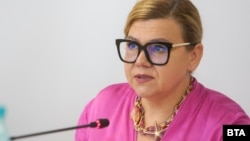
Sonia Momchilova, the head of Bulgaria's media regulator, has also been outspoken on issues of gender and sexual orientation, including mocking EU job offers in the context of the Pride movement.
SOFIA -- Critics are accusing Bulgaria's top broadcast and new-media regulator of falling for the Kremlin's hybrid warfare after Sonia Momchilova likened UN-backed evidence of Russian atrocities in Ukraine to anti-Putin "propaganda."
More than 1,400 bodies were discovered in a suburb of Ukraine's capital after Russian troops withdrew from Bucha following a 26-day occupation in March 2022. Evidence cited by the United Nations and the International Criminal Court's prosecutor indicated that Russian forces carried out systematic brutality in Bucha, including execution-style killings of civilians.
The chairwoman of the Council for Electronic Media (CEM), Momchilova drew swift local and international censure along with calls for her dismissal when she told YouTube vlogger Asen Genov's Kontrakomentar program on June 19 that "just as there is Russian propaganda, we cannot deny that there is also [some] in the opposite direction," adding, "You know, about [Russian President Vladimir] Putin's illness, that he'd been replaced [by a double], Bucha, and so on."
There has been speculation for years over the 70-year-old Russian president's health, sometimes including unsubstantiated reports alleging the use of lookalikes for public appearances.
One day after her comments to Kontrakomentar, Momchilova lashed out on Facebook at local news site Dnevnik, which had long argued that coverage of the Bucha tragedy in the Bulgarian media reflected an "information war" between Russia and "Ukraine and the democratic community."
A Bulgarian think tank, the Center for the Study of Democracy, published a report in April in which it asserted that "pro-Kremlin disinformation is most prominent in countries with deep-rooted cultural and historical alignments to Russia," singling out Bulgaria, Serbia, Montenegro, and Serb enclaves in the Balkans in particular.
Momchilova's comments equating Bucha reports with anti-Russian "propaganda" emerged amid a broader and highly politicized debate over Bulgarian National Radio and perceptions of bias and "propaganda insinuations" in some of its programming. Russia sanctions and other tough responses to the invasion of a post-Soviet neighbor have proved divisive in Bulgaria amid political stalemate and two years of inconclusive elections. In the discussion about the public radio broadcaster, Momchilova had suggested the show in question was serving the role of public media by reflecting the attitudes of the public.
A former prime ministerial adviser and communications specialist, Momchilova was appointed to the CEM by pro-Russian President Rumen Radev in 2021 and became chairwoman of the council half a year later. Two of the five council members are presidential appointees, while the other three are appointed by parliament.
She has come under criticism before. Two NGOs demanded her resignation earlier this year over her criticism of a joint investigation (including by RFE/RL's Bulgarian Service) of Bulgarian authorities' treatment of migrants at the border. Momchilova cast the decisive vote to keep herself in office at the time.
Ukraine Remembers The Victims Of Bucha, One Year After Liberation
1/12When Russian forces withdrew from the Kyiv suburb of Bucha after 33 days of occupation, following their failed attempt to seize the nation's capital, they left behind scenes of horror that, a year later, have not been forgotten.
Images of civilian bodies, some with their hands bound behind their backs, were beamed across the world.
On March 31, Ukraine marked one year since Russian forces withdrew from the Kyiv suburb of Bucha. After more than a month of occupation, Russian troops left behind the bodies of hundreds of dead civilians. Ukrainian and international officials have called the deaths a war crime.
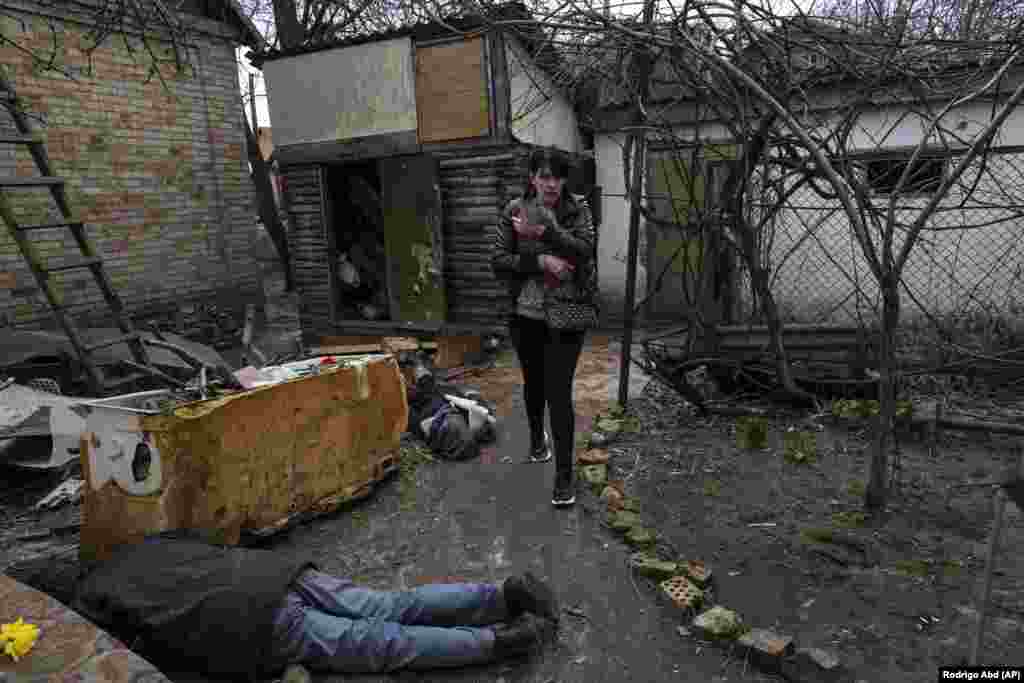
2/12Other images, such as Ira Gavriluk holding her cat as she walks past the corpses of her husband and her brother on April 4, stunned viewers.
Kyiv authorities said that more than 1,400 deaths, including 37 children, occurred during the Russian occupation of Bucha.
On March 31, Ukraine marked one year since Russian forces withdrew from the Kyiv suburb of Bucha. After more than a month of occupation, Russian troops left behind the bodies of hundreds of dead civilians. Ukrainian and international officials have called the deaths a war crime.
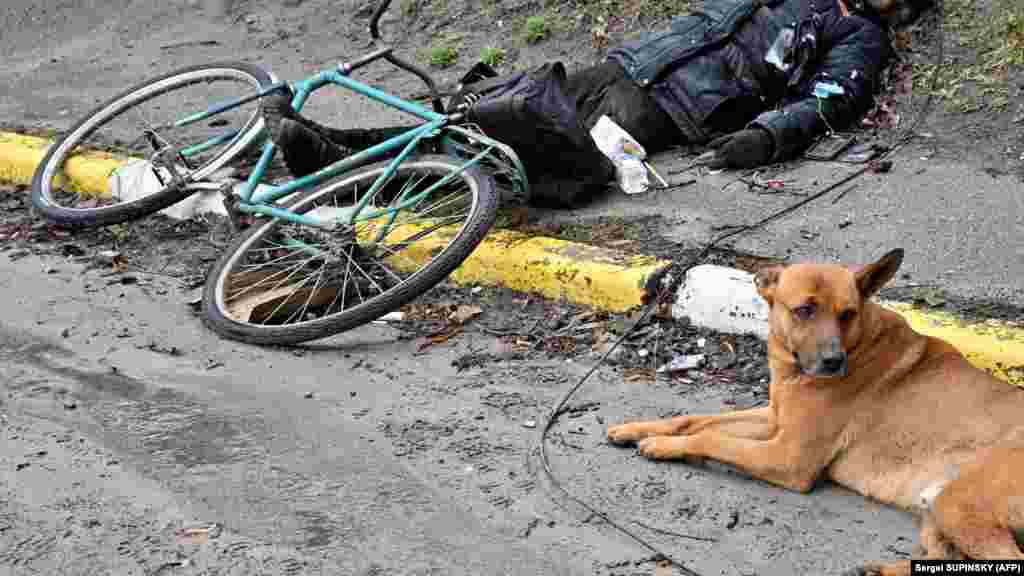
3/12A dog sitting near a civilian identified as Volodymyr Brovchenko, who was shot dead while riding his bike in Bucha.
Ukraine and its Western allies accused Russian troops of war crimes after the discoveries, pointing to an abundance of footage and witness accounts. Moscow denies the accusations, claiming the atrocities in Bucha were staged.
On March 31, Ukraine marked one year since Russian forces withdrew from the Kyiv suburb of Bucha. After more than a month of occupation, Russian troops left behind the bodies of hundreds of dead civilians. Ukrainian and international officials have called the deaths a war crime.
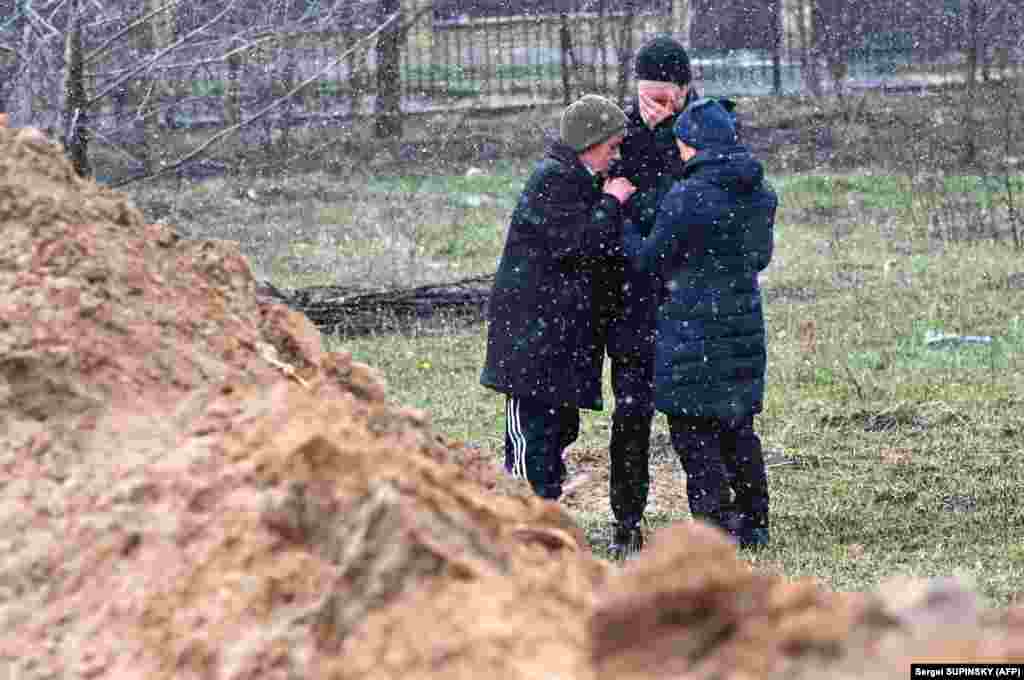
4/12People react as they gather close to a mass grave on April 3, 2022.
Kyiv also reported that 175 people were found in various mass graves and torture chambers.
On March 31, Ukraine marked one year since Russian forces withdrew from the Kyiv suburb of Bucha. After more than a month of occupation, Russian troops left behind the bodies of hundreds of dead civilians. Ukrainian and international officials have called the deaths a war crime.
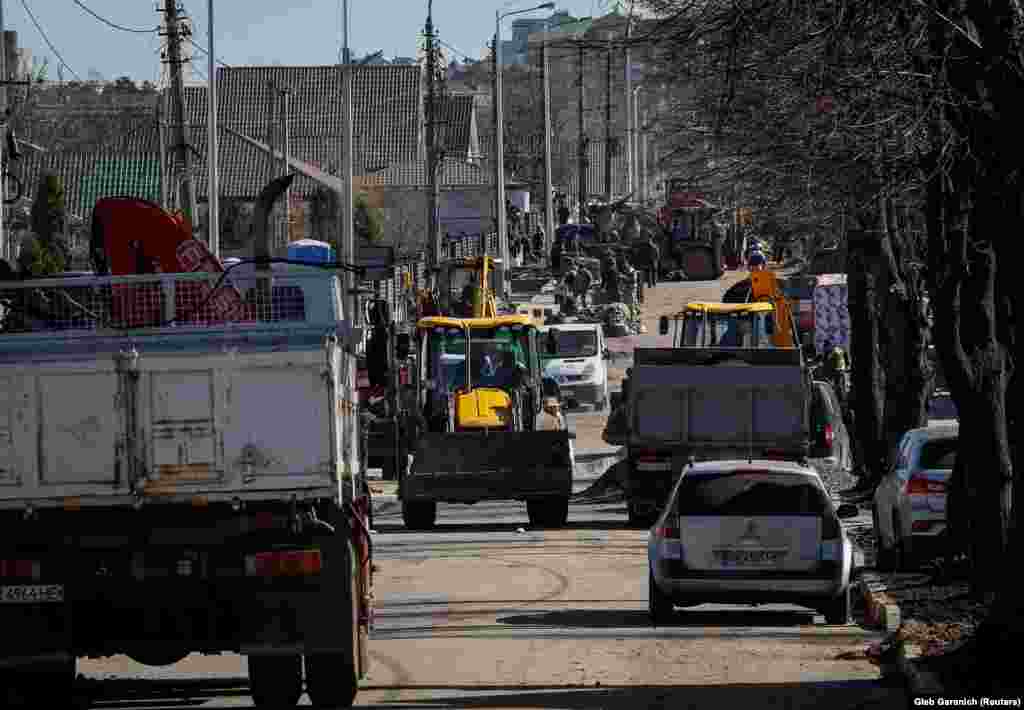
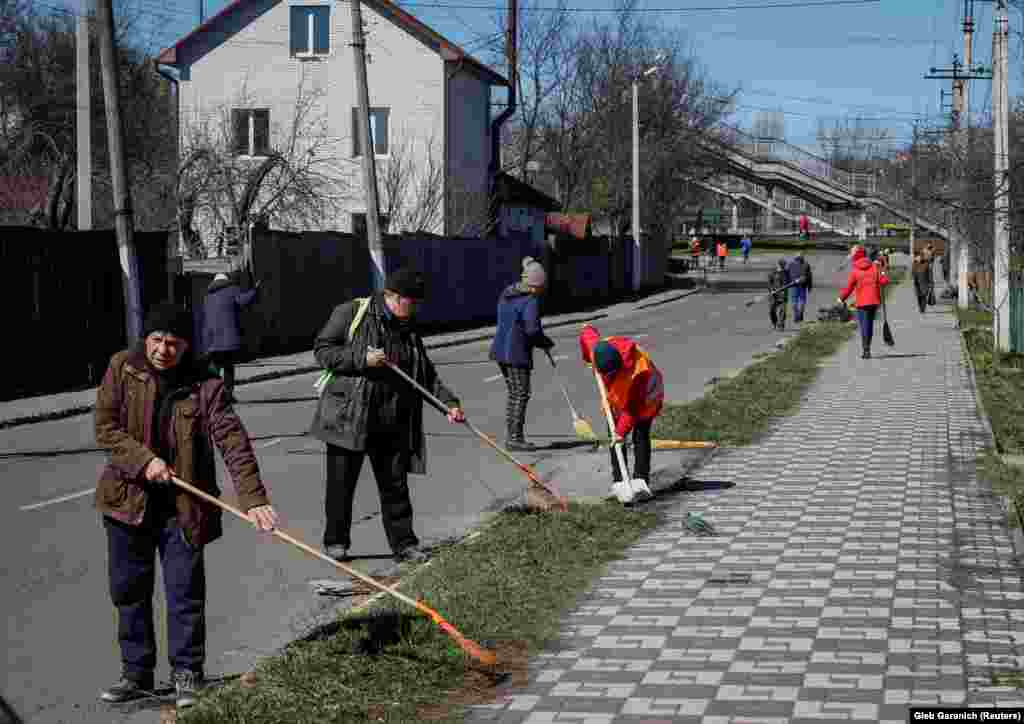
5/12Nearly a year later, community workers have rebuilt the streets, erasing most of the visible signs of death and destruction.
On March 31, Ukraine marked one year since Russian forces withdrew from the Kyiv suburb of Bucha. After more than a month of occupation, Russian troops left behind the bodies of hundreds of dead civilians. Ukrainian and international officials have called the deaths a war crime.
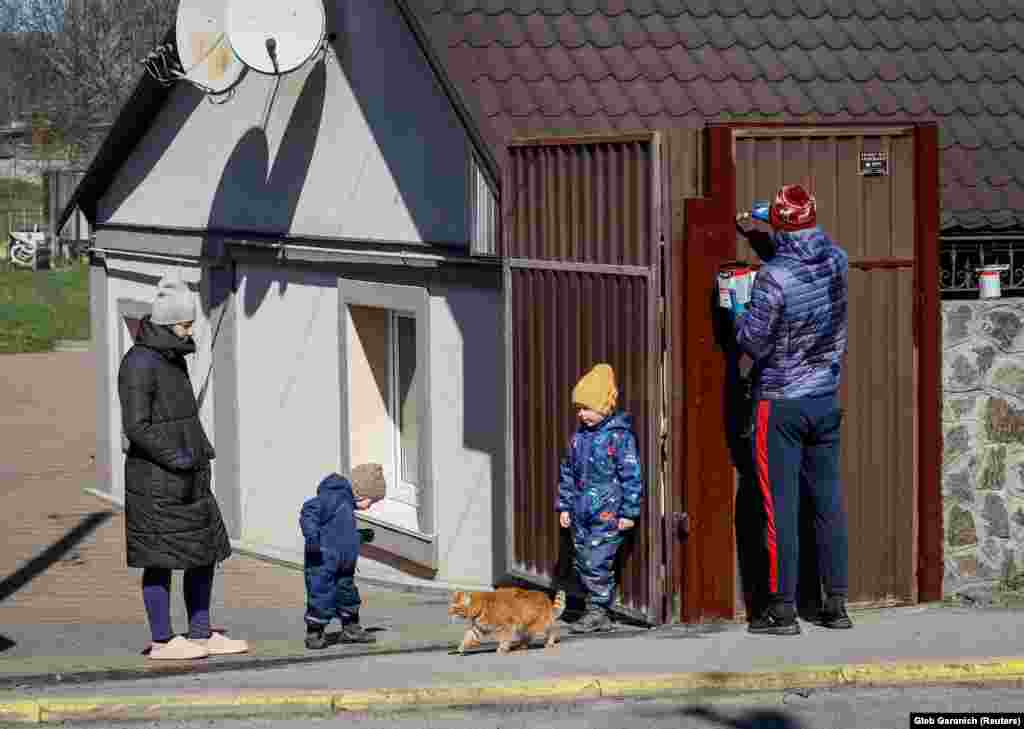
6/12Daria (left) looks on as her husband Maxim paints a gate to their house while their children play, on March 30, 2023. Dead civilians were strewn along the street in front of their house a year ago.
On March 31, Ukraine marked one year since Russian forces withdrew from the Kyiv suburb of Bucha. After more than a month of occupation, Russian troops left behind the bodies of hundreds of dead civilians. Ukrainian and international officials have called the deaths a war crime.
7/12Though the streets and many homes have been repaired and cleared of debris, residents say the deep psychological wounds left by the occupation will take generations to overcome.
On March 31, Ukraine marked one year since Russian forces withdrew from the Kyiv suburb of Bucha. After more than a month of occupation, Russian troops left behind the bodies of hundreds of dead civilians. Ukrainian and international officials have called the deaths a war crime.
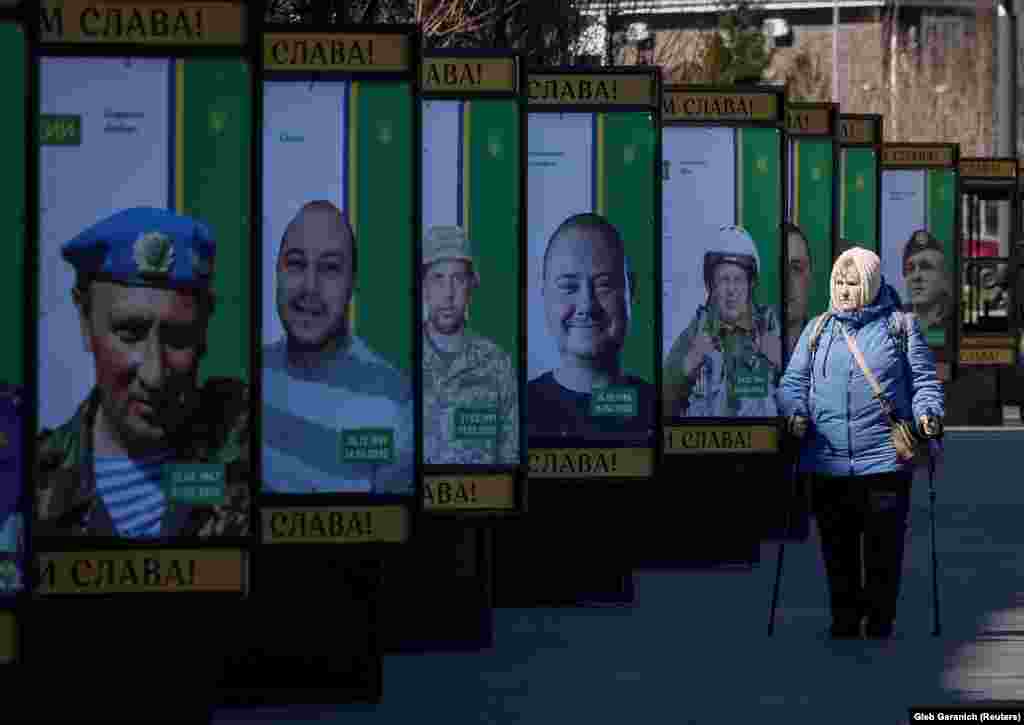
8/12A woman walks by billboards in Bucha of Ukrainian soldiers who died defending their country.
On March 31, Ukraine marked one year since Russian forces withdrew from the Kyiv suburb of Bucha. After more than a month of occupation, Russian troops left behind the bodies of hundreds of dead civilians. Ukrainian and international officials have called the deaths a war crime.
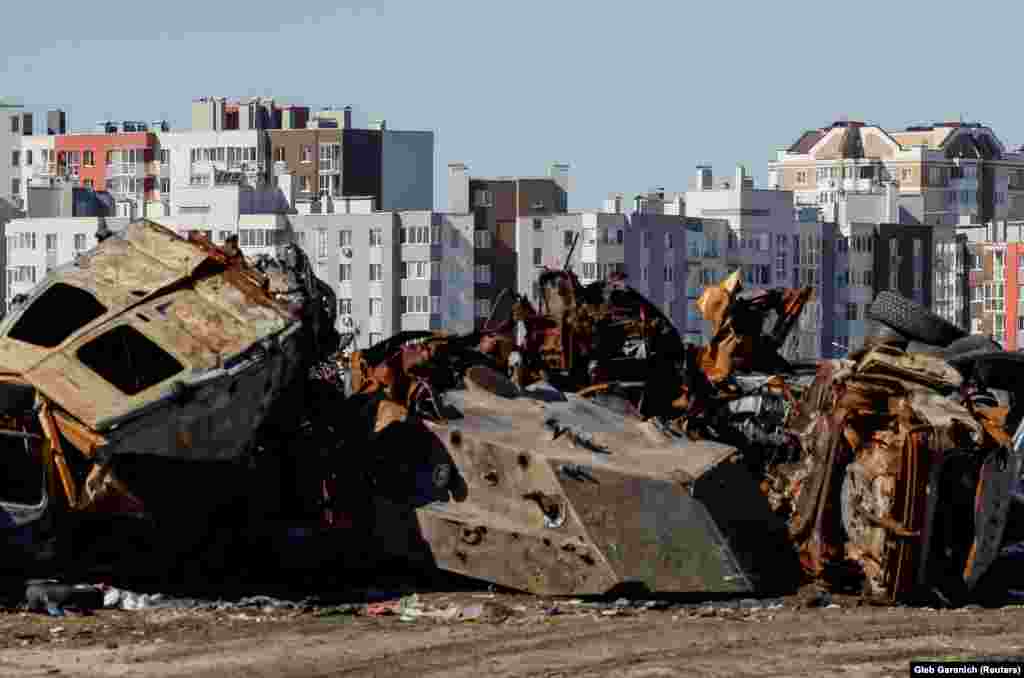
9/12Civilian cars and military vehicle destroyed during the invasion can still be seen near repaired apartment buildings in Bucha before the first anniversary of its liberation.
On March 31, Ukraine marked one year since Russian forces withdrew from the Kyiv suburb of Bucha. After more than a month of occupation, Russian troops left behind the bodies of hundreds of dead civilians. Ukrainian and international officials have called the deaths a war crime.
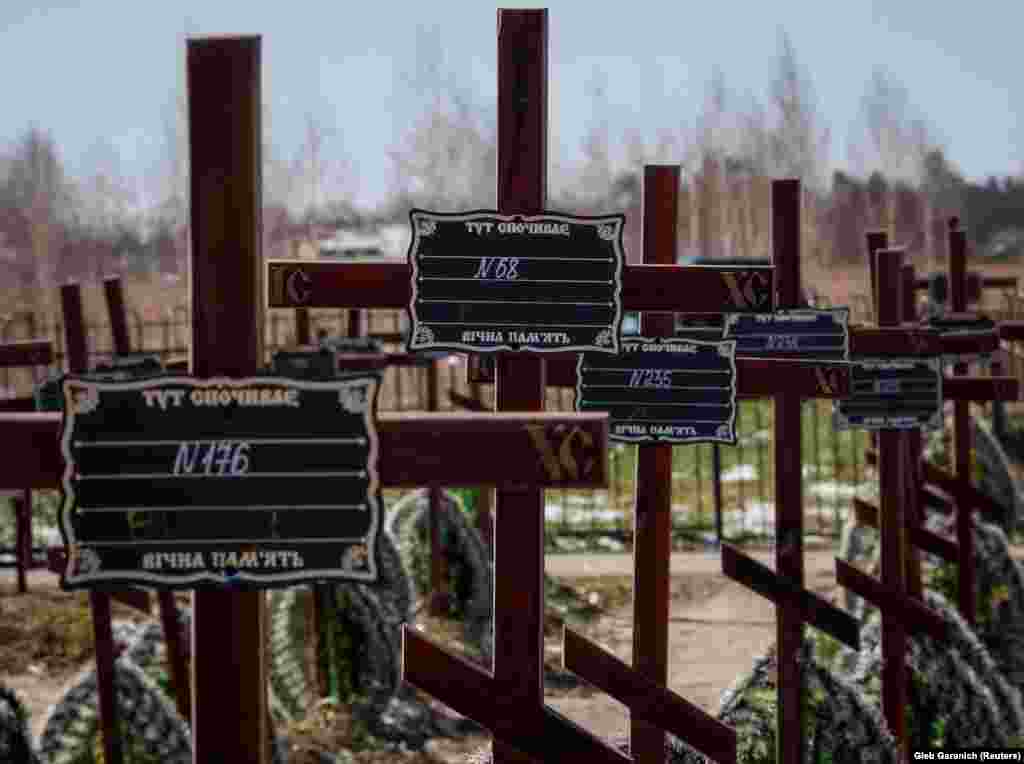
10/12The graves of unidentified people, including children killed during the Russian occupation of Bucha, are marked with numbers.
On March 31, Ukraine marked one year since Russian forces withdrew from the Kyiv suburb of Bucha. After more than a month of occupation, Russian troops left behind the bodies of hundreds of dead civilians. Ukrainian and international officials have called the deaths a war crime.
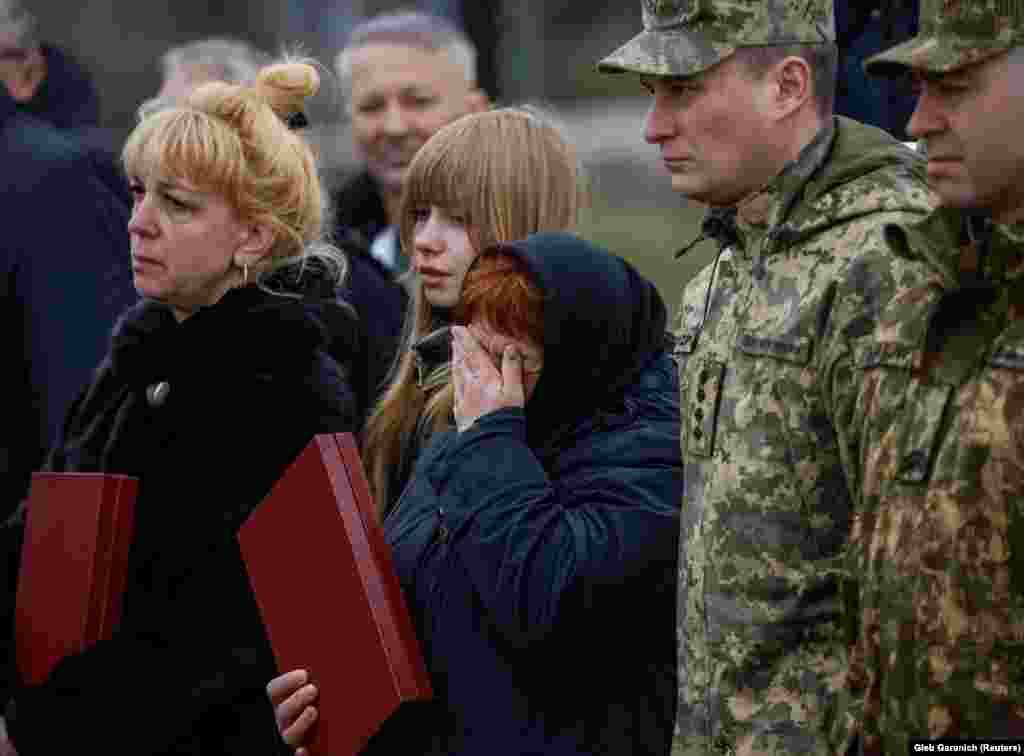
11/12Family members and soldiers paid tribute to those were killed on the first anniversary of the liberation of Bucha on March 31.
On March 31, Ukraine marked one year since Russian forces withdrew from the Kyiv suburb of Bucha. After more than a month of occupation, Russian troops left behind the bodies of hundreds of dead civilians. Ukrainian and international officials have called the deaths a war crime.
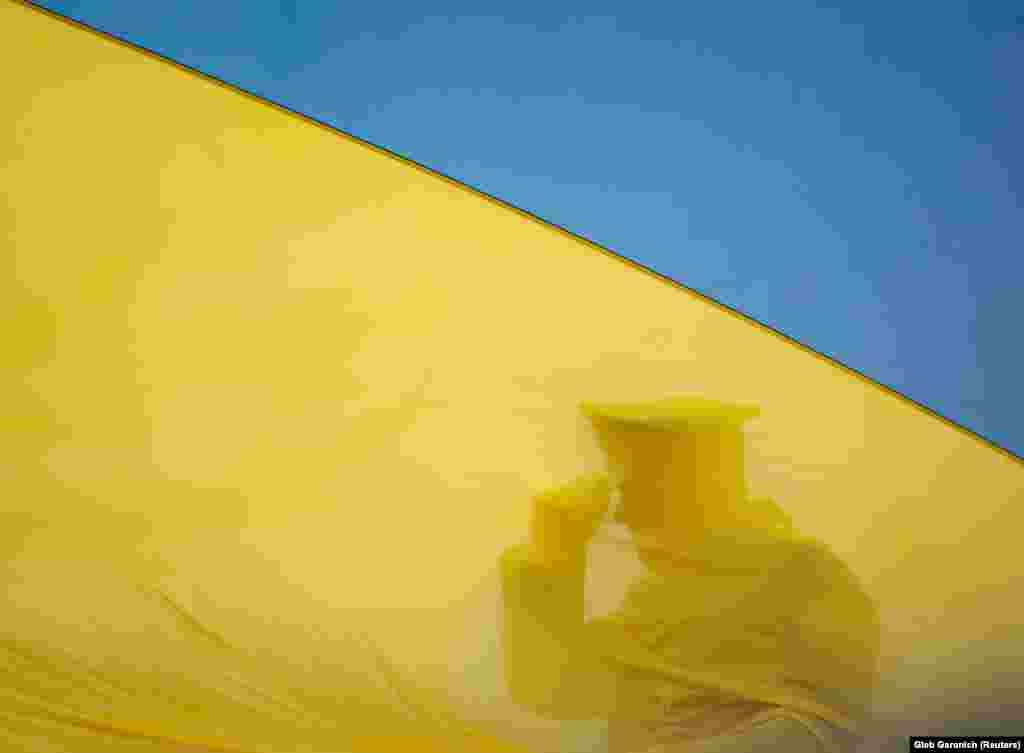
12/12A member of the Honor Guard is seen as the Ukrainian national flag is hoisted during a ceremony to mark the first anniversary of the liberation of Bucha.
President Volodymyr Zelenskiy said that Ukraine will never forgive the atrocities committed there.
On March 31, Ukraine marked one year since Russian forces withdrew from the Kyiv suburb of Bucha. After more than a month of occupation, Russian troops left behind the bodies of hundreds of dead civilians. Ukrainian and international officials have called the deaths a war crime.
Previous slide
Next slide
Her recent outspokenness has also extended to issues of gender and sexual orientation, including mocking EU job offers in the context of the Pride movement and what she described this week as a "digital and polygenderist transition towards…total monkeyfication."
The Ukrainian Embassy challenged Momchilova's comments likening Bucha reports to anti-Russian "propaganda" on June 21, calling them "unacceptable and manipulative."
It noted that Bulgaria was a signatory to an EU declaration in 2022 condemning "in the strongest possible terms the reported atrocities committed by the Russian armed forces in a number of occupied Ukrainian towns" including Bucha.
The embassy statement said it "expects the Council for Electronic Media and the relevant Bulgarian institutions to refute and take the necessary measures to respond to the dangerous and misleading claims regarding the atrocities committed by Russian occupiers in Bucha. These claims contradict the official position of the Republic of Bulgaria as a member state of the EU and NATO."
Shortly afterward, the U.S. Embassy in Sofia issued a statement warning that the "Kremlin's disinformation machine goes into overdrive when denying Russia's targeting of civilians." It cited the "massacre" at Bucha and added, "Don't be fooled by the lies."
Less than an hour after that, Momchilova's interviewer Genov also circled back to say her "inconsistent statements regarding the war in Ukraine worried me seriously during our conversation." He said he was concerned at their effect on Bulgaria's image.
Sonia Momchilova: "Just as there is Russian propaganda, we cannot deny that there is also [some] in the opposite direction."
On June 22, dozens of journalists appealed to Bulgarian lawmakers for Momchilova's resignation or dismissal and a broader debate on laws regulating the media.
"We are outraged by a statement by the Chairman of the Council for Electronic Media, Sonya Momchilova…in which she defines the tragic events in the city of Bucha as Ukrainian propaganda," the signatories complained. They called such a "qualification…a cynical disregard for the truth and an insult to humanity."
"Such behavior sends an extremely harmful message to our already vulnerable media environment and damages the prestige of Bulgaria," they argued. The signatories also echoed Kyiv's demand that the council and all "relevant Bulgarian institutions" refute Momchilova's statement.
It is unclear how much agreement the journalists' appeal would have garnered among legislators. But the council acted first.
"The Council for Electronic Media categorically does not share any suggestions related to the denial of the atrocities in Bucha," it said in a June 22 statement. It called the events there "a monstrous act of torture and the killing of civilians."
The absence of any names attached to the five-member council's statement means it was unanimously supported, including presumably by Momchilova herself.

Written by Andy Heil based on reporting by RFE/RL's Bulgarian Service.
RFE/RL’s Bulgarian Service relaunched in 2019 after a 15-year absence, providing independent news and original analysis to help strengthen a media landscape weakened by the monopolization of ownership and corruption.
Andy Heil is a Prague-based senior correspondent covering Central and Southeastern Europe and the North Caucasus, and occasionally science and the environment. Before joining RFE/RL in 2001, he was a longtime reporter and editor of business, economic, and political news in Central Europe, including for the Prague Business Journal, Reuters, Oxford Analytica, and Acquisitions Monthly, and a freelance contributor to the Christian Science Monitor, Respekt, and Tyden.