




The war in Iran and the resulting energy shock could revive China’s interest in a long-stalled pipeline to import Russian gas, analysts told RFE/RL, potentially reshaping Beijing’s energy strategy.
As countries are facing an energy crisis after Iran shut the Strait of Hormuz, halting oil and liquefied natural gas (LNG) flows from the Gulf, Beijing is grappling with the potential loss of discounted Iranian oil and the risk of prolonged market disruption, prompting a rethink of its reliance on a chokepoint that carries roughly 40 percent of its oil and 30 percent of its LNG imports.
Those pressures could rekindle talks over the Power of Siberia-2 gas project -- a 2,600-kilometer pipeline that would bring gas from Russia's northern Yamal Peninsula to China via eastern Mongolia -- as Beijing reassesses its reliance on seaborne energy.
“It definitely keeps Power of Siberia-2 on the negotiating table,” Erica Downs, a senior research scholar at the Center on Global Energy Policy at Columbia University, told RFE/RL. “With supplies from Qatar disrupted, China's preference for overland natural gas imports is likely to increase.”
Qatar, which produces a fifth of the world's LNG and supplied 28 percent of China’s imports in 2025, was forced to stop exports after Iran blockaded the Strait of Hormuz following US-Israeli strikes in late February. Iranian missiles have since struck Qatar's giant Ras Laffan LNG complex, sending gas prices in Asia and Europe soaring and knocking out 17 percent of the facility's capacity for up to five years.
Power of Siberia-2 has been mired in disagreements over pricing and ownership terms for years, as well as ongoing Chinese concern over becoming too dependent on Russia for its energy imports. But a widening conflict and prolonged disruption to Qatar’s LNG output could force Beijing to reconsider its gas import strategy.
“The longer the disruption and the higher global LNG prices, the more attractive Power of Siberia-2 is going to look,” said Downs.
Pipe Dream Or Back In Play?
When China released its latest five-year plan in early March that charted its economic and social blueprint for 2026-2030, the document called on China to "advance preparatory work for the central route of the China-Russia natural gas pipeline," language some market observers interpreted as a direct reference to the Power of Siberia-2 pipeline.
Aleksei Chigadaev, an associate fellow at New Eurasian Strategies Center, told RFE/RL that the mention is “important signaling from the Chinese side” as the war in Iran highlights how concentrated China's gas security still is around maritime routes.

That signal follows a report by The Wall Street Journal, citing sources “close to Beijing’s decision-making,” following the 12-day war between Iran and Israel in June 2025 that said that the short conflict had already led Chinese policymakers to see the Russian pipeline as more viable.
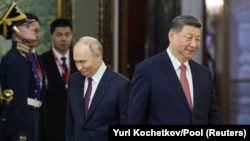
The future of the Power of Siberia-2 also made headlines in September 2025, when Aleksei Miller, chief executive of the Russian energy giant Gazprom, announced that a legally binding memorandum on the pipeline had been reached between Beijing and Moscow.
But that document does not constitute a green light on the ambitious multibillion-dollar project and many of the key details that could determine its future -- such as the price of gas, the volume that will pass through the pipeline, and who will foot the bill for its construction -- remain unresolved.
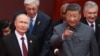
Chinese officials were conspicuously silent in the announcement’s aftermath. State media referenced the negotiations only by citing Russian or international reporting. When Xi Jinping, Vladimir Putin, and Mongolian President Ukhnaagiin Khurelsukh met in Beijing in September 2025, Chinese media quoted Xi as saying only that "hard connectivity" should be a focus of future relations among the three countries.
Talks have stalled and restarted for years as Beijing pursued diversification to avoid overdependence on any single supplier.
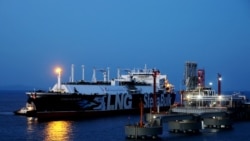
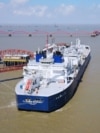
Russia is already the country's largest supplier of pipeline gas thanks to the Power of Siberia-1, which became operational in 2019 under a 30-year, $400 billion deal and is now the third-largest provider of LNG after Australia and Qatar.
The project has long been more urgent for Moscow than for Beijing. Russia lost its biggest energy market when gas exports to Europe collapsed after the full-scale invasion of Ukraine in 2022, and the Kremlin has hoped the pipeline could compensate for at least part of that loss.
But the ongoing crisis in the Strait of Hormuz brought by the war in Iran could change that calculus.
Analysts say two variables remain central to whether a deal gets done: Beijing has pushed in negotiations to pay close to Russia’s own heavily-subsidized domestic prices for gas and has also sought to commit to only 50 percent of the pipeline's planned annual capacity of 50 billion cubic meters of gas, well below the typical 80 percent threshold.
If Moscow moves on both fronts, the pipeline becomes a more compelling security hedge for Beijing, but reaching those concessions could require China picking up a larger portion of the construction costs in exchange. That could create another sticking point in negotiations, however, with Beijing likely to take a large ownership stake in return.
“The Russian economy is not in a good condition right now and it's unclear where Moscow would find the massive sum required for this project,” Chigadaev said.
China's Quandary On More Russian Gas
China has so far managed to withstand the worst shocks of the energy crisis brought by war in the Middle East thanks to diversified supply, falling demand at home, and strategic reserves.
According to Kpler, a commodity intelligence firm, Chinese refineries have stockpiled between 1.2 and 1.4 billion barrels of oil as of the end of 2025, which could last up to three months. Teapot Chinese refiners are also expected to turn to Iranian and Russian oil in floating storage across Asia to maintain supply flows.

A July 2025 study by the Rhodium Group estimated that China's growing electric vehicle fleet is reducing oil demand by more than 1 million barrels per day. That level is likely to rise further by around 600,000 barrels per day over the next year. Beijing is also likely to accelerate its push to become more energy self-sufficient by producing more oil and gas at home but also by transitioning its power system away from fossil fuels altogether.
In the meantime, overland pipeline gas offers China a potential offramp.
Beyond the Power of Siberia-2, China is also looking at Turkmenistan. Gurbanguly Berdymukhamedov, the Central Asian country’s former president who still wields paramount authority through a separate power structure, announced plans to expand gas production during a March 21 meeting with Xi in Beijing.
Turkmenistan is already a major provider of natural gas to China through an overland pipeline and Berdymukhamedov authorized the state energy firm Turkmengaz to contract a subsidiary of China National Petroleum Corporation (CNPC) to build a new gas-processing facility with a capacity of 10 billion cubic meters (bcm) per year.
In addition to the proposed Power of Siberia-2, the Russia-China Far Eastern natural gas pipeline, designed to carry up to 12 bcm annually from Sakhalin Island, is set to start operations in January 2027.
That leaves China with short-term options as it navigates energy disruptions and negotiates with Moscow.
“It comes down to price and flexibility on volume,” said Downs. “If Moscow can meet Beijing, then I could see Power of Siberia-2 appealing as a backup source of supply for the Chinese.”