




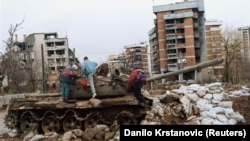
They spent their childhoods counting victims, listening to detonations and military helicopters, hearing stories of horrors, and speaking their first words as refugees.
December 2025 marked 30 years since the war in Bosnia-Herzegovina ended. Over the same period, Chechnya endured two devastating wars, while the Taliban disappeared from power in Afghanistan only to return two decades later.
Generations born as the world emerged from the Cold War came of age in states whose instability would mark them forever.
From Bosnia to Chechnya to Afghanistan, RFE/RL spoke with three people whose lives were shaped by the conflicts that defined their childhoods.
Bosnia's Dayton Generation
Nermin Mameledzija was born just months before the signing of the Dayton peace agreement that ended the war in Bosnia-Herzegovina, a conflict that killed around 100,000 people.
His parents had fled to Germany from their hometown of Turbe, and Nermin spent his first years there before the family returned to Bosnia.
"We really had a fairy-tale childhood," Nermin, 30, told RFE/RL from Braunschweig, Germany. "The neighborhood raised us, they gave you a slice of bread and you were gone all day."
However, although he grew up in peacetime Turbe, a small town in central Bosnia, the country around him remained damaged and divided.
The divisions left by Dayton became clear in elementary school. He attended a system of "two schools under one roof," where children were separated by ethnicity despite following almost identical curriculums.

After university, Nermin returned to Germany. He has never worked in Bosnia.
"What pushed me away from Bosnia was the injustice. For everything you need connections, you have to work your way around things," he said.
Bosnia-Herzegovina ranks as the second-most corrupt country in Europe, according to Transparency International. And a UN Population Fund study shows that every second citizen aged 18 to 29 is considering moving elsewhere.

When RFE/RL spoke to Nermin five years ago on the 25th anniversary of the peace accords, he hoped he would not become one of them. He was a final-year dentistry student at the time and wanted a job in Bosnia so that "Austria or Germany wouldn't get a fully trained worker."
"I would never give up my passport. That's the last thing that ties me to Bosnia," he says now. "Bosnia gave me everything…. But everyone has the right to decide what they want and where they want to be."
Today, when he speaks to his family online, neither of his sisters lives in Bosnia, either.
'I Still Feel Vulnerable' -- Scarred By Chechen Conflict
Some 3,000 kilometers from Sarajevo as it was emerging from war, residents of Grozny were taking shelter in basements.
When the First Chechen War ended in August 1996, 8-year-old Hava returned to her family's apartment to find it burned down. She would spend several weeks living in a cellar as bombs fell over the Chechen capital.

Three years later, the Second Chechen War began. Hava's family fled, taking refuge in her grandmother's village. They returned to Grozny after four years to find a devastated city still under a state of emergency.
"When you're a child you're isolated from everything," she told RFE/RL. "You understand what's happening, and then you play stupid games where you count military planes or helicopters you saw that day and compete with friends over who saw more."
Jasminko Halilovic of the War Childhood Museum in Sarajevo suggests such behaviors are attempts by children to impose order on chaos.
"Counting detonations, collecting shrapnel, building shelters out of pillows -- all of these can be interpreted as attempts to regain control over a world that has become unpredictable," he said.
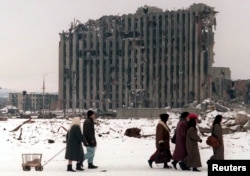
Hava, who asked that her surname not be published, remembers days without water or electricity, nights under curfew, and doing homework by gas lamp. More than 25,000 people were killed in the Second Chechen War, with thousands still unaccounted for.
Since 2007, the Russian region has been ruled by Ramzan Kadyrov, widely accused of human rights abuses. The United States sanctioned him in 2020.
Now working as a researcher in Serbia, Hava has not lived in Chechnya for two years but says she would return if corruption eased and reforms were introduced.
"Russia has to change for me to return to Chechnya," she said. "And it has to change in a way that would positively reflect on Chechnya."
Although the war ended years ago, she believes her generation has never known true stability.
"I still feel vulnerable because I can't go back, and I am in another country trying to figure out how things work," she said.
'School Seemed Like A Dream' In Afghanistan
When the Taliban first captured Kabul in 1996, Nilofar Ebrahemi was 3 years old and wore boys' clothes.
"My parents dressed me as a boy, maybe because they wanted more sons or maybe because of the security situation," she said.
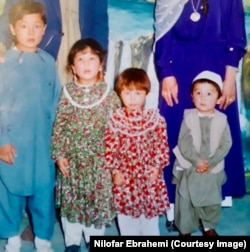
Nilofar only came to understand she was a girl when a religious teacher told her to wear a head scarf at age 8.
"I wasn't who I was," she said. "I never played with dolls, with girls. I never cried because my father told me I had to be brave like a boy."
Under the Taliban, no one in her family could work. Sometimes they could not even afford tea and drank boiled water instead. Her mother, who wore a burqa, was once whipped, and Nilofar was banned from school.
"School seemed like a dream," she said. "I remember just wondering…whether there were places in the world where girls went to school or if all children were like us."
She learned to count and write from her father, who believed children must be ready for better times.
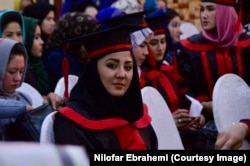
Nilofar finally entered school after 2001, when US forces began the war against the Taliban as Hamid Karzai emerged as Afghanistan's interim leader and later became president. Life remained dangerous.
"There would be an explosion one day, in the morning the blood would be washed off the street, and then people would continue crossing. It became completely normal," she said.
Nilofar graduated from university, earned a scholarship for a master's degree in India, and returned in late 2020 to teach at a private university. She also freelanced in media and worked on climate projects.
This lasted only six months. Everything changed in August 2021, when US and allied forces withdrew after nearly 20 years and the Taliban returned to power.
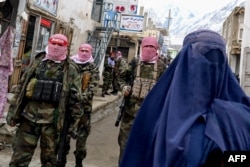
Restrictions on women soon erased most of her rights. She could no longer work, study, or move freely. "I am a woman who studied, who planned doctoral studies, who wanted to work, and all of it was destroyed," she said.
Her passport had expired, and when she renewed it, it was too late to flee. In Kabul, she ran a tailoring project for women until "a man who looked like Taliban intelligence officer showed me his gun and simply said, 'Do you see this?'"

Nilofar is now in Tehran seeking a visa for Europe. Embassies ask for proof that the situation back home is bad for women, she said, though "the whole world knows what is happening in Afghanistan."
If her application is rejected, she must return. "I don't know what will happen to me," she said.
She sometimes envies uneducated women. "They stayed at home both then and now," she said. "I fought to study, to work, and spent all that time only to end up with nothing."
Dreams Of Home
Thirty years after Dayton, the Bosnia that shaped Nermin's childhood still struggles to change. He says, though, that he would still like to go back eventually, despite having a wife in Germany and much better options for pursuing a specialization in oral surgery.
Hava also dreams of returning to Chechnya one day. "I dream of having a small house in the mountains and maybe a guesthouse for tourists…a few chickens, cats, and maybe a goat," she said.
Nilofar's dream of studying in Afghanistan came true briefly, until the Taliban's return took it away again. Now she only hopes to leave behind a country "where women live as if in a cage."
Nearly three decades ago, a 1996 UN report on children and conflict warned that many would grow up "deprived of material and emotional needs." with "the entire fabric of their societies…torn to pieces."
Its words still echo today in the lives of Nermin, Hava, and Nilofar.