As local and regional elections unfolded across Crimea on September 14, the smell of fried meat pies filled the streets in the city of Bakhchysarai.
Crimean Tatars, an indigenous population of the peninsula, have actively boycotted the vote -- the first local elections since Russia annexed Crimea from Ukraine in March.
In Bakhchysarai, an ancient city that once served as the capital of the Crimean khanate, some Crimean Tatars chose to snub the vote by demonstratively staying home and cooking a traditional Crimean Tatar dish: meat pies known as "chebureki."
"What elections?" scoffs Gulzara, a Crimean Tatar living in Bakhchysarai, as she molds the half-moon-shaped pasties. "Everything has long been decided for us."
The initiative, dubbed "Chebureki Instead Of Elections," aimed to peacefully reject the legitimacy of Crimea's new Moscow-backed authorities while upholding Crimean Tatar culture.
Gulzara says the protest was a success.
"It was great," she says. "I had plenty of guests, people who also didn't take part in the election."
Residents of the Black Sea peninsula were voting to select lawmakers for the parliaments of Crimea and the city of Sevastopol, and for local city council members.
Lawmakers will then elect governors for Crimea and Sevastopol.
A preliminary count gave the ruling United Russia party a strong lead with more than 70 percent of votes, trailed by the nationalist Liberal Democratic Party of Russia with just over 8 percent of the ballots.
In Sevastopol, which voted separately, United Russia had captured 59 percent of the vote with half the ballots counted.
Critics, however, reject the vote as both illegitimate and flawed.
A leading independent Russian election watchdog, Golos, said its observers were prevented from entering several polling stations in Crimea.
Crimea Votes In First Elections Since Annexation By Russia
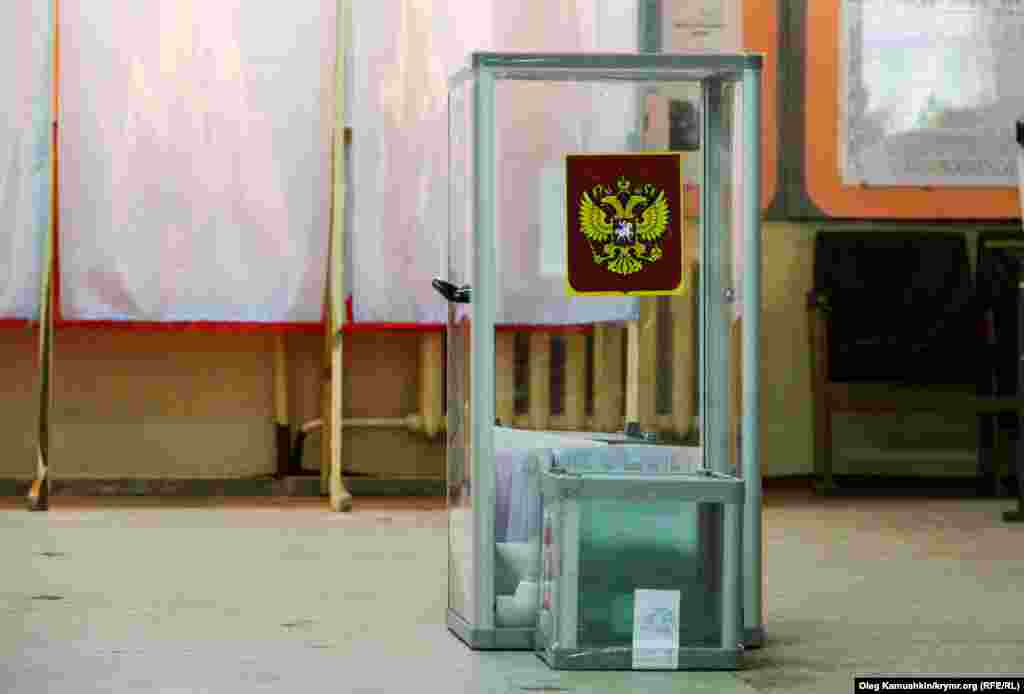
1/10At a polling station in Simferopol, Russia's double-headed eagle has replaced the Ukrainian emblem.
Voters in Crimea went to the polls on September 14 to elect local city councilors and lawmakers in the regional parliaments of Crimea and Sevastopol. The election was the first since Russia annexed the peninsula from Ukraine in March. Ethnic Crimean Tatars boycotted the vote to show their rejection of the legitimacy of Crimea's new Moscow-backed authorities. (RFE/RL)
Show moreShow less
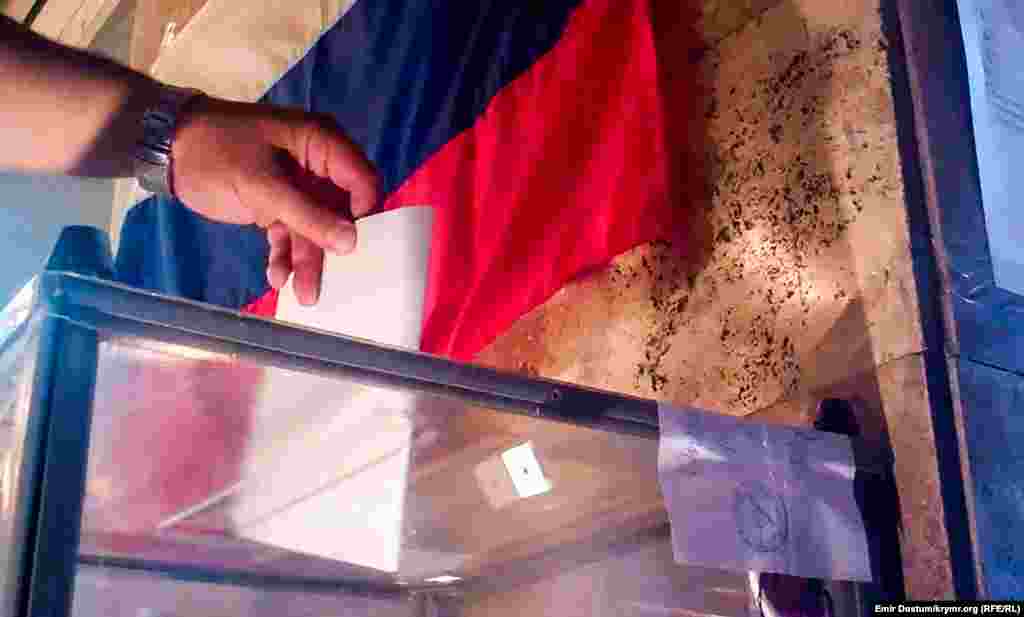
2/10Irregularities were reported soon after the polling stations opened.
Voters in Crimea went to the polls on September 14 to elect local city councilors and lawmakers in the regional parliaments of Crimea and Sevastopol. The election was the first since Russia annexed the peninsula from Ukraine in March. Ethnic Crimean Tatars boycotted the vote to show their rejection of the legitimacy of Crimea's new Moscow-backed authorities. (RFE/RL)
Show moreShow less
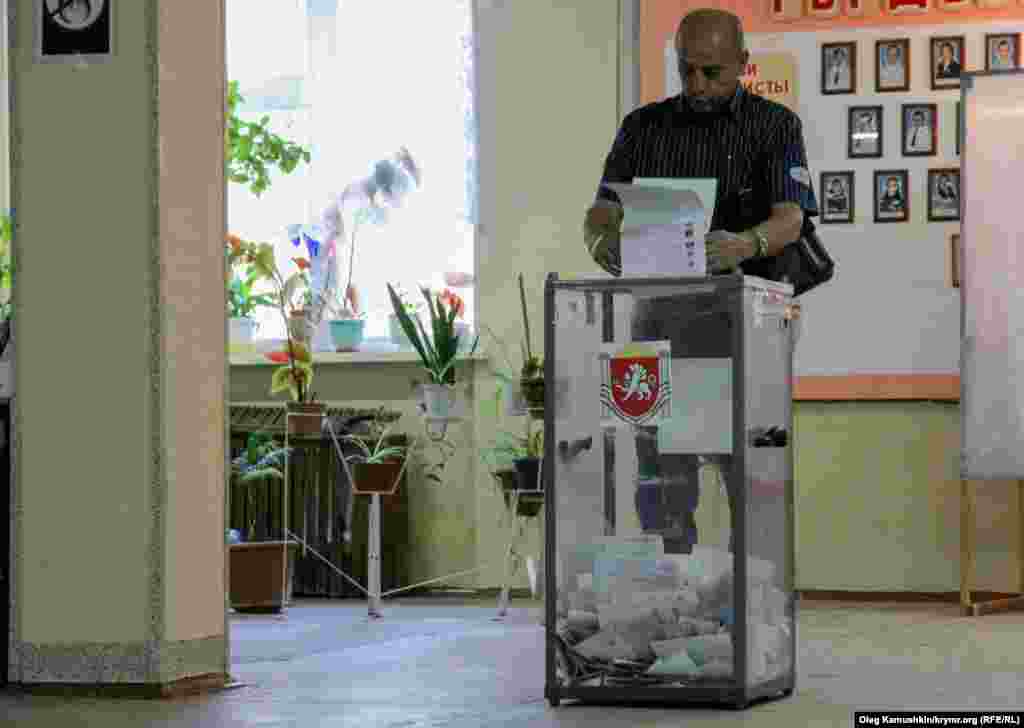
3/10A man casts his ballot in Simferopol.
Voters in Crimea went to the polls on September 14 to elect local city councilors and lawmakers in the regional parliaments of Crimea and Sevastopol. The election was the first since Russia annexed the peninsula from Ukraine in March. Ethnic Crimean Tatars boycotted the vote to show their rejection of the legitimacy of Crimea's new Moscow-backed authorities. (RFE/RL)
Show moreShow less
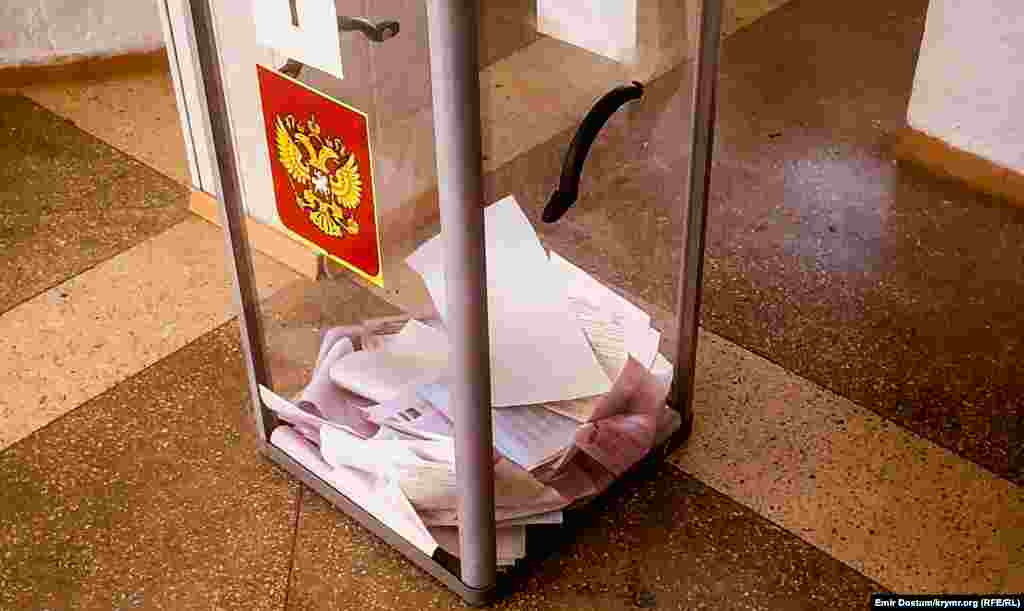
4/10Turnout was reportedly lower than during the independence referendum that paved the way for Russia's takeover in March.
Voters in Crimea went to the polls on September 14 to elect local city councilors and lawmakers in the regional parliaments of Crimea and Sevastopol. The election was the first since Russia annexed the peninsula from Ukraine in March. Ethnic Crimean Tatars boycotted the vote to show their rejection of the legitimacy of Crimea's new Moscow-backed authorities. (RFE/RL)
Show moreShow less
5/10A voter studies the ballot. Many residents of Crimea, voting in a Russian election for the first time, are unfamiliar with Russian political parties.
Voters in Crimea went to the polls on September 14 to elect local city councilors and lawmakers in the regional parliaments of Crimea and Sevastopol. The election was the first since Russia annexed the peninsula from Ukraine in March. Ethnic Crimean Tatars boycotted the vote to show their rejection of the legitimacy of Crimea's new Moscow-backed authorities. (RFE/RL)
Show moreShow less
6/10A quiet moment at a polling station
Voters in Crimea went to the polls on September 14 to elect local city councilors and lawmakers in the regional parliaments of Crimea and Sevastopol. The election was the first since Russia annexed the peninsula from Ukraine in March. Ethnic Crimean Tatars boycotted the vote to show their rejection of the legitimacy of Crimea's new Moscow-backed authorities. (RFE/RL)
Show moreShow less
7/10
Voters in Crimea went to the polls on September 14 to elect local city councilors and lawmakers in the regional parliaments of Crimea and Sevastopol. The election was the first since Russia annexed the peninsula from Ukraine in March. Ethnic Crimean Tatars boycotted the vote to show their rejection of the legitimacy of Crimea's new Moscow-backed authorities. (RFE/RL)
Show moreShow less
8/10Election officials reported voter turnout at 60 percent.
Voters in Crimea went to the polls on September 14 to elect local city councilors and lawmakers in the regional parliaments of Crimea and Sevastopol. The election was the first since Russia annexed the peninsula from Ukraine in March. Ethnic Crimean Tatars boycotted the vote to show their rejection of the legitimacy of Crimea's new Moscow-backed authorities. (RFE/RL)
Show moreShow less
9/10Police, self-defense groups, election observers, and officials of the Emergency Ministry were all on watch at polling stations.
Voters in Crimea went to the polls on September 14 to elect local city councilors and lawmakers in the regional parliaments of Crimea and Sevastopol. The election was the first since Russia annexed the peninsula from Ukraine in March. Ethnic Crimean Tatars boycotted the vote to show their rejection of the legitimacy of Crimea's new Moscow-backed authorities. (RFE/RL)
Show moreShow less
10/10
Voters in Crimea went to the polls on September 14 to elect local city councilors and lawmakers in the regional parliaments of Crimea and Sevastopol. The election was the first since Russia annexed the peninsula from Ukraine in March. Ethnic Crimean Tatars boycotted the vote to show their rejection of the legitimacy of Crimea's new Moscow-backed authorities. (RFE/RL)
Show moreShow less
Previous slide
Next slide
The election took place against the backdrop of increasing pressure on Crimean Tatars, who are facing raids on their homes, religious institutions, businesses and schools.
"Such actions are clearly disproportionate and create an atmosphere of fear and intimidation," Nils Muižnieks, the Council of Europe's human rights commissioner, said on September 12 following a visit to Crimea.
Muižnieks said it was "essential to create a sense of security not only for Crimean Tatars but also for ethnic Ukrainians and those who have expressed critical views of recent political developments."