



Accessibility links

Breaking News

You Say Crimea, They Say Taurida

The last Russian tsar, Nicholas II, and his wife, Empress Aleksandra, sightseeing on the Ai-Petri mountain peak outside Yalta in 1909
1/14 The last Russian tsar, Nicholas II, and his wife, Empress Aleksandra, sightseeing on the Ai-Petri mountain peak outside Yalta in 1909
With its Crimean takeover, Russia has not only expanded its borders -- it's also reclaimed miles of sunny, storied beachfront property. Here's a look at Crimea's history as a prime holiday destination.
Soviet leader Josef Stalin spent summer breaks at Yalta's Massandra Palace, and famously hosted British Prime Minister Winston Churchill and U.S. President Franklin Roosevelt for the Yalta Conference in 1945.
2/14 Soviet leader Josef Stalin spent summer breaks at Yalta's Massandra Palace, and famously hosted British Prime Minister Winston Churchill and U.S. President Franklin Roosevelt for the Yalta Conference in 1945.
With its Crimean takeover, Russia has not only expanded its borders -- it's also reclaimed miles of sunny, storied beachfront property. Here's a look at Crimea's history as a prime holiday destination.
Soviet luminaries like cosmonaut Yury Gagarin, the first man in space, were also frequent visitors to Crimea. Here, Gagarin (smoking) and composer Aleksandra Pakhmutova (far right) during a fishing trip in the resort town of Hurzuf in June 1965. 
3/14 Soviet luminaries like cosmonaut Yury Gagarin, the first man in space, were also frequent visitors to Crimea. Here, Gagarin (smoking) and composer Aleksandra Pakhmutova (far right) during a fishing trip in the resort town of Hurzuf in June 1965. 
With its Crimean takeover, Russia has not only expanded its borders -- it's also reclaimed miles of sunny, storied beachfront property. Here's a look at Crimea's history as a prime holiday destination.
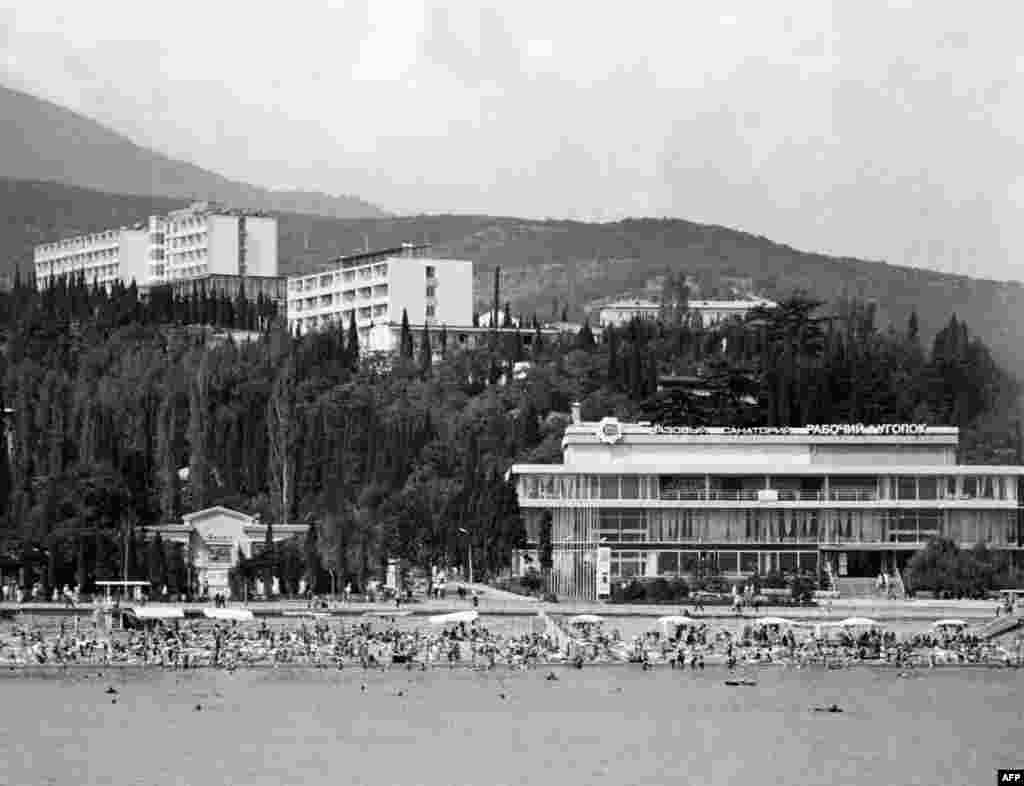
Crimea was also a key destination for well-placed Soviet citizens, who competed at work and school for highly prized "kurorty," or spa trips, at resorts like the Rabochy Ugolok (Workers' Corner) in Alushta.
4/14 Crimea was also a key destination for well-placed Soviet citizens, who competed at work and school for highly prized "kurorty," or spa trips, at resorts like the Rabochy Ugolok (Workers' Corner) in Alushta.
With its Crimean takeover, Russia has not only expanded its borders -- it's also reclaimed miles of sunny, storied beachfront property. Here's a look at Crimea's history as a prime holiday destination.
Vacationers enjoy a low-frills aerial lift in Yalta, 1968.
5/14 Vacationers enjoy a low-frills aerial lift in Yalta, 1968.
With its Crimean takeover, Russia has not only expanded its borders -- it's also reclaimed miles of sunny, storied beachfront property. Here's a look at Crimea's history as a prime holiday destination.
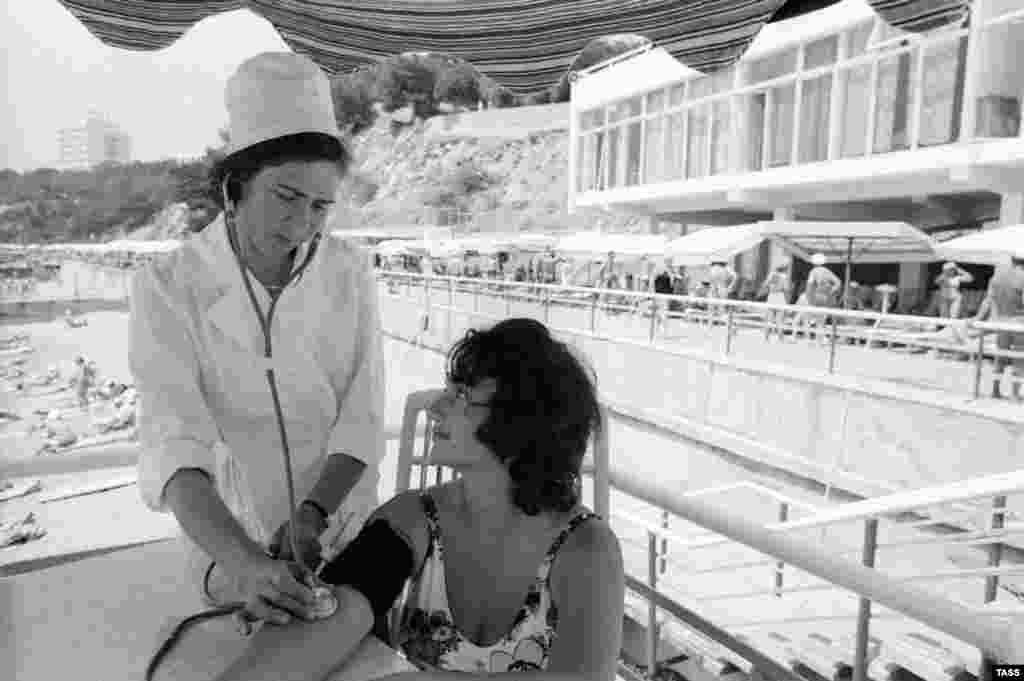
A beachside nurse at the Ukraina sanatorium perfoms a check-up on a vacationer from Kabardino-Balkaria in 1977. 
6/14 A beachside nurse at the Ukraina sanatorium perfoms a check-up on a vacationer from Kabardino-Balkaria in 1977. 
With its Crimean takeover, Russia has not only expanded its borders -- it's also reclaimed miles of sunny, storied beachfront property. Here's a look at Crimea's history as a prime holiday destination.
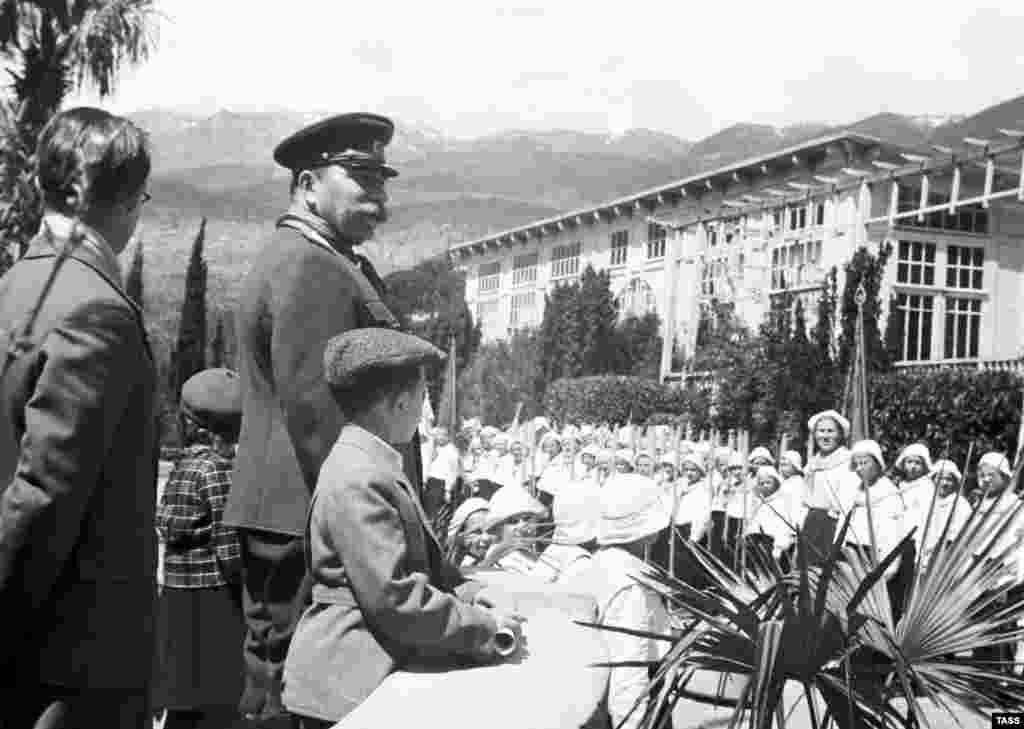
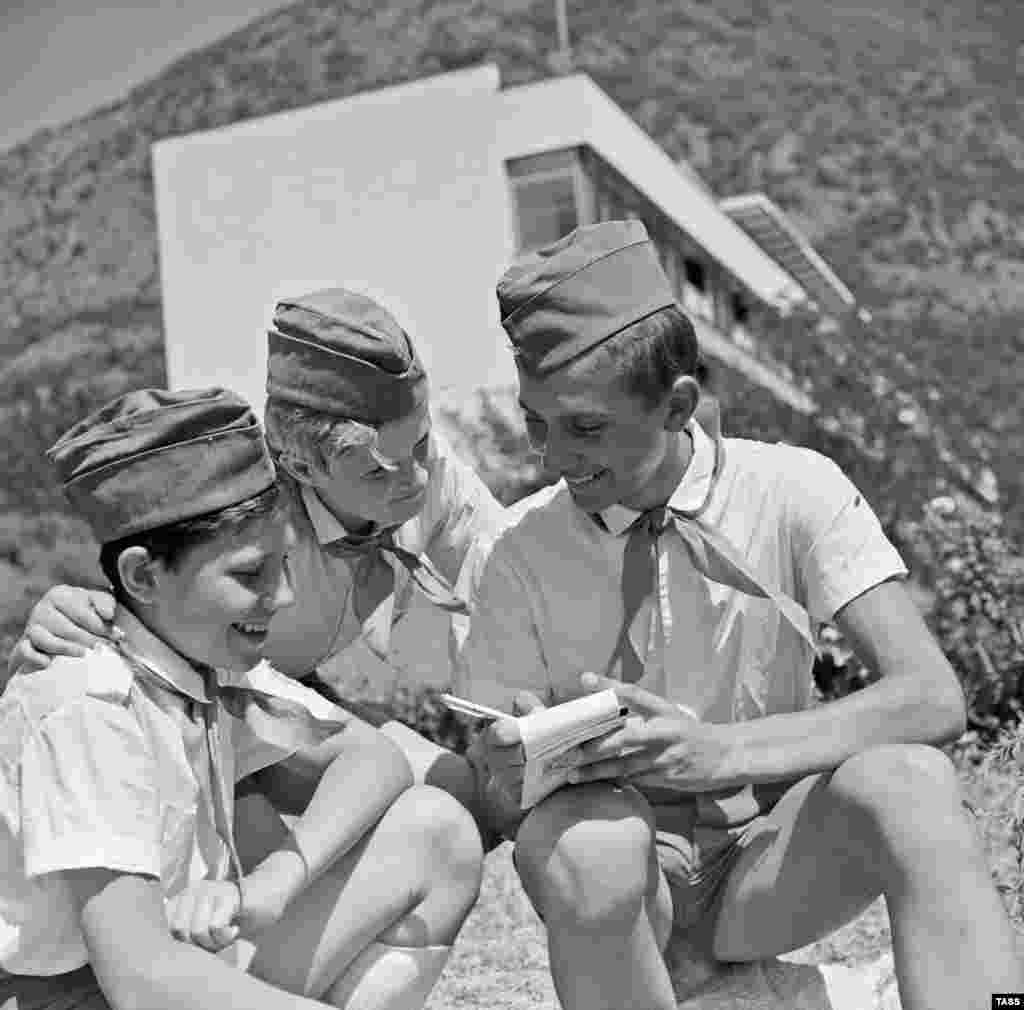
Nor was Crimea only for adults. It was also the site of Artek, a deluxe Young Pioneer camp for the offspring of Soviet bureaucrats and other children lucky enough to secure a spot through academic or athletic achievement. Marshal of the Soviet Union Semyon Budyonny pays a visit to the camp in 1946.
7/14 Nor was Crimea only for adults. It was also the site of Artek, a deluxe Young Pioneer camp for the offspring of Soviet bureaucrats and other children lucky enough to secure a spot through academic or athletic achievement. Marshal of the Soviet Union Semyon Budyonny pays a visit to the camp in 1946.
With its Crimean takeover, Russia has not only expanded its borders -- it's also reclaimed miles of sunny, storied beachfront property. Here's a look at Crimea's history as a prime holiday destination.
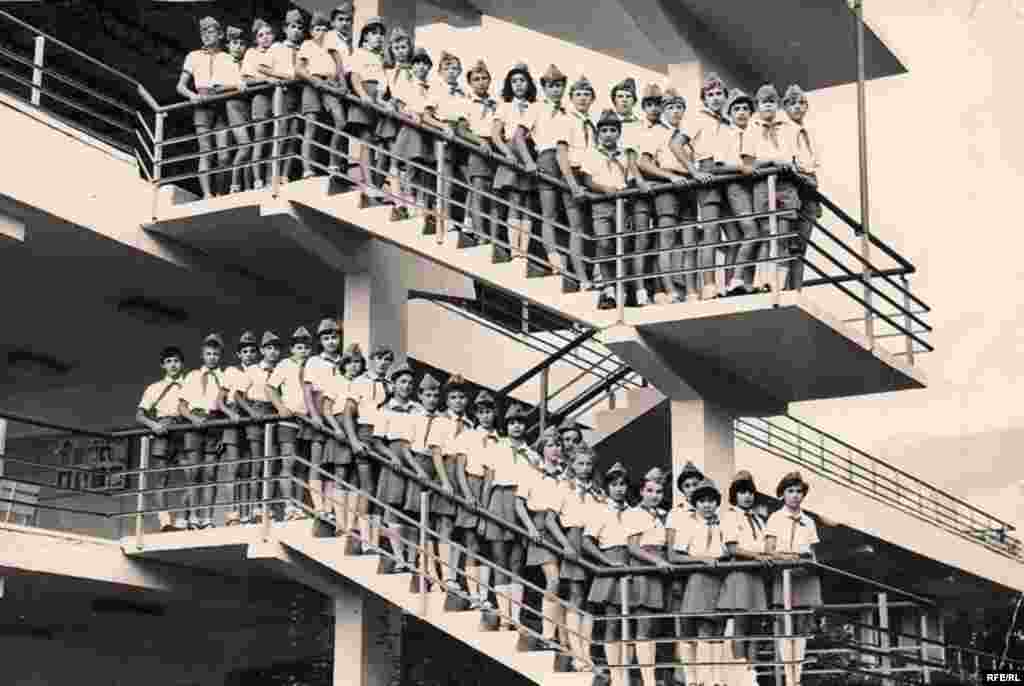
Young Pioneers line up for a group portrait. Because of the warm climate, Artek operated year-round. At its peak it hosted 27,000 children a year. 
8/14 Young Pioneers line up for a group portrait. Because of the warm climate, Artek operated year-round. At its peak it hosted 27,000 children a year. 
With its Crimean takeover, Russia has not only expanded its borders -- it's also reclaimed miles of sunny, storied beachfront property. Here's a look at Crimea's history as a prime holiday destination.
Artek vacationers in 1972. The camp featured three swimming pools, a film studio, and a 7,000-seat stadium for performances and sporting events. 
9/14 Artek vacationers in 1972. The camp featured three swimming pools, a film studio, and a 7,000-seat stadium for performances and sporting events. 
With its Crimean takeover, Russia has not only expanded its borders -- it's also reclaimed miles of sunny, storied beachfront property. Here's a look at Crimea's history as a prime holiday destination.
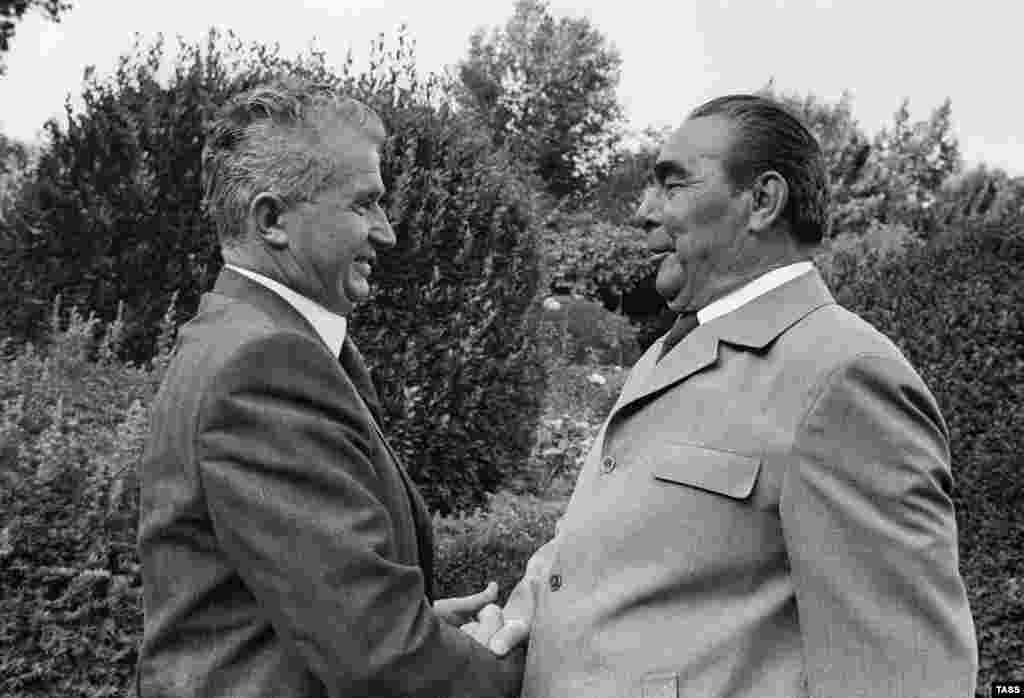
Romania's Nicolae Ceausescu meets with Soviet leader Leonid Brezhnev in Yalta in 1976. Brezhnev was a frequent visitor to Crimea, and continued the trend of hosting foreign guests from both inside and outside the communist bloc.
10/14 Romania's Nicolae Ceausescu meets with Soviet leader Leonid Brezhnev in Yalta in 1976. Brezhnev was a frequent visitor to Crimea, and continued the trend of hosting foreign guests from both inside and outside the communist bloc.
With its Crimean takeover, Russia has not only expanded its borders -- it's also reclaimed miles of sunny, storied beachfront property. Here's a look at Crimea's history as a prime holiday destination.
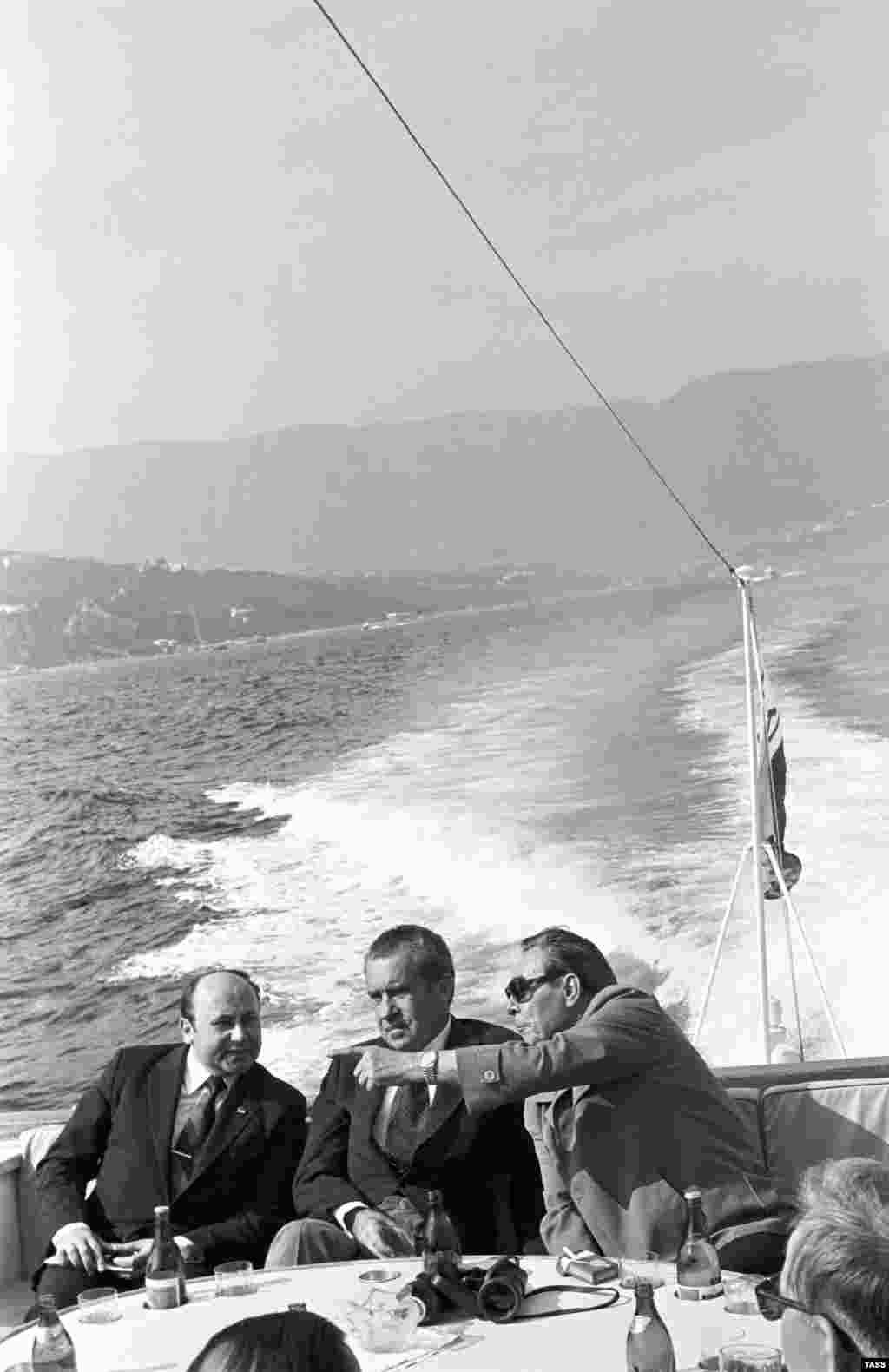
Despite East-West tensions, Brezhnev and U.S. President Richard Nixon shared a suprising number of relaxing moments. The Cold War adversaries went on a Black Sea boat trip during Nixon's trip to Crimea in 1974. 
11/14 Despite East-West tensions, Brezhnev and U.S. President Richard Nixon shared a suprising number of relaxing moments. The Cold War adversaries went on a Black Sea boat trip during Nixon's trip to Crimea in 1974. 
With its Crimean takeover, Russia has not only expanded its borders -- it's also reclaimed miles of sunny, storied beachfront property. Here's a look at Crimea's history as a prime holiday destination.
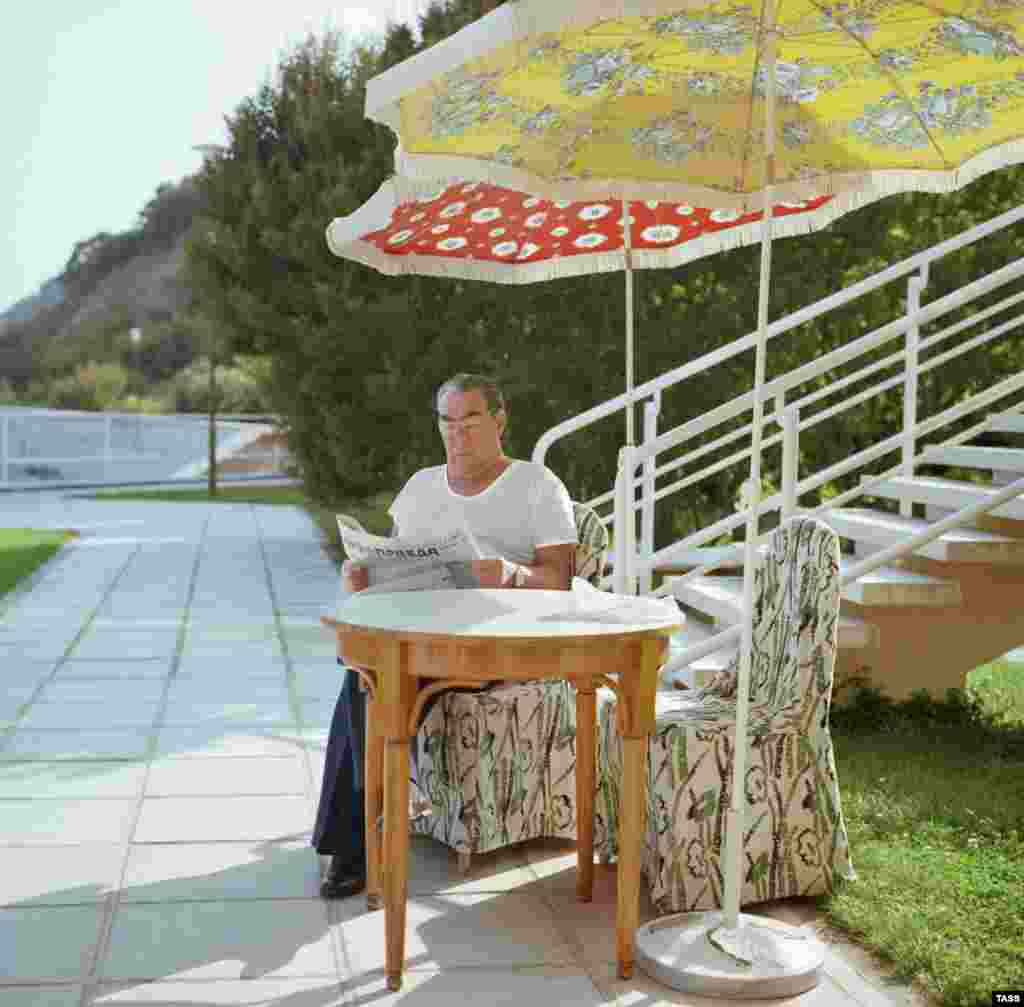
Finally, some alone time: Brezhnev reading "Pravda" during a Crimea vacation in 1978.
12/14 Finally, some alone time: Brezhnev reading "Pravda" during a Crimea vacation in 1978.
With its Crimean takeover, Russia has not only expanded its borders -- it's also reclaimed miles of sunny, storied beachfront property. Here's a look at Crimea's history as a prime holiday destination.
Ukrainian President Leonid Kuchma (left) and Russian President Vladimir Putin hold a walking meeting in Yalta in May 2003.
13/14 Ukrainian President Leonid Kuchma (left) and Russian President Vladimir Putin hold a walking meeting in Yalta in May 2003.
With its Crimean takeover, Russia has not only expanded its borders -- it's also reclaimed miles of sunny, storied beachfront property. Here's a look at Crimea's history as a prime holiday destination.
Putin visiting with campers -- now wearing blue scarves instead of communist-era red -- at Artek in 2001. After the collapse of the Soviet Union, the camp was changed from a Young Pioneer site to an "international children's center."
14/14 Putin visiting with campers -- now wearing blue scarves instead of communist-era red -- at Artek in 2001. After the collapse of the Soviet Union, the camp was changed from a Young Pioneer site to an "international children's center."
With its Crimean takeover, Russia has not only expanded its borders -- it's also reclaimed miles of sunny, storied beachfront property. Here's a look at Crimea's history as a prime holiday destination.
Previous slide
Next slide

MOSCOW -- Crimea Is Ours has been a popular patriotic rallying cry for Russians since the annexation of the peninsula from Ukraine 10 months ago.

But now some Russian officials are claiming that Crimea isn't even really Crimea -- it's Taurida.

The idea of renaming Crimea was first floated by the bombastic nationalist Vladimir Zhirinovsky, who noted in an interview with the pro-Kremlin website LifeNews on January 1 that the peninsula's original Greek name was Taurida and was later changed to the Turkic Crimea.

"The first given names should be used everywhere!” Zhirinovsky said, noting that the Crimean cities of Sevastopol, Feodosiya, Kerch, and Yevpatoria all have Greek names.

Zhirinovsky is often used as a stalking horse by the Kremlin, making outrageous statements that later become official policy. And the idea of renaming Crimea appears to be picking up momentum.
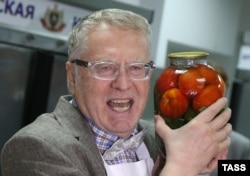
Vladimir Zhirinovsky: "The first given names should be used everywhere!”

Sergei Tsekov, who represents Crimea in the Federation Council, the upper house of Russia's parliament, said the idea was worth considering

"I don’t think we can get away from the word ‘Crimea.’ I don’t rule out that it could be Crimea-Taurida or Taurida-Crimea," Tsekov said, according to media reports.

Tsekov noted that the idea "could stir up a certain amount of fire," adding that he was "prepared to discuss this issue, but not to fiercely advocate it."

The ancient Greeks set up settlements along the coast of Crimea in the 6th and 7th centuries and named the region Taurica after the Tauri people who lived there.

The peninsula changed hands various times, falling under the Crimean Khanate, a Turko-Mongol vassal state of the Ottoman Empire from 1441 until 1783, when it was annexed by the Russian Empire under Catherine the Great. The name was Russified as the Taurida Oblast, a territory that also included parts of what are today southern Ukraine.

The name Crimea gradually came into colloquial usage in the 18th and 19th centuries.

In the chaos following the 1917 Bolshevik Revolution and subsequent civil war in Russia, the ethnic Tatar government on the peninsula briefly established the Crimean People's Republic on December 13, 1917. But it was overrun by the Bolsheviks in January 1918 and changed hands between the Red and White forces several times in the civil war.

The peninsula was finally incorporated into the Soviet Union as the Crimean Autonomous Soviet Socialist Republic in 1921.

Many Russian place names have Turkic roots due to the Mongol-Tatar rule from the 13th to the 15th centuries. The Russian word for Kremlin -- Kreml -- is widely believed to come from the Turkic word for "fortress." It is the same as the Turkic root for the Russian word for Crimea, Krym.

  • 16x9 Image

    Tom Balmforth

    Tom Balmforth covers Russia and other former Soviet republics from his base in Moscow.


This item is part of
XS
SM
MD
LG