Accessibility links

Breaking News

Georgian Protesters Describe Injuries, Beatings Amid Police Crackdown

Updated
Eyewitnesses, including three injured men, told RFE/RL that what they called "provocateurs" arrived by car around 1 a.m. and physically assaulted some of the protesters. This image is from Georgia's 1TV channel.

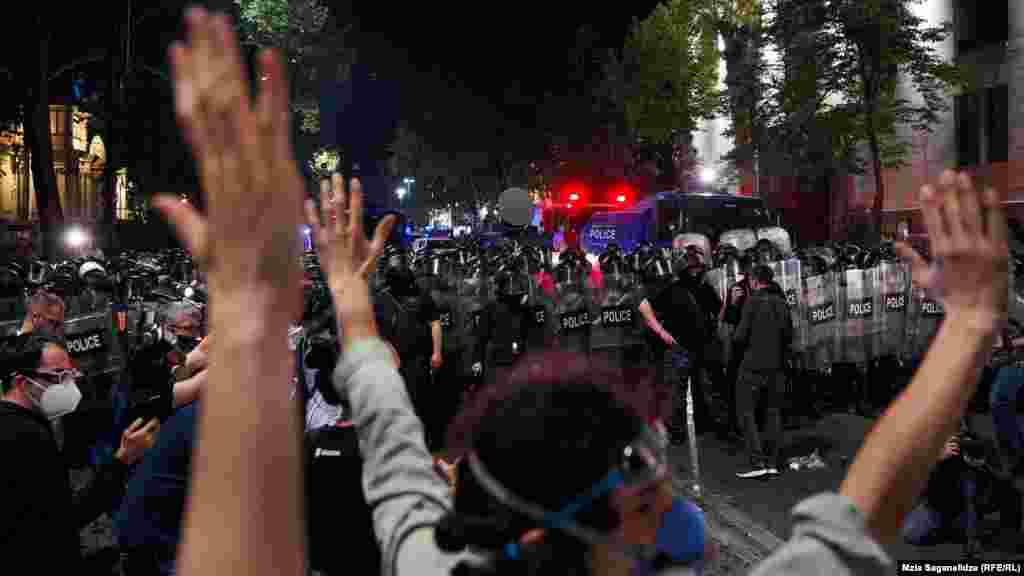
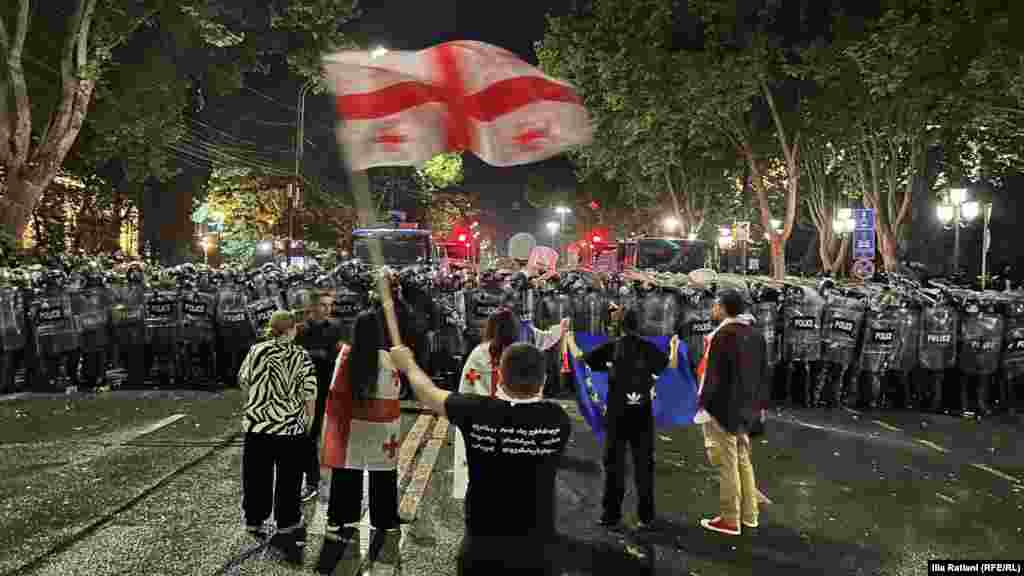
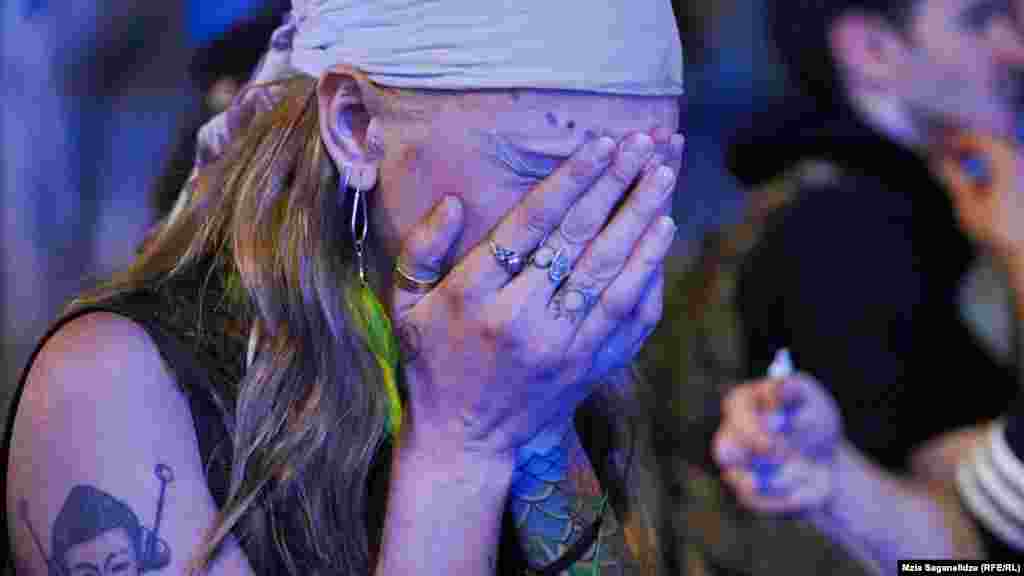
TBILISI -- Protesters who rallied against the Georgian government's plan to approve a controversial "foreign agent" law say they were beaten by security forces who launched a violent crackdown with water cannons, volleys of tear gas, and, according to some eyewitnesses, rubber bullets.

Tensions remained high as tens of thousands of people returned to the streets late on May 3 as the standoff continued between the government and demonstrators who have been staging mass protests in the center of the South Caucasus country's capital.

Tbilisi's main Rustaveli Avenue once again appeared blocked late on May 3 and early into the morning, with some protesters holding candles and EU and Georgian flags in the Kashveti Church.

Thousands of protesters moved to an area near the Paragraph Hotel, where a meeting of the Asian Development Bank is being held. The hotel is owned by an investment fund controlled by former Prime Minister Bidzina Ivanishvili, the influential billionaire founder of the ruling Georgian Dream party

At least one person was detained near the hotel for allegedly “insulting” police officers, the head of the Tbilisi Police Patrol told RFE/RL.

Authorities said police had arrested at least 23 people overnight, bringing the total to at least 100 detained over the past three days. The Interior Ministry told RFE/RL that detainees have been accused of administrative offenses, petty hooliganism, and disobeying police officers.

Eyewitnesses, including two injured men, told RFE/RL that what they called "provocateurs" arrived by car around 1 a.m. in Heroes' Square and physically assaulted some of the protesters.
Injured Reporter Says Georgian Police Used Rubber Bullets Against Protesters
please wait

No media source currently available

0:00 0:02:17 0:00

It was the continuation of days of protests over the proposed law, denounced by opponents as being inspired by similar repressive legislation in Russia that Moscow has used to stifle dissent.

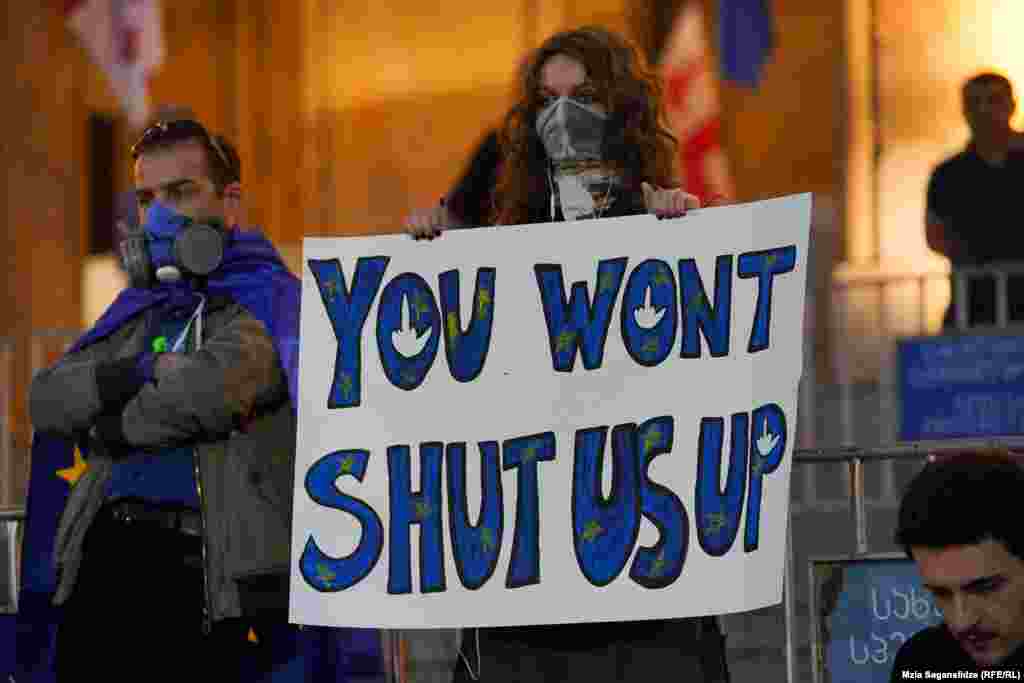
The bill would require organizations receiving more than 20 percent of their funding from abroad to register as "agents of foreign influence." Opponents warn that implementing the law could jeopardize the country's move toward European Union membership.

The bill was passed in a second reading on May 1, followed by a violent crackdown by riot police against demonstrators that ended with some 15 people being hospitalized. A parliamentary session on May 2 was subsequently canceled.

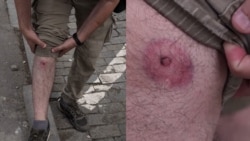
In at least eight cases on May 1, the victims claimed that, in addition to water cannons and tear gas, police also used rubber bullets. RFE/RL gathered eyewitness accounts, photographic evidence of injuries, interviewed three of the injured, and filmed the rubber bullets at the scene where they were reportedly fired.

Tbilisi Tense As Georgians Continue Protests, Despite Crackdown
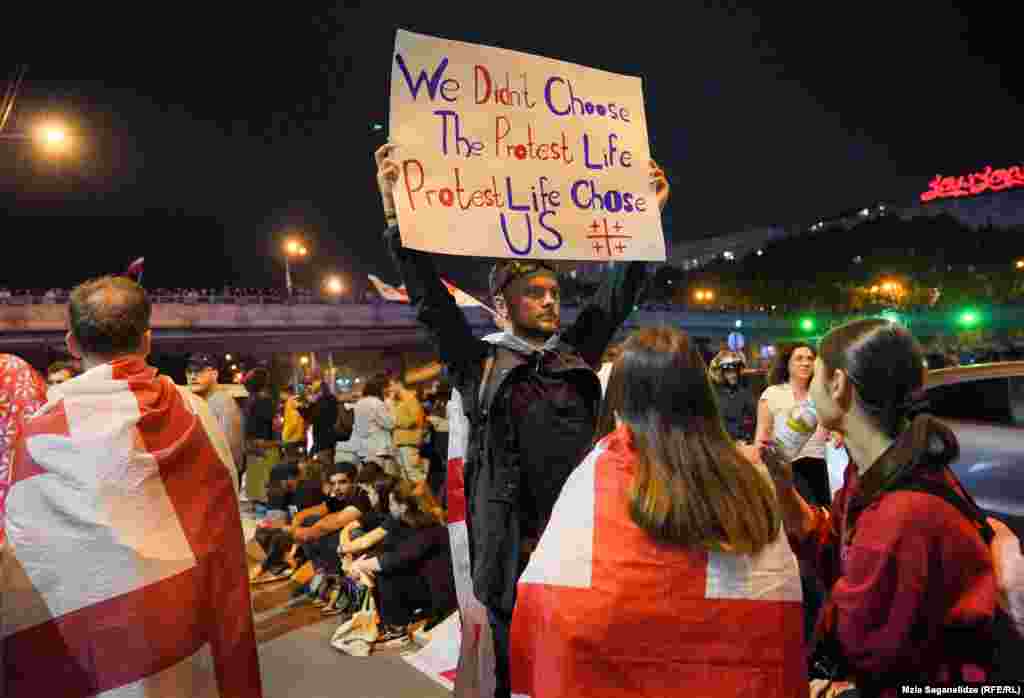
A protester opposed to the controversial &quot;foreign agent&quot; bill stands in the center of Heroes&#39; Square in Tbilisi during a rally on May 2&ndash;3.<br />
<br />
The European Union and the United States have condemned the controversial legislation that is making its way through Georgia&#39;s parliament following violent <strong><a href="https://www.rferl.org/a/georgia-protests-drone-footage/32929968.html" target="_blank">clashes</a></strong>&nbsp;between police and protesters that broke out late on May 1.
1/11 A protester opposed to the controversial "foreign agent" bill stands in the center of Heroes' Square in Tbilisi during a rally on May 2–3.

The European Union and the United States have condemned the controversial legislation that is making its way through Georgia's parliament following violent clashes between police and protesters that broke out late on May 1.
The European Union and the United States have condemned the controversial "foreign agent" legislation making its way through Georgia's parliament as peaceful protests against the bill continued on May 2 in Tbilisi following violent clashes that shook the country.
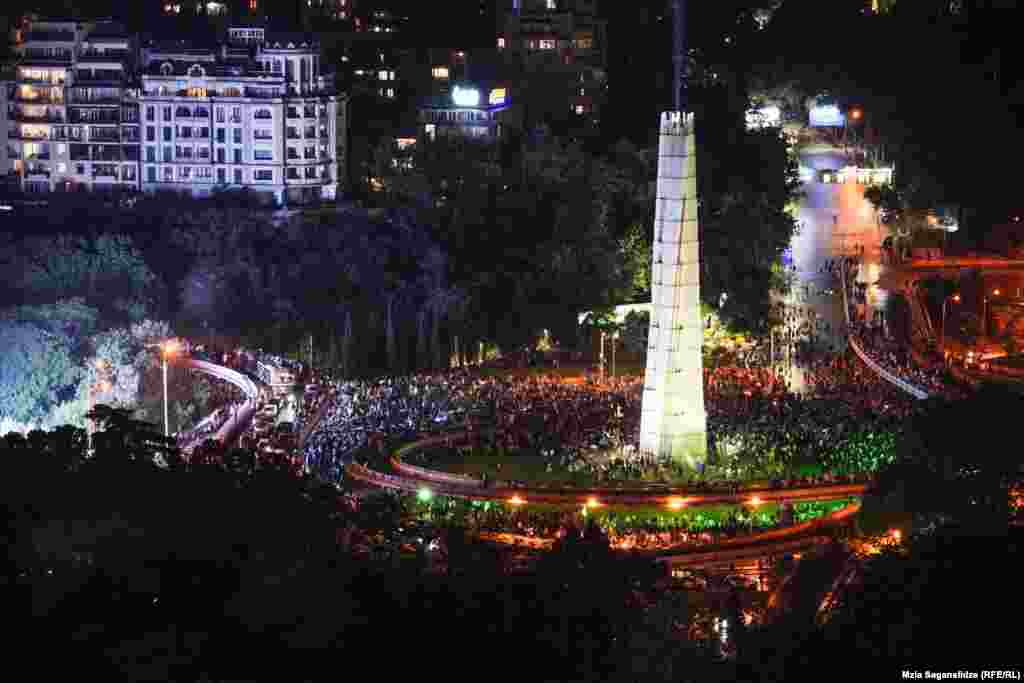
Peaceful protesters surround the monument on Heroes&#39; Square.<br />
<br />
The May 1 demonstration -- one of the largest the country has ever seen -- took place after the bill advanced in a second-reading vote.&nbsp;
2/11 Peaceful protesters surround the monument on Heroes' Square.

The May 1 demonstration -- one of the largest the country has ever seen -- took place after the bill advanced in a second-reading vote. 
The European Union and the United States have condemned the controversial "foreign agent" legislation making its way through Georgia's parliament as peaceful protests against the bill continued on May 2 in Tbilisi following violent clashes that shook the country.
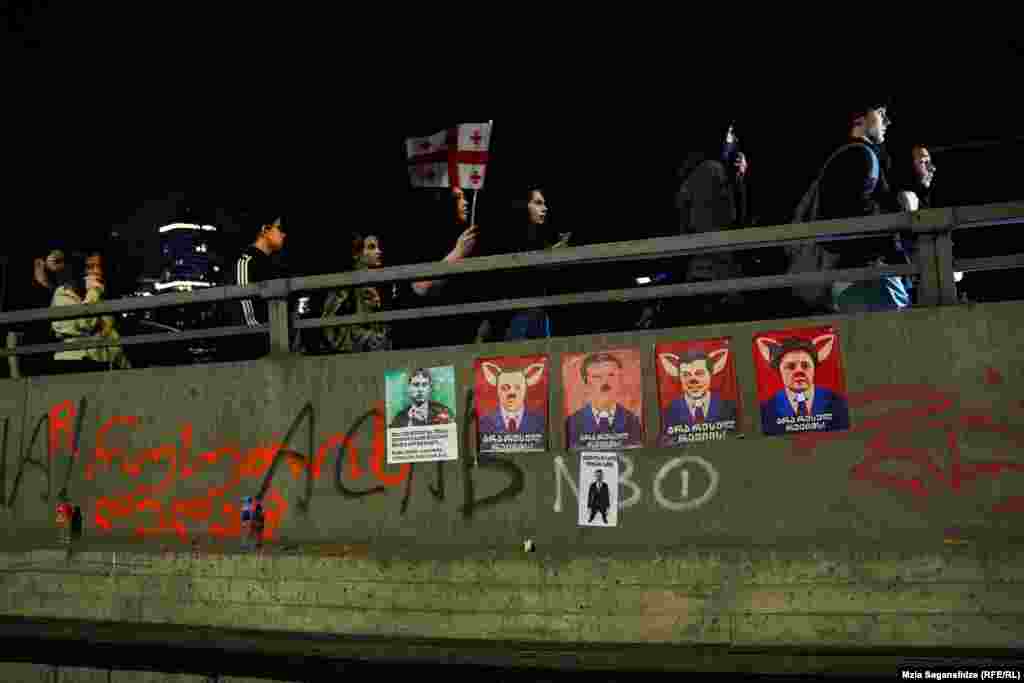
Portraits of the leaders of the ruling Georgian Dream party are covered in graffiti with the inscription &quot;No To Russian Regime.&quot;<br />
<br />
Georgians have been demonstrating in large numbers since a slightly modified version of the legislation was reintroduced on April 9.
3/11 Portraits of the leaders of the ruling Georgian Dream party are covered in graffiti with the inscription "No To Russian Regime."

Georgians have been demonstrating in large numbers since a slightly modified version of the legislation was reintroduced on April 9.
The European Union and the United States have condemned the controversial "foreign agent" legislation making its way through Georgia's parliament as peaceful protests against the bill continued on May 2 in Tbilisi following violent clashes that shook the country.
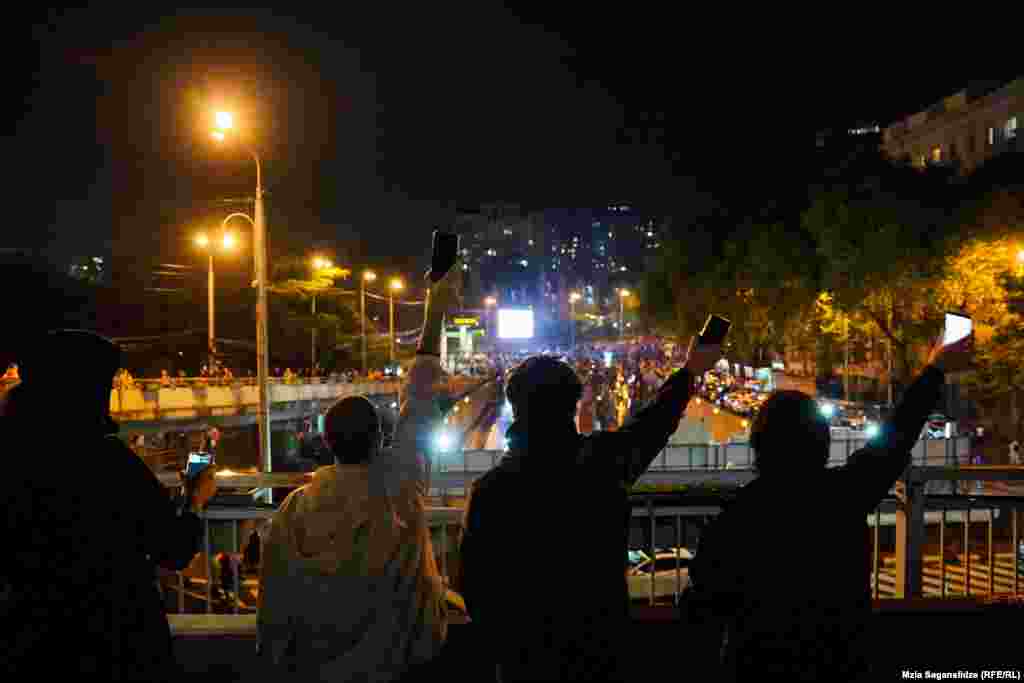
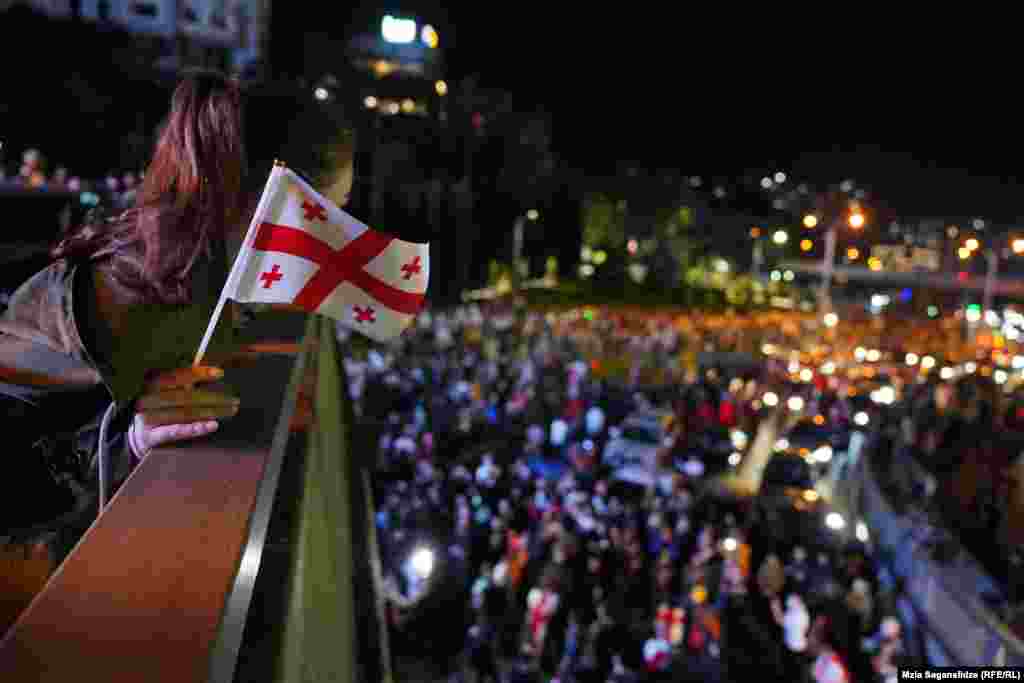
Protesters gesture from an overpass.<br />
<br />
The bill&#39;s opponents refer to the bill as &quot;the Russian law,&quot; a reference to the &quot;foreign agent&quot; statute that the Kremlin has employed to stifle dissent.
4/11 Protesters gesture from an overpass.

The bill's opponents refer to the bill as "the Russian law," a reference to the "foreign agent" statute that the Kremlin has employed to stifle dissent.
The European Union and the United States have condemned the controversial "foreign agent" legislation making its way through Georgia's parliament as peaceful protests against the bill continued on May 2 in Tbilisi following violent clashes that shook the country.
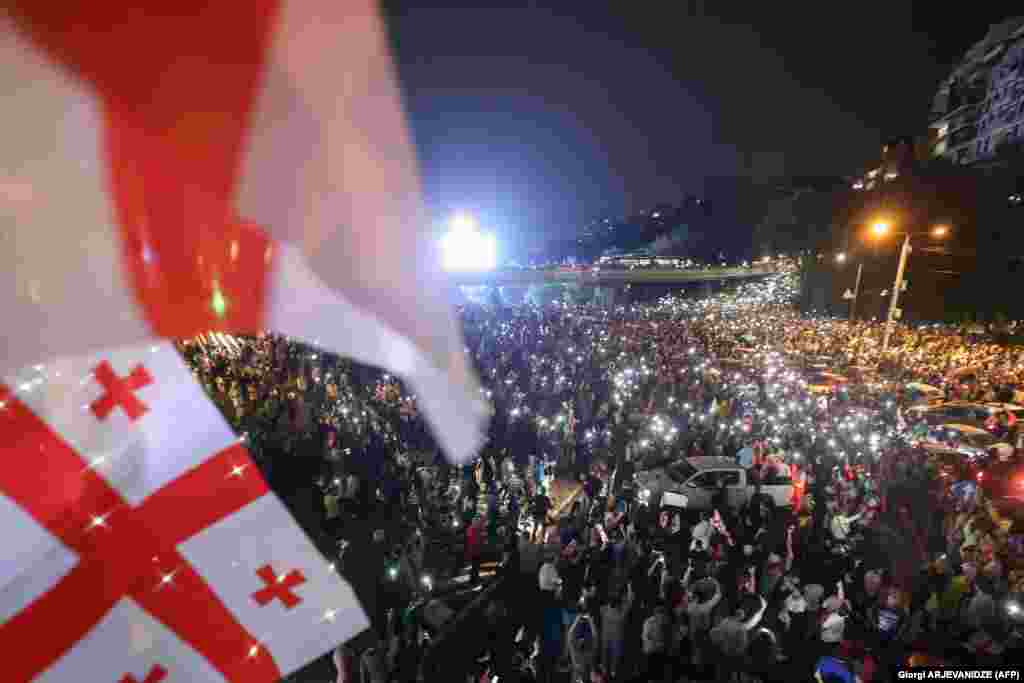
Peaceful protesters descend upon Heroes&#39; Square.<br />
<br />
The bill would require organizations receiving more than 20 percent of their funding from abroad to register as &quot;agents of foreign influence.&quot; Opponents warn that implementing the law could jeopardize the country&#39;s move toward European Union membership.
5/11 Peaceful protesters descend upon Heroes' Square.

The bill would require organizations receiving more than 20 percent of their funding from abroad to register as "agents of foreign influence." Opponents warn that implementing the law could jeopardize the country's move toward European Union membership.
The European Union and the United States have condemned the controversial "foreign agent" legislation making its way through Georgia's parliament as peaceful protests against the bill continued on May 2 in Tbilisi following violent clashes that shook the country.
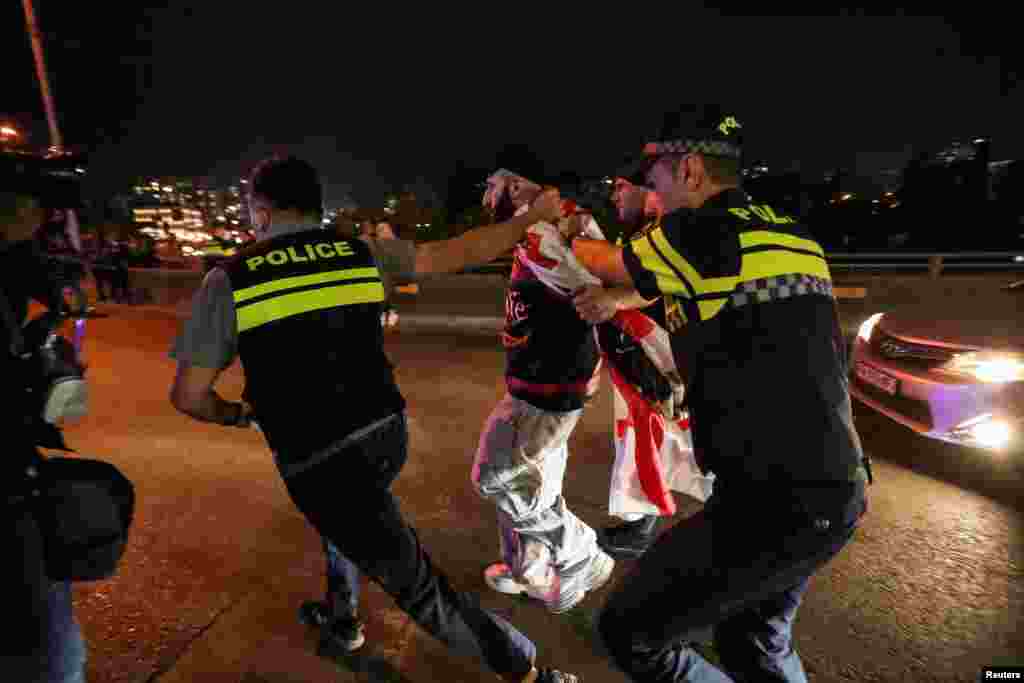
A man is led away by police during the largely peaceful protest on May 2.<br />
<br />
The EU&rsquo;s foreign policy arm earlier this month criticized Georgian Dream&rsquo;s decision to reintroduce the law, which it said &ldquo;raises serious concerns&rdquo; around media freedom in the country -- something it called &ldquo;crucial for the EU accession process.&rdquo;
6/11 A man is led away by police during the largely peaceful protest on May 2.

The EU’s foreign policy arm earlier this month criticized Georgian Dream’s decision to reintroduce the law, which it said “raises serious concerns” around media freedom in the country -- something it called “crucial for the EU accession process.”
The European Union and the United States have condemned the controversial "foreign agent" legislation making its way through Georgia's parliament as peaceful protests against the bill continued on May 2 in Tbilisi following violent clashes that shook the country.
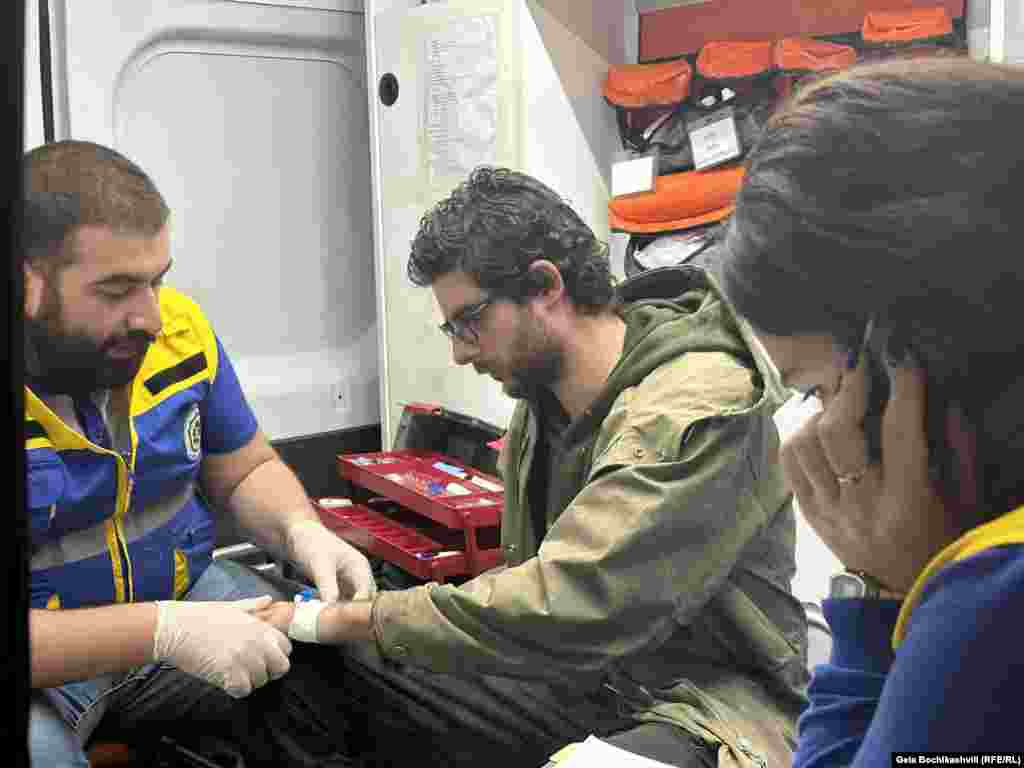
An injured protester receives first aid inside an ambulance during the May 2-3 protests.<br />
<br />
During the clashes on May 1, at least eight people said they were struck by rubber bullets. RFE/RL gathered eyewitness accounts, photographic evidence of injuries, <strong><a href="https://www.rferl.org/a/georgia-protests-rubber-bullets-injuries/32931074.html" target="_blank">interviewed</a></strong> two of the injured, and filmed rubber bullets at the scene where they were reportedly fired.
7/11 An injured protester receives first aid inside an ambulance during the May 2-3 protests.

During the clashes on May 1, at least eight people said they were struck by rubber bullets. RFE/RL gathered eyewitness accounts, photographic evidence of injuries, interviewed two of the injured, and filmed rubber bullets at the scene where they were reportedly fired.
The European Union and the United States have condemned the controversial "foreign agent" legislation making its way through Georgia's parliament as peaceful protests against the bill continued on May 2 in Tbilisi following violent clashes that shook the country.
The evidence seen by RFE/RL is consistent with injuries caused by rubber bullets, but Deputy Interior Minister Aleksandre Darakhvelidze denied the use of rubber bullets against demonstrators when he addressed reporters at a press briefing.
8/11 The evidence seen by RFE/RL is consistent with injuries caused by rubber bullets, but Deputy Interior Minister Aleksandre Darakhvelidze denied the use of rubber bullets against demonstrators when he addressed reporters at a press briefing.
The European Union and the United States have condemned the controversial "foreign agent" legislation making its way through Georgia's parliament as peaceful protests against the bill continued on May 2 in Tbilisi following violent clashes that shook the country.
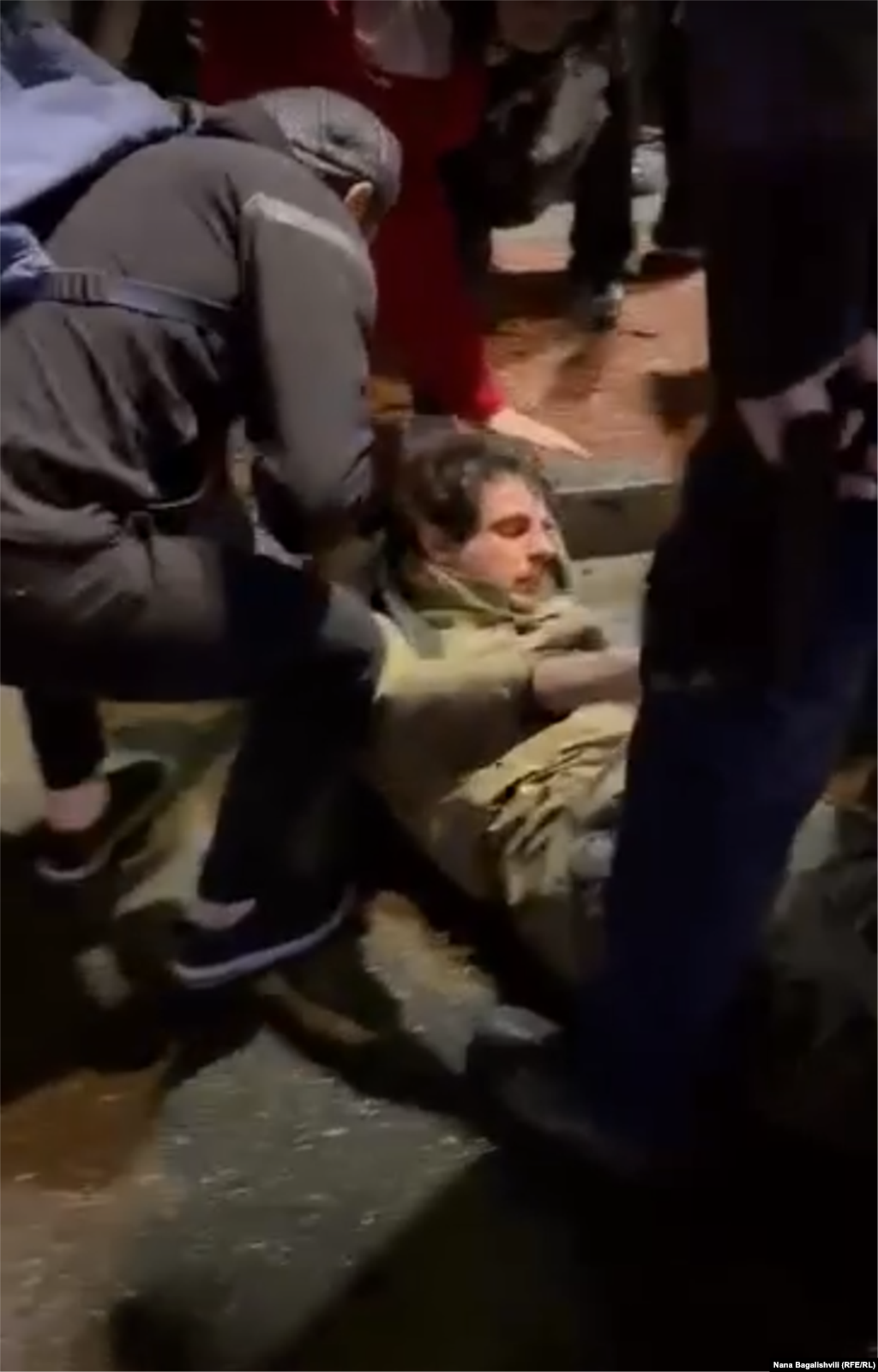
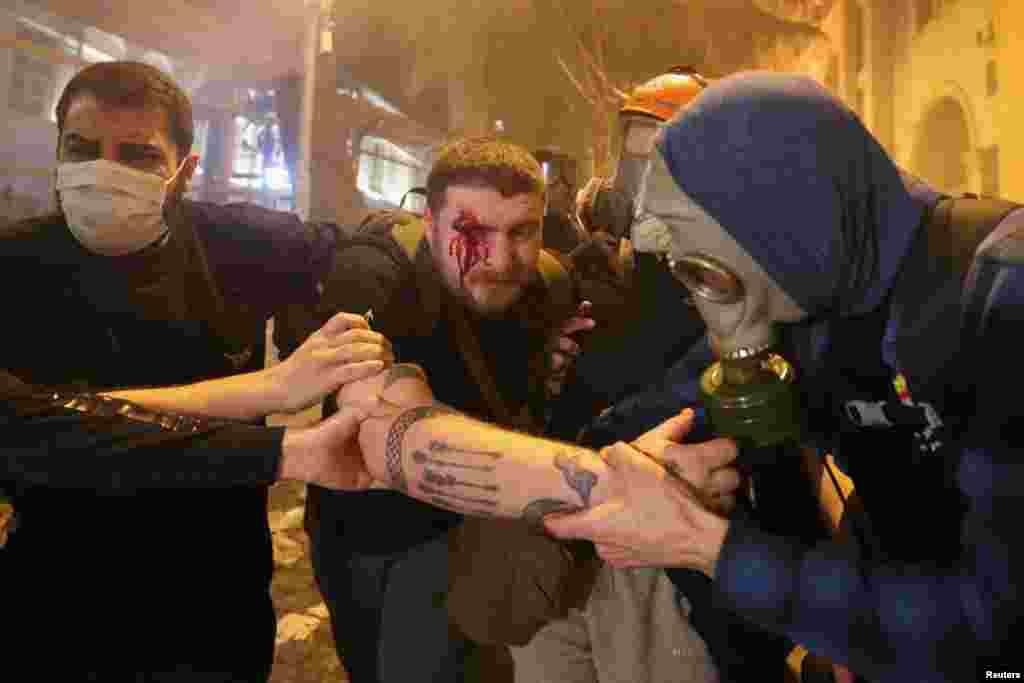
An injured man is helped by protesters at Heroes&#39; Square early on May 3. Eyewitnesses, including two injured men, told RFE/RL that what they called &quot;provocateurs&quot; arrived by car around 1 a.m. and physically assaulted some of the protesters.<br />
<br />
<br />
<br />
&nbsp;
9/11 An injured man is helped by protesters at Heroes' Square early on May 3. Eyewitnesses, including two injured men, told RFE/RL that what they called "provocateurs" arrived by car around 1 a.m. and physically assaulted some of the protesters.


The European Union and the United States have condemned the controversial "foreign agent" legislation making its way through Georgia's parliament as peaceful protests against the bill continued on May 2 in Tbilisi following violent clashes that shook the country.
Georgian President Salome Zurabishvili, who has distanced herself from the policies of the ruling party, has promised to veto the law if it is formally adopted in a third reading, as expected.
10/11 Georgian President Salome Zurabishvili, who has distanced herself from the policies of the ruling party, has promised to veto the law if it is formally adopted in a third reading, as expected.
The European Union and the United States have condemned the controversial "foreign agent" legislation making its way through Georgia's parliament as peaceful protests against the bill continued on May 2 in Tbilisi following violent clashes that shook the country.
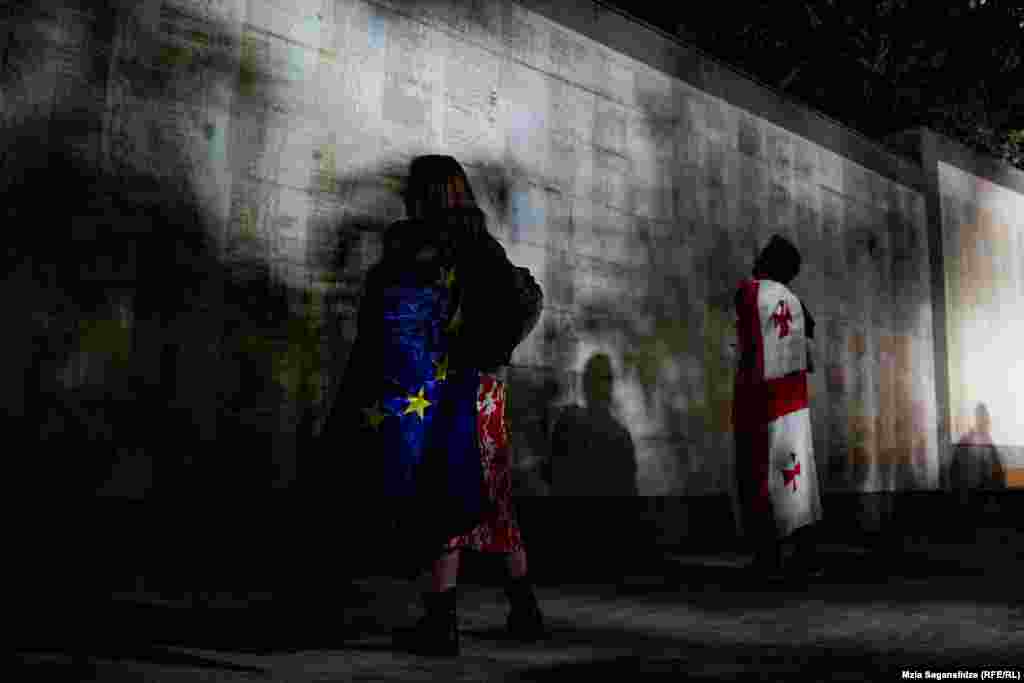
Protesters stop to view the names of fallen soldiers who battled against the Soviet Army in the 1920s, the Abkhaz war in 1992-93, and in the August 2008 Russo-Georgian War at Heroes&#39; Square.<br />
<br />
One of the organizers told RFE/RL that a large&nbsp;protest against the &quot;foreign agent&quot; bill is currently being planned for May 11.
11/11 Protesters stop to view the names of fallen soldiers who battled against the Soviet Army in the 1920s, the Abkhaz war in 1992-93, and in the August 2008 Russo-Georgian War at Heroes' Square.

One of the organizers told RFE/RL that a large protest against the "foreign agent" bill is currently being planned for May 11.
The European Union and the United States have condemned the controversial "foreign agent" legislation making its way through Georgia's parliament as peaceful protests against the bill continued on May 2 in Tbilisi following violent clashes that shook the country.
Previous slide
Next slide

Freelance reporter Davit Tamazashvili showed his injuries to RFE/RL on May 2 and recalled the events of the previous night, telling RFE/RL he was adjusting his camera when shooting suddenly started and he felt three bullets hit his legs.

The evidence seen by RFE/RL is consistent with injuries caused by rubber bullets, but Deputy Interior Minister Aleksandre Darakhvelidze denied the use of rubber bullets against demonstrators when he addressed reporters at a press briefing.

Darakhvelidze told reporters early on May 2 that "no rubber bullets" were used by law enforcement officers, "although there were sufficient legal reasons for their use."

Georgia's Special Investigation Service said a probe into excessive force against the demonstrators was ongoing.

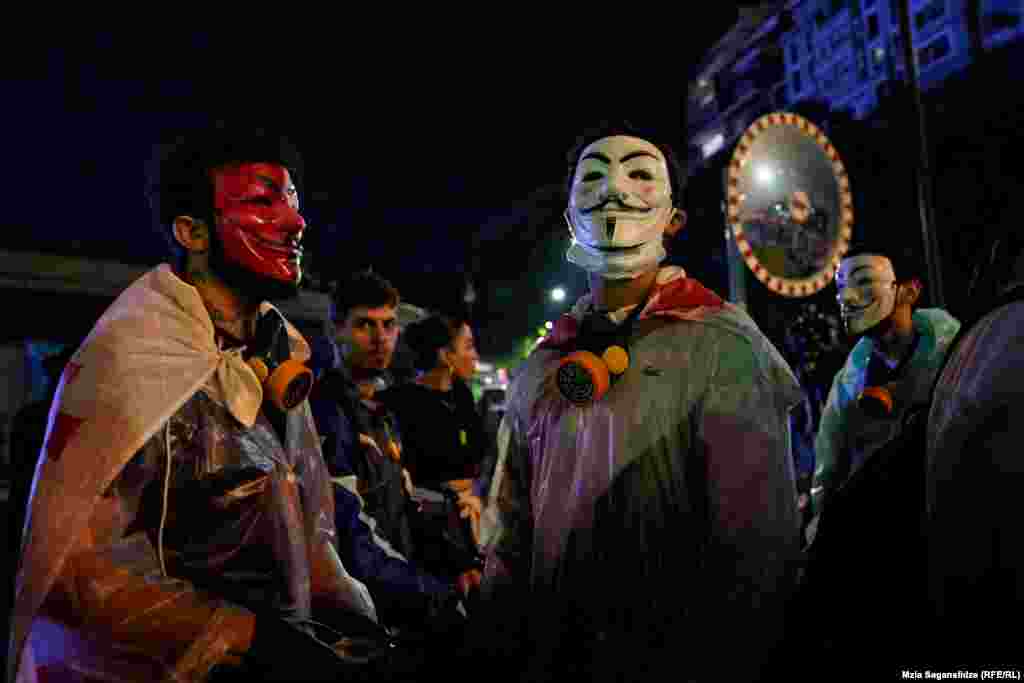
Nika Demurishvili, 24, who was hospitalized after protests on May 1, told RFE/RL by phone on May 3 that he was back at home after being hit in the eye by a suspected rubber bullet. He said he was still in pain and unable to open his damaged eye.

"I was wearing an gas mask that also had an eye protector" while attempting to help other protesters who had been knocked down by authorities, he said.

"It was like a rubber bullet hit me. What else could it have been.... I don't know exactly, but if it were a gas cylinder, I wouldn't have been hit directly in the face," he added.

Doctor Vako Lobzhanidze told reporters that "there is a serious injury to the [victim's] right eye, although the eye survived,” adding that it did not appear that surgery would be needed.

Eyewitness Nana Bagalishvili told RFE/RL while on Queen Tamara Avenue that she was “walking home from Heroes Square” when saw “tall men dressed in civilian clothes, likely security personnel or athletes, assaulting a man in a car, where his son, probably under 10 years old, was also present.”

"They attempted to forcibly remove the man from the car and beat him. A woman in the car was also subjected to physical assault," she said, adding that other cars and men dressed similarly in black were "assaulting rally participants of the rally.”

Nikoloz Butkhuzi told RFE/RL through Skype that he “saw four men assaulting a single person who was lying on the ground.”

He said he attempted to aid the fallen person before the men turned their attempt to him.

“They assaulted everyone indiscriminately. It was deliberate and premeditated,” he said.

Not all claims from the streets can immediately be independently verified.

The May 1 demonstration -- one of the largest the country has ever seen -- took place after the legislation was advanced in a second reading. A third and final reading is expected on May 17.

Police In Georgia Use Tear Gas, Water Cannons To Disperse Protesters Outside Of Parliament
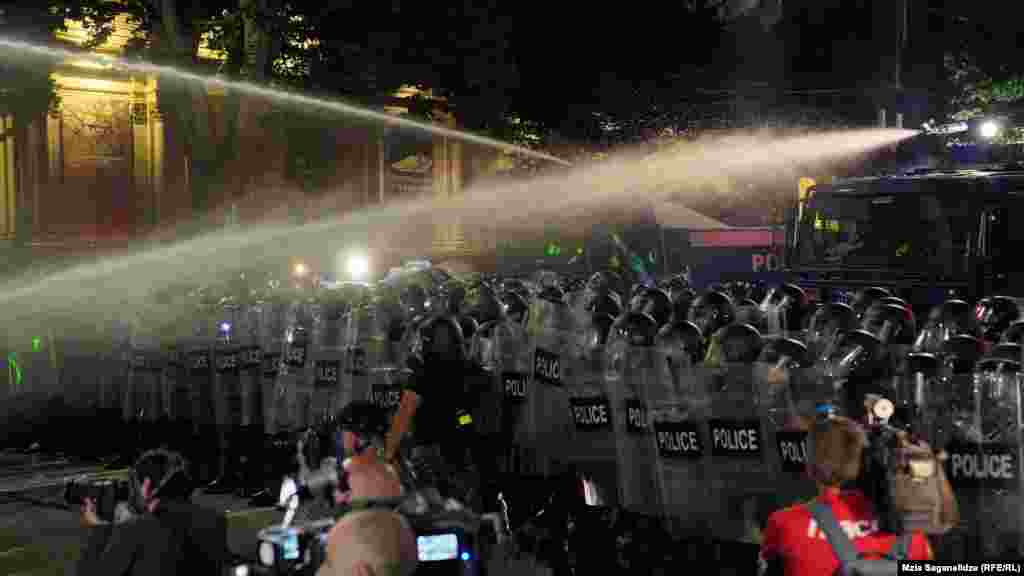
Georgian police used water cannons, tear gas, and batons against demonstrators in the nation&#39;s capital, Tbilisi, on May 1 after the legislature advanced a controversial &quot;foreign agent&quot; law. The bill had already fueled weeks of demonstrations, prompting a warning from Brussels that it could jeopardize Georgia&#39;s aspirations of joining the European Union.
1/11 Georgian police used water cannons, tear gas, and batons against demonstrators in the nation's capital, Tbilisi, on May 1 after the legislature advanced a controversial "foreign agent" law. The bill had already fueled weeks of demonstrations, prompting a warning from Brussels that it could jeopardize Georgia's aspirations of joining the European Union.
Police in Tbilisi fired tear gas and water cannons at protesters gathered outside Georgia's parliament on May 1 after a controversial "foreign agent" bill advanced in its second reading. The bill has fueled weeks of demonstrations and warnings from Brussels it could jeopardize Georgia's EU hopes.
Protesters help an injured man during a rally in Tbilisi.&nbsp;<br />
<br />
At least 11 people, including six police officers, were receiving hospital treatment after being injured, according to Georgia&#39;s Health Ministry.<br />
&nbsp;
2/11 Protesters help an injured man during a rally in Tbilisi. 

At least 11 people, including six police officers, were receiving hospital treatment after being injured, according to Georgia's Health Ministry.
 
Police in Tbilisi fired tear gas and water cannons at protesters gathered outside Georgia's parliament on May 1 after a controversial "foreign agent" bill advanced in its second reading. The bill has fueled weeks of demonstrations and warnings from Brussels it could jeopardize Georgia's EU hopes.
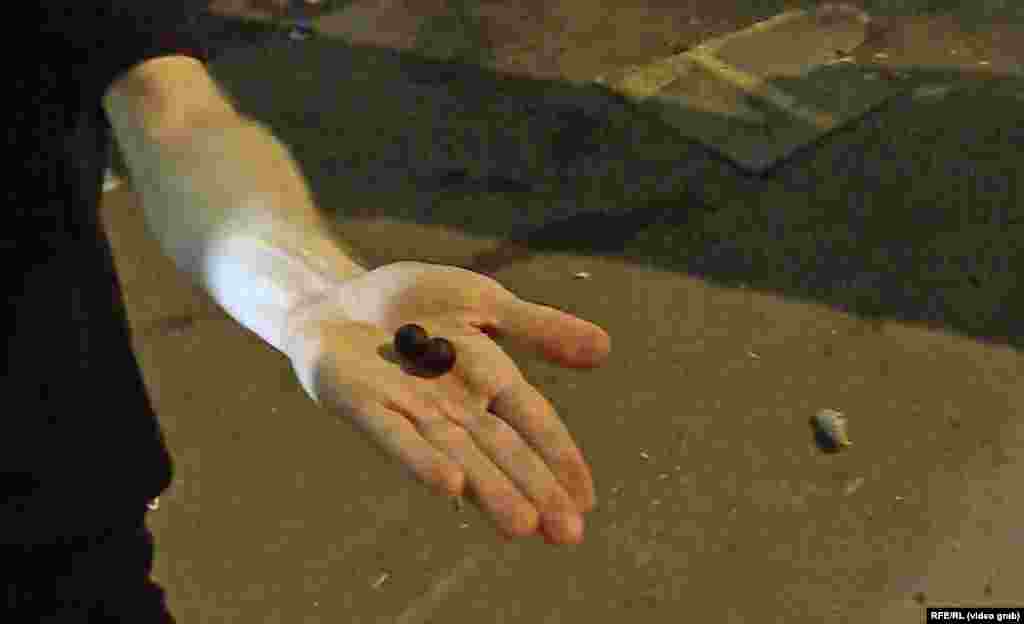
<div>A protester showed a Current Time cameraman what appeared to be rubber projectiles that were allegedly fired during the May 1 demonstration in Tbilisi. Current Time is the Russian-language TV and digital network led by RFE/RL in partnership with VOA.&nbsp;</div>
3/11
A protester showed a Current Time cameraman what appeared to be rubber projectiles that were allegedly fired during the May 1 demonstration in Tbilisi. Current Time is the Russian-language TV and digital network led by RFE/RL in partnership with VOA. 
Police in Tbilisi fired tear gas and water cannons at protesters gathered outside Georgia's parliament on May 1 after a controversial "foreign agent" bill advanced in its second reading. The bill has fueled weeks of demonstrations and warnings from Brussels it could jeopardize Georgia's EU hopes.
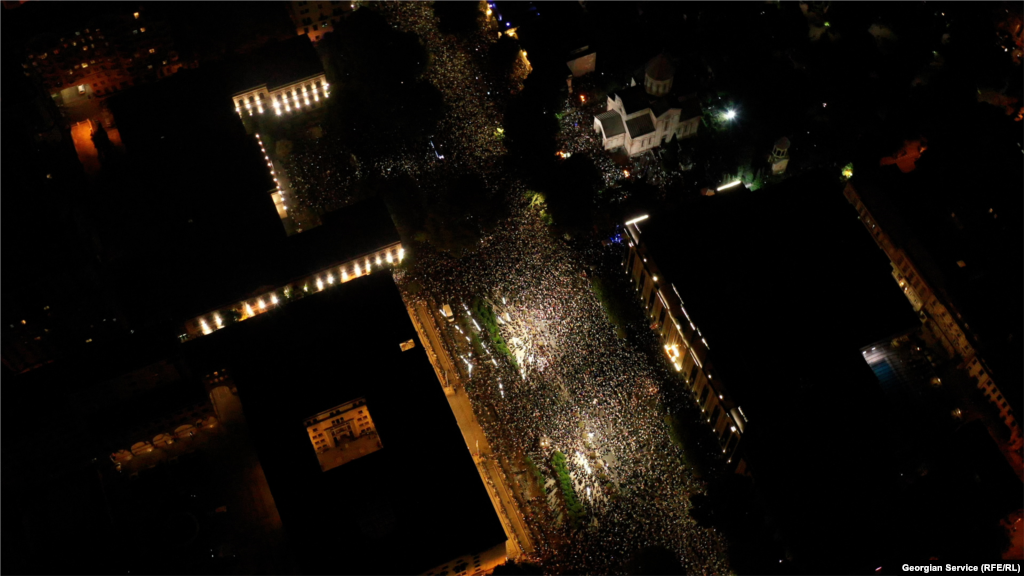
Drone footage captured by RFE/RL&#39;s Georgian Service shows the massive scale of the latest protests in Tbilisi overnight on May 1.<br />
<br />
<br />
&nbsp;
4/11 Drone footage captured by RFE/RL's Georgian Service shows the massive scale of the latest protests in Tbilisi overnight on May 1.


Police in Tbilisi fired tear gas and water cannons at protesters gathered outside Georgia's parliament on May 1 after a controversial "foreign agent" bill advanced in its second reading. The bill has fueled weeks of demonstrations and warnings from Brussels it could jeopardize Georgia's EU hopes.
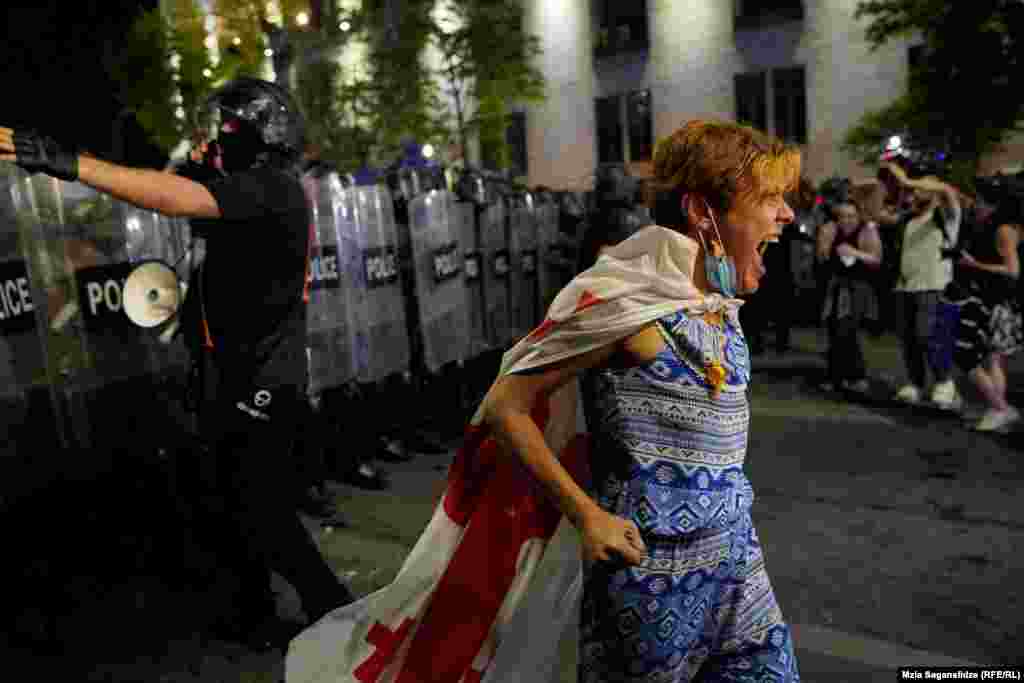
A protester draped in a Georgian flag shouts in front of a police cordon.&nbsp;<br />
<br />
The protests were a continuation of several weeks of rallies led by opposition parties and activist groups against the parliament&rsquo;s advancement of the controversial draft law, which was passed in a first reading on April 17.&nbsp;<br />
<br />
&nbsp;
5/11 A protester draped in a Georgian flag shouts in front of a police cordon. 

The protests were a continuation of several weeks of rallies led by opposition parties and activist groups against the parliament’s advancement of the controversial draft law, which was passed in a first reading on April 17. 

 
Police in Tbilisi fired tear gas and water cannons at protesters gathered outside Georgia's parliament on May 1 after a controversial "foreign agent" bill advanced in its second reading. The bill has fueled weeks of demonstrations and warnings from Brussels it could jeopardize Georgia's EU hopes.
In a statement, the U.S. State Department&nbsp;<strong><a href="https://www.state.gov/georgias-western-trajectory-at-risk/" target="_blank">condemned</a></strong>&nbsp;the violence against protesters and the lawmakers&#39; vote, calling it &quot;anti-Western.&quot;<br />
<br />
&nbsp;
6/11 In a statement, the U.S. State Department condemned the violence against protesters and the lawmakers' vote, calling it "anti-Western."

 
Police in Tbilisi fired tear gas and water cannons at protesters gathered outside Georgia's parliament on May 1 after a controversial "foreign agent" bill advanced in its second reading. The bill has fueled weeks of demonstrations and warnings from Brussels it could jeopardize Georgia's EU hopes.
The government withdrew the bill introduced last year due to&nbsp;<strong><a href="https://www.rferl.org/a/georgia-foreign-agent-law-again/32891424.html" target="_blank">widespread protests</a></strong>&nbsp;against the proposal. The law would require organizations with foreign funding to register their activities, give the authorities broad oversight powers, and allow criminal penalties for vague infractions.
7/11 The government withdrew the bill introduced last year due to widespread protests against the proposal. The law would require organizations with foreign funding to register their activities, give the authorities broad oversight powers, and allow criminal penalties for vague infractions.
Police in Tbilisi fired tear gas and water cannons at protesters gathered outside Georgia's parliament on May 1 after a controversial "foreign agent" bill advanced in its second reading. The bill has fueled weeks of demonstrations and warnings from Brussels it could jeopardize Georgia's EU hopes.
The ruling Georgian Dream party announced its plans to reintroduce the bill after a previous version was dropped in 2023. This new version omits the phrase &quot;foreign agent.&quot;
8/11 The ruling Georgian Dream party announced its plans to reintroduce the bill after a previous version was dropped in 2023. This new version omits the phrase "foreign agent."
Police in Tbilisi fired tear gas and water cannons at protesters gathered outside Georgia's parliament on May 1 after a controversial "foreign agent" bill advanced in its second reading. The bill has fueled weeks of demonstrations and warnings from Brussels it could jeopardize Georgia's EU hopes.
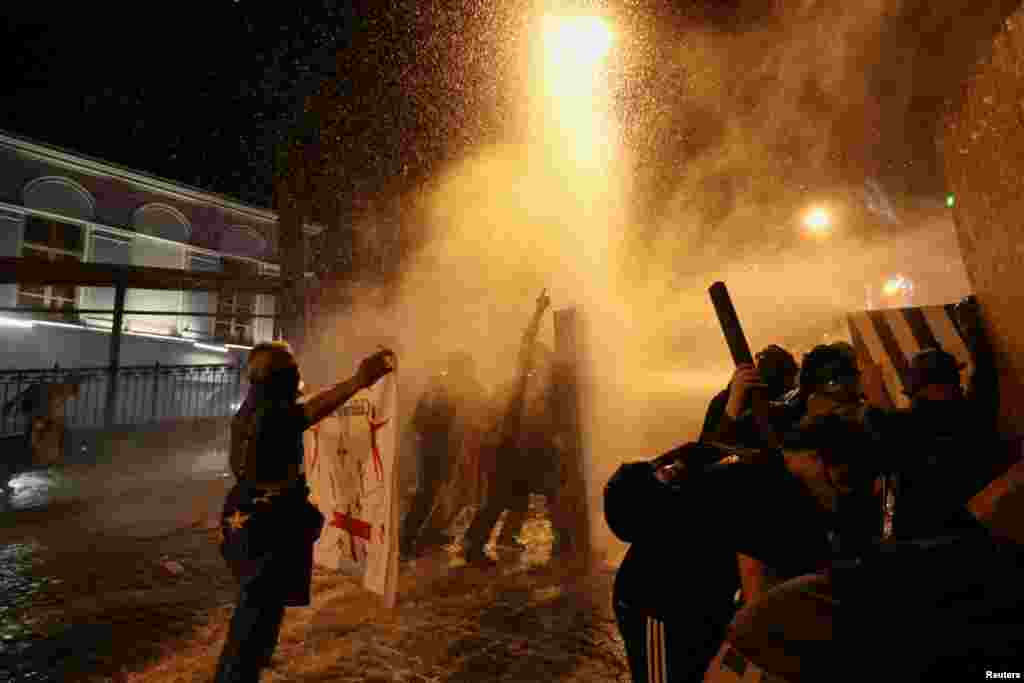
A protester reacts as water cannons and tear gas are sprayed into the crowd.
9/11 A protester reacts as water cannons and tear gas are sprayed into the crowd.
Police in Tbilisi fired tear gas and water cannons at protesters gathered outside Georgia's parliament on May 1 after a controversial "foreign agent" bill advanced in its second reading. The bill has fueled weeks of demonstrations and warnings from Brussels it could jeopardize Georgia's EU hopes.
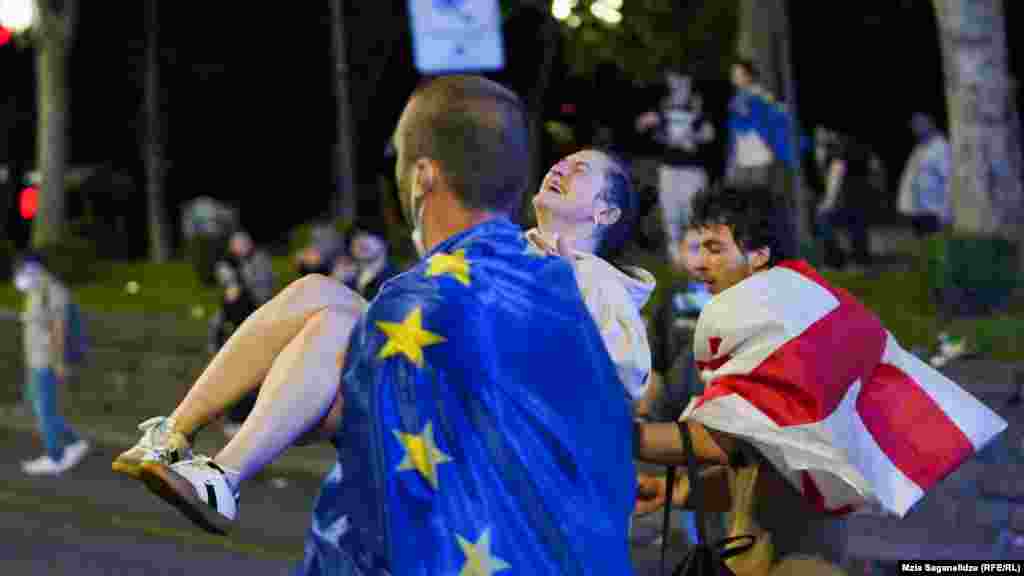
A man draped in an EU flag carries an injured protester.<br />
<br />
Supporters of the bill say it mirrors similar U.S. legislation and promotes transparency. Opponents say the proposed legislation would stifle dissent and silence independent media. They have compared it to similar legislation in Russia, which is why many call it the &quot;Russian law.&quot;&nbsp;
10/11 A man draped in an EU flag carries an injured protester.

Supporters of the bill say it mirrors similar U.S. legislation and promotes transparency. Opponents say the proposed legislation would stifle dissent and silence independent media. They have compared it to similar legislation in Russia, which is why many call it the "Russian law." 
Police in Tbilisi fired tear gas and water cannons at protesters gathered outside Georgia's parliament on May 1 after a controversial "foreign agent" bill advanced in its second reading. The bill has fueled weeks of demonstrations and warnings from Brussels it could jeopardize Georgia's EU hopes.
The final reading of the bill is scheduled to be debated on May 17. Georgian President Salome Zurabishvili told media that she would veto it if it&rsquo;s approved in its final reading.&nbsp;However, she also said the ruling Georgian Dream party has enough lawmakers to override her decision if she does so.
11/11 The final reading of the bill is scheduled to be debated on May 17. Georgian President Salome Zurabishvili told media that she would veto it if it’s approved in its final reading. However, she also said the ruling Georgian Dream party has enough lawmakers to override her decision if she does so.
Police in Tbilisi fired tear gas and water cannons at protesters gathered outside Georgia's parliament on May 1 after a controversial "foreign agent" bill advanced in its second reading. The bill has fueled weeks of demonstrations and warnings from Brussels it could jeopardize Georgia's EU hopes.
Previous slide
Next slide

A large protest against the bill is currently being planned for May 11, one of the organizers told RFE/RL.

“I want you to remember this date. Let’s all organize a very large demonstration on May 11. A large, peaceful, strong, confident manifestation. Put it on your calendars,” the unnamed organizer said.

UN human rights chief Volker Turk voiced concern about the authorities' treatment of protesters. Turk also urged authorities to withdraw the bill and engage in dialogue with civil society and journalists, who risk being affected by the proposed legislation.

"I am concerned by reports of unnecessary and disproportionate use of force by law enforcement personnel against demonstrators and media workers in Georgia’s capital, Tbilisi, this week," he said.

A wave of anger has washed across Georgia since the ruling Georgian Dream party said it was reintroducing a slightly modified version of legislation that protests forced it to back away from last year.

Explainer: Why Are Mass Protests Shaking Tbilisi?
please wait

No media source currently available

0:00 0:01:47 0:00

Critics call the bill "the Russian law," a reference to the "foreign agent" law in Russia that the government in Moscow has used to silence its critics. Georgian President Salome Zurabishvili, who has distanced herself from the policies of the ruling party, has promised to veto the law if it is formally adopted in a third reading, as expected.

The Georgian Foreign Ministry on May 2 refused an invitation from the United States to speak directly with U.S. officials, U.S. Ambassador Robin Dunnigan said.

"Recently, we have invited senior members of the Georgian Government to engage directly with the most senior leaders in the United States to discuss our strategic partnership and any concerns with U.S. assistance; unfortunately, the Georgian side chose not to accept this invitation," she said in a statement on X, formerly Twitter.
A statement from the Georgian Foreign Ministry said the invitation was rejected because there was a condition that the parliament temporarily stop the discussion of the draft law. This prerequisite "does not correspond to the spirit of partnership," the ministry statement said.

Georgian Prime Minister Irakli Kobakhidze later accused the United States of making "false" statements over the controversial law, saying Washington's words are similar to previous statements that "encouraged" violence during other times of unrest in the Caucasus nation.

Dunnigan's statement, which also urged Georgia to "recommit the country to its Euro-Atlantic future, as written in Georgia’s constitution," makes no reference to any conditions for holding talks.

  • 16x9 Image

    RFE/RL's Georgian Service

    RFE/RL's Georgian Service is a trusted source of politically and financially independent journalism in a country where much of the media is aligned with the government or the opposition.

  • 16x9 Image

    RFE/RL's Echo of the Caucasus

    RFE/RL's Echo of the Caucasus broadcasts in Russian to Georgia.

This item is part of
XS
SM
MD
LG