Accessibility links

Breaking News

This Street Once Brought Ukrainians And Russians Together. Now It Divides Them.

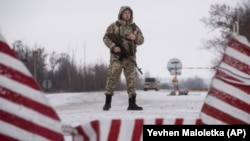
A Ukrainian guard stands ready at the border in Milove.

MILOVE, Ukraine -- Friendship Of Peoples Street used to be more like a bridge, with the lives of residents in the Ukrainian border town of Milove intersecting with their neighbors just a stone's throw away in Russia's Chertkovo.

But today, a lengthy barbed-wire fence bisects the street, and patrols and checkpoints make clear that the relationship is not what it was.

Russian border guards built the 3-meter-high barrier four months ago, separating families and neighbors who had crossed freely between the two towns for decades.

"See that guy there?" asks Olena with a laugh as she points toward the fence. "He's already standing in Russia."

But the resident of Milove, who gave only her first name, is not joking. Her town lies in Luhansk Oblast, which has been riven by a war in eastern Ukraine between Kyiv and separatist forces. The man she points to is in Rostov Oblast, part of Russia, which is backing separatists in Ukraine's Luhansk and Donetsk regions.

The once-neighborly relationship turned chilly in 2014, when Russia seized Ukraine's Crimean Peninsula and sided with the separatists in Ukraine's eastern Donbas region.

The fighting has claimed more than 10,300 lives and prompted the West to impose sanctions against Russia, which denies involvement in the conflict despite a raft of evidence proving otherwise.

Milove has largely avoided the violence that has plagued other areas of Luhansk, parts of which are controlled by separatists, but Olena says the fence --erected amid deteriorating relations -- has compounded economic hardships for Milove residents.

"Russians bought fruits and vegetables here because they were cheaper and better. Now, small businesses are having a tough time," she says.

PHOTO GALLERY: The Last Link Of Luhansk (CLICK TO VIEW)

The Last Link Of Luhansk
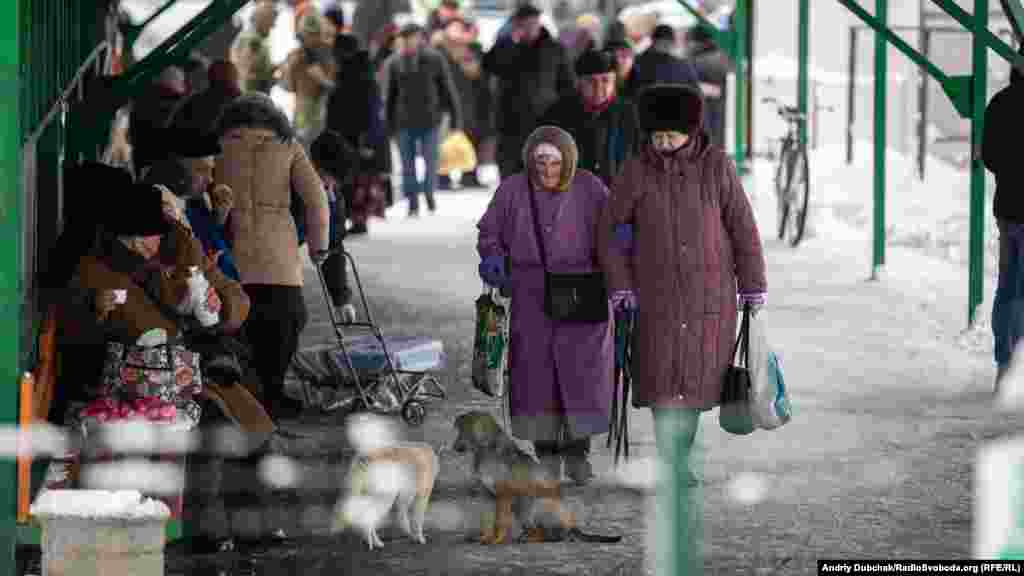
The approach to the checkpoint at Stanytsia Luhanska, on the edge of Kyiv-held territory in the Luhansk region. Fighting in the area continues between Ukrainian forces and Russia-backed separatists in a conflict that has claimed more than 10,000 lives since it began in 2014.
1/17 The approach to the checkpoint at Stanytsia Luhanska, on the edge of Kyiv-held territory in the Luhansk region. Fighting in the area continues between Ukrainian forces and Russia-backed separatists in a conflict that has claimed more than 10,000 lives since it began in 2014.
Crossing through the only corridor that remains open for people in Ukraine's Luhansk region to navigate the so-called line of contact.
The majority of those making the crossing are retirees from separatist-held territory coming to collect their pensions from Ukraine's central government.
2/17 The majority of those making the crossing are retirees from separatist-held territory coming to collect their pensions from Ukraine's central government.
Crossing through the only corridor that remains open for people in Ukraine's Luhansk region to navigate the so-called line of contact.
Near a checkpoint controlled by the Ukrainian military, a bank machine (right) is in regular use and is refilled with cash each day.
3/17 Near a checkpoint controlled by the Ukrainian military, a bank machine (right) is in regular use and is refilled with cash each day.
Crossing through the only corridor that remains open for people in Ukraine's Luhansk region to navigate the so-called line of contact.
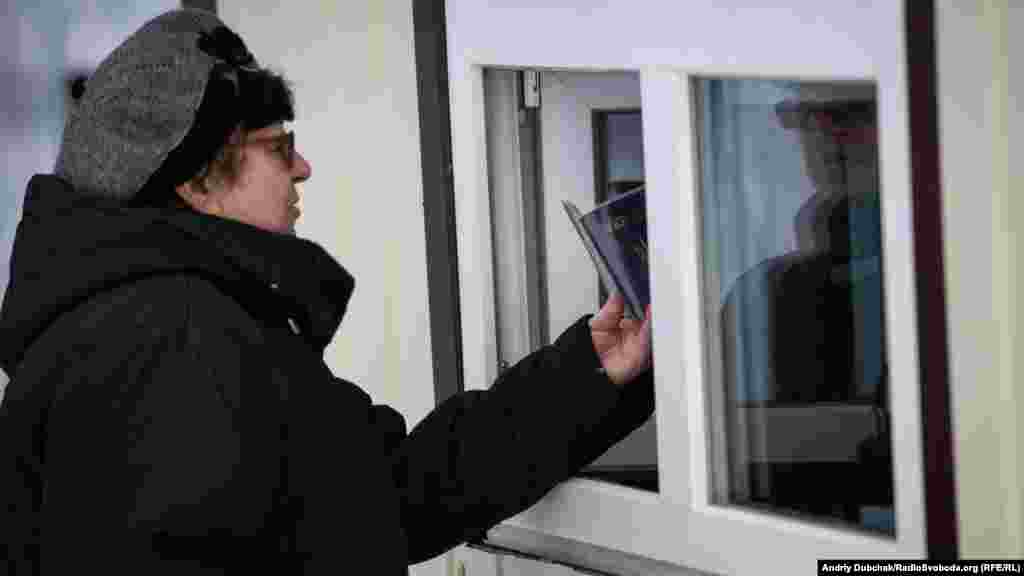
A woman having her passport checked by a Ukrainian official.
4/17 A woman having her passport checked by a Ukrainian official.
Crossing through the only corridor that remains open for people in Ukraine's Luhansk region to navigate the so-called line of contact.
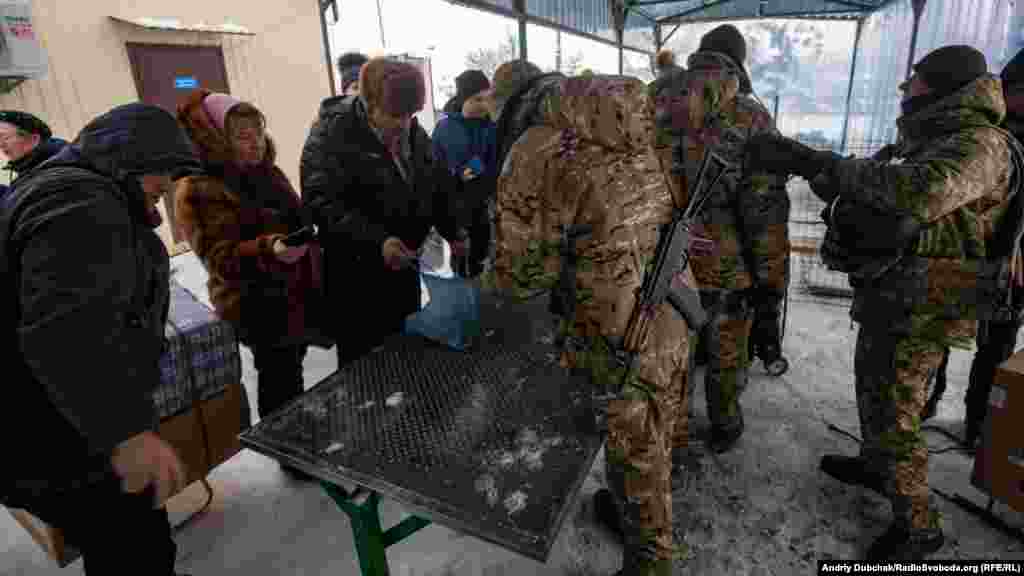
Ukrainian soldiers search belongings before people can begin the long march to separatist-held territory.
5/17 Ukrainian soldiers search belongings before people can begin the long march to separatist-held territory.
Crossing through the only corridor that remains open for people in Ukraine's Luhansk region to navigate the so-called line of contact.
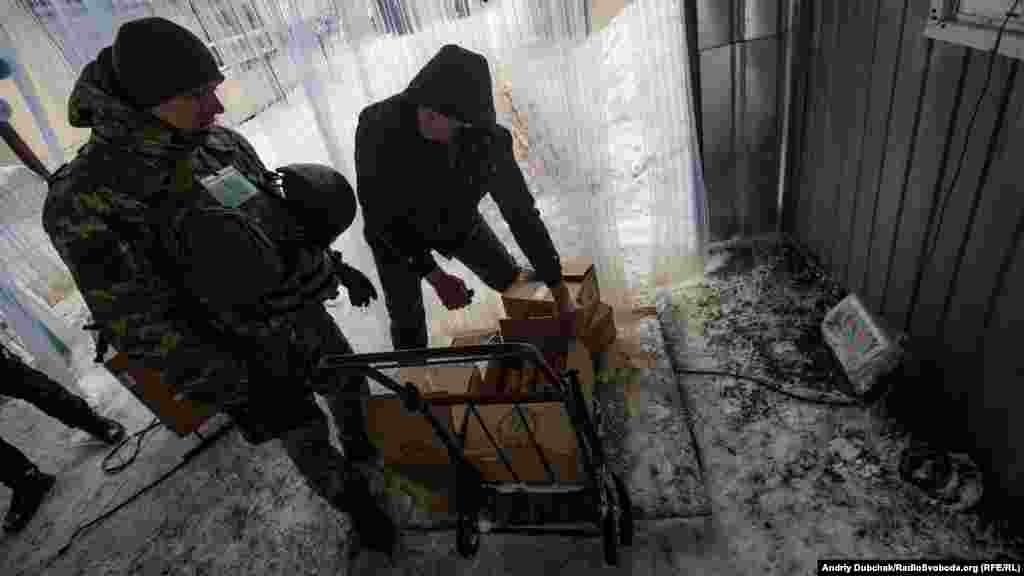
Boxes being weighed on a frosty set of scales. At 74.2 kilograms, this man's load falls just within the 75 kilograms each person is allowed to cross with.
6/17 Boxes being weighed on a frosty set of scales. At 74.2 kilograms, this man's load falls just within the 75 kilograms each person is allowed to cross with.
Crossing through the only corridor that remains open for people in Ukraine's Luhansk region to navigate the so-called line of contact.
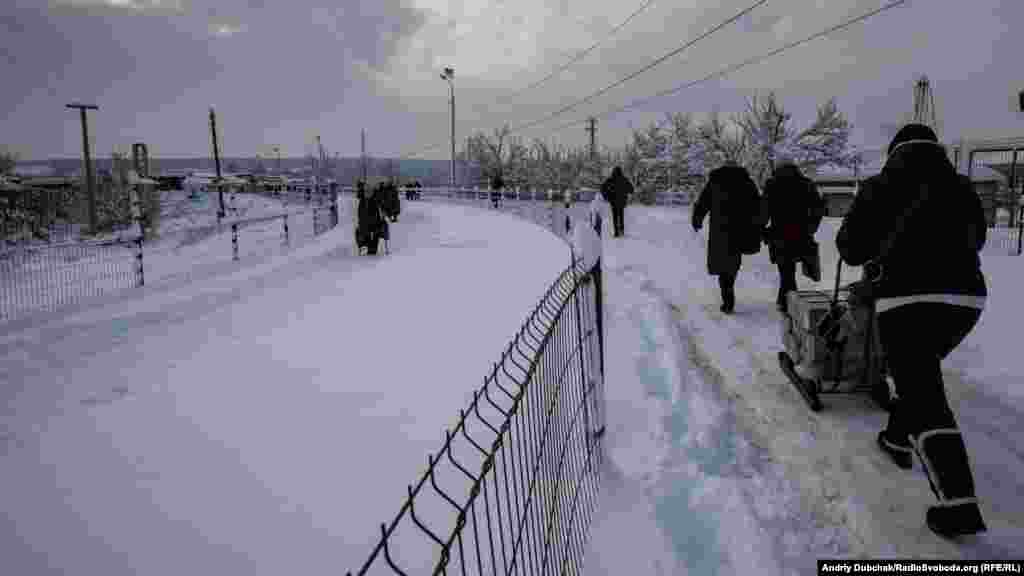
Once the checks are complete, the journey through no-man's land begins. Separatist checkpoints lie nearly 5 kilometers away.
7/17 Once the checks are complete, the journey through no-man's land begins. Separatist checkpoints lie nearly 5 kilometers away.
Crossing through the only corridor that remains open for people in Ukraine's Luhansk region to navigate the so-called line of contact.
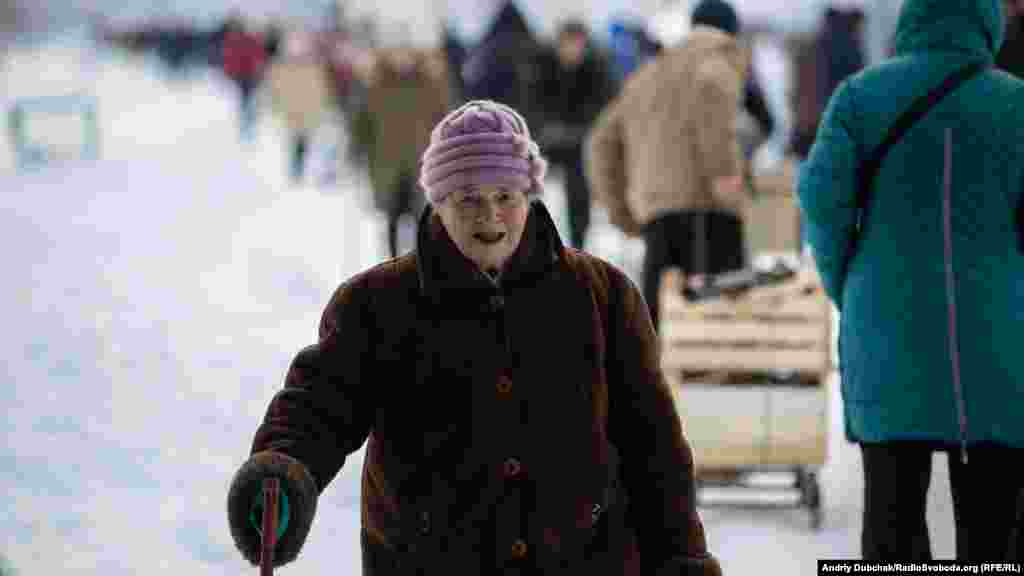
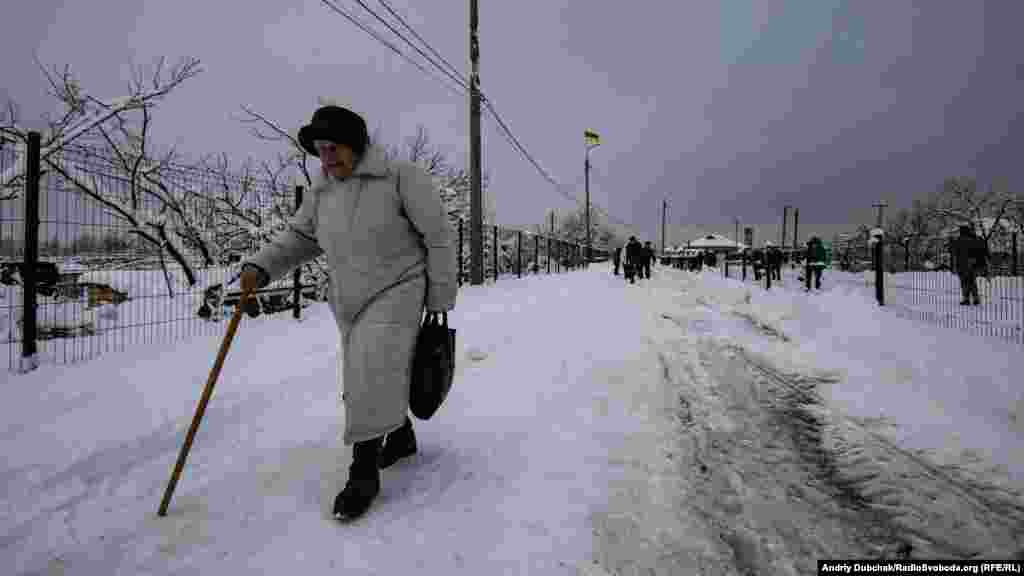
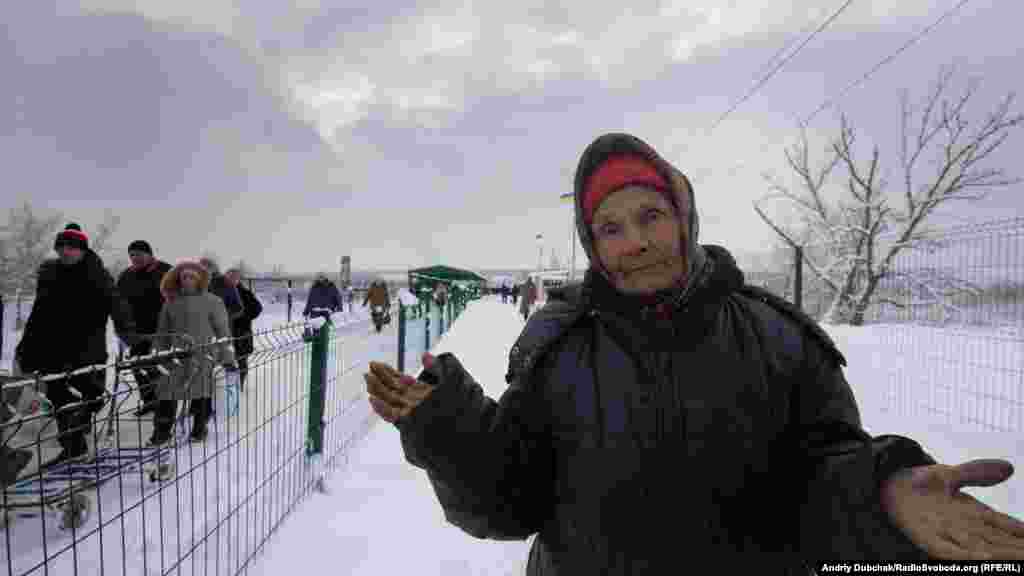
For the mostly elderly people who make the crossing, it's an arduous journey. Around four out of five of those who make the crossing are pensioners.
8/17 For the mostly elderly people who make the crossing, it's an arduous journey. Around four out of five of those who make the crossing are pensioners.
Crossing through the only corridor that remains open for people in Ukraine's Luhansk region to navigate the so-called line of contact.
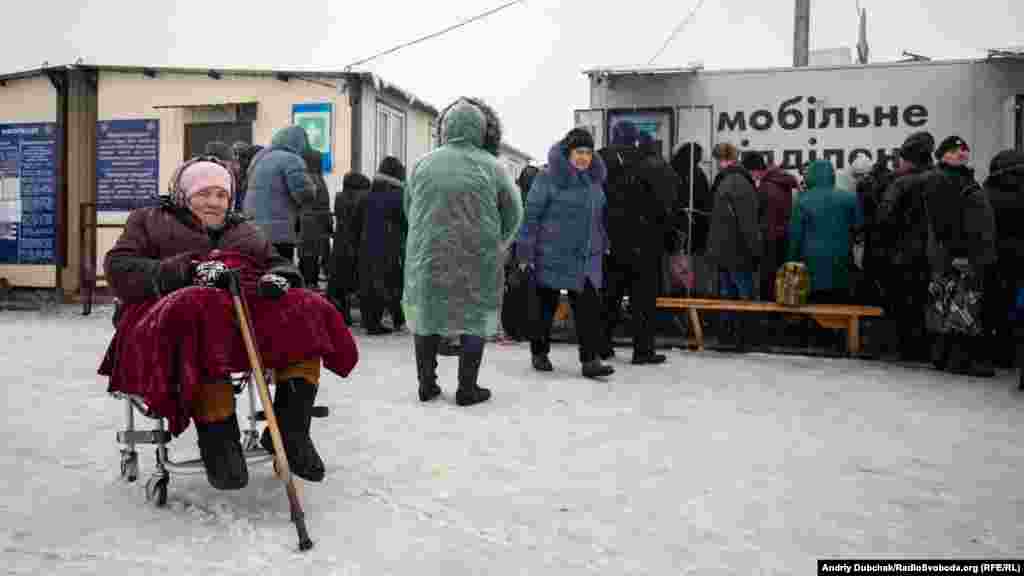
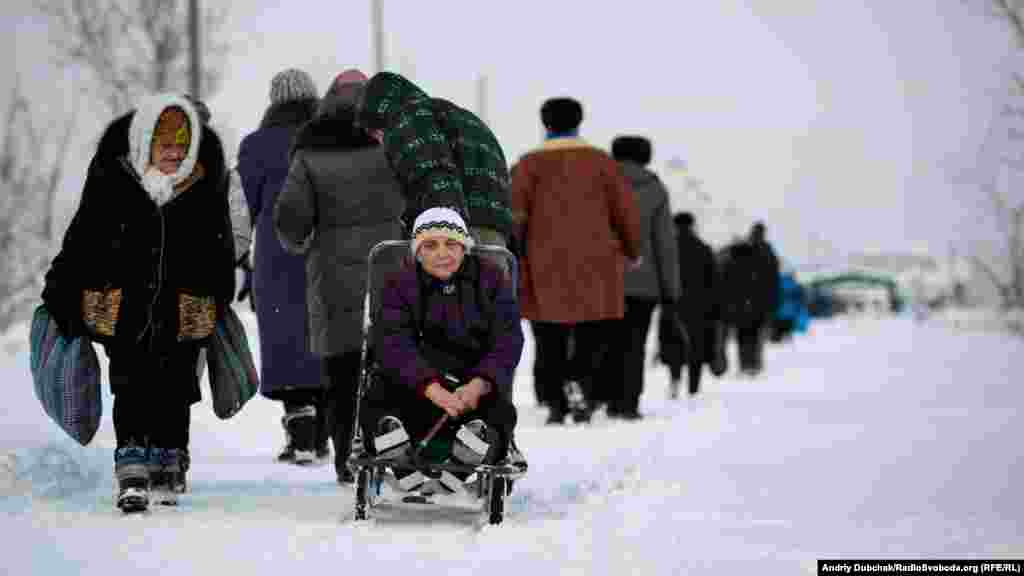
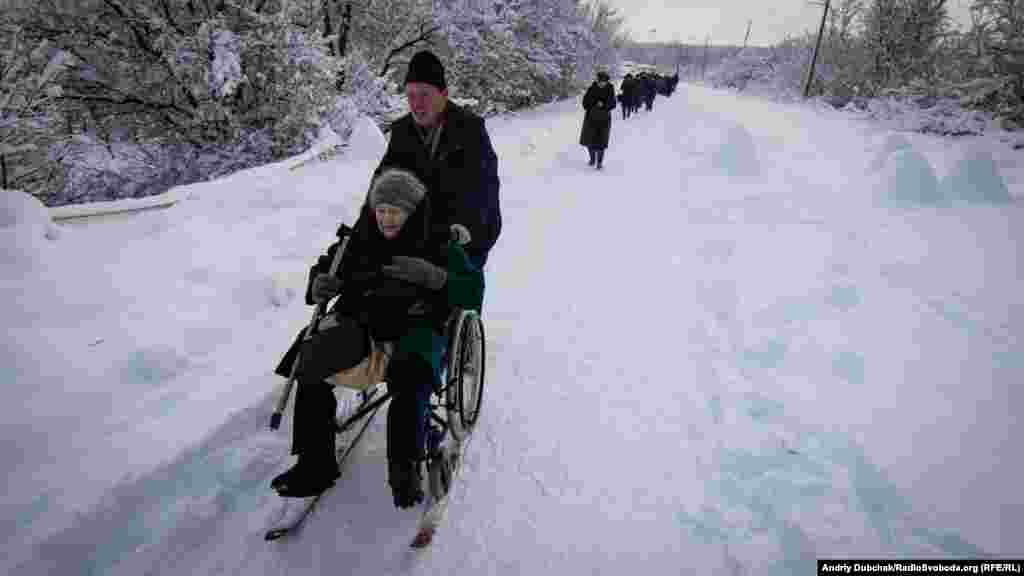
For the frail and disabled, the trip is impossible without enlisting relatives or hiring porters to help.&nbsp;<br />
&nbsp;
9/17 For the frail and disabled, the trip is impossible without enlisting relatives or hiring porters to help. 
 
Crossing through the only corridor that remains open for people in Ukraine's Luhansk region to navigate the so-called line of contact.
An elderly woman being pushed on her winter-modified wheelchair.&nbsp;
10/17 An elderly woman being pushed on her winter-modified wheelchair. 
Crossing through the only corridor that remains open for people in Ukraine's Luhansk region to navigate the so-called line of contact.
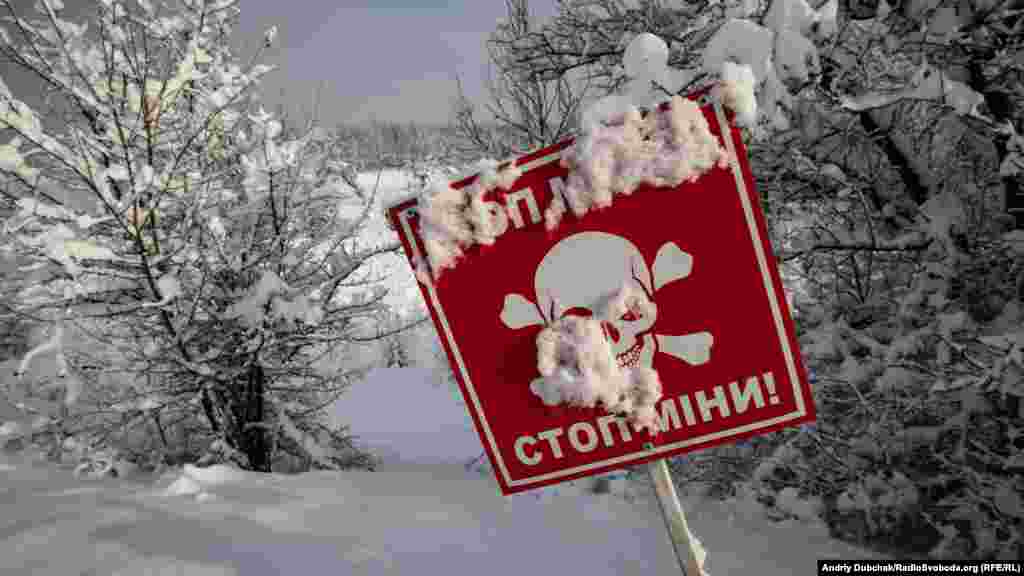
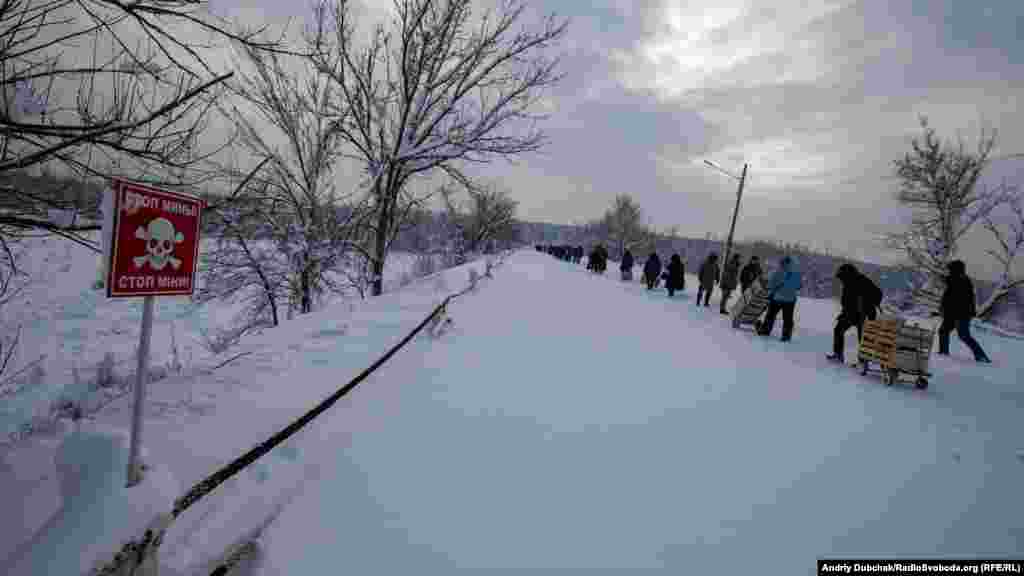
On either side of the pedestrian corridor, land mines lurk beneath the fresh snow.&nbsp;
11/17 On either side of the pedestrian corridor, land mines lurk beneath the fresh snow. 
Crossing through the only corridor that remains open for people in Ukraine's Luhansk region to navigate the so-called line of contact.
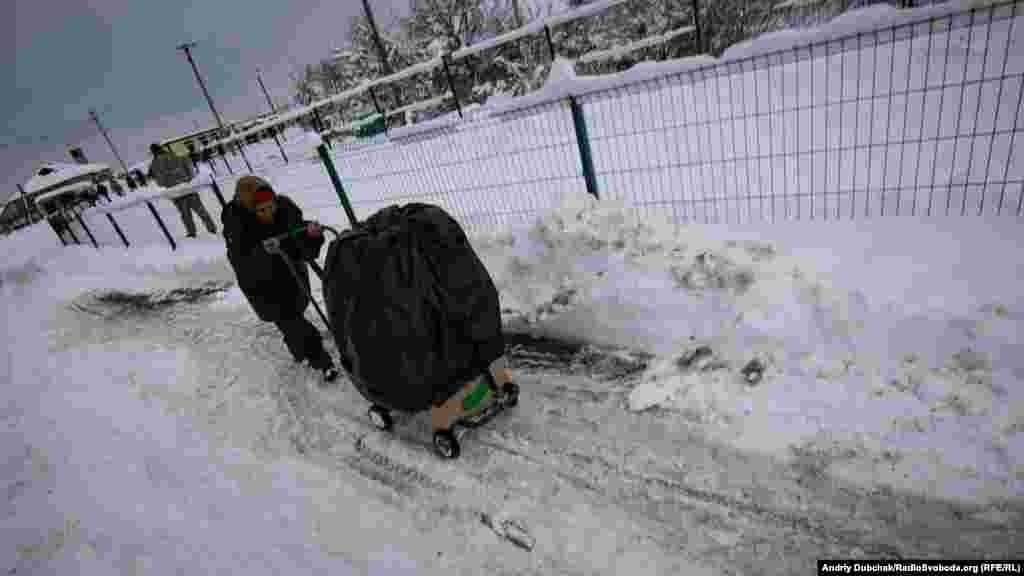
<span>Nina Nikolayevna works</span><span>&nbsp;as a porter, dragging goods between the warring sides. The 79-year-old earns 200-400 hryvnyas ($7-14) per trip, but only one one crossing with cargo is allowed per day.</span>
12/17 Nina Nikolayevna works as a porter, dragging goods between the warring sides. The 79-year-old earns 200-400 hryvnyas ($7-14) per trip, but only one one crossing with cargo is allowed per day.
Crossing through the only corridor that remains open for people in Ukraine's Luhansk region to navigate the so-called line of contact.
Nikolayevna at work, pushing a load of fruits and vegetables through slushy snow toward separatist-held territory. Such fresh items are significantly more expensive in the separatist region.&nbsp;
13/17 Nikolayevna at work, pushing a load of fruits and vegetables through slushy snow toward separatist-held territory. Such fresh items are significantly more expensive in the separatist region. 
Crossing through the only corridor that remains open for people in Ukraine's Luhansk region to navigate the so-called line of contact.
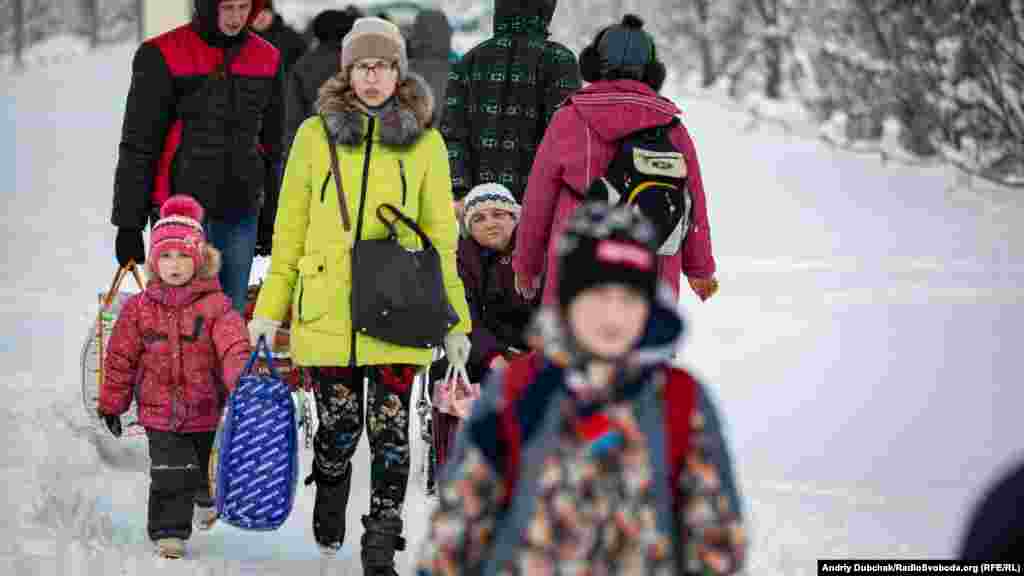
A young family heading toward separatist-held territory.&nbsp;
14/17 A young family heading toward separatist-held territory. 
Crossing through the only corridor that remains open for people in Ukraine's Luhansk region to navigate the so-called line of contact.
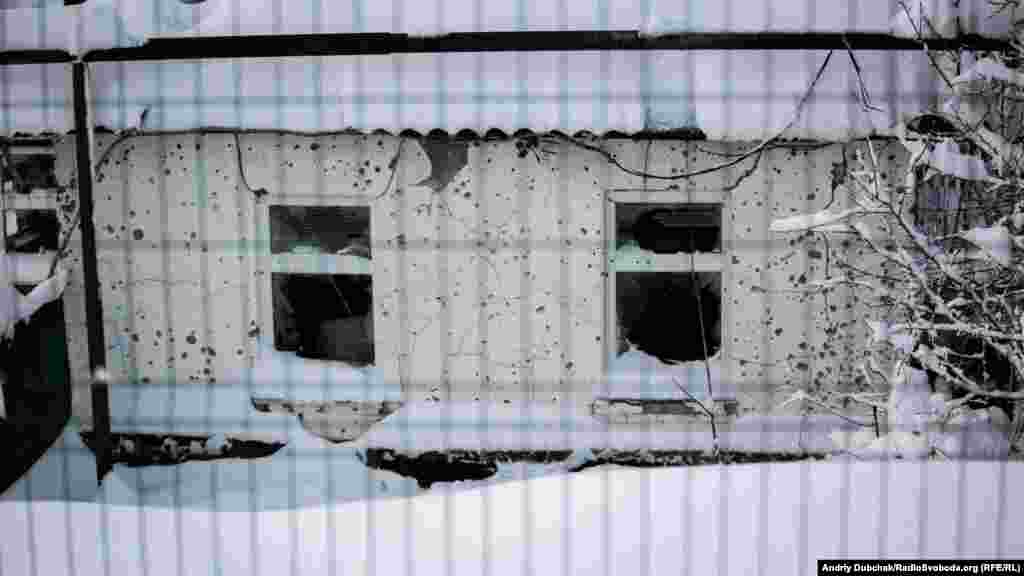
Signs of the heavy fighting that tore the area apart, particularly in the early days of the war, remain alongside the roadway.
15/17 Signs of the heavy fighting that tore the area apart, particularly in the early days of the war, remain alongside the roadway.
Crossing through the only corridor that remains open for people in Ukraine's Luhansk region to navigate the so-called line of contact.
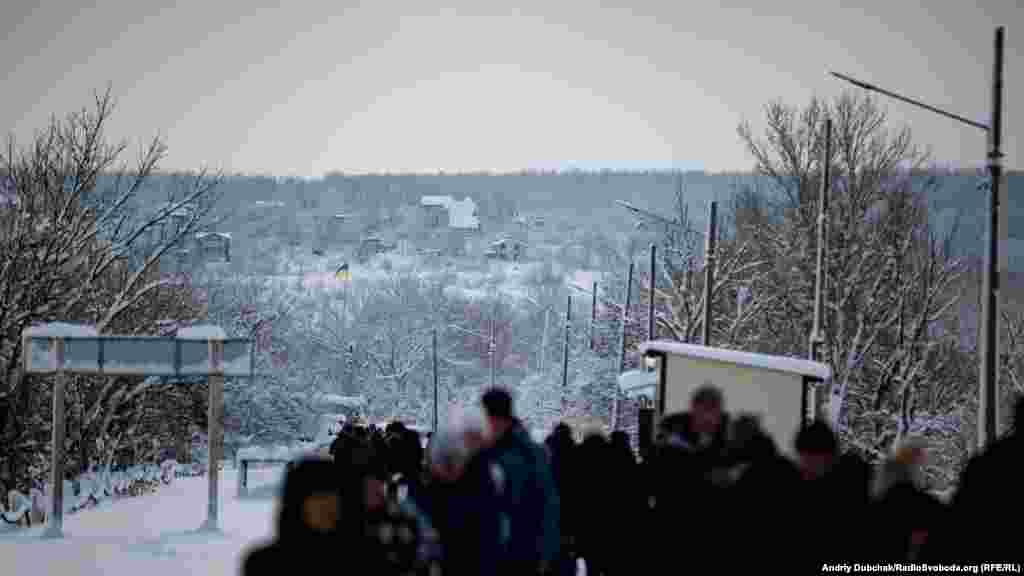
A last Ukrainian flag marks the edge of territory safe for RFE/RL&#39;s correspondents. In the empty houses on the hill, snipers often set up after the &quot;border&quot; closes at 5 p.m. A Ukrainian soldier was wounded by a sniper firing from this hill around one week before RFE/RL visited.<br />
<br />
&nbsp;
16/17 A last Ukrainian flag marks the edge of territory safe for RFE/RL's correspondents. In the empty houses on the hill, snipers often set up after the "border" closes at 5 p.m. A Ukrainian soldier was wounded by a sniper firing from this hill around one week before RFE/RL visited.

 
Crossing through the only corridor that remains open for people in Ukraine's Luhansk region to navigate the so-called line of contact.
The farthest point our photographer walks before returning to government-held territory. A little farther on is a bridge that was destroyed by separatist forces in 2015. There appears to be little political will on either side to fix or replace the bridge.
17/17 The farthest point our photographer walks before returning to government-held territory. A little farther on is a bridge that was destroyed by separatist forces in 2015. There appears to be little political will on either side to fix or replace the bridge.
Crossing through the only corridor that remains open for people in Ukraine's Luhansk region to navigate the so-called line of contact.
Previous slide
Next slide


The overpass that straddles the rail line along the boundary between Russia and Ukraine is now a border crossing. At each end of the pass, which is only accessible to locals, guards check documents to determine if they can pass.

"I just returned from there," says Ihor, turning back toward the concrete and steel structure.

Ihor, a Ukrainian, complains that Kyiv has complicated travel more than Moscow.

Ukrainians, he says, are allowed into Russia with local residency permits, whereas Ukraine requires Russians to show their passports to enter.

Life in Milove, Ihor adds, nearly came to a halt when Ukrainian President Petro Poroshenko temporarily barred Russian male nationals of combat age from entering Ukraine.

Poroshenko took the action in November a month after Russia open fire on and seized three Ukrainian naval vessels and their crews on the Black Sea. The group of ships were approaching the Kerch Strait, which separates Russia from the annexed Crimean Peninsula, en route to a Ukrainian port on the Azov Sea.

The barring of Russian men was part of the imposition of martial law in 10 Ukrainian regions, including those close to areas controlled by Russia-backed separatists in the east, those abutting the Russia-backed separatist Transdniester region in Moldova, and along the Azov Sea coast.

Poroshenko lifted martial law on December 26.

"After that order went into effect, a lot fewer people traveled here. And when there was a total ban on men, then very rarely did anybody come," says the 50-year-old Ihor, who's lived his entire life in Milove outside of a few spells when he worked in Russia.

Russian guards patrol an area along the Russian side of the fence in Milove.

The added bureaucracy to cross the border has cut trade, causing a scarcity of some goods and an opportunity for the more entrepreneurial, locals say. Sausage and vodka have become hot contraband items, one resident explains, speaking to RFE/RL on condition of anonymity.

"They hide sticks of sausages and bottles of vodka in their sleeves and pockets. They take them to Chertkovo and sell them there. You can make 20 to 25 hryvna (70 to 90 U.S. cents) in profit on each one," he explains.

He also says there's a brisk black-market business in the trade of gasoline. Contraband fuel from Russia is cheaper than Ukrainian gas.

"Of course, there are those who also sell their produce -- milk, eggs, vegetables, and other stuff. Ours are tastier," he adds with a smile.

At a local cafe in Milove, a tune by the Russian-Georgian crooner Valeriy Meladze echoes in the dark bar.

Artak, owner of the Anush cafe, says tensions between Moscow and Kyiv have been bad for business.

"A lot of people used to come in here. There were a lot of workers, too. And now....You're the first customers today," says Artak to correspondents from RFE/RL's Ukrainian Service.

Artak didn't have much to offer, anyway.

"There's no coffee or tea," he says.

Like others in Milove, Artak says the border fence stuck a dagger in any hopes of reviving struggling local businesses.

He says his cafe is caught up in the dispute.

"If they had constructed the barrier through my cafe, then the kitchen would have been in Russia," he adds bitterly.

Back on the street, Olena says a way of life has been lost forever.

"We visited each other, were friends, a lot of us had work there [in Chertkovo]," she says. "Now, it's all in the past."

Written by Tony Wesolowsky in Prague based on reporting by Anastasia Magazova and Andriy Dubchak of RFE/RL's Ukrainian Service in Milove
  • 16x9 Image

    Tony Wesolowsky

    Tony Wesolowsky is a senior correspondent for RFE/RL in Prague, covering Belarus, Ukraine, Russia, and Central Europe, as well as energy issues. His work has also appeared in The Philadelphia Inquirer, the Christian Science Monitor, and the Bulletin Of The Atomic Scientists.

  • 16x9 Image

    Anastasia Magazova

    Anastasia Magazova is a Ukrainian journalist who is working with RFE/RL on a fellowship.

  • 16x9 Image

    Andriy Dubchak

    Andriy Dubchak is the founder and director of the independent reporting media outlet Donbas Frontliner and was a correspondent and photographer for many years for RFE/RL's Ukrainian Service. He specializes in telling the stories of soldiers and civilians caught up in the war in eastern Ukraine. He received a 2022 Free Media Award from the Fritt Ord and ZEIT foundations for his "courageous professional reporting from battle zones." He also received a Lovie award for his coverage of the Maidan protests in 2014 and a Gold Medal in the LifePressPhoto competition in 2020.

This item is part of
XS
SM
MD
LG