The protest comes amid efforts by Moscow and Tokyo to resolve a decades-long dispute over the islands, known in Russia as the Southern Kuriles and in Japan as the Northern Territories.
Hundreds have demonstrated on Sakhalin in Russia’s Far East to protest against any potential transfer to Japan of any of the islands from the disputed Kurile chain.
Some 300 people turned out for the unsanctioned event on January 19 in Yuzhno-Sakhalinsk, the regional administrative center.
One demonstrator was hauled off by police after the event and held for two hours before being released with a citation for violating public order.
It comes amid efforts by Moscow and Tokyo to resolve a decades-long dispute over the islands, known in Russia as the Southern Kuriles and in Japan as the Northern Territories.
The islands were captured by Soviet troops in the last days of World War II. Failure to resolve the dispute has blocked the countries from signing a peace treaty to formally end the hostilities.
The Kurile Islands: Why Russia And Japan Never Made Peace After World War II
1/16A young dog sidesteps a Reuters photographer on Kunashir Island, one of four islands that Russia has settled but Japan calls its Northern Territories. Kunashir lies just 20 kilometers from the Japanese mainland.
For Russia, they are the justly earned spoils of war. For Japan, the Kurile Islands are stolen territory, lost to Soviet aggression and Western interference. More than 70 years after the last shot was fired in World War II, the two countries remain locked in a stalemate over four wave-battered islands. (A version of this gallery was originally published in April 2017.)
2/16A Russian woman touches up her lipstick on Kunashir. The dispute over the islands means a peace treaty has never been signed between Russia and Japan to formally end World War II hostilities. As one local woman put it, "There is no war, but there is no peace either."
For Russia, they are the justly earned spoils of war. For Japan, the Kurile Islands are stolen territory, lost to Soviet aggression and Western interference. More than 70 years after the last shot was fired in World War II, the two countries remain locked in a stalemate over four wave-battered islands. (A version of this gallery was originally published in April 2017.)
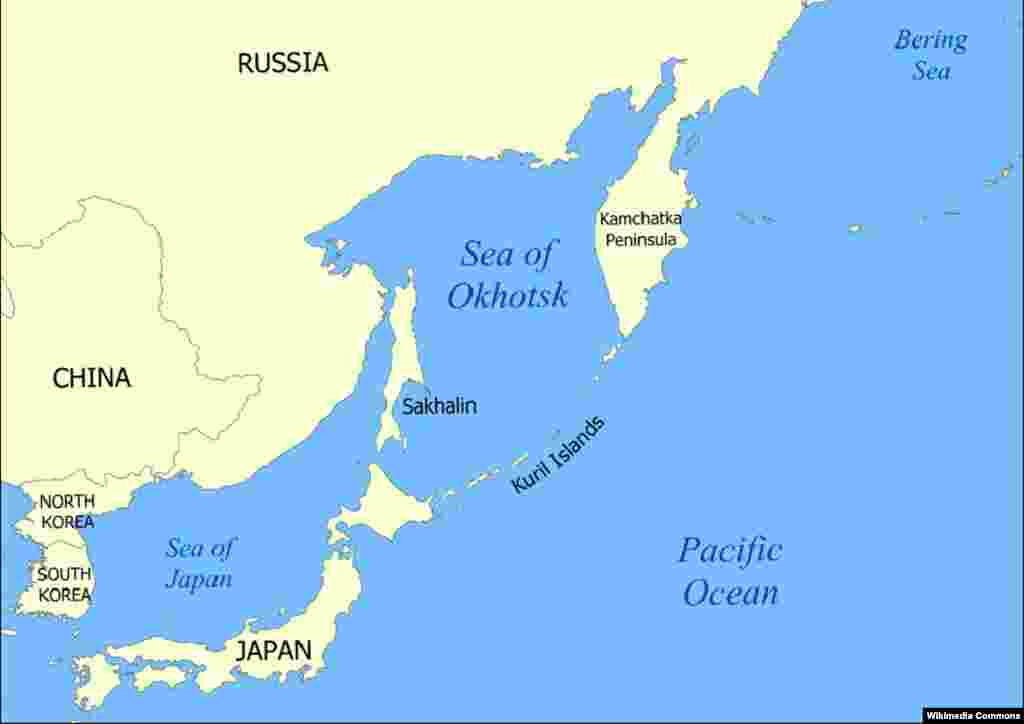
3/16The Kurile Islands (center) lie like a trail of droplets between Japan and Russia. Historically the boundary between the two countries has been tugged up and down the island chain, but after World War II that boundary slid south, hard against the Japanese mainland.
For Russia, they are the justly earned spoils of war. For Japan, the Kurile Islands are stolen territory, lost to Soviet aggression and Western interference. More than 70 years after the last shot was fired in World War II, the two countries remain locked in a stalemate over four wave-battered islands. (A version of this gallery was originally published in April 2017.)
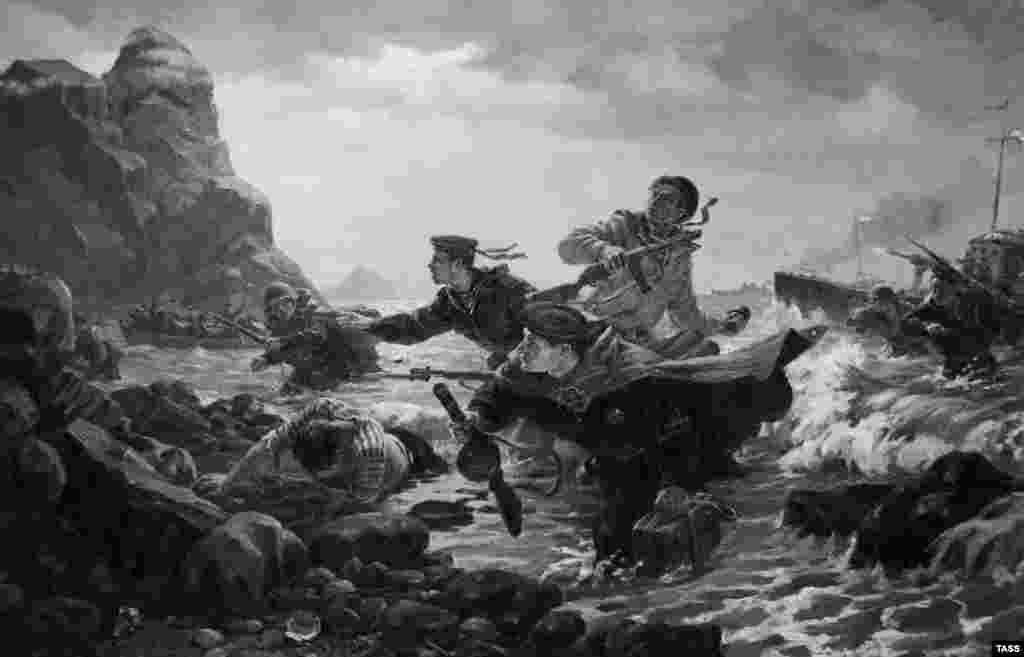
4/16In the waning days of World War II, the United States and United Kingdom promised Moscow the Kurile Islands in return for entering the fight against Japan. This Soviet-era painting depicts the landing of Soviet forces on one of the islands.
For Russia, they are the justly earned spoils of war. For Japan, the Kurile Islands are stolen territory, lost to Soviet aggression and Western interference. More than 70 years after the last shot was fired in World War II, the two countries remain locked in a stalemate over four wave-battered islands. (A version of this gallery was originally published in April 2017.)
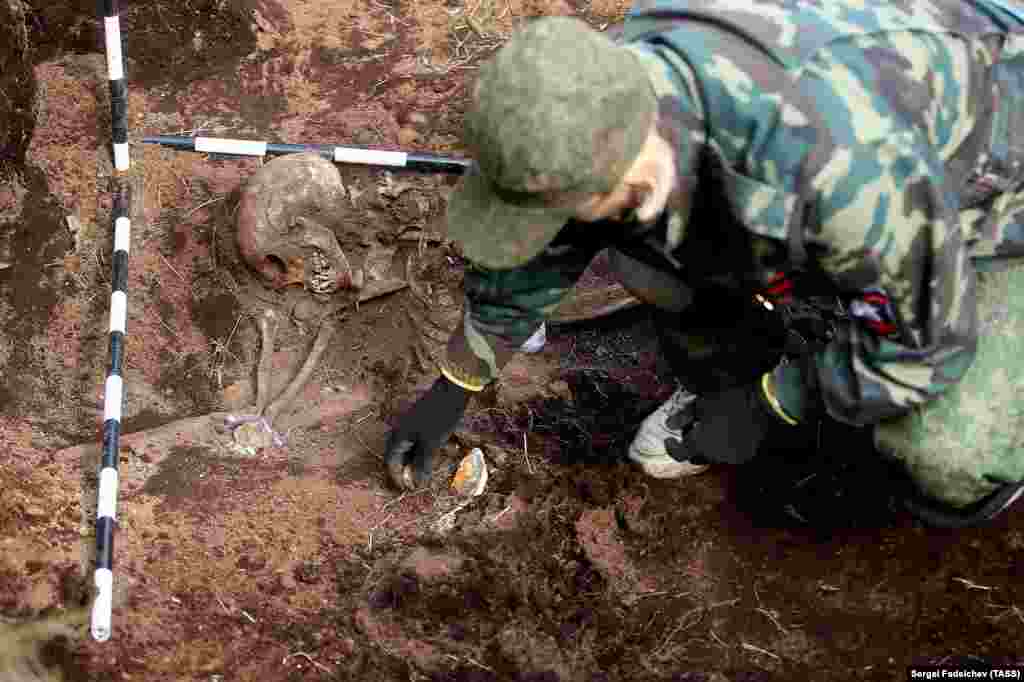
5/16The remains of a Soviet soldier killed during the operation to seize the Kurile Islands in 1945. Japan claims the four islands closest to the Japanese mainland are not part of the Kurile chain and the U.S.S.R. therefore had no right to capture them.
For Russia, they are the justly earned spoils of war. For Japan, the Kurile Islands are stolen territory, lost to Soviet aggression and Western interference. More than 70 years after the last shot was fired in World War II, the two countries remain locked in a stalemate over four wave-battered islands. (A version of this gallery was originally published in April 2017.)
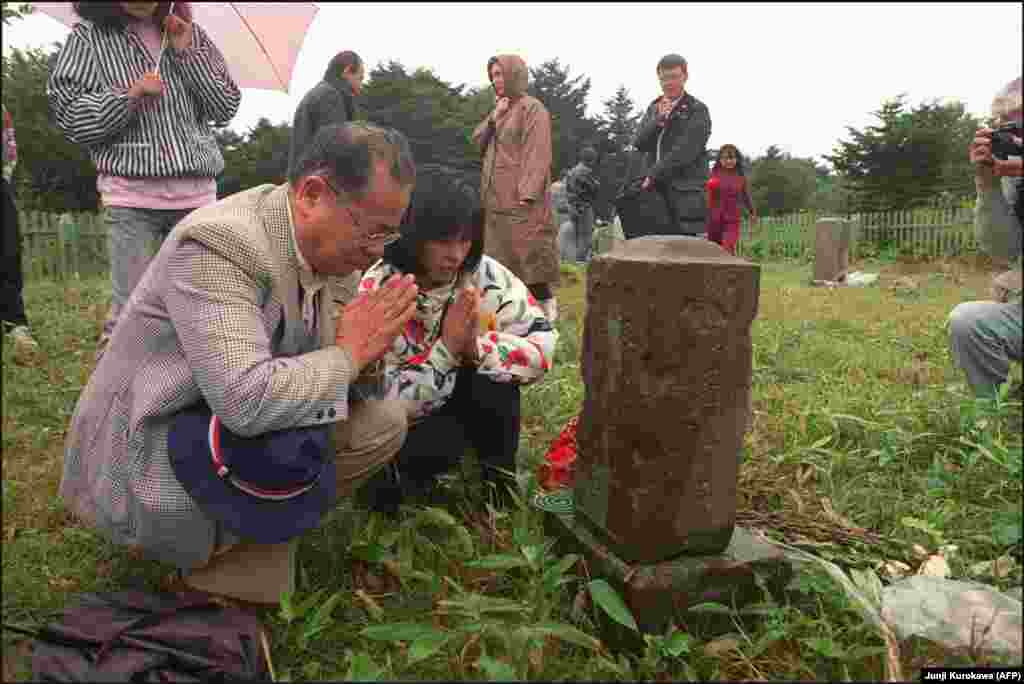
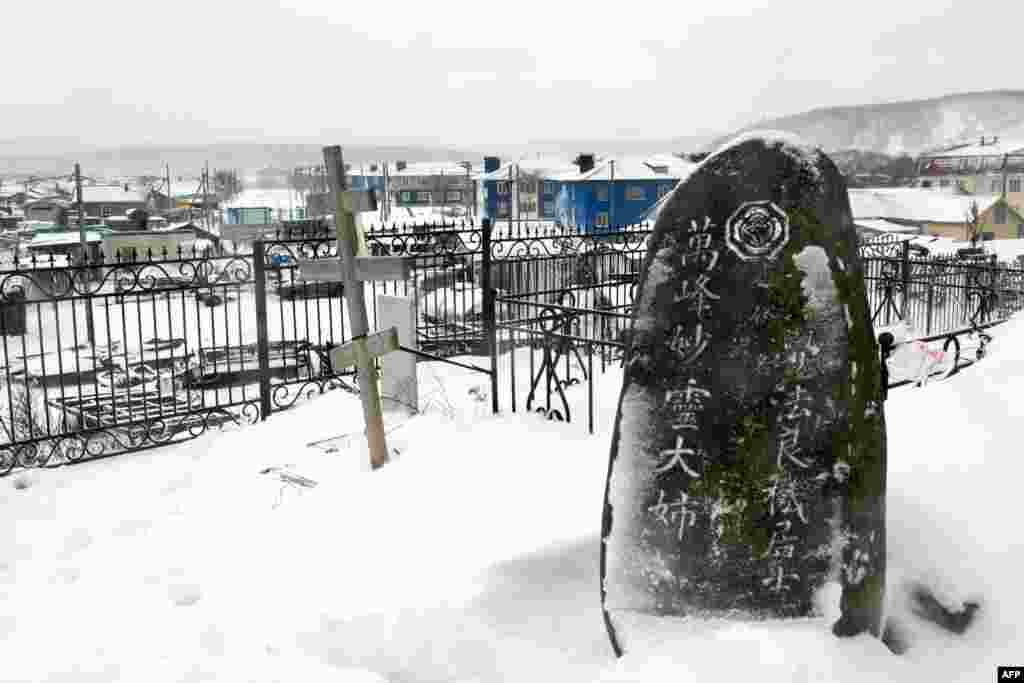
6/16A Japanese gravestone on Kunashir Island. Once captured in 1945, there was a period of uneasy cohabitation (which is the subject of a 2014 animated film) before Josef Stalin ordered the forceful eviction of the Japanese population to mainland Japan in 1947.
For Russia, they are the justly earned spoils of war. For Japan, the Kurile Islands are stolen territory, lost to Soviet aggression and Western interference. More than 70 years after the last shot was fired in World War II, the two countries remain locked in a stalemate over four wave-battered islands. (A version of this gallery was originally published in April 2017.)
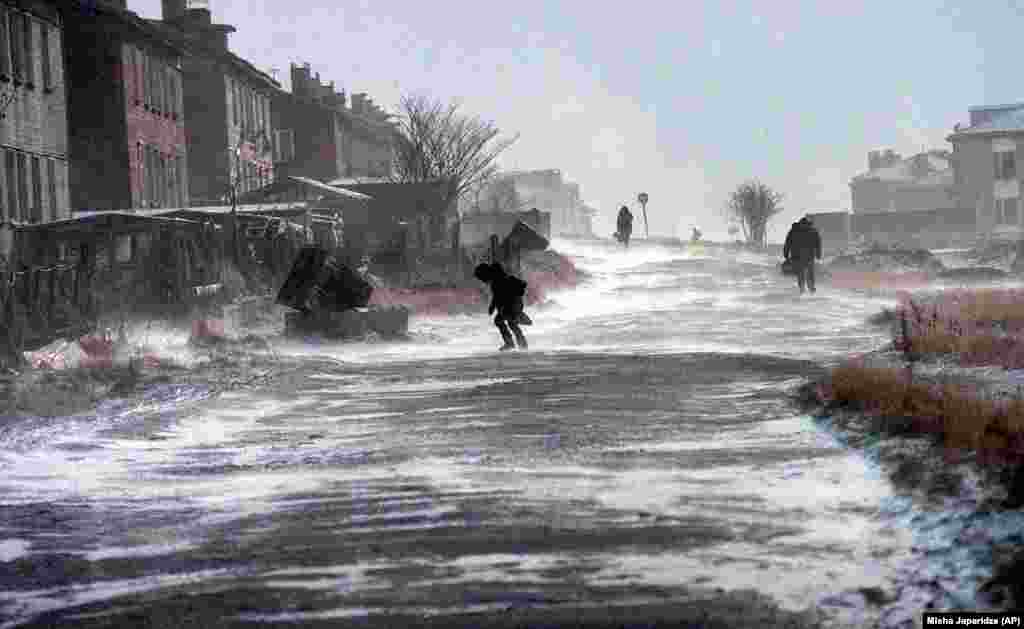
7/16Winter on Kunashir in 1998. Today, around 19,000 Russians populate the disputed Kurile Islands.
For Russia, they are the justly earned spoils of war. For Japan, the Kurile Islands are stolen territory, lost to Soviet aggression and Western interference. More than 70 years after the last shot was fired in World War II, the two countries remain locked in a stalemate over four wave-battered islands. (A version of this gallery was originally published in April 2017.)
8/16Dusk in the harbor on Kunashir Island. Fishing is the main source of income for the Russians here, but infrastructure is ragged and economic prospects for locals are generally bleak. A Japanese man who was evicted in 1947 described his former homeland as "a wasteland" when he visited in 2005.
For Russia, they are the justly earned spoils of war. For Japan, the Kurile Islands are stolen territory, lost to Soviet aggression and Western interference. More than 70 years after the last shot was fired in World War II, the two countries remain locked in a stalemate over four wave-battered islands. (A version of this gallery was originally published in April 2017.)
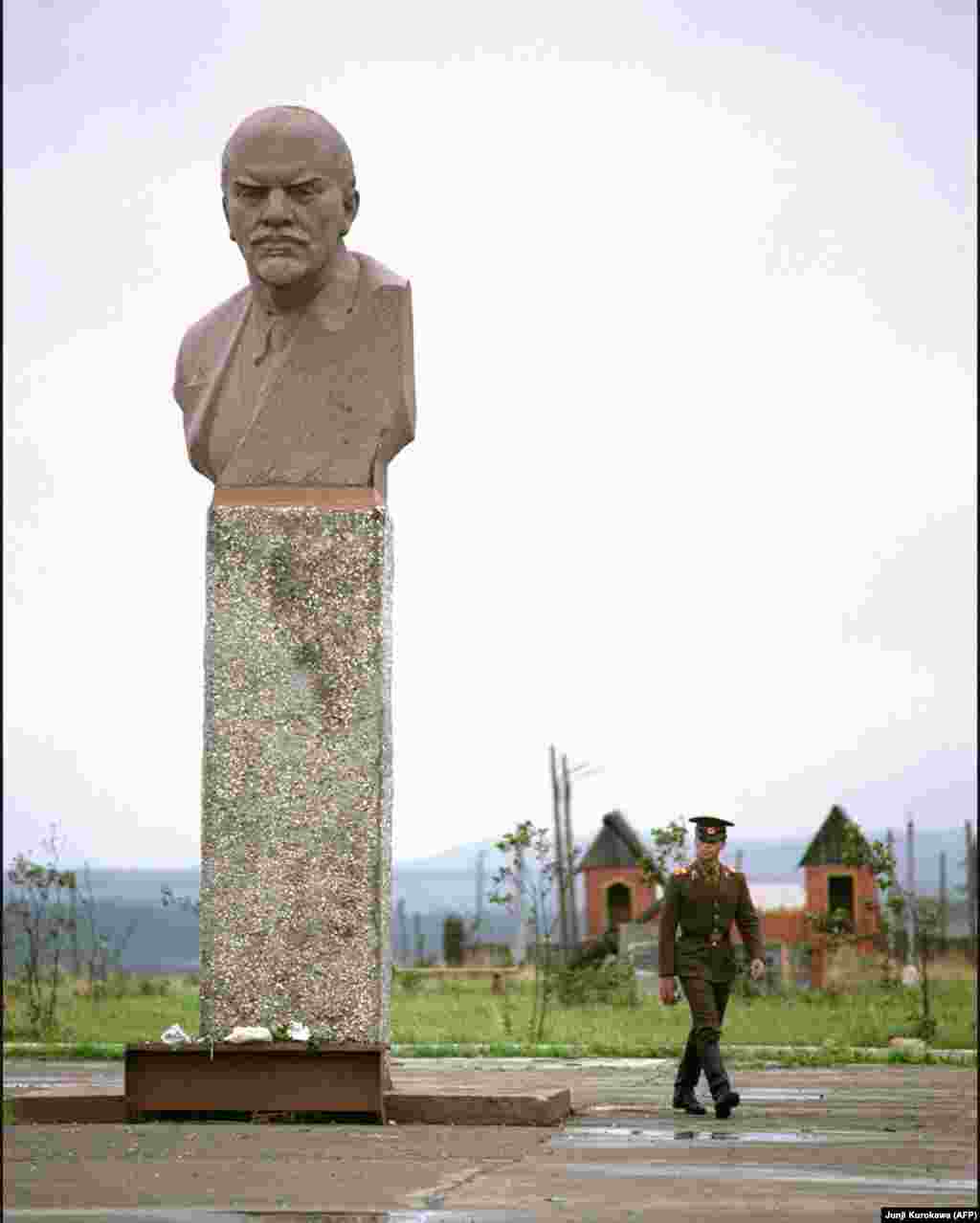
9/16A Soviet soldier on Kunashir Island in 1989. Shortly after the Soviet Union collapsed, Kurile islanders heId a mock referendum on asking Japan to take ownership of the islands. A Russian official on the islands seethed at the memory, "Most of these people are nobody, nothing."
For Russia, they are the justly earned spoils of war. For Japan, the Kurile Islands are stolen territory, lost to Soviet aggression and Western interference. More than 70 years after the last shot was fired in World War II, the two countries remain locked in a stalemate over four wave-battered islands. (A version of this gallery was originally published in April 2017.)
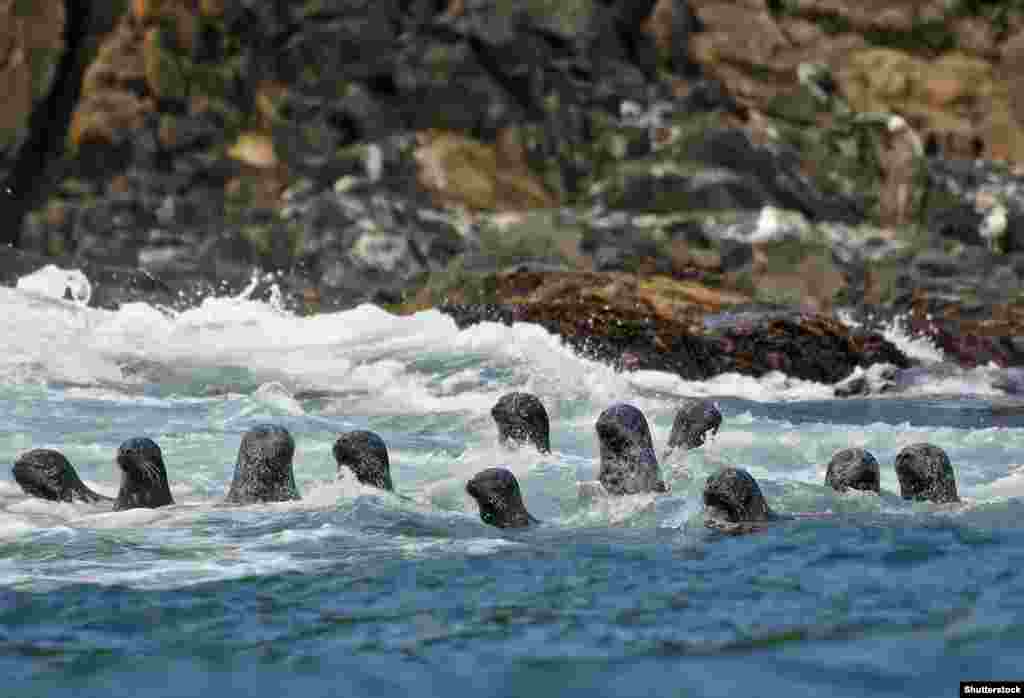
10/16Seals swimming off Kunashir Island. Waters around the disputed islands teem with sea life worth an estimated $4 billion per year in potential fisheries value. Japanese authorities have vowed to carefully exploit the fishing and tourism potential of the Kuriles if Russia returns the four islands.
For Russia, they are the justly earned spoils of war. For Japan, the Kurile Islands are stolen territory, lost to Soviet aggression and Western interference. More than 70 years after the last shot was fired in World War II, the two countries remain locked in a stalemate over four wave-battered islands. (A version of this gallery was originally published in April 2017.)
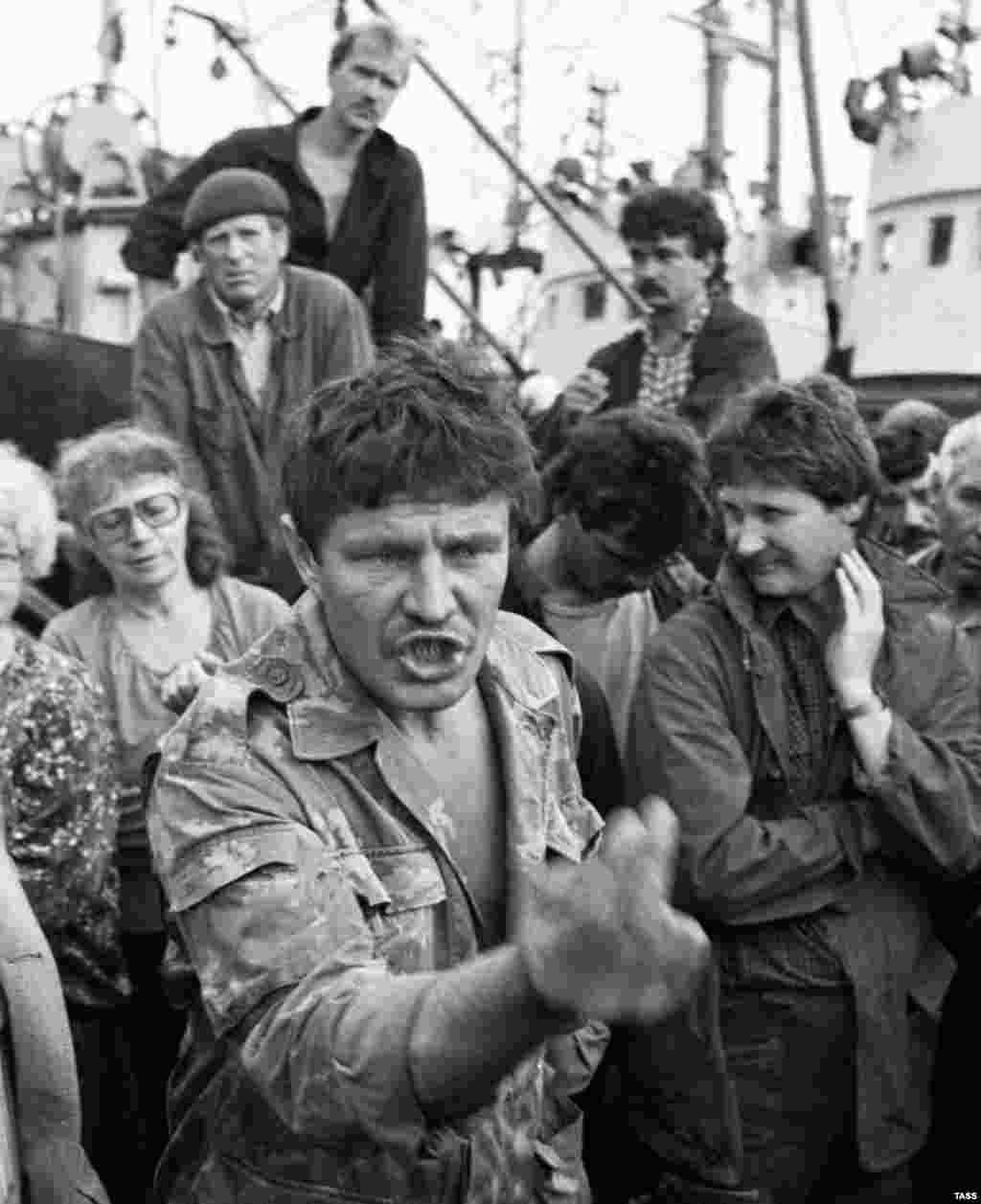
11/16Russian fishermen at a rally defending Russia's possession of the Kuriles in the early '90s. A 2016 poll showed 78 percent of Russian mainlanders were opposed to returning the disputed islands to Japan.
For Russia, they are the justly earned spoils of war. For Japan, the Kurile Islands are stolen territory, lost to Soviet aggression and Western interference. More than 70 years after the last shot was fired in World War II, the two countries remain locked in a stalemate over four wave-battered islands. (A version of this gallery was originally published in April 2017.)
12/16A Japanese tank rusting on one of the Kurile Islands. After losing more than 20 million Soviet citizens in World War II, the idea of returning land to an ally of Nazi Germany is unthinkable to most Russians. One politician made Russia's position clear in a 2002 statement: "[Japan] must remember they lost the war and signed an unconditional surrender; they put themselves politically and territorially at the winners' mercy."
For Russia, they are the justly earned spoils of war. For Japan, the Kurile Islands are stolen territory, lost to Soviet aggression and Western interference. More than 70 years after the last shot was fired in World War II, the two countries remain locked in a stalemate over four wave-battered islands. (A version of this gallery was originally published in April 2017.)
13/16A nuclear submarine near the Kurile Island chain in 1998. Another factor wedding Russia to the islands is current military strategy. Deepwater channels between the Kuriles allow Russian submarines a stealthy corridor to the Pacific Ocean.
For Russia, they are the justly earned spoils of war. For Japan, the Kurile Islands are stolen territory, lost to Soviet aggression and Western interference. More than 70 years after the last shot was fired in World War II, the two countries remain locked in a stalemate over four wave-battered islands. (A version of this gallery was originally published in April 2017.)
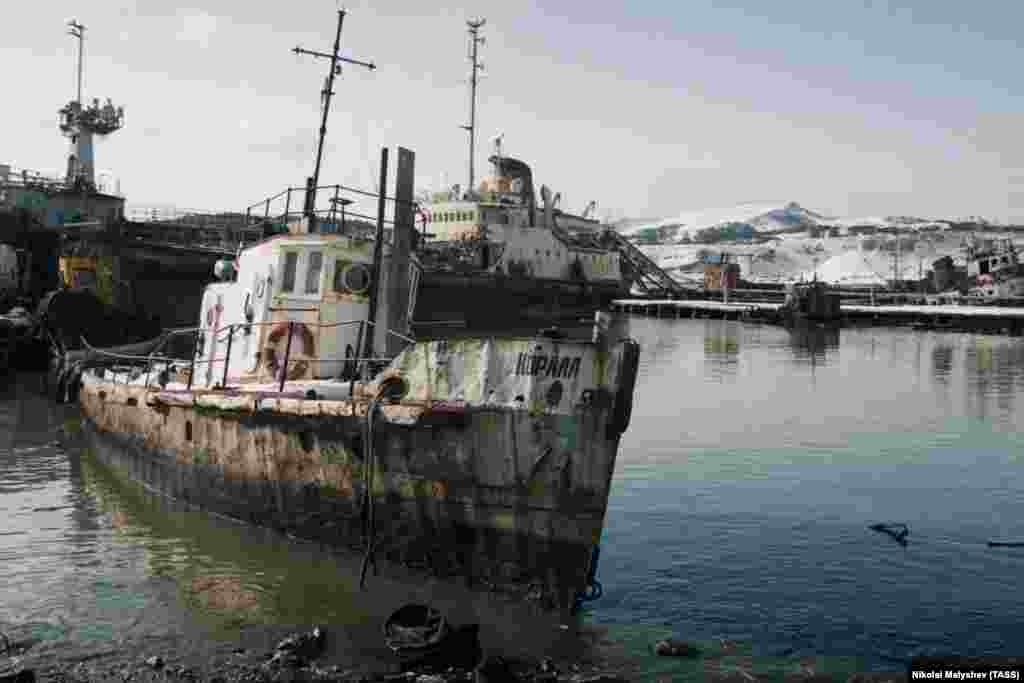
14/16Russian fishing boats on Shikotan, one of the smaller disputed islands. With the prospect of the United States establishing a military outpost on the Kuriles if returned to Japan, Russia is unlikely ever to agree to a handover of all the disputed islands. But one possibility could end the dispute in what Russian President Vladimir Putin has called a "hikiwake" (the term for "draw" in judo).
For Russia, they are the justly earned spoils of war. For Japan, the Kurile Islands are stolen territory, lost to Soviet aggression and Western interference. More than 70 years after the last shot was fired in World War II, the two countries remain locked in a stalemate over four wave-battered islands. (A version of this gallery was originally published in April 2017.)
15/16The most palatable solution for both sides might be what has been dubbed "two islands plus alpha," in which Japan would receive the Shikotan (pictured) and Habomai islands (and their fishing grounds), plus one more yet-to-be-defined concession from Russia. In return, Japan would renounce claims to the two larger, militarized islands, Kunashir and Etorofu.
For Russia, they are the justly earned spoils of war. For Japan, the Kurile Islands are stolen territory, lost to Soviet aggression and Western interference. More than 70 years after the last shot was fired in World War II, the two countries remain locked in a stalemate over four wave-battered islands. (A version of this gallery was originally published in April 2017.)
16/16Japanese former residents visiting relatives' graves on Kunashir island. Analysts suggest that "alpha" might include fishing rights for Japan near the two larger islands or the rights for Japanese citizens to visit and do business on the disputed islands. If Russia and Japan can find an "alpha" that is acceptable to both sides, a peace treaty can be signed and World War II might finally, formally end for these two nations.
For Russia, they are the justly earned spoils of war. For Japan, the Kurile Islands are stolen territory, lost to Soviet aggression and Western interference. More than 70 years after the last shot was fired in World War II, the two countries remain locked in a stalemate over four wave-battered islands. (A version of this gallery was originally published in April 2017.)
Previous slide
Next slide
In November, Russian President Vladimir Putin and Japanese Prime Minister Shinzo Abe agreed to accelerate negotiations based on a 1956 Soviet proposal to return the two less populated islands, Shikotan and a group of islets called Habomai.
Russian Foreign Minister Sergei Lavrov said on January 14 that the two countries still have "substantial disagreements" despite some progress in bringing their positions closer.
Lavrov also warned not to expect progress toward an agreement unless Japan first recognizes Russian sovereignty over the Pacific island chain.








![A Japanese tank rusting on one of the Kurile Islands. After losing more than 20 million Soviet citizens in World War II, the idea of returning land to an ally of Nazi Germany is unthinkable to most Russians. One politician made Russia's position clear in a 2002 statement: "[Japan] must remember they lost the war and signed an unconditional surrender; they put themselves politically and territorially at the winners' mercy."](https://gdb.rferl.org/56d865c3-5779-4a95-93c3-699b3b2328cf_w1024_q10_s.jpg)